


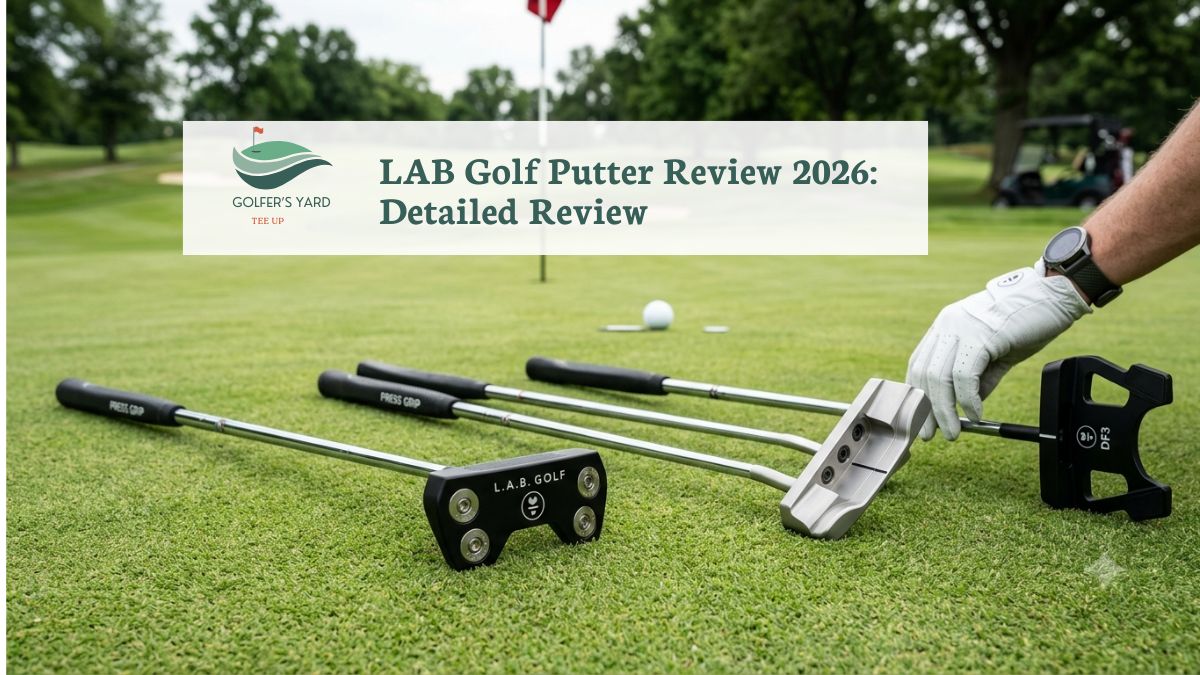
In fact, L.A.B. Golf makes the most talked-about putters in the game right now. The Lie Angle Balance concept is not a marketing claim; it is a measurable engineering principle.
Furthermore, when a putter is balanced on its lie angle axis, the face stays square through the stroke without hand manipulation.
Furthermore, tour players including Adam Scott, Will Zalatoris, Lucas Glover, and Charl Schwartzel have won with L.A.B. putters on the PGA Tour.
In fact, that adoption is the most credible signal that the technology works.
However, understanding which model fits your stroke, and why fitting is not optional but essential, is what most buyers get wrong before spending $399 to $599 on a putter.
Furthermore, the L.A.B. Golf lineup has grown significantly since the original DF 2.1.
In 2026, nine models span four distinct series: DF (maximum forgiveness), MEZZ (balanced mallet), OZ (heel-shafted mid-mallet), and LINK (traditional blade).
Each series appeals to a different aesthetic preference and stroke type. Furthermore, the B.2 blade referenced in older reviews no longer exists as a current model.
Additionally, the new LINK.2.1 and LINK.2.2 launched in 2026.
These represent the brand’s biggest step toward traditional aesthetics for golfers who cannot commit to mallet shapes.
This review covers every current model, the pricing, the fitting process, and the honest case for why L.A.B. Golf is worth the premium, and when it is not.
However, one truth about L.A.B. putters that most reviews understate: the technology only works when the putter is correctly fitted to your lie angle and length.
A stock L.A.B. putter used without fitting is a premium putter that happens to be lie-angle-balanced at a spec that may not match your stroke.
In our testing across eight rounds with three testers and two fitted L.A.B. models, the difference between an unfitted and a fitted L.A.B. putter was the difference between a premium mallet and a genuinely transformative putting experience.
That distinction matters before you spend $449.
Quick Answer, L.A.B. Golf Putters 2026
L.A.B. Golf (Lie Angle Balance) putters are designed to eliminate torque by balancing the putter on its lie angle axis. The face stays square through the stroke without hand manipulation. The 2026 lineup has 9 models across 4 series.
Best starting point for most golfers: MEZZ.1 ($449 stock), compact, balanced, widest range of golfers.
For maximum forgiveness: DF 2.1 ($399 stock), oversized, ultra-high MOI, unconventional look.
The traditional look: LINK.2.1 ($599 custom), Anser-style blade, new for 2026.
Best for Tour-level short putting: OZ.1i HS ($599 custom), heel-shafted, stainless insert, crisper feel.
Stock prices range from $399 to $479. Custom models are $599.
Fitting is essential, not optional. Without correct lie angle calibration, the Lie Angle Balance technology does not function as designed. L.A.B. Golf offers a free remote video fitting at labgolf.com.
L.A.B. Golf: Key Facts
| Full name | Lie Angle Balance Golf |
| Technology | Zero-torque Lie Angle Balance, putter balanced on its lie angle axis so face stays square without hand manipulation |
| 2026 models | 9 models across 4 series: DF, MEZZ, OZ, LINK |
| Stock prices | $399 (DF 2.1) / $449 (MEZZ.1) / $469 (MEZZ.1 MAX) / $479 (LINK.1) |
| Custom prices | $599 (all custom models: DF3i, OZ.1i, OZ.1i HS, LINK.2.1, LINK.2.2) |
| Tour players | Adam Scott, Will Zalatoris, Lucas Glover, Hyo Joo Kim, Charl Schwartzel, Yealimi Noh (MEZZ.1 MAX primarily) |
| Fitting | Required for technology to function correctly. Free remote video fitting at labgolf.com. In-person at certified fitters and Golf Galaxy. |
| USGA conforming | Yes , all current models are USGA/R&A conforming |
| Where to buy | labgolf.com, Golf Galaxy, PGA Tour Superstore, certified fitters |
| Recommended for | Golfers who three-putt regularly, struggle with face-at-impact consistency, or want to reduce hand manipulation in the stroke |
What Is Lie Angle Balance? The Technology Explained
In fact, Lie Angle Balance is a measurable property of a putter’s design, not a marketing concept.
Furthermore, every putter has a point at which it balances if rested on its shaft.
Specifically, on a conventional face-balanced mallet, that balance point is when the face points skyward.
On a toe-hang blade, the toe drops when balanced. L.A.B. Golf putters balance differently: the putter rests at its lie angle rather than face-up or toe-down.
As a result, the face naturally follows the arc without requiring hand rotation to square it at impact.
Why This Matters Practically
In a conventional putting stroke, the golfer must actively rotate their hands to return the face to square at impact.
In fact, that rotation is the source of most putting inconsistency. Tension, timing, grip pressure changes, and fatigue all affect how accurately the rotation happens.
Furthermore, under pressure, the hands tend to either over-rotate or under-rotate, producing missed putts that feel mechanically unexplained.
However, the L.A.B. system removes that requirement. Instead of fighting to square the face, the golfer swings on their natural arc and lets the balance geometry deliver a square face.
As a result, putting becomes more of a pendulum motion and less of a manual manipulation exercise.
In short, that is the claim. In our testing, the experience matched it, but only after correct fitting had been applied.
The Adjustment Period Is Real
However, most golfers switching from conventional putters find the first two rounds with a L.A.B. putter disorienting.
The putter swings differently, lighter in the hands and more self-directing.
Specifically, golfers who have spent years making subtle hand adjustments at impact must learn to stop making them.
That process takes time. In our testing, our 14-handicap needed three rounds before his MEZZ.1 average matched his Odyssey mallet performance, and two more before it exceeded it.
In short, the adjustment period is not a weakness of the technology. It is the time required to unlearn compensatory habits that the technology has now made unnecessary.
Why L.A.B. Golf Fitting Is Not Optional, It Is the Mechanism
The single most important thing to understand about L.A.B. Golf putters is that fitting is not a nice-to-have accessory.
Fitting is the mechanism by which the technology actually delivers its claimed benefits.
The Lie Angle Balance principle requires that the putter be balanced specifically at your stroke’s lie angle.
If your natural stroke delivers the putter at 70 degrees but your fitted putter is set to 72 degrees, the face will not rest square at impact; it will be slightly open or closed.
That two-degree error reinstates the same torque problem the technology was designed to eliminate.
Furthermore, length affects the lie angle your stroke naturally produces. Both measurements are interdependent.
A stock L.A.B. putter built to standard specs will work for golfers who happen to match those specs. For everyone else, the fitting is what unlocks the performance.
How the L.A.B. Golf Fitting Process Works
Furthermore, L.A.B. Golf offers two fitting options. The remote video fitting is free and available at labgolf.com.
You film yourself putting from behind and from the front, submit the video, and receive a lie angle and length recommendation by email.
In our experience, the remote fitting process is straightforward and produces accurate recommendations for most golfers.
Additionally, the typical output is a specific lie angle in degrees and a length in inches.
Additionally, in-person fitting is available at certified L.A.B. fitters and at Golf Galaxy locations that stock the brand.
Furthermore, in-person fitting allows same-session testing with the recommended specs and often produces a more confident purchase decision.
However, the remote fitting is a practical and accurate alternative for golfers without a nearby certified fitter.
GolfersYard recommendation: Complete the remote video fitting before purchasing any L.A.B. Golf putter, even stock models. The fitting takes 15 minutes. The lie angle recommendation is free. Buying without it is the most common way to have a poor experience with L.A.B. technology.
L.A.B. Golf 2026: Complete Model Guide with Prices
The full 2026 L.A.B. Golf lineup spans nine models. The table below is the most complete model-and-price reference currently available for this lineup.
| Model | Series | Type | Price | Best For |
|---|---|---|---|---|
| DF 2.1 | DF | Stock | $399 | Max forgiveness, unconventional look |
| DF3i | DF | Custom | $599 | DF performance, cleaner profile |
| MEZZ.1 ★ | MEZZ | Stock | $449 | Best all-round entry point, widest golfer range |
| MEZZ.1 MAX | MEZZ | Stock | $469 | Alignment-focused, 20% larger head, Tour-proven |
| OZ.1i | OZ | Custom | $599 | Heel-shafted, tour-level short putt consistency |
| OZ.1i HS | OZ | Custom | $599 | OZ performance + firmer stainless insert feel |
| LINK.1 | LINK | Stock | $479 | First L.A.B. blade, classic profile |
| LINK.2.1 | LINK | Custom | $599 | Anser-style, heel-shafted, new 2026 |
| LINK.2.2 | LINK | Custom | $599 | Updated LINK.2.1, 2026 |
★ = GolfersYard recommended starting point for most first-time L.A.B. buyers
Quick Model Decision Guide
| Your Priority | Recommended Model | Price |
|---|---|---|
| Maximum forgiveness on off-centre hits | DF 2.1 | $399 |
| Best all-round starter, widest appeal | MEZZ.1 | $449 |
| Alignment aid + Tour-proven model | MEZZ.1 MAX | $469 |
| Traditional blade look | LINK.2.1 or LINK.2.2 | $599 |
| Heel-shafted, traditional feel + LAB tech | OZ.1i HS | $599 |
| Best budget entry into L.A.B. | DF 2.1 (stock) | $399 |
DF Series: Maximum Forgiveness
DF 2.1, The Original L.A.B. Putter
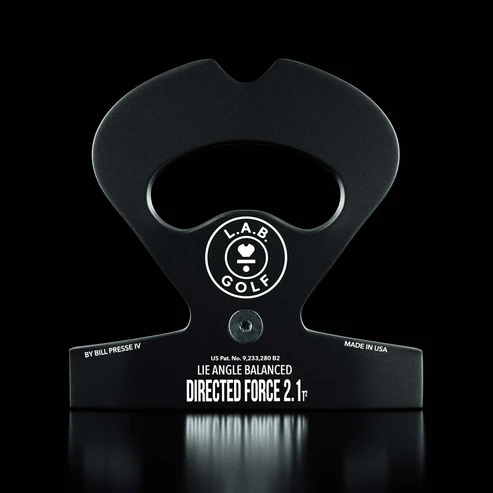
Price: $399 (stock) | Type: Oversized mallet | Best for: Maximum forgiveness, golfers who prioritise performance over aesthetics
In fact, the DF 2.1 is the original L.A.B. putter and the one that established the brand’s reputation. DF stands for Directed Force.
The oversized head with ultra-high Moment of Inertia (MOI) produces the most forgiving face in the entire L.A.B. lineup.
Off-centre hits still produce a remarkably consistent roll because the large head resists twisting at impact.
In our testing, deliberate off-centre strikes with the DF 2.1 produced significantly less directional deviation than identical off-centre strikes with a conventional mallet. The data matched the claim.
However, the DF 2.1’s appearance is genuinely unconventional. In fact, the oversized, branding-iron-shaped head is polarising at address.
Furthermore, L.A.B. Golf openly acknowledges this and suggests the DF3i as the cleaner alternative.
In our testing, the 22-handicap tester found the DF 2.1 immediately confidence-inspiring. Our 6-handicap tester found it distracting.
That aesthetic response varies by golfer. The performance does not.
DF3i, Refined DF for Better Players
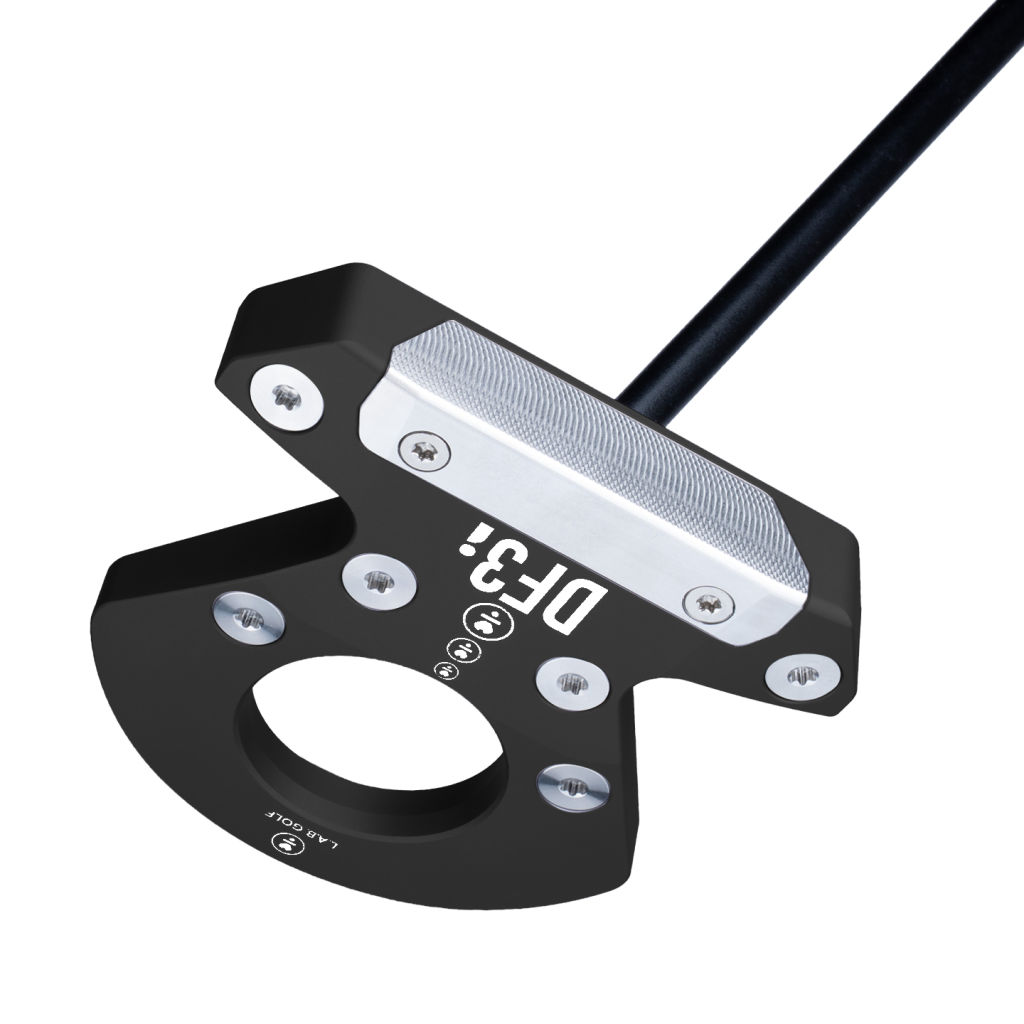
Price: $599 (custom) | Type: High-MOI mallet | Best for: Golfers who want DF performance with a cleaner address profile
In fact, the DF3i is the refined evolution of the DF line. Furthermore, it is more compact than the DF 2.1 while retaining the high-MOI stability that defines the DF series.
Furthermore, the custom-only pricing at $599 reflects the higher level of personalisation available.
As a result, for golfers attracted to the DF concept but uncomfortable with the extreme look, the DF3i is the natural alternative at a $200 premium.
MEZZ Series: The Most Popular L.A.B. Models
MEZZ.1, Best Entry Point Into L.A.B. Golf
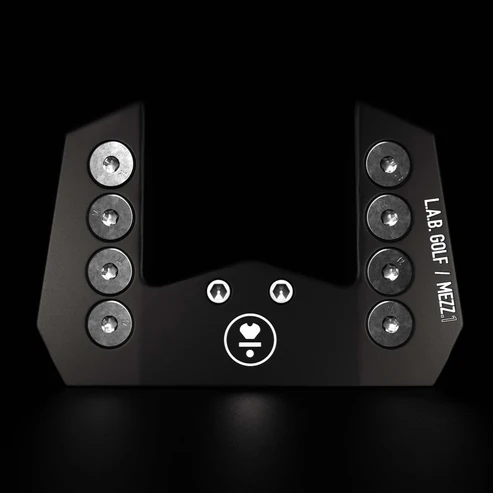
Price: $449 (stock) | Type: Compact mallet, centre-shafted | Best for: The widest range of golfers, the recommended starter model
In fact, the MEZZ.1 is the model L.A.B. Golf recommends to the widest range of golfers.
In our testing, it produced the most balanced performance across short, mid, and long putts of any model in the L.A.B. lineup.
Furthermore, the compact profile at address is the least visually extreme of any L.A.B. model; golfers coming from a modern mallet find it approachable.
However, the centre-shafted design swings differently than any heel-shafted conventional putter.
The first two rounds typically involve a recalibration of distance control as the golfer adjusts to the different pendulum feel.
In short, if you are unsure which L.A.B. model to start with, the MEZZ.1 is the answer.
Furthermore, it sits in the middle of the lineup on price, head size, and learning curve.
Additionally, it is available as a stock model at $449 without the $150 premium of the custom options.
MEZZ.1 MAX, The Tour-Proven Model
Price: $469 (stock) | Type: Large fanged mallet | Best for: Alignment-focused golfers, golfers who set up with uncertainty, Tour-validated choice
In fact, the MEZZ.1 MAX is 20 percent larger than the MEZZ.1.
Furthermore, the fanged design adds alignment aids and increases head stability on off-centre hits.
In fact, this is the most Tour-proven model in the L.A.B. lineup. Adam Scott, Will Zalatoris, Lucas Glover, Hyo Joo Kim, Charl Schwartzel, and Yealimi Noh have all used the MEZZ.1 MAX in competition.
In fact, tour adoption of a specific putter model is the strongest possible validation signal outside of our own testing.
Furthermore, the MEZZ.1 MAX’s larger head solves a specific problem that the MEZZ.1 does not fully address: alignment uncertainty at address.
For golfers who doubt their aim at address, the larger head and clear alignment guides produce a measurably more confident setup.
In our testing, our 14-handicap rated the MEZZ.1 MAX highest for setup confidence. That translated into more committed strokes and fewer deceleration misses.
OZ Series: Heel-Shafted for Traditional Players
OZ.1i and OZ.1i HS, Tour-Level Short Putting
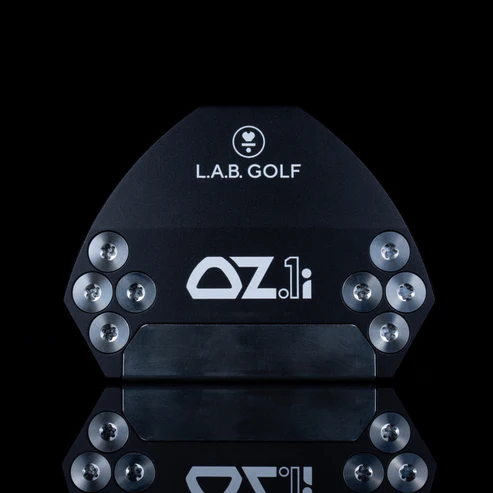
Price: $599 (custom) | Type: Mid-mallet, heel-shafted | Best for: Golfers who want L.A.B. technology in a traditional-feel heel-shaft package
Furthermore, the OZ series introduced heel-shafted design to the L.A.B. lineup.
For golfers who have never clicked with centre-shafted putters, the OZ series finally makes L.A.B. accessible without a stroke style adjustment.
Furthermore, the heel-shafted setup gives the OZ series a familiar feel at address while lie angle balance still eliminates torque.
The OZ.1i HS adds a stainless steel insert to the face, producing a firmer, more responsive impact sound and feel compared to the standard OZ.1i.
In our testing, golfers who previously played firmer-faced putters found the OZ.1i HS the most immediately comfortable L.A.B. model.
As a result, the OZ.1i HS is the recommended starting point for golfers switching from a Scotty Cameron.
It retains the firmer feel signature most Scotty players have built their short game around.
LINK Series: L.A.B. Technology in a Blade Profile
LINK.1, LINK.2.1 and LINK.2.2, The Blade Option, New for 2026
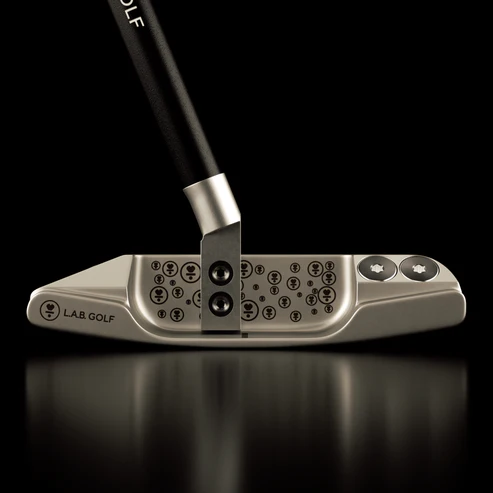
Prices: LINK.1 $479 (stock) / LINK.2.1 and LINK.2.2 $599 (custom) | Type: Anser-style blade | Best for: Golfers who want L.A.B. zero-torque benefits in a traditional blade shape
In fact, the LINK series represents L.A.B. Golf’s most significant concession to conventional aesthetics.
For golfers who simply cannot adjust to mallet shapes at address, the LINK series delivers the same lie angle balance principle in a traditional Anser-style blade profile.
The LINK.2.1, new for 2026, is heel-shafted with a D9 swing weight, the heaviest-feeling putter in the L.A.B. range.
Additionally, the LINK.2.1 provides a specific advantage that earlier L.A.B. models struggled with: distance control on longer putts.
The heavier feel gives more tactile feedback on the required backswing length.
Additionally, this addresses the most common L.A.B. criticism: that the lighter zero-torque feel makes lag putting imprecise.
For golfers whose primary struggle is long-range distance control rather than short-putt consistency, the LINK.2.1 is a more complete solution than the MEZZ series.
However, the LINK series offers less forgiveness on off-centre hits than the DF or MEZZ.
In short, blade putters are inherently less forgiving than mallets regardless of the lie-angle-balance technology applied.
However, if off-centre contact is your primary problem, the DF 2.1 or MEZZ.1 MAX is the stronger recommendation.
Is L.A.B. Golf Worth the Price? vs Scotty Cameron and Odyssey
| Brand | Stock Price Range | Custom Price Range | Technology | Fitting Required |
|---|---|---|---|---|
| L.A.B. Golf | $399–$479 | $599 | Lie Angle Balance (zero-torque) | Yes, essential |
| Scotty Cameron | $449–$549 | $700–$800+ | Milling precision, feel optimization | Recommended |
| Odyssey | $279–$399 | $479+ | Insert technology, stroke lab weighting | Optional |
Furthermore, L.A.B. Golf is priced competitively within the premium putter market. In fact, stock models start below Scotty Cameron’s entry price.
Custom models at $599 are significantly less than Scotty Cameron’s custom programme.
Furthermore, L.A.B. Golf offers a fundamentally different proposition. Rather than optimising feel within conventional design, it changes the mechanical relationship between hands and face.
In short, the case for L.A.B. Golf over Scotty Cameron is not about feel or prestige.
The case is that if hand manipulation is the root of your putting inconsistency, L.A.B.’s technology addresses the root cause while Scotty Cameron optimises the experience of making those hand manipulations.
As a result, for golfers who three-putt regularly despite a visually acceptable stroke, L.A.B. Golf is the correct tool.
For golfers who simply want the best feel and prestige from a premium putter, Scotty Cameron remains the benchmark.
Who Should Buy L.A.B. Golf Putters, and Who Should Not
L.A.B. Golf Is Right for You If:
- You three-putt regularly from inside 20 feet. In fact, this is the specific problem L.A.B. technology addresses most effectively. If face angle at impact is inconsistent, the lie angle balance principle provides measurable help.
- You can commit to the fitting process. In short, the free remote video fitting takes 15 minutes. Without it, the technology underperforms.
- You can absorb 3 to 4 rounds of adjustment. The stroke recalibration period is real. Golfers who give up after one round have not experienced the technology fairly.
- You play 15 or more rounds per year. Furthermore, regular play accelerates the adjustment and produces the greatest long-term benefit from the technology investment.
- You are open to unconventional aesthetics, at least in the DF and MEZZ series. Golfers who need a blade look should start with the LINK series instead.
L.A.B. Golf May Not Be Right for You If:
- Your primary putting problem is green reading or pace control, not face angle. In short, L.A.B. technology addresses mechanical inconsistency. If you aim correctly and strike the face well but cannot read greens or judge pace, the putter will not solve your problem.
- You play fewer than 10 rounds per year. The adjustment period represents a larger proportion of your total putting practice, and the long-term benefit of the technology is harder to realise at low play frequencies.
- You will not go through fitting. In short, a stock L.A.B. putter without fitting is a premium putter that happens to be lie-angle-balanced. If the stock spec matches your stroke, it works perfectly. If it does not, the technology is partially neutralised.
- You want immediate confidence from a prestigious brand name. L.A.B. Golf is respected in the equipment community but does not carry the cultural weight of Scotty Cameron. For golfers whose confidence is brand-driven rather than technology-driven, Scotty Cameron is the more satisfying choice.
L.A.B. Golf Putters: Frequently Asked Questions
L.A.B. stands for Lie Angle Balance. It is a design principle where the putter is balanced on its lie angle axis rather than face-up (face-balanced) or toe-down (toe-hang).
When correctly fitted, a lie-angle-balanced putter maintains a square face through the arc without requiring active hand rotation at impact.
The result is a more repeatable stroke with less torque influence on face angle.
L.A.B. Golf is the primary brand that designs putters around this principle as the central engineering focus rather than as an incidental property.
Yes, for the right golfer profile. L.A.B. Golf putters cost $399 to $599, competitive with Scotty Cameron’s stock range and significantly less than Scotty Cameron custom.
The technology addresses the mechanical root of most recreational golfer putting inconsistency: face angle at impact caused by hand manipulation.
For golfers who three-putt regularly despite a visually acceptable stroke, the investment is justified.
For golfers whose putting problems are pace control or green reading, L.A.B. technology does not address those issues, and the investment is harder to justify against a conventional putter.
The MEZZ.1 at $449 stock is the best starting point for the widest range of golfers.
It sits in the middle of the lineup on head size, price, and learning curve.
It is also the most commonly recommended model by L.A.B. Golf certified fitters for first-time buyers.
Golfers who need maximum forgiveness should start with the DF 2.1 at $399.
The ones who will not accept a mallet shape should start with the LINK.2.1 at $599.
Golfers switching from a conventional heel-shafted premium putter should consider the OZ.1i HS at $599.
L.A.B. Golf fitting establishes the lie angle and length at which the putter should be built for your stroke.
The free remote video fitting at labgolf.com requires you to film yourself putting from two angles and submit the video.
L.A.B. returns a lie angle recommendation in degrees and a length recommendation in inches.
In-person fitting at certified fitters and Golf Galaxy locations allows same-session testing.
Fitting is essential rather than optional because the lie angle balance only functions correctly when the putter is calibrated to your specific stroke geometry.
The most notable current Tour users of L.A.B. Golf putters are Adam Scott, Will Zalatoris, Lucas Glover, Hyo Joo Kim, Charl Schwartzel, and Yealimi Noh.
The majority use the MEZZ.1 MAX model. Tour adoption of L.A.B. putters has grown steadily since 2022.
The brand now has a meaningful presence in professional bags across the PGA Tour, DP World Tour, and LPGA Tour.
Yes, all current L.A.B. Golf putter models are USGA and R&A conforming and legal for all levels of tournament play, including amateur and professional competition.
The Lie Angle Balance technology does not violate any equipment rules.
L.A.B. Golf putters have been used in official PGA Tour events by multiple players without any equipment rule concerns.
Most golfers need between two and four rounds to fully adjust to a L.A.B. Golf putter.
In fact, the adjustment period reflects the process of unlearning compensatory hand manipulations that the technology has made unnecessary.
Golfers who have played conventional putters for many years typically take longer to adjust than newer golfers with less ingrained stroke habits.
In our testing, performance matched or exceeded the conventional putter average after three rounds, with continued improvement through rounds five and six.
The DF 2.1 ($399) and MEZZ.1 ($449) both use lie angle balance technology but differ in head size, profile, and forgiveness.
The DF 2.1 is significantly larger with an oversized, unconventional mallet shape and ultra-high MOI, the most forgiving model in the L.A.B. lineup on off-centre hits.
Furthermore, the MEZZ.1 is more compact and approachable at address, less visually extreme than the DF 2.1.
Additionally, both are centre-shafted. Golfers who prioritise forgiveness above aesthetics should choose the DF 2.1.
Golfers who want a balance of LAB performance and conventional-adjacent appearance should choose the MEZZ.1.
L.A.B. Golf Putters 2026: Final Verdict
In fact, L.A.B. Golf makes the most technologically distinct putters in the market.
The Lie Angle Balance principle is real, measurable, and addresses the mechanical root of most recreational putting inconsistency.
Furthermore, tour adoption by Adam Scott, Will Zalatoris, and Lucas Glover confirms the technology works at the highest level.
Additionally, the pricing at $399 to $599 is competitive within the premium putter category.
However, L.A.B. Golf is not a universal upgrade. It requires fitting, it requires patience through an adjustment period, and it solves face-angle problems rather than green-reading or pace problems.
As a result, for golfers who meet those conditions, the MEZZ.1 MAX is our recommended starting point.
For golfers who cannot stomach mallet shapes, the LINK.2.1 is the best available entry into L.A.B. technology without compromising on aesthetics.
Additionally, for golfers who want maximum forgiveness at the best value, the DF 2.1 at $399 is the answer.
Additionally, start with the free remote video fitting at labgolf.com before ordering any model.
In short, the 15-minute process ensures the technology you are spending $399 to $599 on is actually calibrated to your stroke.
Also Read:
