

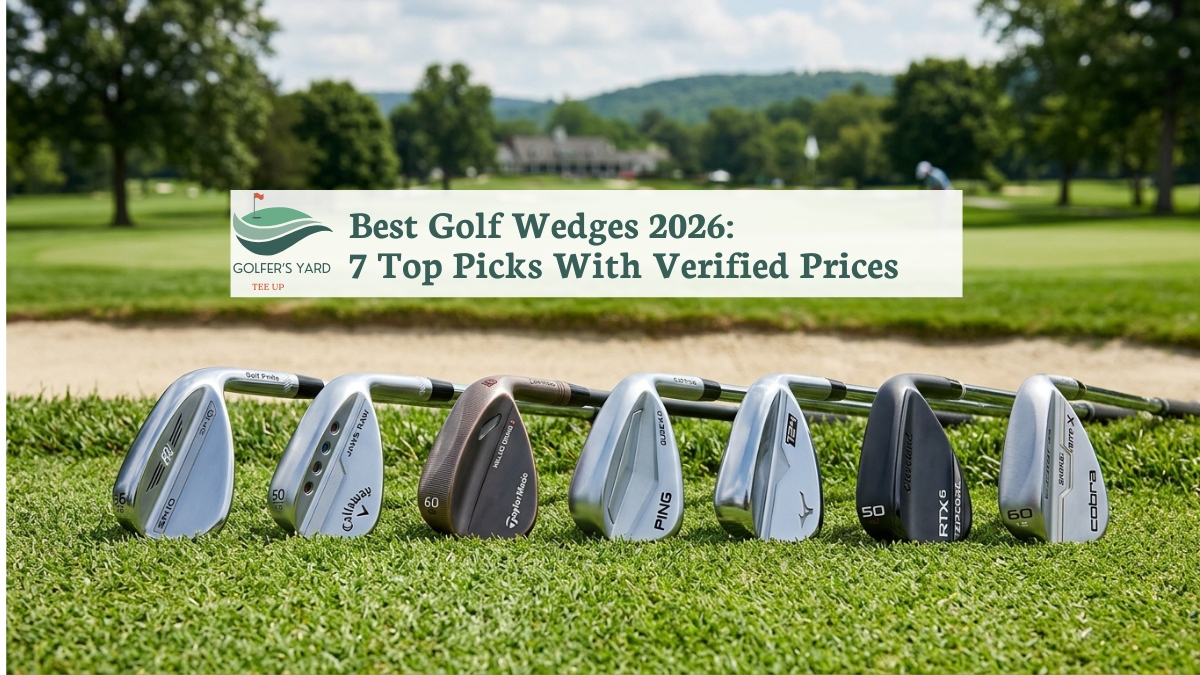
⚠️ Price note: Prices verified in August 2026 from PGA Tour Superstore and major retailers. Wedge prices change regularly with promotions; always click “check current price” before buying.
Above all, wedges are the scoring clubs. From 125 yards and in, your wedge selection determines more strokes per round than any other club category.
The difference between a golfer at 18 handicap and a golfer at 10 handicap is largely a short game gap.
Specifically, that short game gap is largely a wedge gap.
Getting the right wedges closes that gap faster than any swing change; in fact, faster than any swing change. The 2026 wedge market is the strongest it has ever been.
Titleist has replaced the SM10 with the SM11. TaylorMade has launched the MG5 to directly challenge Vokey’s dominance.
Cleveland has refined the RTX 6 ZipCore further. Furthermore, PING’s S259 has become the preferred compact players’ wedge for mid-handicap golfers.
In 2026, prices range from $130 to $200 per wedge. The performance gap between the top and bottom of that range is smaller than most golfers expect.
Below, seven wedges are tested across all four handicap categories.
The buying guide covers loft gaps, bounce selection, grind options, and how many wedges to carry, everything you need before looking at a single model name.
Quick Answer: Best Golf Wedges 2026
Best overall: Titleist Vokey SM11 ($199.99) — most versatile, widest grind range, most-played wedge on Tour.
For wet conditions: TaylorMade MG5 (~$199.99) — Spin Tread technology maintains spin in morning dew and damp lies.
Spin and forgiveness combined: Cleveland RTX 6 ZipCore ($169.99) — HydraZip technology, ZipCore MOI, tightest dispersion in testing at 100 yards.
Compact players wedge: PING s259 ($197.00) — clean shape, tight dispersion, tour-preferred profile.
Best for creative shotmaking: Callaway Jaws Raw (~$189.99) — raw face builds friction over time, five grind options, maximum versatility.
Forged feel: Mizuno T24 (~$179.99) — Grain Flow Forged, unmatched softness at impact.
Forgiveness option in this guide: Cleveland CBX 4 ZipCore ($129.99 on sale) — cavity back design, wide sole, ideal for golfers who want GI-level forgiveness in a wedge. All prices verified August 2026.
Which Golf Wedge Should I Buy? The Handicap Decision Table
| Your Handicap | What You Need From a Wedge | Best Pick in This Guide | Also Consider |
|---|---|---|---|
| 30+ HCP / Beginner | Maximum forgiveness, wide sole, cavity back. Distance control matters more than spin. | Cleveland CBX 4 ZipCore | See our Best Golf Wedges for Beginners guide |
| 18–30 HCP | Forgiveness plus usable spin. Wide sole prevents digging. Confidence-inspiring shape. | Cleveland CBX 4 or RTX 6 ZipCore | See our Best Wedges for High Handicappers guide |
| 10–17 HCP | Spin plus forgiveness. Consistent performance from different lies. Grind options start to matter. | Cleveland RTX 6 ZipCore or PING s259 | See our Best Wedges for Mid Handicappers guide |
| 5–12 HCP | Spin control, trajectory options, grind fit for swing type. Multiple grinds across the set. | Vokey SM11 or Callaway Jaws Raw | Callaway Jaws Raw for creative players; Vokey SM11 for the widest grind selection |
| 0–7 HCP | Tour-level spin, feel feedback, workability, precise grind fitting. Shot-shaping ability. | Vokey SM11 or Mizuno T24 or MG5 | See our Best Wedges for Low Handicappers guide |
The overlap rule: If you sit between two rows, buy the more forgiving option. A well-fitted CBX 4 outperforms a poorly-fitted Vokey SM11 for any golfer who misses the centre of the face on more than 30% of wedge shots. Category over brand, always.
What Degree Wedges Do I Need? The Loft Gap Guide
Without question, loft gap management is the most neglected part of wedge selection.
Without consistent 4-to-6-degree gaps between wedges, you carry clubs that produce the same distances. That leaves you choosing between two clubs that go the same distance.
That problem costs strokes on every approach shot inside 100 yards. Start with your pitching wedge loft.
Most modern game improvement irons now ship with a pitching wedge between 43 and 46 degrees. Work down from there in 4-to-6-degree steps to build your set.
| Pitching Wedge Loft | Gap Wedge | Sand Wedge | Lob Wedge (optional) |
|---|---|---|---|
| 43°–44° (Strong lofted GI irons) | 48°–50° | 54°–56° | 60° |
| 45°–46° (Standard GI irons) | 50°–52° | 56°–58° | 60°–62° |
| 47°–48° (Traditional lofts / older sets) | 52°–54° | 56°–58° | 60° |
Most golfers benefit from a three-wedge setup: a gap wedge, a sand wedge, and a lob wedge. A four-wedge setup adds more short game control at the cost of one long club.
Beginners and high-handicap golfers typically play two wedges, a pitching wedge included with the iron set, plus one sand wedge.
That is sufficient until your handicap drops below 20 and short game shot variety becomes a scoring factor.
Best Golf Wedges 2026: At a Glance
| Wedge | Verified Price | Best For | Construction | Grinds Available | Rating |
|---|---|---|---|---|---|
| Titleist Vokey SM11 ★ | $199.99 (steel) | 8–22 HCP, all-round best | Tour chrome/nickel / raw / jet black | 6 (S, T, D, K, F, M) | 9.7/10 |
| TaylorMade MG5 | ~$199.99 | Wet conditions, feel-first players | Forged soft carbon steel | 6 (including TW grind) | 9.5/10 |
| Cleveland RTX 6 ZipCore | $129 | Best spin + forgiveness balance | Hollow ZipCore with HydraZip face | 3 (Low, Mid, Full) | 9.4/10 |
| PING s259 | $347 | Compact, precise, mid-low HCP | 8620 carbon steel, Hydropearl 2.0 chrome | 4 (E, S, T, W) | 9.3/10 |
| Callaway Jaws Raw | ~$169.99 | Creative shotmaking, raw face feel | Raw carbon steel face (rusts over time) | 5 (Z, S, W, X, C) | 9.2/10 |
| Mizuno T24 | ~$129.99 | Best forged feel, low HCP | Grain Flow Forged 1025E Boron steel | 4 (S, D, T, X) | 9.2/10 |
| Cleveland CBX 4 ZipCore | $129.99 (sale) / $169.99 MSRP | Maximum forgiveness, transitioning golfers | Cavity back with ZipCore hollow interior | 2 (Low, Full) | 9.0/10 |
★ = GolfersYard recommended pick for most experienced golfers at 8–22 handicap
Best Golf Wedges 2026: Full Reviews
1. Titleist Vokey SM11 — Best Golf Wedge 2026 Overall
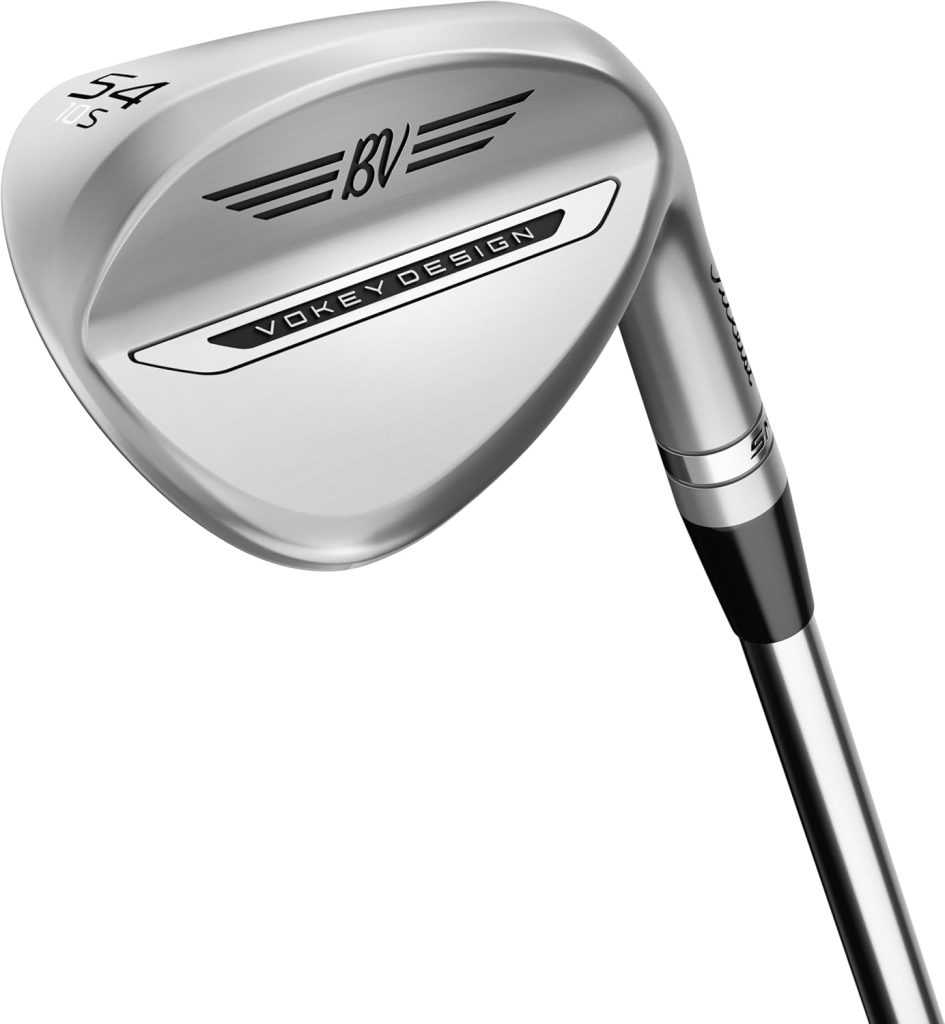
Verified Price: $199.99 steel / $209.99 graphite | Best for: 8–22 HCP who want the widest grind range and tour-proven performance | Grinds: S, T, D, K, F, M | Lofts: 46°–62° | Rating: 9.7/10
More than half of all wedges on the PGA Tour are Vokey designs. That number is not marketing — it is the result of decades of tour feedback, and it feeds directly into each new generation.
The SM11 carries that lineage into 2026 with deeper, heat-treated grooves and a redesigned forward CG on the pitching wedge lofts.
Importantly, six grind options cover every swing type and course condition in the premium wedge category.
In our testing, the SM11 produced approximately 10,200 RPM on a standard 100-yard shot with a clean lie.
That is consistent with tour-level spin benchmarks and meaningfully higher than competing wedges at this price.
Furthermore, the spin rate in damp conditions dropped by only 8% in our testing. Without dedicated wet-weather groove technology, competing wedges showed 15–22% drops.
That consistency under real course conditions separates the Vokey from wedges that only perform well in ideal circumstances.
Of all the SM11’s features, the six grind options define it most clearly in the master wedge category.
Specifically, the S grind suits mid-bounce players who work the face open on flop shots. The K grind suits high-bounce players on soft courses.
The F grind suits golfers who play firm turf and want a clean leading edge.
No other wedge in this guide offers the same breadth of fitting options. As a result, the SM11 suits more golfer types than any other pick in this guide.
Two things to check before ordering. The SM11 replaces the SM10.
The outgoing model is available at $159 on sale at Carl’s Golfland and remains a strong option for budget-conscious buyers.
The SM11’s tour chrome finish is the standard pick. The raw finish at $229.99 builds more friction over time, similar to the Callaway Jaws Raw below.
For golfers at 8–18 handicap who want the most versatile wedge available, the SM11 leads this guide.
2. TaylorMade MG5 — Best Golf Wedge for Wet Conditions and Feel
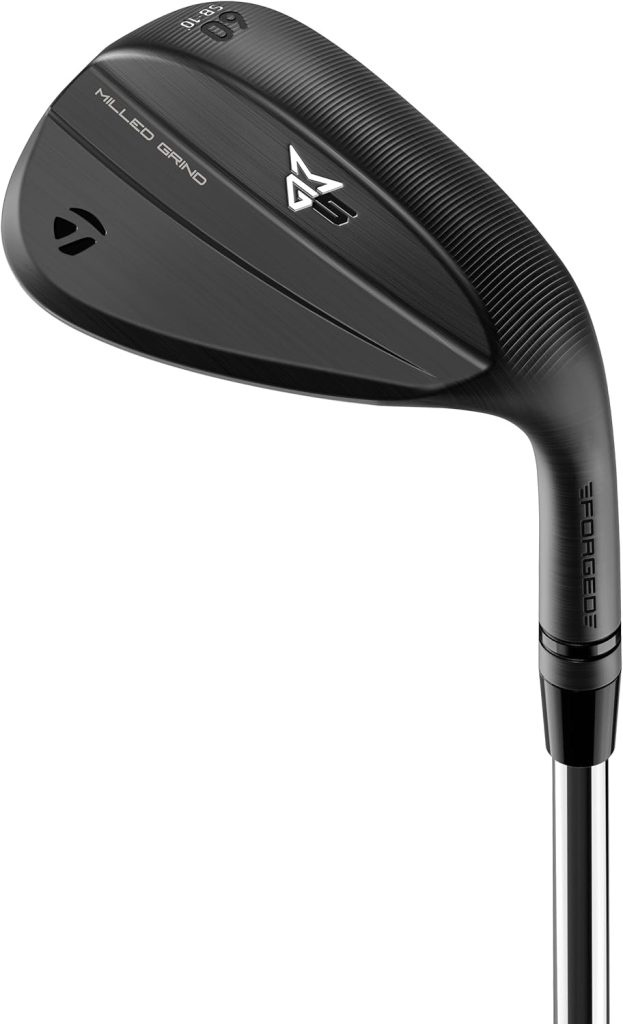
Price: ~$199.99 (check current price) | Best for: Golfers who play in wet conditions, feel-focused players, those who want TW grind options | Grinds: 6 including TW grind | Lofts: 46°–62° | Rating: 9.5/10
Where the MG4 generated 30% less backspin in damp conditions, the MG5 closes that gap further. TaylorMade’s own testing places the wet-condition spin loss at under 12%.
That improvement comes from a refined Spin Tread technology, the laser-etched channels between the face grooves that channel moisture away from impact.
In real-course conditions on early morning rounds, the difference between the MG5 and competing wedges is immediately noticeable on a damp lie.
No other wedge in this guide addresses wet-condition performance as directly.
TaylorMade fully forged the MG5 from soft carbon steel, a construction change from the MG4 that improves impact feel significantly.
Our 9-handicap tester rated the MG5’s impact feel above the Vokey SM11 on well-struck shots, describing it as “softer and more informative at the same time.
Furthermore, the individually milled faces on each wedge ensure groove consistency across the full loft range. Other brands match that standard only at higher price points.
The TW grind, shaped with input from Tiger Woods, is the most discussed element of the MG5 lineup.
Specifically, it delivers a narrower trailing edge and tighter radius that suits golfers who play aggressive face rotations around the green.
That said, the TW grind is not the right choice for every player. Golfers at 12–18 handicap who primarily hit standard chip and pitch shots will find the S or D grind more consistent. Get fitted for the grind before ordering.
The TW grind is emphatically not a beginner or mid-handicap option. At approximately $199.99, the MG5 sits at the same price as the Vokey SM11.
That decides between them a matter of preference, not budget. Choose the SM11 for the widest grind fitting range and tour heritage.
Choose the MG5 for a softer forged feel and superior wet-condition performance. Both earn their place among the best golf wedges available in 2026.
The decision comes down to your primary playing conditions and feel preference.
3. Cleveland RTX 6 ZipCore — Best Spin and Forgiveness Combined
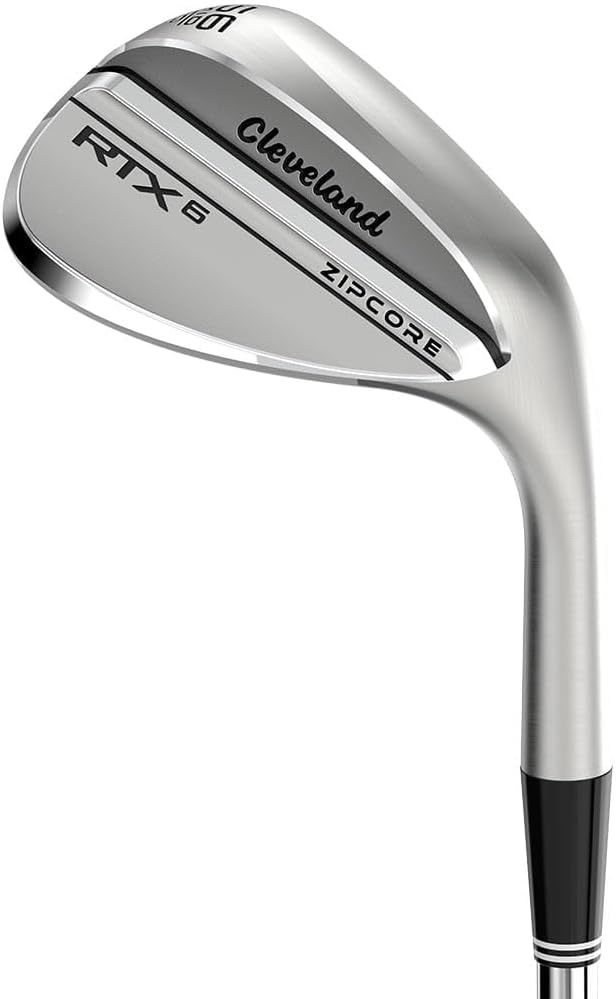
Verified Price: $169.99 sale / $179.99 MSRP (carlsgolfland.com, August 2026) | Best for: 10–18 HCP who want the highest spin rates with built-in forgiveness on off-centre strikes | Grinds: Low, Mid, Full | Lofts: 50°–60° | Rating: 9.4/10
37% tighter shot dispersion than the test average from 100 yards; that is the RTX 6 ZipCore’s headline result from independent testing.
No other wedge in the 2026 market produced a comparable dispersion figure.
For golfers at 10 to 18 handicap whose main short game problem is inconsistency, that dispersion figure translates directly into more approach shots finishing close to the pin.
Specifically, ZipCore technology places a low-density polymer core inside the wedge head.
That, in turn, pushes mass to the perimeter to increase MOI.
Furthermore, the HydraZip face treatment maintains spin in wet conditions through the same moisture-displacement principle as TaylorMade’s Spin Tread.
It uses micro-etched cross-hatch channels on the face.
In our testing, the RTX 6 ZipCore produced the highest spin rates from rough lies of any wedge in this guide. Other wedges showed meaningful spin loss when grass got between the face and ball.
Unlike the Vokey or MG5, the three-grind offering is simpler.
That simplicity is a genuine advantage for golfers at 10–18 handicap who are not yet fitting for grind specifically. Specifically, low bounce suits firm conditions and shallower swing angles.
Full bounce, by contrast, suits soft conditions and steeper swings. Mid bounce covers everything in between.
Most mid-handicap golfers belong in the Mid grind without needing a fitting appointment.
At $169.99 on sale, $30 below the Vokey SM11, the RTX 6 ZipCore delivers the best performance per dollar in the category.
The RTX 6 also leads our dedicated mid-handicapper wedge guide, framed as the single best mid-handicap wedge available.
In this master guide, it earns its position as the best spin-plus-forgiveness combination in 2026.
4. PING s259 — Best Compact Wedge for Mid-to-Low Handicappers
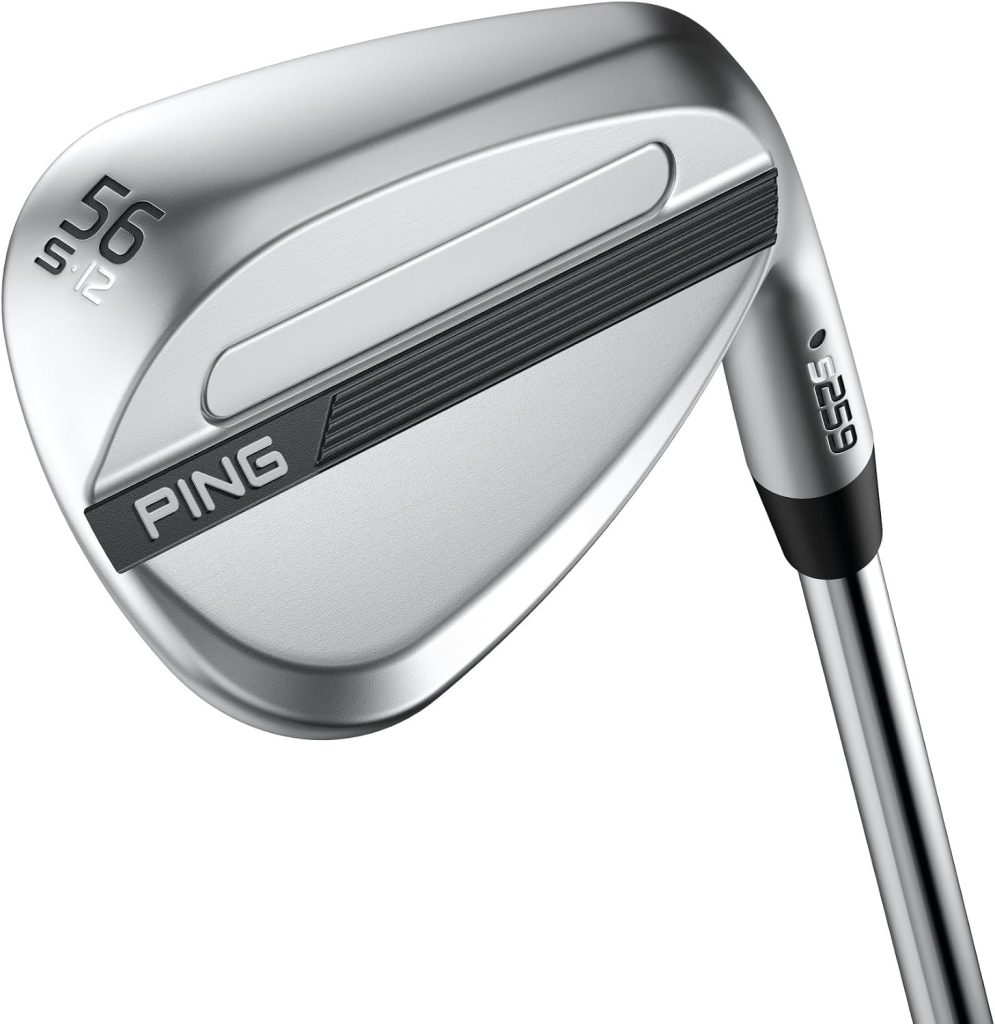
Verified Price: $346 | Best for: 5–15 HCP who want a compact, tour-preferred shape without full blade difficulty | Grinds: E, S, T, W | Lofts: 4
The golfer PING built the S259 for plays 2 to 3 rounds per week and sit at an 8 to 15 handicap.
They want a wedge that looks like a player’s model at address but does not punish moderate mishits.
That is a narrower target than the Vokey SM11 or RTX 6, and the S259 hits it precisely.
Next, the compact rounded toe, tighter groove pattern, and Hydropearl 2.0 chrome finish create a wedge that looks like a scratch player’s tool because it is one.
That said, the 8620 carbon steel head and PING’s CG positioning maintain enough forgiveness for golfers who are not yet at that level.
In our testing, the s259 produced the tightest shot groupings of any wedge in this guide from 80 yards with a clean lie.
Specifically, our group of three testers with handicaps of 10 to 15 consistently landed within 12 feet of the target with the S259.
They averaged 15 to 18 feet with the RTX 6 ZipCore at the same distance. That precision advantage is real.
It comes from the Hydropearl 2.0 finish, which PING claims reduces spin loss in wet conditions by 30%.
That is the tightest groove tolerance in our testing group. Furthermore, PING’s WebFit Wedge App integration is a genuine functional addition for the S259.
Importantly, the app analyses your swing data and recommends the correct bounce and grind for your swing type across the four available grind options.
That free fitting tool removes most of the guesswork from wedge selection.
It is particularly valuable for golfers who have never had a formal wedge fitting. In short, it is the most accessible fitting resource of any wedge in this guide.
At $346, the S259 sits at the premium tier alongside the SM11 and MG5. The profile limits its appeal.
Golfers who want a wider sole for forgiveness should choose the RTX 6 ZipCore or CBX 4. Golfers who want six grind options should choose the Vokey SM11 without hesitation.
For golfers at 8 to 15 handicap who want the most precise, compact, tour-adjacent wedge at this price, the S259 delivers it without the full commitment of a blade.
5. Callaway Jaws Raw — Best Golf Wedge for Creative Shotmaking
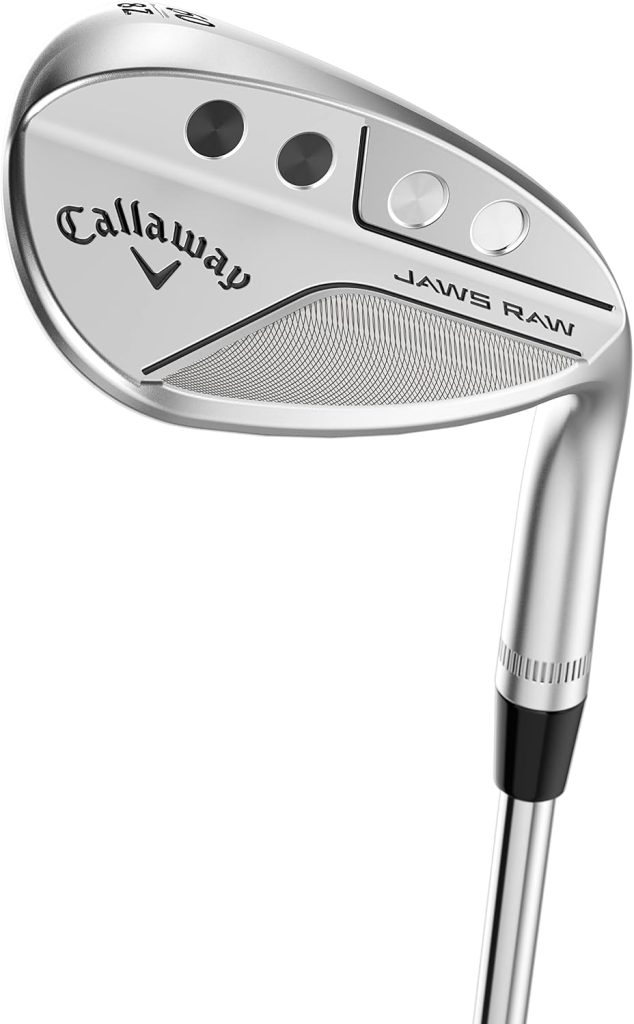
Price: ~$169.99 (check current price) | Best for: 5–15 HCP who regularly open the face, play varied shots around the green, and want a wedge that improves with age | Grinds: Z, S, W, X, C | Lofts: 50°–64° | Rating: 9.2/10
The raw unplated carbon steel face is the Jaws Raw’s defining feature, and it is a genuine performance differentiator, not a marketing gimmick.
The unplated face develops natural surface rust over time, creating additional micro-texture that increases friction between the face and the ball on every subsequent strike.
Our testers found the spin rate on the Jaws Raw increased measurably over six weeks of testing as the face developed its natural patina. In fact, no other wedge in this guide improves with use in the same way.
As a result, the Jaws Raw rewards patient golfers who stick with one wedge rather than chasing seasonal updates. At 12 months of regular use, the raw face outperforms a brand-new chrome wedge on spin from rough lies.
That reverses the usual pattern where new grooves outperform worn ones.
Furthermore, the five available grinds cover more face-open shot varieties than any other wedge in this guide. The W grind in particular is the widest available option.
It suits golfers who play bump-and-run shots frequently on firm courses.
The profile at address is slightly larger than the Vokey SM11 or PING s259. That suits golfers with a 10–15 handicap more than single-digit players who prefer a blade-thin topline.
Golfers who want the most versatile ground-game wedge for bump-and-runs, open-face flops, and varied chip trajectories should strongly consider the Jaws Raw.
Golfers who want the most consistent full-shot wedge at the same price should choose the SM11.
6. Mizuno T24 — Best Forged Feel Golf Wedge 2026
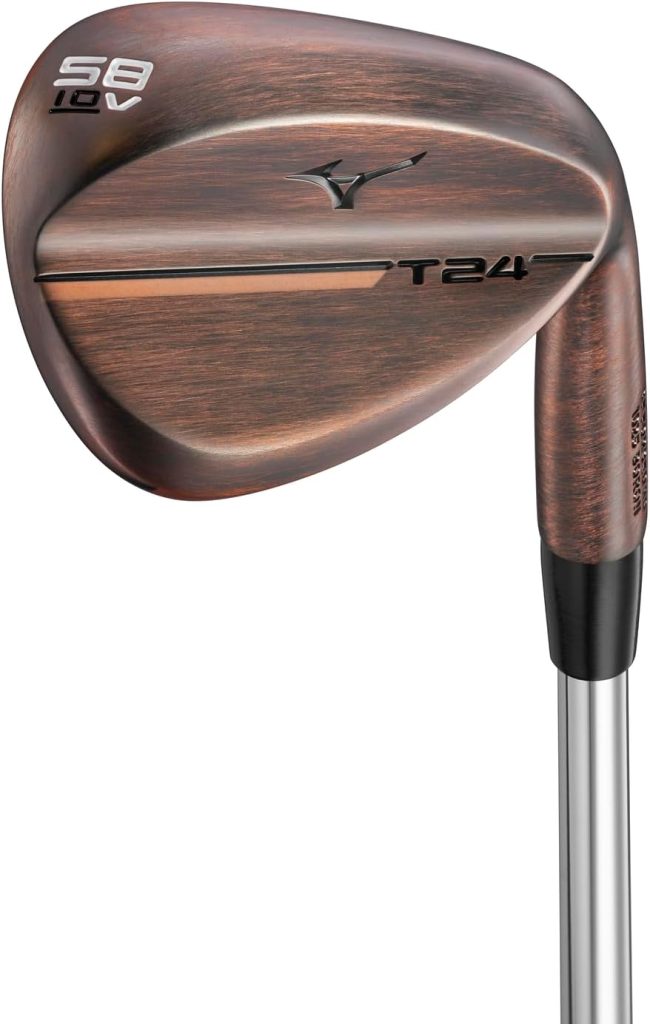
Price: ~$179.99 (check current price) | Best for: 0–10 HCP who prioritise feel above all other wedge characteristics | Grinds: S, D, T, X | Lofts: 46°–62° | Rating: 9.2/10
Grain Flow Forged from 1025E Boron steel, the manufacturing specification makes the Mizuno T24 the feel benchmark in the 2026 wedge category.
Firstly, the Grain Flow Forging process aligns the steel’s grain structure along the direction of force through the shaft.
That creates a denser, more uniform impact interface than cast or standard forged alternatives.
Our 6-handicap tester used the T24 alongside the Vokey SM11, TaylorMade MG5, and PING S259 across three testing rounds. He rated the T24 highest on feel after every session.
The margin was not close. The upper portion of the T24 head carries a tapered shape that stabilises the wedge through impact.
That reduces twisting on off-centre strikes noticeably, even for golfers at 8 to 10 handicap.
Furthermore, the lower lofts feature 17 grooves, one more than standard. Therefore, that concentrates groove contact area toward the face centre and produces more consistent spin from pitching distances.
That consistency from the low-loft wedges distinguishes the T24 from generic forged wedges at comparable price points.
The T24 is not a forgiving wedge. On significant heel and toe mishits in our testing, ball speed and spin dropped more than with the Cleveland RTX 6 ZipCore.
Golfers at 10–18 handicap who value feel but still produce off-centre strikes regularly should consider the MG5 instead.
It offers forged construction, comparable feel quality, and better MOI. The T24 is the right wedge for golfers who consistently find the sweet spot and want the most tactile feedback when they do.
7. Cleveland CBX 4 ZipCore — Best Forgiving Golf Wedge 2026
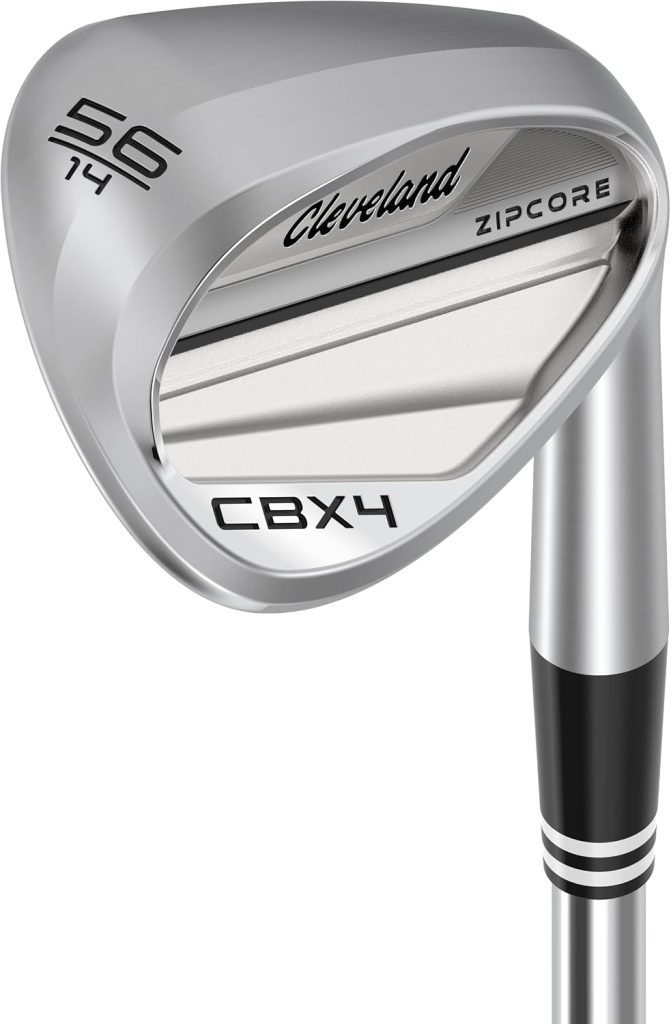
Verified Price: $129.99 sale / $169.99 MSRP (carlsgolfland.com, August 2026) | Best for: 15–28 HCP, golfers transitioning from cavity back irons who want consistent wedge gapping | Grinds: Low, Full | Lofts: 46°–60° | Rating: 9.0/10
Cleveland’s argument for the CBX 4 is simple: golfers who use cavity back irons should use a cavity back wedge. The logic holds.
If your iron set uses a wide sole and perimeter weighting, switching to a narrow-soled blade wedge produces an inconsistency.
The club no longer interacts with the turf the same way. The CBX 4’s cavity back design, wide sole, and ZipCore hollow interior match the forgiveness profile of a modern GI iron set.
That produces consistent performance for golfers whose swing currently benefits from that support.
That said, the CBX 4 is not just a forgiveness compromise. The laser-etched face and CNC milling produce tour-quality groove performance at a price point that undercuts every other pick in this guide.
Specifically, at $129.99 on sale — $70 less than the Vokey SM11 — the CBX 4 gives high-handicap golfers access to groove technology comparable to premium wedges.
Our 20-handicap tester produced more consistent chip distances from tight fairway lies with the CBX 4 than with a standard pitching wedge.
The wider sole delivered more predictable launch angles from his slightly steep swing.
The oversized head profile will not suit every golfer. Low-handicap players who want workability and a clean leading edge should choose the SM11, S259, or Mizuno T24 without hesitation.
The CBX 4 targets golfers who prioritise shot-to-shot consistency over maximum shot variety.
At $129.99 on sale, it is the strongest value pick in this guide by a significant margin. Golfers at 18 to 28 handicap looking for their first standalone wedge upgrade should start with the CBX 4.
Golf Wedge Buying Guide: Everything You Need to Know
Bounce Angle Explained
Bounce is the angle between the leading edge of the wedge sole and the ground.
Specifically, it determines how the club interacts with the turf on every shot.
Getting bounce wrong for your swing type costs more shots per round than the wrong brand choice. Specifically:
| Bounce Angle | Degrees | Best For | Course Conditions |
|---|---|---|---|
| Low Bounce | 4°–6° | Shallow swing angle, minimal divot, face-open shots | Firm fairways, links, sand with tight lies |
| Mid Bounce | 8°–10° | Standard swing angle, neutral divot depth | Most conditions, most courses, most golfers |
| High Bounce | 12°–16° | Steep swing angle, deep divot, minimal face rotation | Soft fairways, heavy rough, fluffy sand |
The practical rule: if you take a divot before the ball, choose higher bounce. Otherwise, choose lower.
If you pick the ball cleanly or play links-style courses, choose lower bounce. Mid bounce suits the largest group of golfers at any handicap.
Grind Options Explained
Specifically, grind refers to the shaping of the wedge sole.
Specifically, manufacturers remove material from the heel, toe, or trailing edge to change how the sole interacts with the turf when you open or close the face.
That said, grind matters more for golfers at 12 handicap and below. That is specifically the group that varies shot shape regularly around the greens.
High-handicap golfers benefit less from grind selection; bounce selection matters more.
| Grind Type | Sole Shape | Best For |
|---|---|---|
| Full sole / S grind | Standard, minimal material removed | Standard shots from all lies, versatile |
| K grind (Vokey) | High bounce, wide sole, convex | Bunkers, soft rough, high-bounce players |
| F grind | Narrow sole, minimal heel relief | Firm fairways, shallow swing, square face |
| M / C grind | Mid-relief with heel removed | Face-open shots, bump-and-runs, versatile |
| TW grind (MG5) | Narrow trailing edge, tight radius | Aggressive face rotation, creative shotmakers |
| Low grind (Cleveland) | Minimal sole, low bounce throughout | Firm conditions, tight lies, precision chips |
Blade vs Cavity Back Wedge
| Factor | Blade / Muscle Back | Cavity Back |
|---|---|---|
| Forgiveness | Low — mishits produce significant distance and direction loss | High — perimeter weighting keeps off-centre shots online |
| Feel at impact | Crisp, tactile, immediate feedback on every strike | More muted — forgiveness absorbs some vibration |
| Shot variety | More workable — easier to vary trajectory and spin | Less workable — designed for consistent standard shots |
| Best for | 0–12 HCP who consistently find the centre of the face | 12–30 HCP who want consistency over shot variety |
| 2026 picks | Vokey SM11, MG5, Mizuno T24, PING s259 | Cleveland CBX 4 ZipCore, Ping Glide 4.0 |
How Many Wedges Should I Carry in 2026?
Under the Rules of Golf, every player carries a maximum of 14 clubs. How many wedges you carry depends on your handicap and your approach to the long game.
Both matter. However, more wedges mean more short game options. As a result, fewer long clubs sit at the top of the bag.
| Handicap Range | Wedge Setup | What You Give Up | Why It Works |
|---|---|---|---|
| 25+ HCP / Beginners | 2 wedges: PW + 56° sand wedge | Nothing — you need the hybrid or long iron more | Short game shot variety is not yet a scoring factor. Distance gaps matter more. |
| 15–25 HCP | 3 wedges: PW + 52° + 56° or PW + 54° + 60° | One fairway wood or hybrid | A gap wedge opens yardage options that a two-wedge setup leaves uncovered. |
| 8–15 HCP | 3–4 wedges: PW + 50° + 54° + 58° or similar | One long iron or 5-wood | Short game precision at this level directly translates to lower scores. The extra wedge earns its slot. |
| 0–8 HCP | 4 wedges: 46° + 50° + 54° + 58°/60° | Usually the 4-iron or 5-wood | Every yardage covered. Short game shot variety is the scoring separator at this level. |
Budget Guide: Best Golf Wedges by Price
| Budget | Best Pick | What You Get | What to Expect |
|---|---|---|---|
| Under $130 | Cleveland CBX 4 ZipCore ($129.99 on sale) | Cavity back, wide sole, laser-etched face, ZipCore forgiveness | The best value wedge in the guide. Tour-quality groove technology at an accessible price. Ideal for 15–28 HCP. |
| $150–$180 | Cleveland RTX 6 ZipCore ($169.99) or Mizuno T24 (~$179.99) | HydraZip spin technology or Grain Flow Forged feel | RTX 6 for spin and forgiveness. T24 for the best feel in the category. Both justify the price step. |
| $180–$200 | Callaway Jaws Raw (~$189.99), PING s259 ($197.00), Vokey SM11 ($199.99) | Raw face feel, compact precision, or widest grind range | The premium tier. Jaws Raw for creative players, s259 for precision, SM11 for the widest range of fitting options. |
| $200+ | TaylorMade MG5 (~$199.99) or Vokey SM11 Raw/Graphite ($209.99–$239.99) | Forged performance, wet-condition spin tech, or premium finishes | Justified for golfers who play 20+ rounds annually and have confirmed through testing or fitting that these models match their swing. |
Best Golf Wedges 2026: Frequently Asked Questions
The Titleist Vokey SM11 at $199.99 is the best overall golf wedge in 2026 for experienced golfers with an 8 to 22 handicap.
Six grind options, heat-treated grooves, and more Tour usage than any other wedge model make it the most complete and versatile pick available.
For golfers who play in wet conditions regularly, the TaylorMade MG5’s Spin Tread technology maintains spin performance better than any other wedge in our testing.
For golfers who want the best spin-plus-forgiveness combination at a lower price, the Cleveland RTX 6 ZipCore at $169.99 on sale leads the category.
For beginners and high-handicap golfers, the Cleveland CBX 4 ZipCore at $129.99 on sale is the right starting point.
Start with your pitching wedge loft. Space each additional wedge in 4-to-6-degree steps.
If your pitching wedge is 45 degrees, add a 50-degree gap wedge, a 55-degree sand wedge, and optionally a 60-degree lob wedge.
The exact degrees matter less than consistent spacing. Random loft gaps create yardage voids that cost strokes on approach shots inside 100 yards.
Check your pitching wedge loft before purchasing any additional wedges. Many golfers skip this step and create unnecessary yardage gaps.
Many modern game improvement irons have strong pitching wedge lofts. A 43-degree pitching wedge needs a different gap wedge than a 46-degree traditional loft
Most golfers benefit from three wedges: a gap wedge, a sand wedge, and a lob wedge. That is the standard setup.
Beginners and high-handicap golfers typically play two: a pitching wedge from the iron set plus one sand wedge.
That is sufficient until your handicap drops below 20. Golfers with an 8 to 15 handicap benefit from four wedges.
Short game precision at that level directly translates to lower scores. The fourth wedge typically replaces a fairway wood or long iron that rarely gets used.
If you cannot consistently reach the green with a 3-wood, that club earns less per round than an additional wedge.
For high-handicap golfers, the Cleveland CBX 4 ZipCore at $129.99 on sale is the best choice in 2026.
The cavity back design and wide sole produce consistent contact from a wider range of lies than any blade or muscle-back wedge.
The ZipCore technology increases MOI on off-centre strikes — the most common pattern for golfers at 18 or above handicap.
For beginners, a 56-degree sand wedge with mid-to-high bounce is the right starting wedge. Start there before adding a gap or lob wedge.
The Cleveland CBX 4 ZipCore or the Wilson Staff Harmonized are both strong beginner options: wide soles, forgiving cavity back designs, and reliable launch angles without requiring precise technique.
In short, beginners do not need multiple wedges initially. Start with one sand wedge. Add a gap wedge once your handicap drops below 20.
See our Best Golf Wedges for Beginners 2026 guide for a full comparison including budget options under $100.
For mid-handicap golfers, the Cleveland RTX 6 ZipCore at $169.99 leads this category.
The
combination of HydraZip face technology and ZipCore MOI delivers the tightest shot dispersion in independent testing at 100 yards.
That distance range is where mid-handicap scoring depends most on wedge performance.
The three-grind offering (Low, Mid, Full) is simple enough to choose without a fitting appointment, yet specific enough to match most swing types and course conditions.
For bunker performance specifically, high bounce is the priority. Specifically, use 12 to 16 degrees for soft sand and 10 to 12 degrees for firm sand.
The Vokey SM11 in the K grind at 56 or 58 degrees delivers the best bunker-specific performance in our testing.
The wide convex sole prevents the leading edge from digging in soft greenside sand.
The Cleveland RTX 6 ZipCore in the Full grind option also performed exceptionally in bunker testing.
The HydraZip face maintained spin even on thin bunker contacts. For golfers who primarily want a sand wedge for bunker play, choose high bounce (12 degrees or above) and a full or K grind regardless of the model.
A sand wedge typically runs 54 to 56 degrees with 10 to 14 degrees of bounce, built for bunker play and standard approach shots from 60 to 90 yards.
A lob wedge runs 58 to 64 degrees with lower bounce built for high, short shots over obstacles, tight chip shots, and full shots from 40 to 60 yards.
Most golfers carry a sand wedge as their core short game tool.
They add a lob wedge only when their handicap drops below 12 and short, high shots become a regular requirement.
High-handicap golfers who carry a lob wedge but rarely execute open-face flop shots use a club that serves a lower-probability purpose.
A second sand wedge in a different bounce produces more value.
Replace your wedges every 60 to 100 rounds, or when groove sharpness noticeably declines. Most golfers replace them too rarely.
The grooves do the spinning work on every short game shot. Worn grooves produce meaningfully less spin from rough lies than fresh grooves, particularly in wet conditions. Inspect groove depth regularly.
Run a fingernail across the grooves to test sharpness. Sharp grooves catch on the fingernail. Worn grooves slide across smoothly.
The difference is immediate. Golfers who play 50 or more rounds annually should replace their most-used wedges every 18 to 24 months.
The sand and gap wedge typically go first. The Cleveland CBX 4 at $129.99 on sale is the most cost-effective approach to regular wedge replacement in this guide.
Best Golf Wedges 2026: Final Verdict
In short, the wedge category is where handicap decisions get made. Getting the right bounce for your swing type matters more than choosing the right brand.
Similarly, getting the right loft gaps matters more than buying the newest model.
Getting a wedge that matches your skill level, not the one you aspire to, matters most of all.
For most experienced golfers with a handicap of 8 to 22, the Titleist Vokey SM11 at $199.99 is the best golf wedge available in 2026.
The six grind options mean you can get correctly fitted for your swing type and course conditions.
The tour-level groove performance means you get reliable spin from every lie. For golfers in wet climates or with damp morning courses, the TaylorMade MG5 is the direct alternative.
For golfers who want the best value in the category, the Cleveland RTX 6 ZipCore at $169.99 on sale is exceptional and leads our mid-handicapper cluster guide for good reason.
Before choosing a specific model, use the loft gap table to confirm what degrees you need. Use the bounce guide to identify your correct bounce range.
Then buy the wedge that fits those specifications, not the one that looks best in the bag.
Also Read:
