

This article contains affiliate links. If you buy through them, we may earn a small commission at no extra cost to you. As an Amazon Associate, we earn from qualifying purchases. Read our affiliate disclosure.
You love walking the course, but by the 14th hole your back aches and your legs feel the hills.
So I spent a full season walking with electric push carts. My goal: find the ones that take the work out of 18 holes.
From April to October 2026, I walked 52 rounds with these carts. Half were on flat parkland, half on a hilly course.
After all that, my best electric golf push cart for most golfers is the Motocaddy M7 GPS Remote.
Although it lists at $2,099, it was about $1,699 on 26 November during Black Friday week.
However, if you want a cart that follows you, the Stewart Q Follow is the pick, on sale at $2,599.
Then, on a budget, the MGI Zip X5 costs $999 and covers up to 36 holes on a charge.
Meanwhile, the Alphard Club Booster V2Pro turns the push cart you already own into a remote cart for $749.
Also, our best golf push carts guide covers manual carts.
Quick Answer: The Best Electric Golf Push Carts
Best overall: Motocaddy M7 GPS Remote, $2,099 list (about $1,699 this week)
Best follow mode: Stewart Q Follow, $2,599 sale (list $3,249)
Best premium remote with GPS: Motocaddy M-Tech GPS Remote, $2,399
Best remote without GPS: M7 Remote by Motocaddy, $1,699 list (about $1,399 this week)
Best GPS without a remote: Motocaddy M5 GPS DHC, $1,499 list (about $1,199 this week)
Best straight tracking: MGI Zip Navigator, $1,599
Best entry-level: Motocaddy M1 DHC, $1,099 list (about $899 this week)
Best under $1,000: MGI Zip X5, $999
Best conversion kit: Alphard Club Booster V2Pro, $749 sale (list $950)
Best budget remote: Bat-Caddy X3R Lithium, $849.95 sale
The Problems an Electric Push Cart Has to Solve
Most golfers do not want “an electric cart”. Instead, they want to keep walking without paying for it on the back nine.
- Tired legs on hills: pushing 30 pounds of bag up a slope drains you before the closing holes.
- Back and knee pain: pulling or carrying a bag for 4 miles makes old injuries flare up.
- A dead battery: a cart that dies on the 15th hole is worse than no cart at all.
- Runaway downhill: on steep slopes, a cart can pull away from you or roll into a pond.
- The car boot: many carts fold too big to fit next to your clubs.
- Drifting off line: remote carts that veer left or right end up in bunkers.
So every cart below solves at least one of these problems. If a cart did not fix one better than the rest, I left it out.
How I Tested These Electric Push Carts
I walk almost every round, so a cart has to earn its place over a full season.
Between April and October 2026, each cart got at least four 18-hole rounds. Meanwhile, my top three got 10 or more.
Specifically, I used two courses: a flat parkland course and a hilly course with three steep climbs.
Also, on every round, I checked the same five things, one for each main problem above.
- Hills: first, I noted whether the cart slowed down on the steepest climb with a full bag.
- Battery: then, I tracked the battery meter at the turn and on the 18th green.
- Downhill: next, on the steepest descent, I checked whether the cart held its speed or ran away.
- Tracking: after that, with remote carts, I sent the cart 50 yards down the fairway and noted any drift.
- Fold: finally, I timed the fold and checked whether it fit in my car boot beside my clubs.
Best Electric Golf Push Carts Compared
Before the reviews, here is every pick side by side, with the problem each one solves.
| Cart | Solves | Control | GPS | Price (26 Nov) |
|---|---|---|---|---|
| Motocaddy M7 GPS Remote | Hills, runaway downhill | Remote | Yes | $2,099 list, about $1,699 sale |
| Stewart Q Follow | Hands-free walking | Follow and remote | No | $2,599 sale |
| Motocaddy M-Tech GPS Remote | Yardages without a device | Remote | Yes | $2,399 |
| Motocaddy M7 Remote | Hills, with no GPS to pay for | Remote | No | $1,699 list, about $1,399 sale |
| Motocaddy M5 GPS DHC | Yardages on a push cart | Push with speed control | Yes | $1,499 list, about $1,199 sale |
| MGI Zip Navigator | Drifting off line | Remote | No | $1,599 |
| Motocaddy M1 DHC | A first electric cart | Push with speed control | No | $1,099 list, about $899 sale |
| MGI Zip X5 | Budget, 36-hole battery | Non-remote | No | $999 |
| Alphard Club Booster V2Pro | Keeping the cart you own | Remote | No | $749 sale |
| Bat-Caddy X3R Lithium | A cheap remote cart | Remote | No | $849.95 sale |
The 10 Best Electric Golf Push Carts for 2026
1. Motocaddy M7 GPS Remote: Best Overall
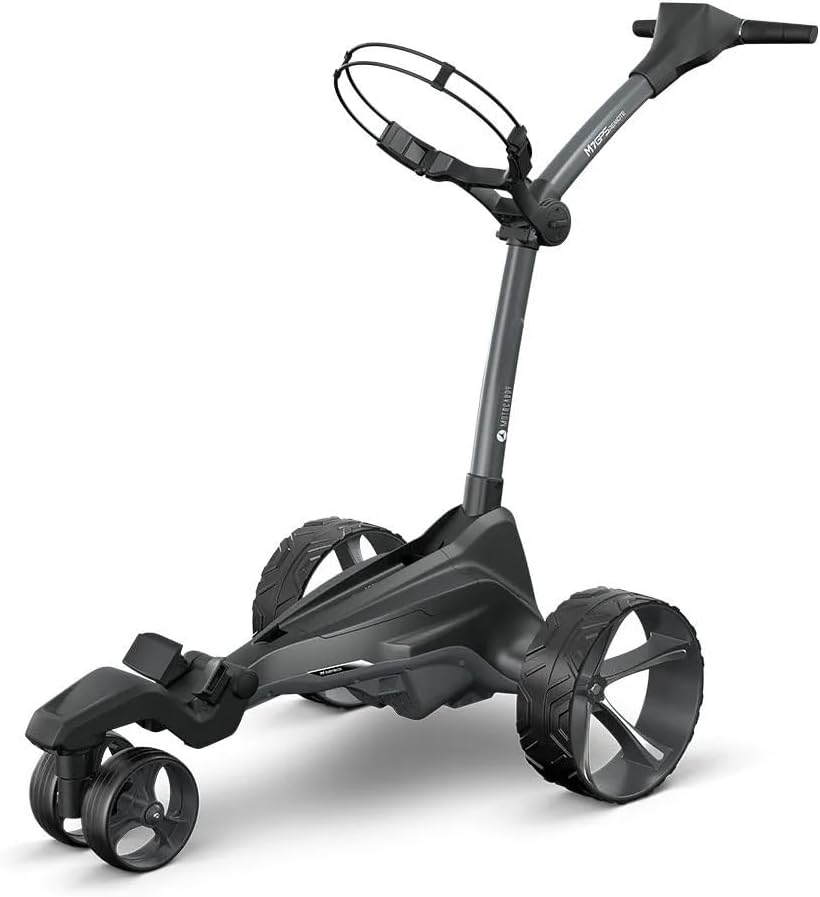
Price: $2,099 list (about $1,699 on 26 Nov) | Control: remote, over 100 m range | GPS: 40,000+ courses | Downhill: automatic control | Warranty: 2 years cart and charger, 5 years lithium battery
The problem it solves: on a hilly course, you want the cart to do the climbing. You also want yardages without a phone or watch.
How it did on my rounds: I walked 12 rounds with the M7 GPS Remote, eight of them on the hilly course. It climbed every slope at the same pace with a full bag. Even so, the battery still showed two bars on the 18th green.
Also, I left my rangefinder in the bag for most rounds, because the handset showed front, middle and back yardages.
Specifically, Motocaddy’s 2026 M7 GPS Remote covers more than 40,000 courses with full-hole mapping and a movable target.
In addition, its Automatic Downhill Control keeps the cart at a steady speed on descents.
Meanwhile, the remote works at over 100 metres. Motocaddy covers the cart and charger for 24 months and the lithium battery for 60 months.
Who it suits: walkers on hilly courses who want remote control and built-in GPS in one cart.
Skip if: you already own a GPS watch you like, since the M7 Remote saves you $400.
Pros – Remote and GPS in one cart – Steady speed on descents – 5-year battery warranty
Cons – Full price is $2,099 – Heavier than a manual cart
2. Stewart Q Follow: Best Follow-Mode Cart
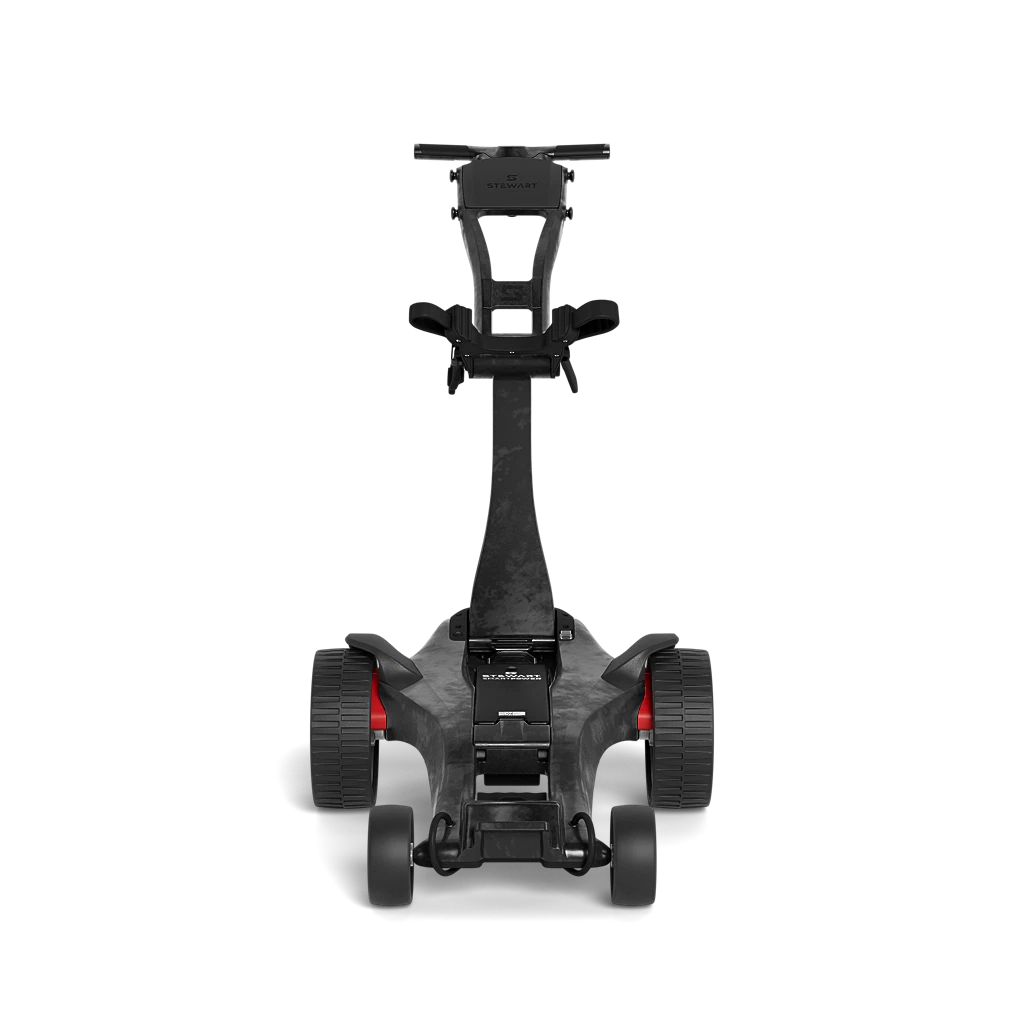
Price: $2,599 sale (list $3,249) | Control: follow and remote | Battery: Base 230Wh or Max 307Wh | GPS: no
The problem it solves: even a remote cart needs your hands on the handset, and you want to walk free.
How it did on my rounds: I walked 10 rounds with the Q Follow in follow mode. It stayed a few steps behind me down every fairway, so I walked to my ball with empty hands.
However, on narrow paths between bunkers, I switched to the remote to steer it myself.
Notably, Stewart calls the Q Follow a compact follow and remote golf cart with a composite chassis. Also, you choose a Base 230Wh or a Max 307Wh battery.
Better still, this week it is on sale at $2,599, down from $3,249.
Who it suits: golfers who walk two or more times a week and want hands-free rounds.
Skip if: you want GPS on the cart, or your budget is under $2,000.
Pros – Follows you hands-free – Remote as a backup – Two battery sizes
Cons – Most expensive pick here – No built-in GPS
3. Motocaddy M-Tech GPS Remote: Best Premium Remote With GPS
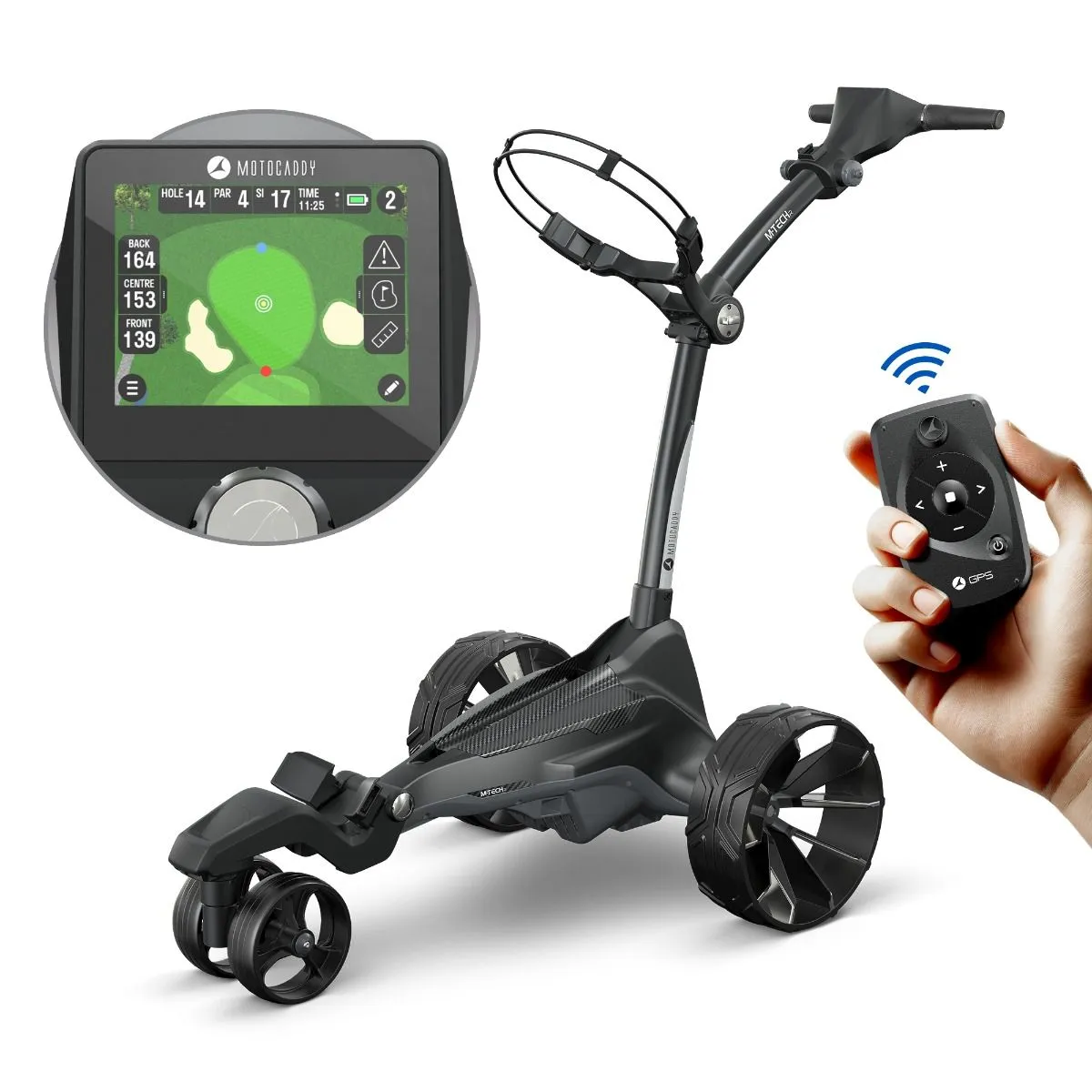
Price: $2,399 | Control: remote, 100 m+ range | GPS: 40,000+ courses | Power: 28V system | Warranty: 36-month extended caddy warranty
The problem it solves: you want the best remote cart Motocaddy makes, with the longest warranty.
How it did on my rounds: I walked six rounds with the M-Tech, including four on the hilly course. It felt the most powerful of the Motocaddys on the steepest climb.
Specifically, Motocaddy gives the M-Tech a high-power 28V system, a cable-free lithium battery and GPS on more than 40,000 courses. Also, it carries a 36-month extended caddy warranty.
Compared with the M7 GPS Remote, it costs $300 more at list price.
Who it suits: golfers who want the top Motocaddy and a 3-year cart warranty.
Skip if: you want the best value, since the M7 GPS Remote is on sale this week.
Pros – Most power in the Motocaddy range – 36-month warranty
Cons – $2,399 list
4. Motocaddy M7 Remote: Best Remote Cart Without GPS
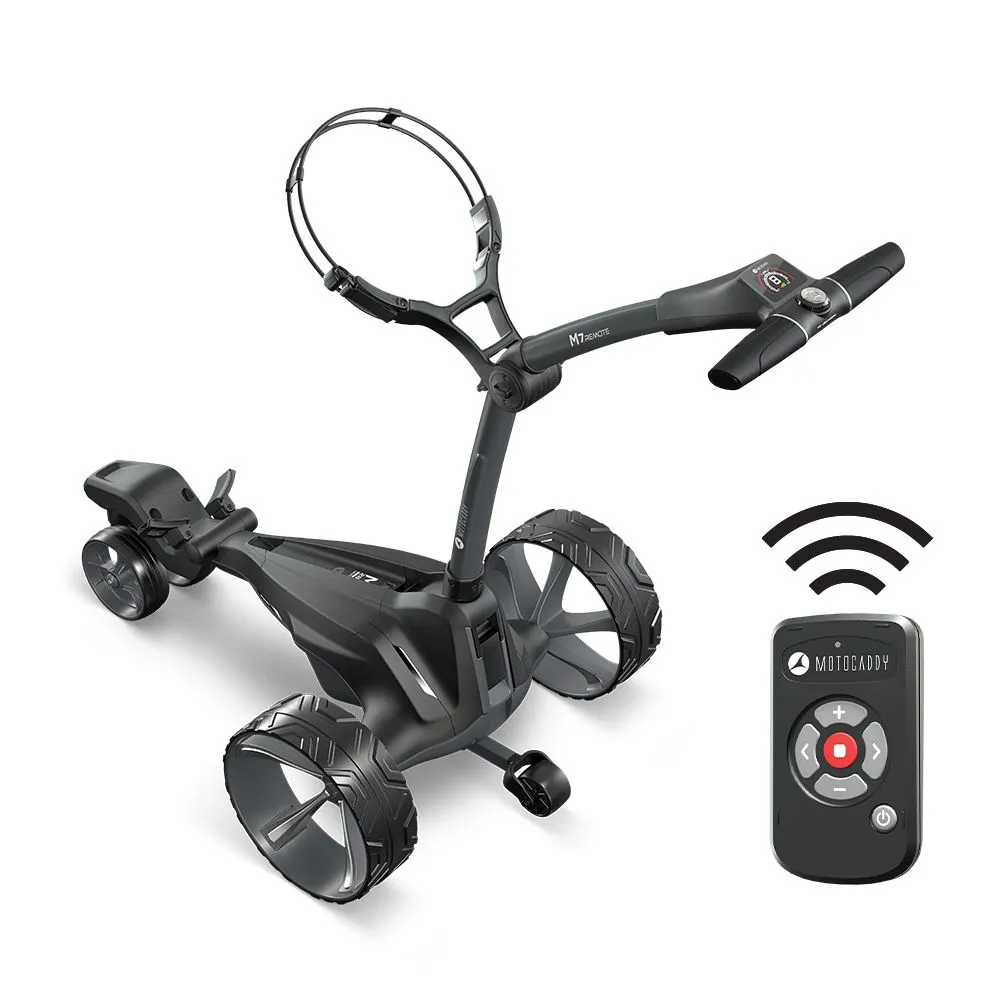
Price: $1,699 list (about $1,399 on 26 Nov) | Control: remote, over 100 m range | Downhill: automatic control | Warranty: 2 years cart and charger, 5 years lithium battery
The problem it solves: you want a remote cart for the hills, but you already have a GPS watch or rangefinder.
How it did on my rounds: I walked eight rounds with the M7 Remote and my usual rangefinder. On the hilly course, it handled every climb the same way the GPS version did.
Notably, the M7 Remote shares the GPS model’s remote range, Automatic Downhill Control and warranty. However, it drops the GPS screen, which saves $400 at list price.
Who it suits: remote-cart buyers who already own a GPS watch or rangefinder.
Skip if: you want yardages on the cart.
Pros – Same remote as the GPS model – $400 less at list price
Cons – No GPS
5. Motocaddy M5 GPS DHC: Best GPS Cart Without a Remote
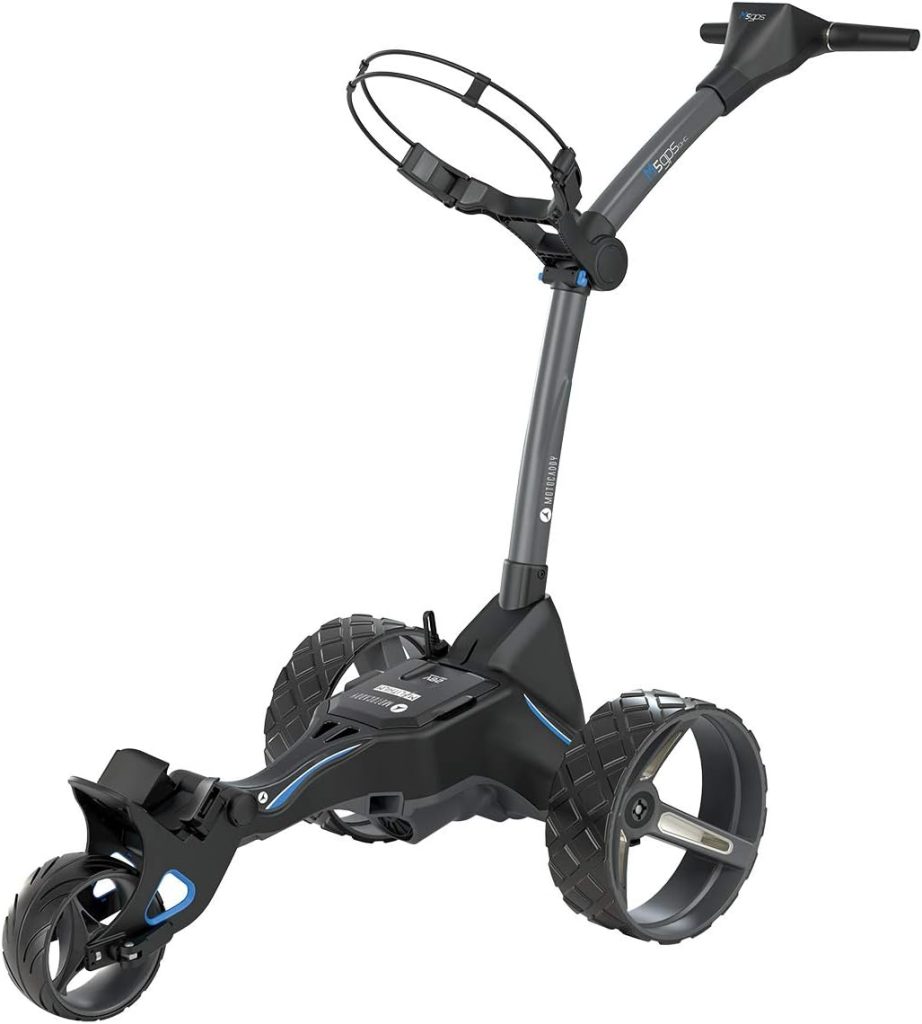
Price: $1,499 list (about $1,199 on 26 Nov) | Control: handle, with downhill control | GPS: 40,000+ courses | Warranty: 2 years cart and charger, 5 years lithium battery
The problem it solves: you want GPS yardages and power on hills, but you do not need a remote.
How it did on my rounds: I walked six rounds with the M5 GPS DHC. Soon, the GPS screen on the handle replaced my rangefinder. Also, the cart held a steady pace down the steep 9th.
Specifically, the M5 GPS DHC covers more than 40,000 courses and regulates its speed on descents. However, one US retailer showed it sold out on 26 November, so stock may be short.
Who it suits: golfers who want GPS on the cart and are happy to steer it.
Skip if: you want to send the cart ahead with a remote.
Pros – GPS on the handle – Steady on descents
Cons – No remote – Patchy stock
6. MGI Zip Navigator: Best Straight-Tracking Remote Cart
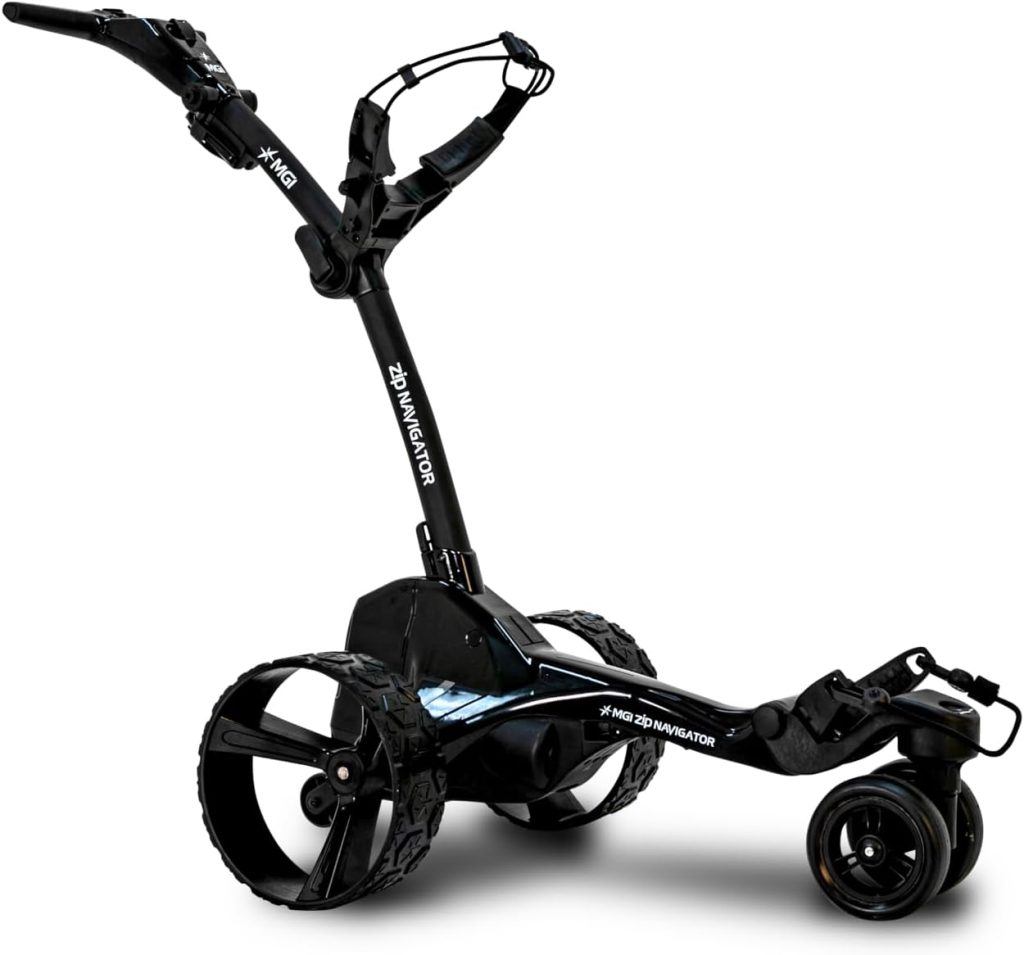
Price: $1,599 | Control: full directional remote | Tracking: gyroscope straight tracker | Battery: lithium, Click and Go
The problem it solves: cheaper remote carts drift off line and end up in bunkers.
How it did on my rounds: I sent the Zip Navigator 50 yards down sloping fairways on six rounds. It held its line better than any other remote cart here, even across a side slope.
Specifically, MGI gives the Navigator a gyroscope straight tracker and a remote with left, right, forward, reverse and speed control. Also, the lithium battery clicks on and off.
Who it suits: golfers on sloping courses who want a remote cart that goes straight.
Skip if: you want GPS on the cart.
Pros – Gyroscope keeps it straight – Full directional remote
Cons – No GPS – Warranty not listed on the retailer page
7. Motocaddy M1 DHC: Best Entry-Level Electric Cart
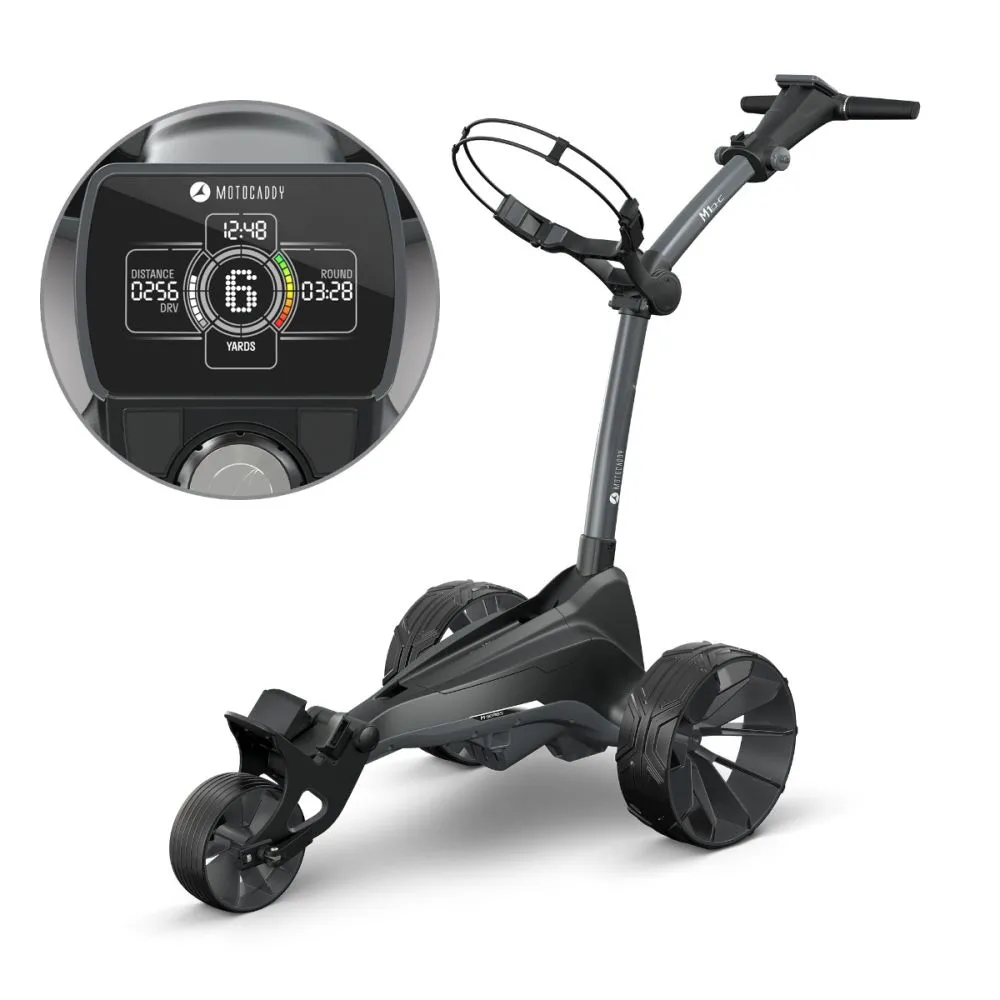
Price: $1,099 list (about $899 on 26 Nov) | Control: handle, with downhill control | Distance control: up to 45 yards | Warranty: 2 years cart and charger, 5 years lithium battery
The problem it solves: you want to try an electric cart without spending $1,500 or more.
How it did on my rounds: I walked five rounds with the M1 DHC. On the hilly course, it did the pushing for me, and I finished with fresh legs.
Besides that, the 2026 M1 DHC adds Automatic Downhill Control and an electronic parking brake. It also offers Adjustable Distance Control up to 45 yards.
Also, it shares the 5-year lithium battery warranty with the pricier Motocaddys.
Who it suits: first-time electric cart buyers.
Skip if: you want a remote or GPS.
Pros – Lowest-priced Motocaddy here – Downhill control and parking brake
Cons – No remote, no GPS
8. MGI Zip X5: Best Electric Push Cart Under $1,000
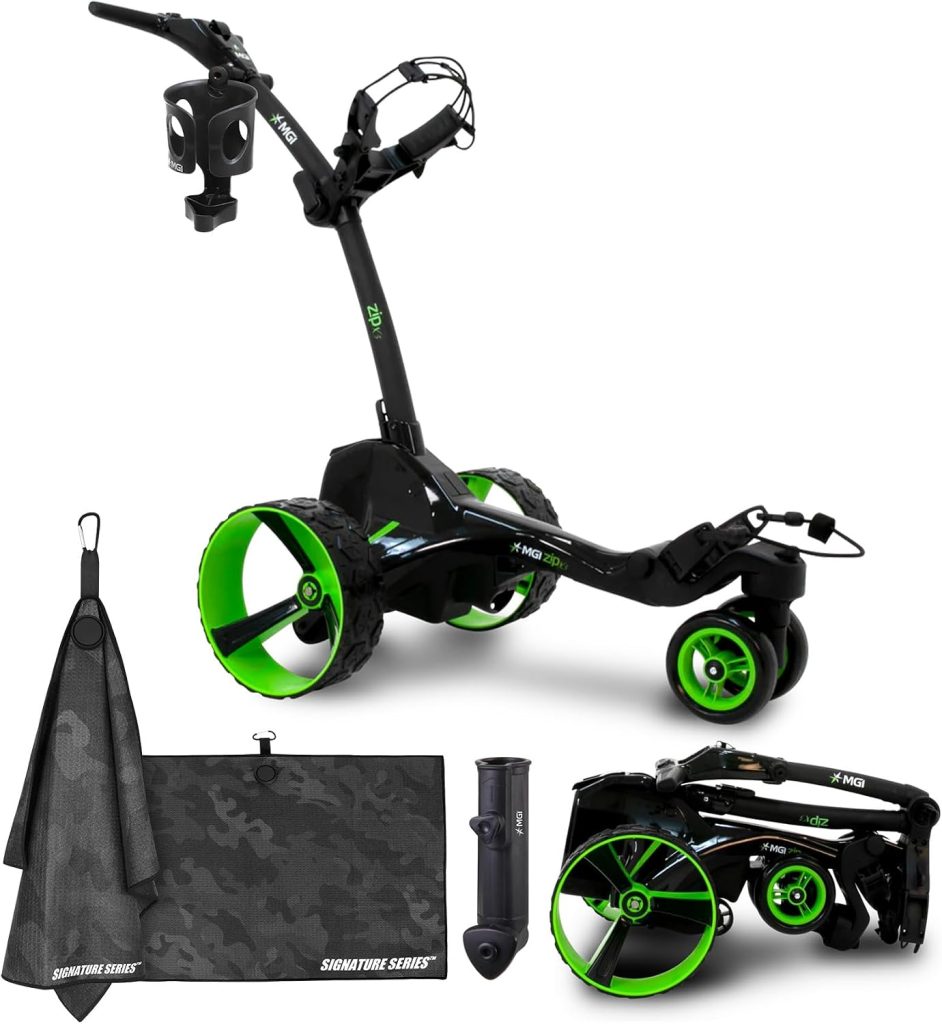
Price: $999 | Control: non-remote, T-bar handle | Battery: 24V 250Wh lithium, up to 36 holes | Weight: 30.57 lbs with battery | Folded: 27.55 x 18.5 x 16.5 in | Warranty: 3 years
The problem it solves: you want an electric cart for under $1,000 that lasts 36 holes.
How it did on my rounds: I walked five rounds with the Zip X5, including one 36-hole day. It made it through both rounds on one charge.
However, MGI calls the Zip X5 a non-remote model, so you steer it with the T-bar handle. Still, MGI rates the 250Wh battery for up to 36 holes and backs it with a 3-year warranty.
Also, it folds to 27.55 by 18.5 by 16.5 inches, small enough for most car boots.
Who it suits: budget buyers who play 36 holes or more between charges.
Skip if: you want a remote cart, since this one has none.
Pros – Up to 36 holes per charge – 3-year warranty – Compact fold
Cons – No remote
9. Alphard Club Booster V2Pro: Best Conversion Kit
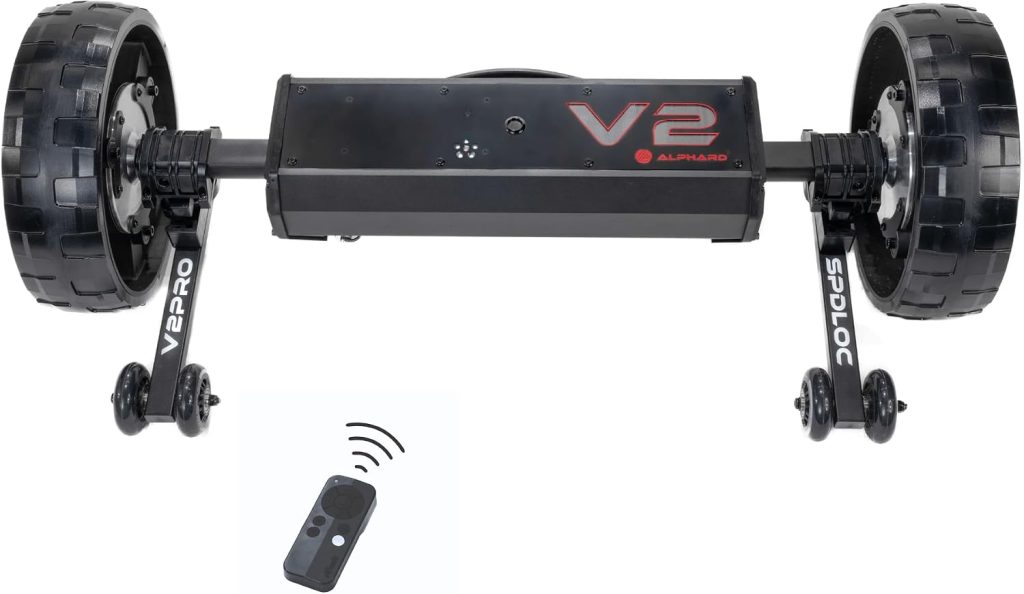
Price: $749 sale (list $950) | Control: remote, with phone app backup | Battery: 18 holes guaranteed, up to 27 | Weight: about 19 lbs plus 4 lb battery | Warranty: 2 years
The problem it solves: you love your push cart and do not want to buy a whole new one.
How it did on my rounds: I fitted the V2Pro to my own three-wheel push cart and walked five rounds with it. Fitting took about 15 minutes, and the remote turned my cart into a remote cart.
Currently, Alphard sells brackets for CaddyTek, Clicgear, Bagboy, Sun Mountain, Bigmax and Axglo carts. So check the compatibility list for your exact model before you order.
Also, Alphard guarantees 18 holes and says it can last up to 27, depending on conditions.
Who it suits: golfers who own a compatible push cart.
Skip if: you play 36 holes in a day.
Pros – Keeps the cart you own – $749 this week
Cons – 18 to 27 holes per charge – Needs the right bracket
10. Bat-Caddy X3R Lithium: Best Budget Remote Cart
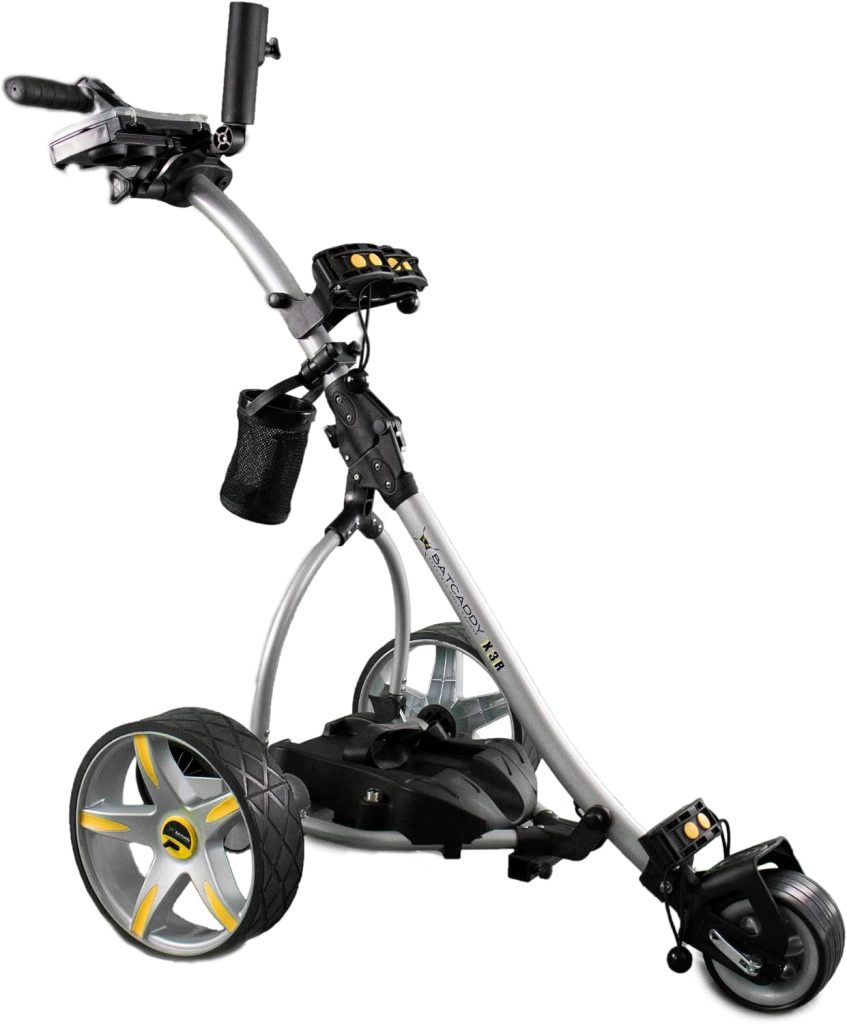
Price: $849.95 sale (list $1,449.93) | Control: remote, up to 90 to 100 yards | Battery: 14V 20Ah lithium, 36 to 54 holes | Warranty: 2 years
The problem it solves: you want a remote cart, but you cannot spend $1,500.
How it did on my rounds: I walked four rounds with the X3R on the flat course. The remote worked well, though the cart felt less refined than the Motocaddys.
According to one US retailer, the X3R Lithium has a 14V 20Ah battery rated for 36 to 54 holes. Its remote reaches up to 90 to 100 yards.
Also, it carries a two-year warranty.
Who it suits: budget buyers who want a remote cart.
Skip if: you play a very hilly course and want automatic downhill control.
Pros – Cheapest remote cart here – Long battery range
Cons – Less refined build
Remote, Follow or Push: Which Electric Cart Do You Need?
Start with how much you want to steer.
- Follow: the Stewart Q Follow walks behind you, so your hands stay free.
- Remote: meanwhile, the M7, M-Tech, Zip Navigator, V2Pro and X3R go where you send them.
- Handle with power: finally, the M5 GPS DHC, M1 DHC and Zip X5 do the pushing while you steer.
In my season, I used remote carts most, because I could send them ahead on long holes.
Best Electric Push Carts for Hilly Courses
Hills are where electric carts earn their price. So look for automatic downhill control as well as power.
On my hilly course, the M-Tech and the M7 GPS Remote climbed best. Also, all four Motocaddys held a steady speed on the way down.
How Long Does an Electric Push Cart Battery Last?
Generally, it depends on the battery and your course. Still, brand ratings give a guide.
| Cart | Battery rating stated |
|---|---|
| MGI Zip X5 | Up to 36 holes |
| Alphard Club Booster V2Pro | 18 holes guaranteed, up to 27 |
| Bat-Caddy X3R Lithium | 36 to 54 holes |
| Motocaddy carts | Not stated as a hole count on the pages we checked |
Electric Push Cart Warranties Compared
Above all, a warranty matters on a cart with a motor and a battery. Here is what each brand states.
| Cart | Warranty stated |
|---|---|
| Motocaddy M7 GPS Remote, M7 Remote, M5 GPS DHC, M1 DHC | 2 years cart and charger, 5 years lithium battery |
| Motocaddy M-Tech GPS Remote | 36-month extended caddy warranty |
| MGI Zip X5 | 3 years |
| Alphard Club Booster V2Pro | 2 years |
| Bat-Caddy X3R Lithium | 2 years |
| Stewart Q Follow and MGI Zip Navigator | Not stated on the pages we checked |
Are Electric Golf Push Carts Worth It?
If you walk most rounds, yes. Above all, an electric cart lets you keep walking on hills that would otherwise send you to a riding cart.
By my count, the M7 GPS Remote saved me about $25 a round in cart fees. So it paid for itself within a season.
However, if you ride most rounds, a cart bag and a manual push cart will do.
Electric Golf Push Cart FAQ
The Motocaddy M7 GPS Remote is our best overall pick.
Specifically, it adds remote control, GPS on 40,000+ courses and automatic downhill control.
Also, it was about $1,699 on 26 November.
The MGI Zip X5 costs $999 and lasts up to 36 holes.
However, it has no remote, so the Bat-Caddy X3R Lithium at $849.95 is the budget remote pick.
Yes, the Alphard Club Booster V2Pro fits many CaddyTek, Clicgear, Bagboy, Sun Mountain, Bigmax and Axglo carts.
Still, check the bracket list for your exact model.
The Stewart Q Follow follows you hands-free and also works by remote.
This week, it is on sale at $2,599.
It depends on the model and your course.
For example, MGI rates the Zip X5 for up to 36 holes, while Alphard guarantees 18 holes on the V2Pro.
Final Verdict: The Best Electric Golf Push Cart for Most Golfers
After a full walking season, the Motocaddy M7 GPS Remote is my pick for most golfers.
If you want hands-free walking, then choose the Stewart Q Follow. Meanwhile, the MGI Zip X5 is the best buy under $1,000.
Already own a push cart? In that case, the Alphard Club Booster V2Pro converts it for $749.
Finally, check this week’s sale prices before they end, since four Motocaddys are $300 to $400 below list.
Keep reading
- Golf equipment guide: the main guide to every club, ball and training aid
- Best golf push carts: manual carts for walkers
- Best golf cart bags: bags that sit well on a cart
- Best golf bags: every type of bag compared
- Best golf GPS watches: yardages on your wrist
- Best golf rangefinders: exact yardages to the pin
