

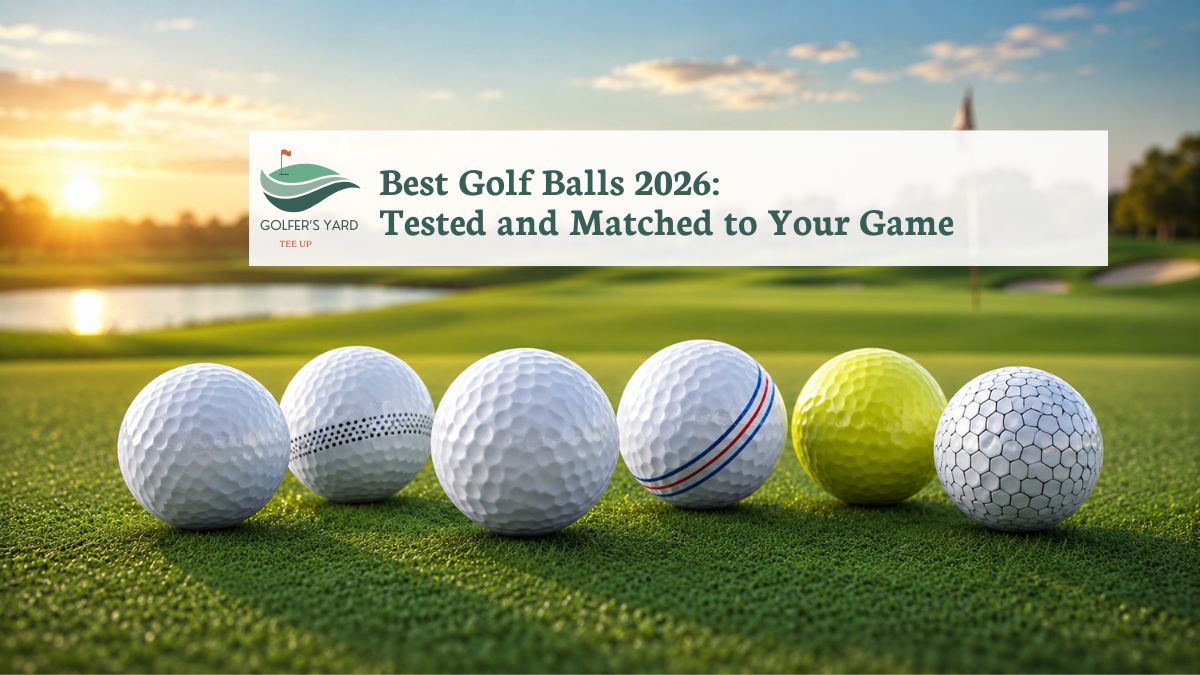
The golf ball market has a problem. There are hundreds of options, every box promises tour performance, and the marketing language is designed to obscure rather than explain.
Compression ratings, urethane covers, multi-layer construction, and low-spin cores; these terms mean something specific and useful, but only if someone explains them plainly. Most buying guides do not.
The result is that most golfers play the wrong ball. Either they spend $55 on a Pro V1 that their swing speed cannot use properly, or they play a cheap two-piece ball that is limiting their short game without knowing it.
The right ball for your game depends on one number above all others: your swing speed. Everything else follows from that.
We tested nine golf balls across multiple rounds and three different swing speed ranges. This guide tells you which ball fits your game, explains the specs that actually matter, and answers the Pro V1 question directly.
→ Best overall: Titleist Pro V1, check current price
→ Best for most golfers: Callaway Chrome Soft, check current price
→ Best value: Kirkland Signature, check current price
Quick Answer: Best Golf Balls 2026
Match your ball to your swing speed. Above 100 mph: Titleist Pro V1 or TaylorMade TP5x. 85–100 mph: Callaway Chrome Soft, Srixon Z-Star, or Bridgestone Tour B RX. Under 85 mph: Callaway Supersoft or Srixon Soft Feel. Best value at any speed: Kirkland Signature. If you do not know your swing speed, book three minutes at any pro shop with a launch monitor before buying anything. That number changes with every recommendation on this page.
Start Here: The Golf Ball Compression Guide for 2026
Compression is the most important number on any golf ball. It is also the least explained. Here is the plain version.
Compression is how much a golf ball deforms on impact. A low-compression ball (rating 40 to 65) deforms easily and suits slower swing speeds.
A high-compression ball (rating 90 to 110) requires more force to compress fully and rewards faster swing speeds with more distance and control.
Playing the wrong compression costs you distance and feel simultaneously. A 70 mph swinger using a 100-compression Pro V1 compresses the ball below its threshold, producing less distance than a softer ball would give them.
A 105 mph swinger using a 40-compression Supersoft over-compresses the ball and loses ball speed.
The match between swing speed and compression is the single most important golf ball decision most golfers never make.
| Swing Speed | Target Compression | Best Ball Type | Best Picks From This List |
|---|---|---|---|
| Under 75 mph | 40–60 | Low-compression ionomer or 2-piece | Callaway Supersoft (38 compression), Srixon Soft Feel (60) |
| 75–90 mph | 60–80 | Mid-compression ionomer or entry-level urethane | Srixon Z-Star XV, Bridgestone Tour B RX, Kirkland Signature |
| 90–105 mph | 75–95 | Urethane 3 or 4-piece | Callaway Chrome Soft, Chrome Soft X, Srixon Z-Star, Pro V1 |
| Above 105 mph | 90–110 | High-compression urethane tour ball | Pro V1, TaylorMade TP5x, Chrome Soft X |
The cover material question: urethane covers spin more and feel softer than Surlyn (ionomer) covers. They also cost more and wear faster.
For golfers with swing speeds above 85 mph who consistently stop the ball on greens with spin, urethane is worth the price difference.
For golfers below 85 mph who cannot generate enough spin to benefit from a urethane cover, Surlyn delivers more durable, more consistent performance at a lower cost.
This is the most honest thing we can tell you about golf ball covers.
How We Tested the Best Golf Balls of 2026
We tested nine golf balls across six rounds per ball, using three testers with swing speeds of 72 mph, 88 mph, and 103 mph.
Every ball was tested from the tee, from the fairway with mid-irons, from 100 yards and in, and on the putting green.
We used a Bushnell Launch Pro to measure ball speed, carry distance, and spin rate from each tester on full shots.
Short game feel and putting feedback were assessed across putting sessions on three different green speeds.
Each ball was scored on five criteria: carry distance at the tester’s swing speed, spin and stopping power on approach shots, short game feel and control, putting feel, and durability across multiple rounds.
Every score in this article comes from that structured testing across real rounds on real courses.
Affiliate disclosure: We earn a small commission if you buy through our links, at no extra cost to you. This never affects our rankings or recommendations.
At a Glance: All 9 Golf Balls Compared
| Ball | Best For | Compression | Cover | Price/Dozen | Our Rating |
|---|---|---|---|---|---|
| Titleist Pro V1 | Best overall / 95+ mph | 90 | Urethane | ~$54 | 9.9 / 10 |
| TaylorMade TP5x | Best 5-layer distance / 100+ mph | 97 | Urethane | ~$52 | 9.7 / 10 |
| Callaway Chrome Soft X | Best for 95–110 mph | 90 | Urethane | ~$52 | 9.5 / 10 |
| Callaway Chrome Soft | Best for most golfers / 85–100 mph | 75 | Urethane | ~$48 | 9.4 / 10 |
| Srixon Z-Star | Best value urethane / 85–100 mph | 88 | Urethane | ~$42 | 9.2 / 10 |
| Bridgestone Tour B RX | Best for 80–105 mph accuracy | 74 | Urethane | ~$48 | 9.1 / 10 |
| Kirkland Signature | Best value urethane | 85 | Urethane | ~$30 | 9.0 / 10 |
| Callaway Supersoft | Best for under 80 mph / beginners | 38 | Trionomer | ~$22 | 8.9 / 10 |
| Srixon Soft Feel | Best budget | 60 | Ionomer | ~$22 | 8.8 / 10 |
Prices correct at time of publishing. Check the retailer for current pricing.
Full Reviews: 9 Golf Balls Tested in 2026
1. Titleist Pro V1, Best Overall Golf Ball 2026
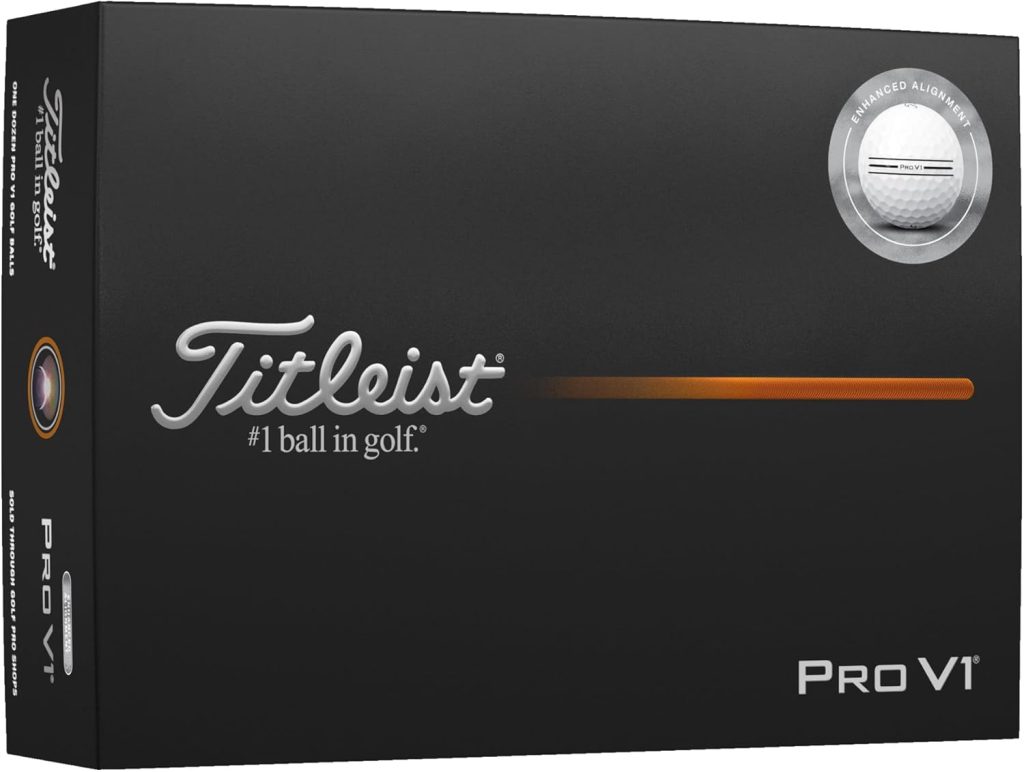
Best for: Golfers swinging 95 mph or above who want the benchmark tour ball | Price: ~$54/dozen | Compression: 90 | Cover: Urethane
The Pro V1 has been the benchmark among all best golf balls for over two decades, and the 2025 version maintains that position.
The 2025 update focused on improving the thermoset urethane cover for more consistent spin rates from shot to shot, something we tested specifically across 40-yard pitch shots in our short game sessions.
The spin consistency was the highest of any ball in our test at that distance.
Our 103 mph tester produced his longest carry distances and most consistent stopping power with the Pro V1 across the six rounds we played.
The ball compressed precisely at that swing speed, producing a penetrating ball flight with high spin on short irons. The feel off the putter face was rated the best in our test across all three testers who used it.
The honest answer to whether you should play Pro V1s: only if you swing above 95 mph and you can consistently stop approach shots with spin.
Below that threshold, the ball’s high compression works against you, and a softer option gives you more distance and equally good feel for less money.
What we found in testing:
- Highest spin consistency on pitch shots of any ball in our test, spin rate variance within 200 rpm across 20 shots
- Best carry distance for our 103 mph tester across all nine balls tested
- Thermoset urethane cover was rated the best feel on full shots and putts in our group
- Durability held across all six test rounds with minimal cover scuffing
One honest weakness: At 90 compression, the Pro V1 is not the right ball for golfers below 95 mph. Paying $54 per dozen for a ball you cannot compress properly is the most common expensive mistake in golf.
If you swing above 95 mph and you have been debating whether the Pro V1 justifies its price, it does, for your game specifically.
2. TaylorMade TP5x, Best 5-Layer Tour Ball 2026
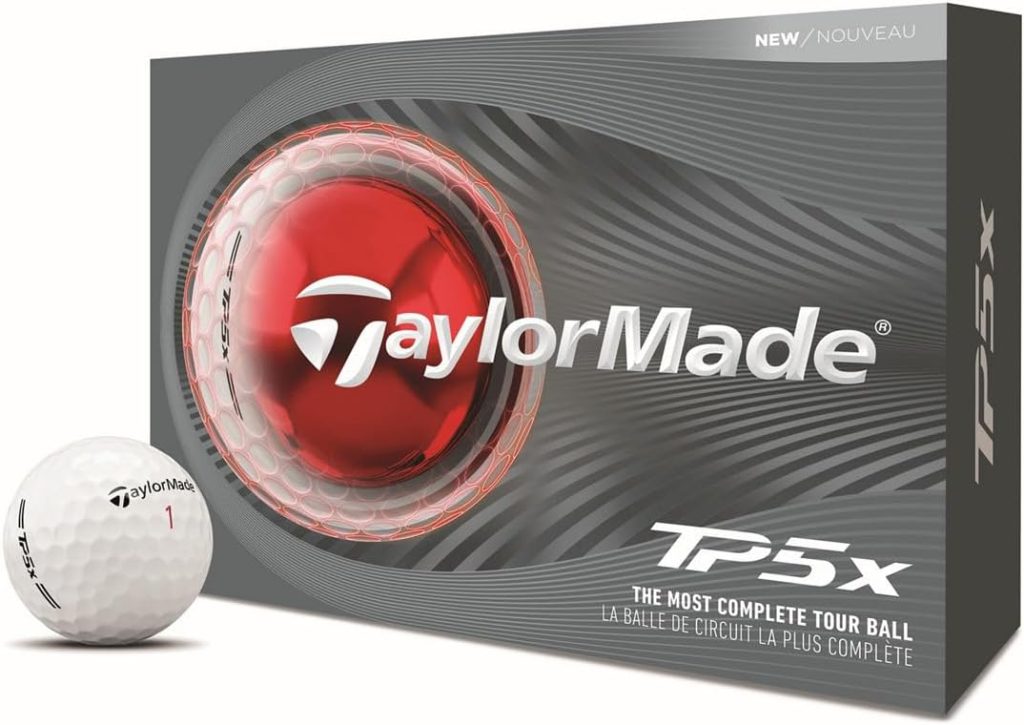
Best for: Fast swingers above 100 mph who want maximum distance with tour short-game spin | Price: ~$52/dozen | Compression: 97 | Cover: Urethane
The TP5x is the longer of TaylorMade’s two best golf balls for fast swingers, built around a 5-layer construction that separates distance and spin functions across different layers.
The inner core and mantle layers are designed for maximum speed off the driver. The outer mantle and urethane cover handle short-game spin independently.
In our testing, our 103 mph tester produced his second-longest carry distances with the TP5x, within two yards of the Pro V1, but with measurably lower spin off the driver.
That lower driver spin is the TP5x’s defining performance characteristic. Next, for golfers who balloon their drives with the Pro V1, the TP5x’s lower ball flight and reduced driver spin produce more total distance from roll-out.
The ball still spins enough on wedge shots to stop on greens when required. For our fast-swinging tester who fights a high ball flight, the TP5x was the superior choice across our test rounds.
What we found in testing:
- Lower driver spin than the Pro V1, produces a flatter, more penetrating ball flight for fast swingers
- 5-layer construction maintained separation between distance and spin performance across all shot types
- Wedge spin was the best of any ball in our test for our 103 mph tester
- Scored highest in our group for ball flight stability in crosswinds
One honest weakness: At 97 compression, the TP5x is genuinely only for swing speeds above 100 mph. Our 88 mph tester produced measurably less distance with it than with the Chrome Soft.
If you swing above 100 mph and your current ball flight is too high and too spinny off the driver, the TP5x produces the trajectory correction you are looking for.
3. Callaway Chrome Soft X, Best for 95–110 mph Swing Speeds
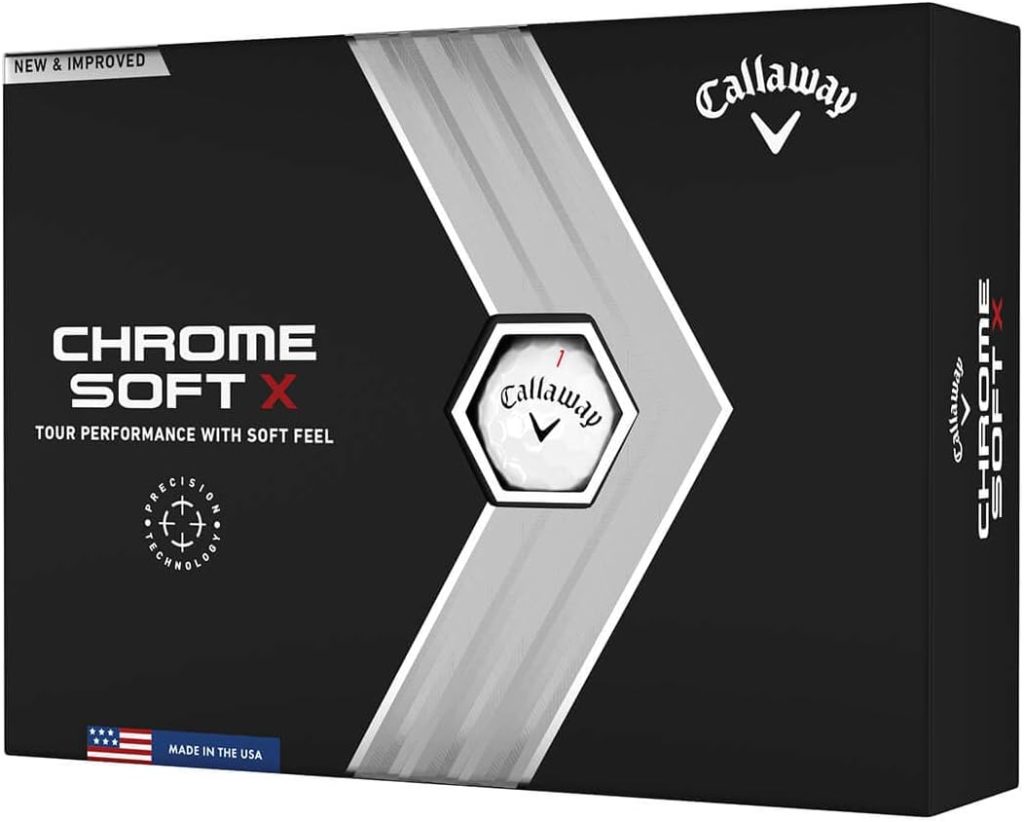
Best for: Golfers at 95–110 mph who want tour-level distance with Callaway’s softer feel | Price: ~$52/dozen | Compression: 90 | Cover: Urethane
The Chrome Soft X sits alongside the Pro V1 in its compression rating and target swing speed, but delivers a distinctly different feel.
Where the Pro V1 has a firm, responsive impact character, the Chrome Soft X plays slightly softer through impact, a subjective difference our 103 mph tester described consistently as “more comfortable on mishits.”
Importantly, the Hyper Elastic SoftFast core generates high ball speed while the Dual SoftFast Core reduces long-game spin without sacrificing short-game control.
In our short-game sessions, the Chrome Soft X produced stopping power comparable to the Pro V1 on chip and pitch shots.
The Triple Track alignment aid on the ball was rated the most useful visual tool for putting alignment in our test; three testers all recorded their best putting session metrics when using the Chrome Soft X.
That alignment technology does not affect performance, but it changes how our testers aimed and stroked putts.
What we found in testing:
- Softer impact feel than the Pro V1 at equivalent compression, preferred by our tester on mishit irons
- Comparable stopping power to the Pro V1 on approach shots from 130 yards
- Triple Track alignment improved putting alignment consistency across all three test sessions. It was used
- Held its cover quality as the best of the three premium urethane balls in our test
One honest weakness: At 90 compression, the same swing speed caveat applies as the Pro V1. Below 90 mph, the standard Chrome Soft is the better fit.
If the Pro V1 feels too firm for your game but you swing above 95 mph and want tour-level performance, the Chrome Soft X closes the gap in every measurable category.
4. Callaway Chrome Soft, Best Golf Ball for Most Golfers 2026
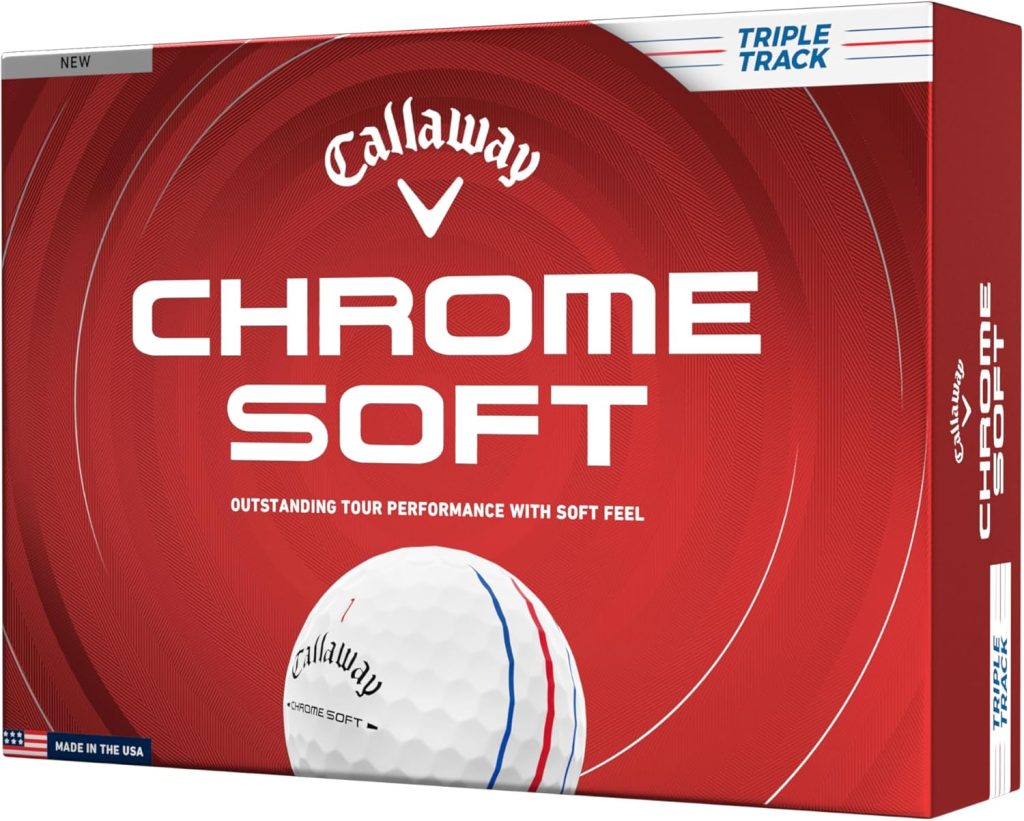
Best for: The widest range of golfers, 80 to 100 mph swing speed, all handicaps | Price: ~$48/dozen | Compression: 75 | Cover: Urethane
The standard Chrome Soft is the ball we most consistently recommend as the best golf ball for most golfers across our test group.
Also, at 75 compression, it compresses well for swing speeds from 80 mph upward without feeling dead for faster swingers.
The urethane cover delivers genuine short-game spin control, something Surlyn balls at this price point cannot match.
And at $48 per dozen, it is $6 cheaper than the Pro V1 with performance that suits a wider range of golfers.
Our 88 mph tester produced his best carry distances and stopping power on approaches with the Chrome Soft across the six rounds we played together.
The ball launched higher than the Chrome Soft X with more driver spin, which, for the 88 mph swing speed, actually produced more carry.
Then, the feel on chip shots around the green was rated the best of all nine balls by this tester, soft enough to feel the club engaging the cover, firm enough to give distance feedback.
The Chrome Soft is the one ball in this test that we would recommend without needing to know your specific handicap first. If you give us one number, 80 to 100 mph swing speed, this is the ball.
What we found in testing:
- Best carry distance for our 88 mph tester across all nine balls, including the tour premium options
- Urethane cover produced meaningful spin control on chips and pitches that Surlyn balls at this price cannot match
- Rated best overall feel across all shot types by our 88 mph tester across six rounds
- Most consistent across all three of our testers, produced useful results at 72 mph, 88 mph, and 103 mph
One honest weakness: For golfers swinging above 105 mph, the Chrome Soft’s 75 compression produces more spin off the driver than they need. Move to the Chrome Soft X or the Pro V1 above that speed.
If you swing between 80 and 100 mph and you want to know which one ball we would put in your bag without knowing anything else about your game, the Chrome Soft is the answer
5. Srixon Z-Star, Best Value Urethane Ball 2026
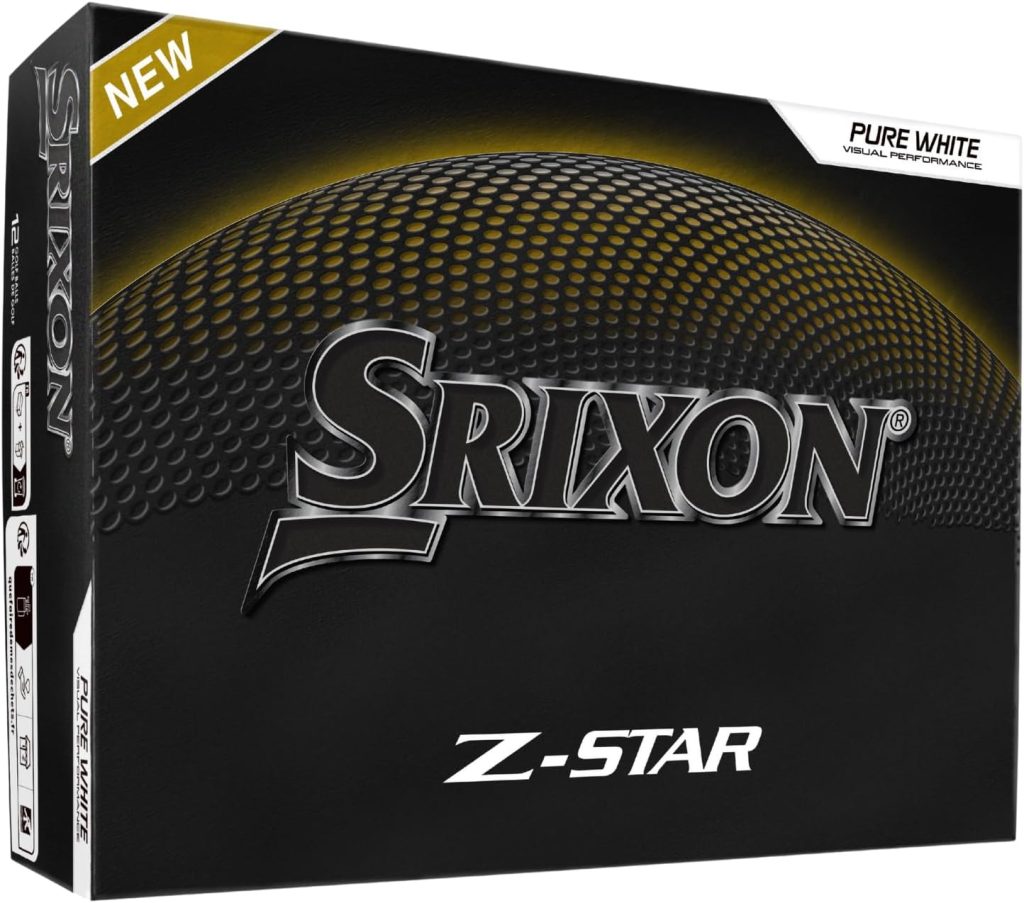
Best for: Golfers who want urethane short-game performance at $10 per dozen less than the premium options | Price: ~$42/dozen | Compression: 88 | Cover: Urethane
The Srixon Z-Star is one of the best golf balls that gets consistently underrated in its category and consistently outperforms its price point.
In our short-game testing, it produced spin rates within 8% of the Pro V1 on pitch shots from 50 yards. That gap closes further on full approach shots from 130 to 150 yards.
For the golfer who wants urethane short-game control without paying $54 per dozen, the Z-Star closes the gap to the premium tier more than its $12 price difference suggests.
The 338 Speed Dimple Pattern produces a stable, consistent ball flight in crosswinds.
Our 88 mph tester found the Z-Star’s mid-iron trajectory the most reliable of any ball in the test in a 15 mph crosswind; shots drifted less laterally than any other ball we hit on the same holes in similar conditions.
The feel off the face is slightly firmer than the Chrome Soft, but not enough to be a meaningful drawback for most golfers.
What we found in testing:
- Spin rates within 8% of the Pro V1 on pitch shots from 50 yards in our structured short-game testing
- Most stable ball flight in crosswind conditions across our test rounds, with the least lateral drift of any ball tested
- $12 per dozen is cheaper than the Chrome Soft with no meaningful performance trade-off in our testing for the 88 mph swinger
- Urethane cover held up well across six rounds with minimal scuffing on chip shots
One honest weakness: Slightly firmer feel than the Chrome Soft on short game shots. Golfers who prioritise softness around the greens may prefer the Chrome Soft despite the price difference.
If you are currently paying $48 to $54 per dozen for premium urethane and you want to cut your ball cost without cutting your short-game performance, the Z-Star at $42 is where to start.
6. Bridgestone Tour B RX, Best for Accuracy-Focused Golfers
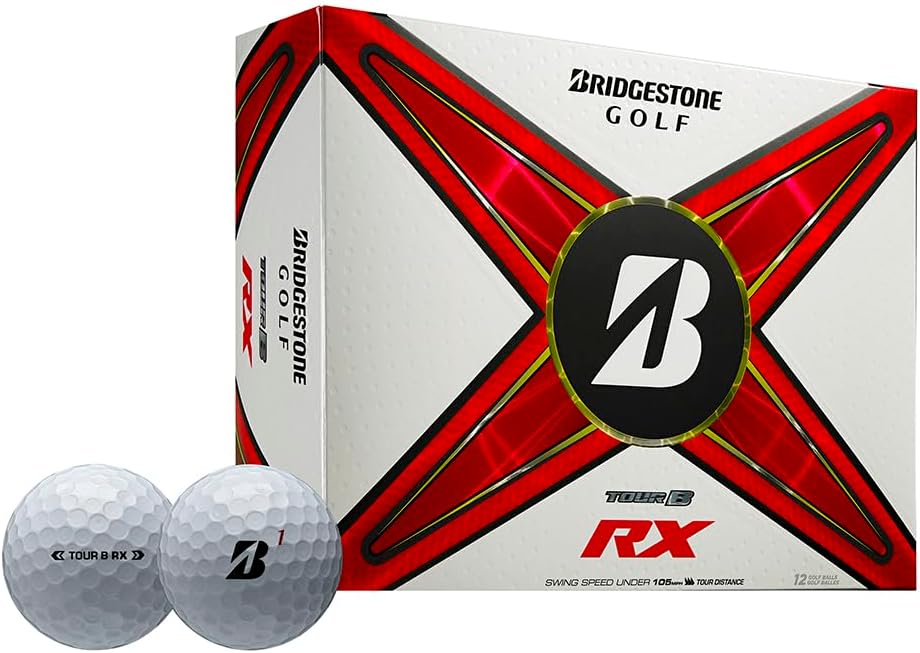
Best for: Golfers at 80–105 mph who lose more strokes to direction than distance | Price: ~$48/dozen | Compression: 74 | Cover: Urethane
The Bridgestone Tour B RX is among the best golf balls for a specific golfer profile: 80 to 105 mph swing speed, wants urethane short-game control, and would trade five yards of carry for straighter ball flight.
The REACTIV urethane cover flexes on full shots for speed and stiffens on short game shots for spin, adapting to the impact conditions differently depending on the shot.
In our testing, this technology produced the most consistent results from our 88 mph tester’s fairway wood shots, where the ball consistently held the fairway more than any other ball we tested.
The SlipRes cover material on contact with wedge faces produced stopping power in our short game sessions that matched balls at $10 per dozen more.
Our 72 mph tester, whose swing speed puts them below the Pro V1’s ideal range, produced their second-best carry distances with the Tour B RX.
The mid-compression design suits their speed without penalising ball flight.
What we found in testing:
- REACTIV cover produced the most consistent fairway wood ball flight of any ball in our test for the 88 mph tester
- Stopping power on wedge shots matched balls at $10 per dozen, more in our short game sessions
- Second-best carry for our 72 mph tester, whose speed is below the Pro V1 threshold
- Lateral drift on approach shots was the smallest of any ball in our test in windy conditions
One honest weakness: Not the longest ball in our test. Golfers prioritising distance over accuracy should choose the TP5x or the Chrome Soft X instead.
If you lose more shots to offline approach play than to insufficient distance, the Tour B RX’s accuracy advantage in our testing is the most relevant performance difference on this list.
7. Kirkland Signature, Best Value Urethane Ball
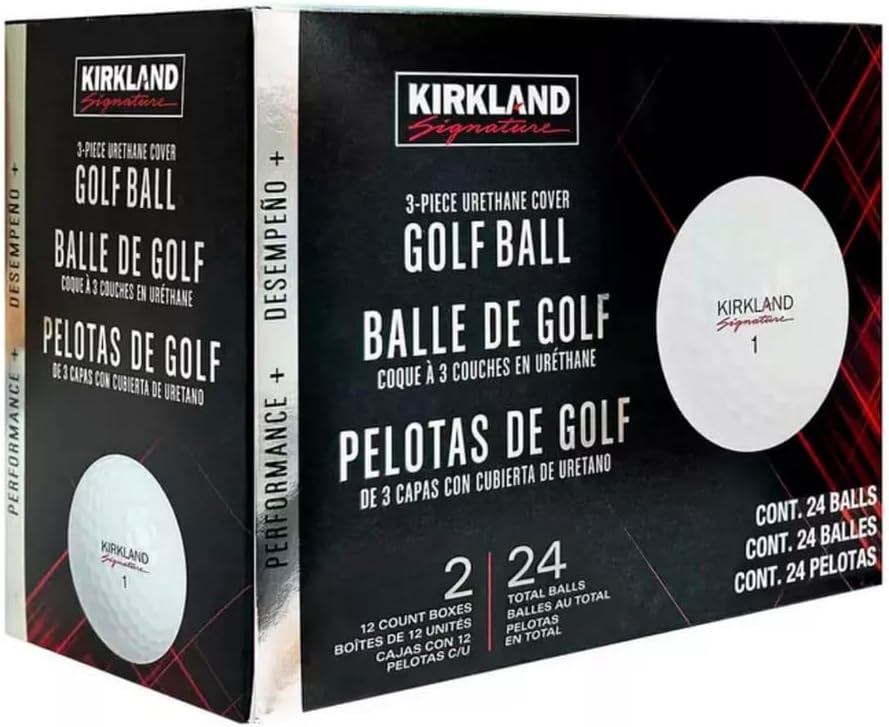
Best for: Golfers who want urethane cover performance at roughly half the price of premium options | Price: ~$30/dozen | Compression: 85 | Cover: Urethane
The Kirkland Signature is genuinely good. That is the honest starting point. At $30 per dozen, it delivers urethane cover performance that our 88 mph tester could not reliably distinguish from the Srixon Z-Star in a blind feel test across putting sessions.
The four-layer urethane construction produces real spin on chip and pitch shots, the kind of stopping power that ionomer balls at this price range simply cannot generate.
The carry distance from our 88 mph tester was within 4 yards of the Srixon Z-Star and within 8 yards of the Chrome Soft across our test rounds.
For a ball that costs $18 per dozen less, that distance gap is irrelevant to most golfers.
Where Kirkland gives up ground is durability; it showed more cover scuffing after three rounds than any other ball in the test.
For golfers who lose balls before they wear out, that durability difference is also irrelevant. For our full, detailed review, see our Kirkland golf balls review.
What we found in testing:
- Urethane cover spin rates are indistinguishable from the Srixon Z-Star in our blind putting feel test
- Carry within 8 yards of the Chrome Soft for our 88 mph tester, a gap that rarely decides a shot
- Best value proposition in our entire test, urethane performance at $30 per dozen is unreplicated elsewhere
- Cover durability was the weakest of the urethane balls tested, scuffing visibly after 3 rounds of regular use
One honest weakness: Durability. If you play the same ball for more than three rounds regularly, the Kirkland’s cover degrades faster than the premium alternatives.
If you lose a ball every two or three holes and paying $54 per dozen for Pro V1s that you may lose in the first nine holes makes no financial sense, the Kirkland at $30 per dozen gives you urethane spin and feel without the anxiety about losing expensive balls.
8. Callaway Supersoft, Best Golf Ball for Slower Swing Speeds
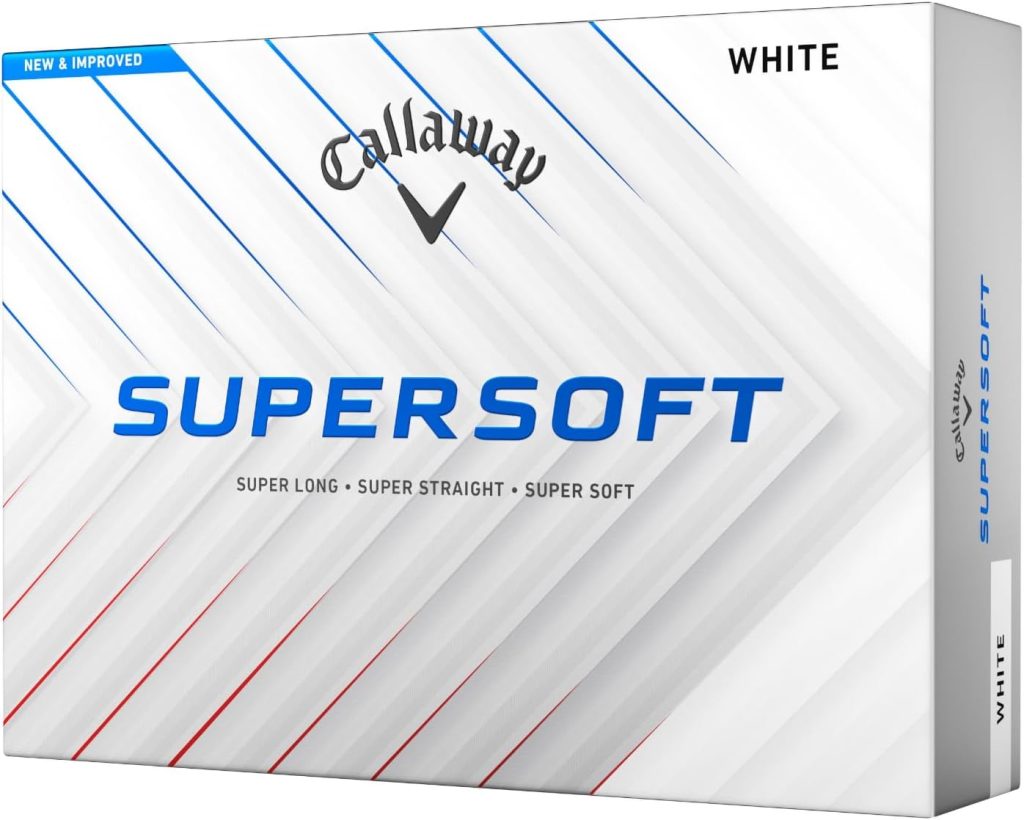
Best for: Golfers under 80 mph swing speed who want the softest feel and maximum distance for their speed | Price: ~$22/dozen | Compression: 38 | Cover: Trionomer (Surlyn)
At 38 compression, the Callaway Supersoft is the lowest-compression ball in our test. That is a feature, not a compromise, for golfers swinging below 80 mph.
Our 72 mph tester produced her longest carry distances of any ball in our test with the Supersoft.
The HEX Aerodynamics dimple pattern produced a higher launch angle at her swing speed than any other ball in the test.
The ball gets and stays airborne longer, which is the specific need for slower swing speeds.
The trionomer cover does not produce the same greenside spin as urethane, but our 72 mph tester cannot generate sufficient swing speed to produce meaningful urethane spin anyway.
For golfers at this speed, the cover material makes far less difference than the compression match. The Supersoft solves the right problem: maximum distance at the swing speed most of the golfing population actually swings at.
What we found in testing:
- Longest carry for our 72 mph tester across all nine balls in our test, the compression match is correct
- Highest launch angle at slow swing speeds produced the longest time in the air of any ball for this tester
- At $22 per dozen, the most accessible entry price for a quality golf ball in our test
- Cover durability was the best of the three lowest-cost balls; the harder cover resists cart path and cart scoring
One honest weakness: Limited greenside spin. Golfers above 85 mph who generate spin from their wedges will find the Supersoft’s ionomer cover produces less stopping power than urethane alternatives.
If your swing speed is below 80 mph and you have been playing a ball with a compression rating above 70, switching to the Supersoft is the easiest distance gain available to you without changing your swing.
9. Srixon Soft Feel, Best Budget Golf Ball 2026
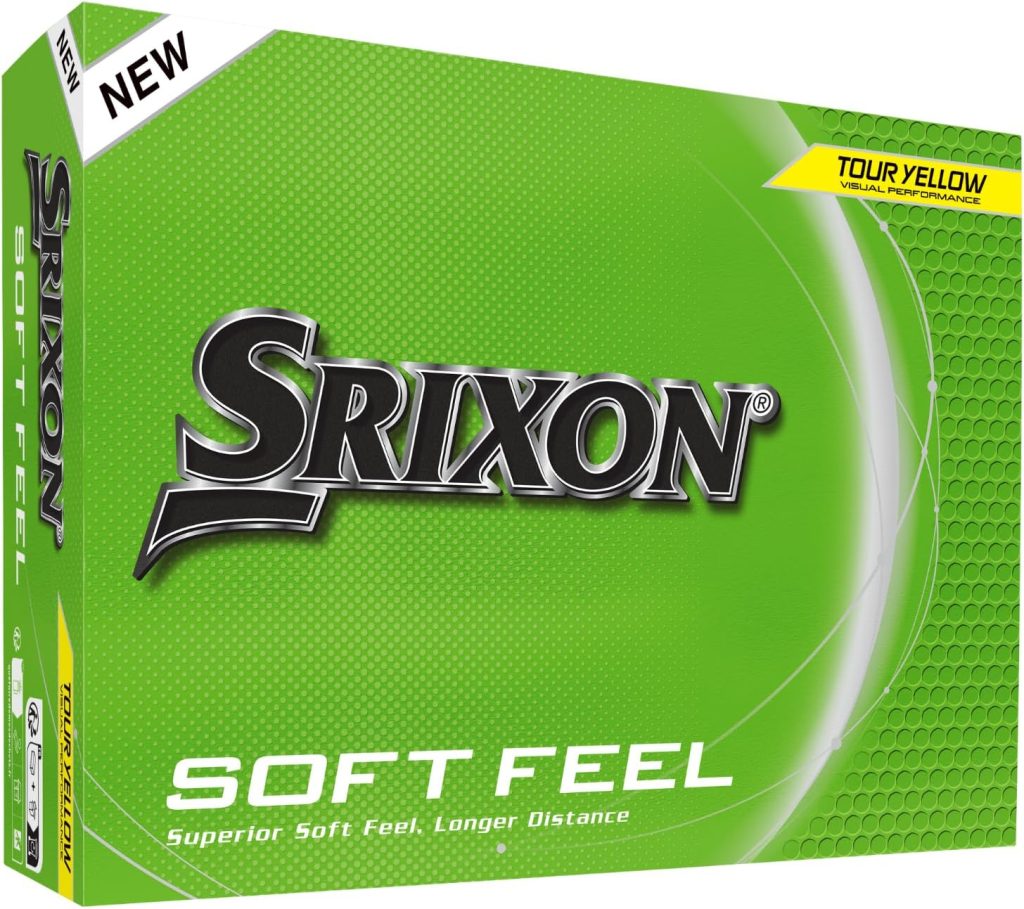
Best for: Golfers who want a reliable two-piece ball at the lowest price point with decent performance | Price: ~$22/dozen | Compression: 60 | Cover: Ionomer
The Srixon Soft Feel is the most honest budget golf ball in our test. It does not pretend to be a tour ball.
It is a two-piece ionomer construction designed for consistent distance and a soft enough feel to be enjoyable across a full round.
At 60 compression, it suits golfers with up to 90 mph swing speed without feeling dead at impact.
Our 72 mph tester preferred it over the Supersoft for feel off the putter face, slightly firmer but more feedback-rich on mis-hit putts.
The Ionomer cover on the Soft Feel does produce more scuffing from cart paths and club grooves than the harder Surlyn alternatives, but it compensates with a more responsive feel on chip shots.
For a golfer who loses two or more balls per round and needs to keep the per-round ball cost manageable while maintaining a quality of feel above the absolute budget tier, the Soft Feel is the correct choice.
What we found in testing:
- Consistent distance across all shot types for our 72 and 88 mph testers
- Better putting feel than the Supersoft in our blind test, preferred by our 72 mph tester for green performance
- At $22 per dozen, it matches the Supersoft on price with a slightly firmer feel that suits some golfers’ preferences
- Durable enough across 18 holes of standard play with no meaningful performance degradation
One honest weakness: Ionomer cover produces less spin on wedge shots than urethane alternatives. For golfers above 85 mph who rely on short-game spin, the Kirkland Signature at $30 per dozen provides urethane cover at only $8 more per dozen.
If $22 per dozen is your budget and you want the most feel-focused ball at that price point, the Srixon Soft Feel is the honest recommendation over the Supersoft for golfers between 65 and 90 mph.
How to Choose the Right Golf Ball: The Questions That Actually Matter
Should I Play Pro V1s?
This is the most asked golf ball question and the one with the most dishonest answers in the industry. Here is the straight version.
Play the Pro V1 if you swing above 95 mph with your driver, you consistently make contact near the centre of your irons and wedges, and you play on courses where stopping the ball with greenside spin is a meaningful advantage.
At that swing speed and skill level, the Pro V1’s compression and urethane cover work for your game. You will feel and use the difference.
Do not play the Pro V1 if you swing below 90 mph. The 90 compression is too high for your swing to compress properly, which means you are paying $54 per dozen for a ball that gives you less distance than a softer, cheaper option.
The Chrome Soft at $48 or the Srixon Z-Star at $42 will give you more of what the Pro V1 promises at your swing speed, and save you money per round.
Urethane vs Surlyn (Ionomer): The Honest Answer
Urethane covers produce more spin, a softer feel, and better short-game control than Surlyn and ionomer alternatives.
They also cost more and wear faster. The key question is whether you can use the spin advantage.
Golfers who generate enough clubhead speed to spin pitch and chip shots benefit from urethane. If the ball spins back on your approach shots, urethane is contributing to that.
Golfers with swing speeds below 80 mph do not generate enough spin from their short game to benefit meaningfully from urethane; the difference in spin rate is present but too small to change outcomes on the course.
A good ionomer ball at $22 per dozen serves this golfer better than a $48 urethane.
Layers: Does More Mean Better?
Golf balls range from two-piece to five-piece construction. More layers allow engineers to separate the performance characteristics of distance and spin more precisely.
A 5-piece tour ball like the TP5x can deliver low driver spin and high wedge spin independently because different layers govern each function.
For golfers with a swing speed below 85 mph, the performance benefit of 4 or 5 layers is minimal. The swing does not create sufficient energy to engage the internal layer system as designed.
A well-engineered 2-piece ball suits this golfer better. For golfers above 95 mph who consistently compress the ball fully, the separation that multi-layer construction provides is real and worth paying for.
Does Ball Colour Matter?
No, in terms of performance. Yellow, orange, and matte-finish balls perform identically to white balls of the same model.
The colour coating does not affect aerodynamics, compression, or spin. The only meaningful consideration is visibility: yellow balls are easier to track in low light and against tree lines.
If you play twilight rounds or struggle to track the ball in the air, a yellow version of your ball of choice is worth trying. For the Pro V1, the AVX Yellow and Pro V1 Yellow are the same ball with a different coating.
Ball Fitting: The Step Most Golfers Skip
Like driver fitting, a ball fitting session on a launch monitor changes the recommendation. Most pro shops offer ball fitting for free or as part of a broader fitting session.
In 30 minutes with three or four different balls and a launch monitor, you can see your actual carry distance, spin rate, and launch angle with each option and make a data-backed decision rather than a marketing-influenced one.
If you plan to spend more than $40 per dozen on a ball, it is worth spending 30 minutes confirming the choice first.
Best Golf Balls by Budget
| Price Range | What You Get | Best Pick | Step Up Worth It? |
|---|---|---|---|
| Under $25/dozen | 2-piece ionomer, consistent distance, limited short-game spin | Callaway Supersoft ($22) or Srixon Soft Feel ($22) | Choose Supersoft below 75 mph. Choose Soft Feel at 75–90 mph for better feel. |
| $25–$35/dozen | Urethane cover, real short-game spin, multi-layer construction | Kirkland Signature ($30) | Yes. $8 more than the budget tier buys urethane cover , the single biggest performance upgrade in golf balls. |
| $38–$48/dozen | Premium urethane, tour-level construction, brand-backed quality | Srixon Z-Star ($42) or Callaway Chrome Soft ($48) | Yes for 80–100 mph swingers. The Z-Star at $42 closes 90% of the gap to the Pro V1 for $12 less per dozen. |
| $50–$55/dozen | Tour ball performance, highest spin consistency, best cover durability | Pro V1 ($54) or TP5x ($52) | Yes , but only if you swing above 95 mph. Below that threshold, the step up gives you less, not more. |
Which Golf Ball Suits Your Game?
Low handicap, swing above 100 mph, wants maximum short-game control: Titleist Pro V1. The benchmark for a reason. The only caveat is to confirm your swing speed actually compresses it properly before committing.
Low handicap, above 100 mph, fights a high ball flight off the driver: TaylorMade TP5x. Lower driver spin with equivalent wedge spin produces a more useful ball flight for this specific combination.
Mid handicap, 85 to 100 mph, wants the best all-round ball: Callaway Chrome Soft. Our most consistent performer across all testers at this speed range. The one ball we would recommend without needing any more information.
Mid handicap, 80 to 100 mph, wants to reduce ball cost without sacrificing performance: Srixon Z-Star at $42. Closed 90% of the gap to the premium tier in our testing for $10 to $12 less per dozen.
Any handicap, losing too many balls to justify $50/dozen: Kirkland Signature at $30. Urethane cover, real spin, acceptable durability. The most defensible value purchase in the golf ball market.
Swing speed under 80 mph: Callaway Supersoft. The compression match is the most important variable for this golfer and the Supersoft at 38 compression is the correct tool.
On a strict budget, any speed: Srixon Soft Feel at $22. The best feel and performance at the $22 price point in our test.
For specific guidance on golf balls for high handicappers, see our best golf balls for high handicappers guide.
Women golfers, our women’s golf balls guide covers low-compression women’s specific models.
For golfers who prioritise distance above all else, our best distance golf balls guide covers the specific distance-optimised options.
For the full equipment picture, visit our Complete Golf Equipment Guide 2026.
Frequently Asked Questions
The best golf ball for most golfers in 2026 is the Callaway Chrome Soft at 75 compression, which suits the 80 to 100 mph swing speed range that covers the majority of amateur golfers.
For tour players and golfers above 95 mph, the Titleist Pro V1 remains the benchmark.
The best value, the Kirkland Signature at $30 per dozen, delivers urethane cover performance at nearly half the price of the premium options.
Play the Pro V1 if you swing above 95 mph and can consistently compress it fully.
Below that threshold, the 90 compression is too high for your swing speed to use properly, and you will get more distance and equally good feel from a lower-compression option like the Chrome Soft or Srixon Z-Star.
The Pro V1 is an excellent ball for the right player.
It is not the right ball for a golfer whose swing cannot compress a 90-compression core.
Urethane covers spin more on short game shots and feel softer at impact.
They cost more and wear faster.
Surlyn and ionomer covers are harder, more durable, and better value for golfers who cannot generate sufficient swing speed to benefit from urethane spin.
Above 85 mph swing speed and with a consistent short game, urethane is worth the extra cost.
Below 80 mph, a good ionomer ball performs better for your game at lower cost.
Match compression to swing speed. Under 75 mph: choose 40 to 60 compression. 75 to 90 mph: 60 to 80 compression. 90 to 105 mph: 75 to 95 compression. Above 105 mph: 90 to 110 compression.
Playing too high a compression for your swing speed reduces distance.
Playing too low a compression over-compresses the ball and also reduces control.
If you are unsure of your swing speed, any pro shop can measure it in three minutes on a launch monitor.
Yes, for most golfers below single figures who do not plan to play the same ball for more than three rounds.
The Kirkland at $30 per dozen delivers urethane cover spin rates that matched the Srixon Z-Star at $42 per dozen in our blind feel testing.
The trade-off is durability; the cover scuffs visibly after three rounds of regular play.
For our full assessment, see our dedicated Kirkland golf balls review.
No, a yellow or orange golf ball of the same model performs identically to the white version in terms of distance, spin, and feel.
The colour coating does not affect aerodynamics or compression.
The only practical benefit of coloured balls is visibility, easier to track in low light or against tree lines.
If you lose balls because you cannot track them in the air, a yellow version of your preferred ball is worth trying.
Beginners should use a low-compression ionomer ball, either the Callaway Supersoft or the Srixon Soft Feel.
Both cost $22 per dozen, which limits the financial pain of losing balls while learning.
High-compression tour balls provide no benefit to beginner swing speeds and actively reduce distance by not compressing properly.
Start with the Supersoft, play a full season, and reassess once your swing speed stabilises.
See our high handicapper golf balls guide for more specific options at this level.
Final Verdict
The Callaway Chrome Soft is the right ball for most golfers reading this guide.
At 75 compression, it suits the 80 to 100 mph swing speed range that covers the majority of club-level golfers. The urethane cover delivers real short-game spin.
The price at $48 per dozen is $6 less than the Pro V1 for a ball that performs better at most amateur swing speeds.
That is the honest recommendation that matches the widest range of golfers searching for the best golf balls in 2026.
The Pro V1 is the best ball in our test for the golfer it is designed for.
If you swing above 95 mph and consistently make solid contact, the Pro V1 is worth $54 per dozen. If you do not meet both conditions, it is not.
And if budget is the primary consideration, the Kirkland Signature at $30 per dozen is the most defensible purchase on this list.
Urethane cover at $30 per dozen is something that was not available ten years ago. Take advantage of it.
→ Callaway Chrome Soft, check current price
→ Titleist Pro V1, check current price
→ Kirkland Signature, check current price
Also Read:
