

⚠️ Price note: Prices verified August 2026 from manufacturer and major retailer websites. Golf club prices change regularly, always click “check current price” for the latest before buying.
In fact, buying the wrong iron category is the most expensive equipment mistake in golf. Not the wrong brand. Not the wrong model.
The wrong category. In fact, a 16-handicap golfer in players’ irons loses more strokes to that mismatch.
A ten-year-old set in the right category outperforms it. That is not a marginal difference. In fact, the 2026 iron market has more category fragmentation than any previous year.
Super game improvement, game improvement, players distance, and blade irons all photograph similarly.
In practice, they diverge dramatically in what they do for different swing types. The single most important thing this guide does is match you to the correct category.
Model recommendations come after that.
In our testing, the wrong category of a premium iron consistently underperformed the right category of a mid-range iron.
Category beats everything else. Here is how to use this guide. The handicap decision table below tells you your category in under 30 seconds.
Start there before reading any model names. Each category section then covers three to five picks with testing observations, honest limitations, and a direct verdict per product.
Furthermore, the buying guide sections at the end cover every supporting decision.
That includes hollow body vs forged, cavity back vs blade, steel vs graphite, fitting, and budget. Each of those decisions is covered in sequence.
Quick Answer, Best Golf Irons 2026 by Handicap
20+ HCP / beginners: TaylorMade Qi Max HL ($1,099.99), super game improvement, maximum launch.
10–24 HCP: TaylorMade Qi Max ($1,099.99) , best off-centre consistency in GI category.
5–14 HCP: TaylorMade P790 2025 ($1,399.99), players distance, blade look with hollow-body performance.
0–7 HCP: Titleist T100 2025 ($1,399.99), benchmark players iron, most played on Tour.
Seniors: PING G740 (check current price), widest shaft fitting range, premium forgiveness for slower swing speeds.
Best value iron set under $1,000: PING G430 ($949.98 on sale) or Mizuno JPX 925 Hot Metal (~$900 for 5-PW). All prices verified August 2026.
Which Golf Iron Should I Buy? The Handicap Decision Table
| Your Handicap | Contact Quality | Iron Category | Best Pick 2026 | Verified Price |
|---|---|---|---|---|
| 30+ HCP or beginner | Mostly off-centre. Ball stays low. | Super Game Improvement | TaylorMade Qi Max HL | $1,099.99 (steel) |
| 18–29 HCP | Mix of solid and off-centre. Inconsistent height. | Game Improvement | TaylorMade Qi Max | $1,099.99 (steel) |
| 10–17 HCP | Mostly solid. Occasional mishit. Consistent height. | GI or Players Distance | TaylorMade Qi Max or PING G430 | $950–$1,100 |
| 5–12 HCP | Solid contact most of the time. Wants workability. | Players Distance | TaylorMade P790 or Mizuno JPX 925 | $1,099–$1,400 |
| 0–7 HCP | Consistently on the sweet spot. Prioritises feel. | Players / Blade | Titleist T100 2025 | $1,399.99 |
| Seniors (any HCP) | Any. Swing speed below 85 mph or joint discomfort. | Senior / Lightweight | PING G740 | Check current price |
The boundary rule: If you sit between two categories, buy the more forgiving option. Buying down in forgiveness hurts your score more than buying up in forgiveness limits your ceiling.
Iron Categories: What Each One Actually Means
| Category | Handicap | Head Size | Offset | What It Prioritises |
|---|---|---|---|---|
| Super Game Improvement | 20–54 | Oversized | High | Maximum launch and forgiveness. Minimum skill required. |
| Game Improvement | 10–24 | Large | Moderate | Forgiveness plus distance. Mishits stay playable. |
| Players Distance | 4–14 | Compact | Minimal | Blade look at address with hollow-body distance inside. |
| Players / Blade | 0–7 | Small | None | Maximum feel, workability, and shot feedback. |
| Senior / Lightweight | Any | Large to medium | Moderate | Lighter shafts, higher launch, easier swing effort. |
Best Game Improvement Irons 2026 (10–24 HCP)
Approach shots from 150 yards separate the mid-handicapper from the high handicapper. In short, game improvement irons keep that gap manageable.
In our testing, a 15-degree off-centre strike in the Qi Max still produced a shot that stayed on the green.
By contrast, a standard iron missed by 20 yards in the same test. The 2026 GI category has diverged significantly.
Furthermore, the gap between the best and worst options is larger than most buyers expect.
1. TaylorMade Qi Max, Best Overall Game Improvement Iron 2026
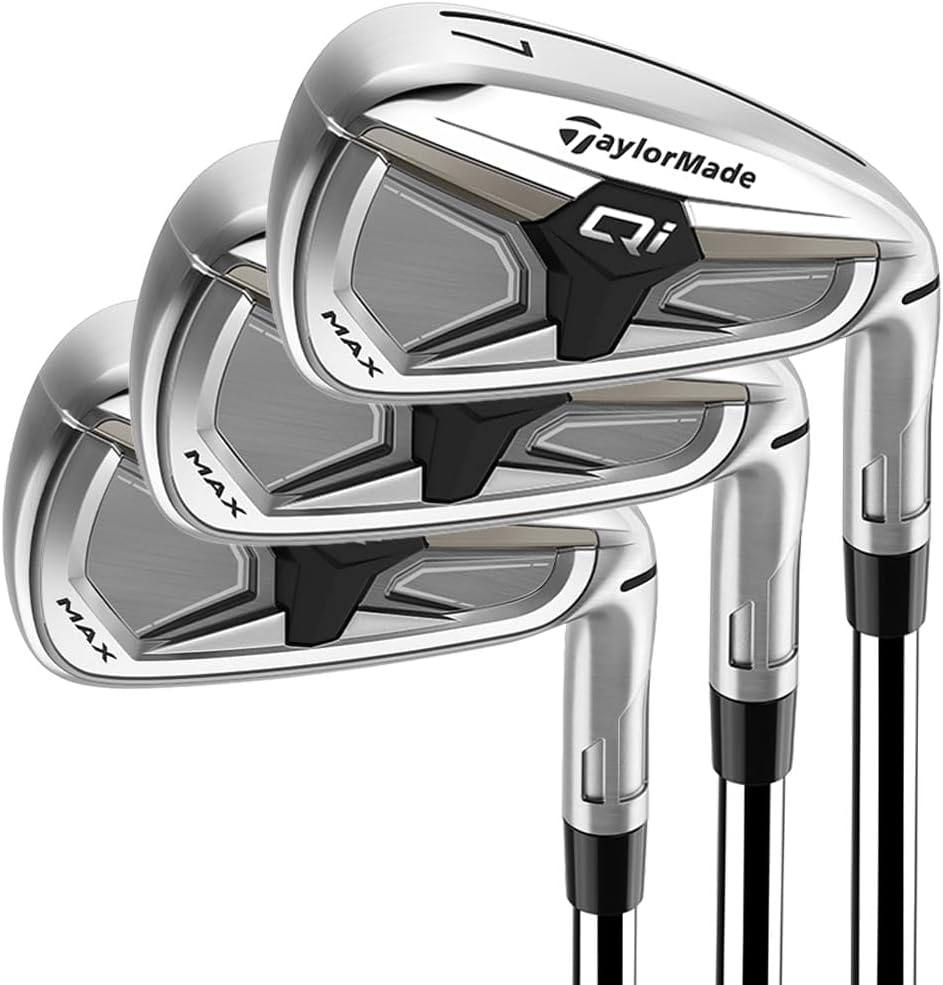
Verified Price: $1,099.99 (7-piece set, steel) / $1,199.99 (graphite) , taylormadegolf.com | Best for: 10–24 HCP | Rating: 9.6/10
The most consistent off-centre performance in our 2026 GI testing came from the Qi Max.
Notably, no single club stood out. Furthermore, performance held up across all nine of our testers regardless of face contact location.
In our testing, low-face and toe strikes maintained ball speed and direction more reliably than any other GI iron. That consistency is precisely what Cap Back design delivers.
Furthermore, the Qi Max produces noticeably higher ball flight than its competitors at equivalent loft.
For 12 to 24 handicap golfers, that launch characteristic directly addresses the most common scoring problem in this range.
In fact, consistent height consistently separates scoring categories. That closing height gap is often the key missing piece for mid-handicappers.
Addressing it directly is what moves the scoring needle.
In our testing, the 18-handicap tester produced his highest and most consistent peak height from the Qi Max. No adjustment period.
One trade-off worth understanding before buying: the Qi Max’s strong lofts can create gapping challenges.
Specifically, the 7-iron sits at approximately 26 degrees versus 31 degrees in a traditional iron.
That said, the PING G430 below produces more feedback at impact and more predictable approach shot spin.
Furthermore, it costs $150 less on sale. If feel matters as much as launch consistency, test both before deciding. One session on a launch monitor settles it. That difference is noticeable at impact.
2. PING G430, Best Feel in the Game Improvement Category
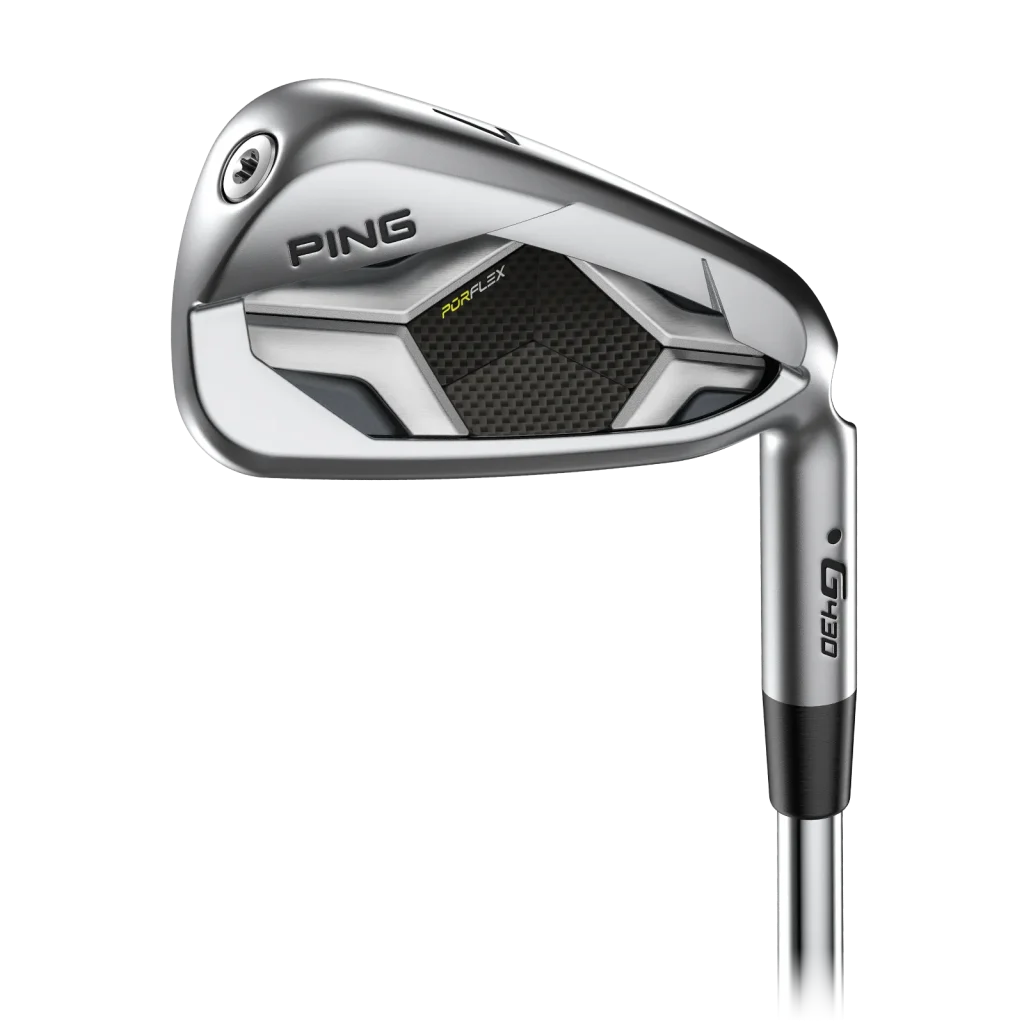
Verified Price: $949.98 (5-PW, steel, on sale) / $1,049.98 (graphite) , pgatoursuperstore.com. MSRP: $1,100.99 steel / $1,188.99 graphite | Best for: 12–22 HCP who want forgiveness with better feel feedback | Rating: 9.3/10
You trade 3 to 5 yards of carry for noticeably better impact feel. That is the PING G430 proposition in one sentence.
Whether that trade makes sense depends on how much feedback matters to your practice.
For golfers who want to know immediately whether they caught the sweet spot, the G430 delivers.
In our testing, its distinct, responsive click on well-struck shots matched nothing else in the GI category.
The Spinsistency groove technology delivered the most consistent spin rates on short iron shots in varying turf conditions in our testing, and more predictable stopping distances on approach shots to greens than competing GI irons.
PING’s colour-coded fitting system lets you order the irons in the correct lie angle from most major retailers at no extra charge.
That matters considerably for any golfer whose swing produces consistent directional patterns. In fact, a wrong lie angle perpetuates those patterns indefinitely.
Golfers below 80 mph swing speed who primarily struggle to get the ball airborne should choose the Qi Max. Below 80 mph, the higher launch matters more than the G430’s better feedback.
For golfers between 80 and 95 mph who want GI forgiveness without sacrificing feel, the G430 is the one to test.
That difference from the Qi Max is noticeable in both directions. At $949.98 on sale at PGA Tour Superstore, it represents exceptional value against the Qi Max at $1,099.99.
3. Mizuno JPX 925 Hot Metal,Best Game Improvement Iron Under $1,000
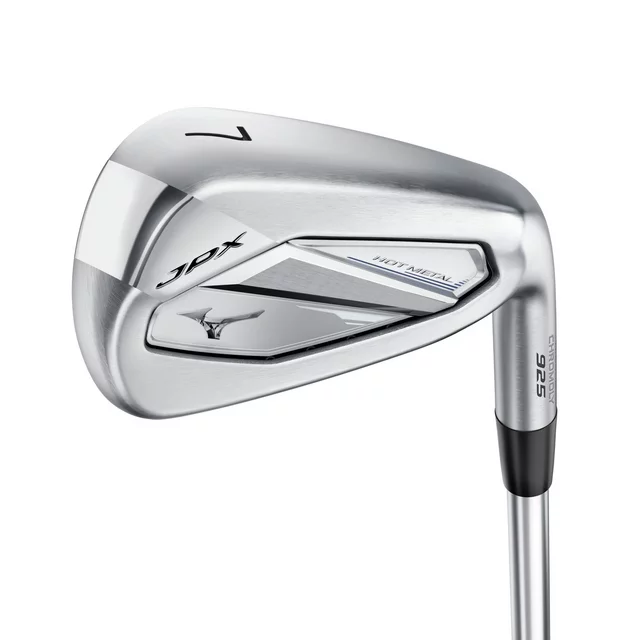
Verified Price: $150/club MSRP (5-PW = ~$900 for 6 clubs) , mizunogolf.com | Best for: 12–24 HCP who want Japanese engineering at sub-$1,000 pricing | Rating: 9.0/10
$150 per club is the MSRP for the Mizuno JPX 925 Hot Metal. That means you build exactly the configuration you need without paying for clubs you will not use.
In practice, a 5-PW set of six clubs comes to $900.
That puts it below both the Qi Max and the G430 in full-set pricing.
Furthermore, that budget advantage becomes meaningful when you factor in what the JPX 925 Hot Metal delivers.
Specifically, multi-material Nickel Chromoly construction with tungsten weighting appears in the Hot Metal lineup for the first time.
Furthermore, the Contour Ellipse face is 30% thinner than the previous generation.
Mizuno’s CORTECH face design produced consistent ball speeds in our testing.
That said, it is not as dramatically forgiving on extreme off-centre strikes as the Qi Max. That said, it outperforms what most golfers expect from a Japanese brand.
The higher launch and steeper landing angles from the tungsten-weighted 4 through 7 irons hold greens better than flat-landing GI irons.
That improvement applies consistently at similar distances.
For golfers who assumed Mizuno irons were out of reach, the JPX 925 Hot Metal changes both calculations. Granted, it is not the Qi Max in terms of raw off-centre consistency.
That said, it delivers genuine quality at a price that puts it in direct competition with budget-tier GI alternatives. None of those alternatives match its engineering at this price point.
Best Super Game Improvement Irons 2026 (20+ HCP and Beginners)
In fact, 25-handicap golfers and new players need the ball airborne more than anything else from their irons. In short, super game improvement irons exist for exactly that purpose.
Specifically, oversized heads, high offset, extra-wide soles, and weaker lofts maximise launch angle at slower swing speeds.
Furthermore, the performance gap between SGI and standard GI irons at 25 or above handicap is direct and score-affecting.
Also Read: Best Golf Irons for Beginners 2026: The Honest Buying Guide
1. TaylorMade Qi Max HL, Best Super Game Improvement Iron 2026
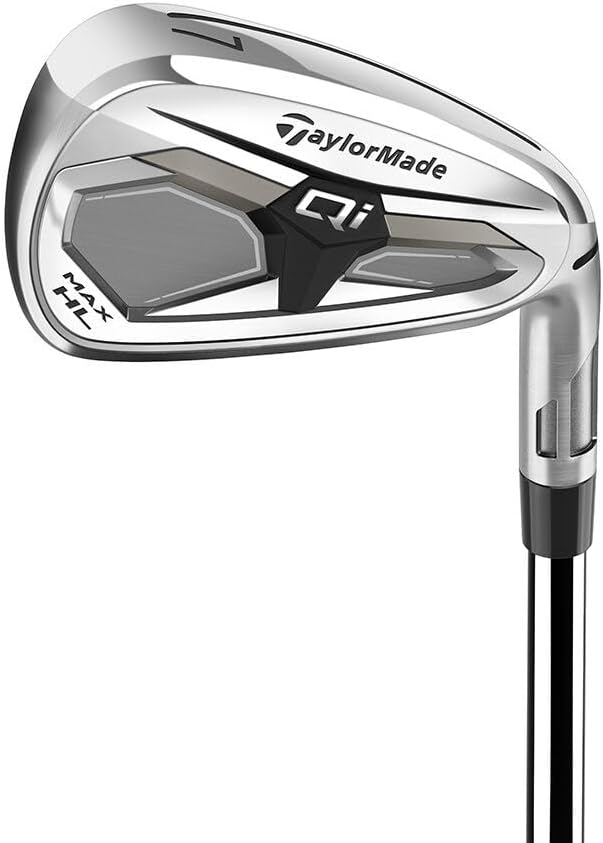
Verified Price: $1,099.99 (steel) / $1,199.99 (graphite) , taylormadegolf.com | Best for: 20+ HCP, beginners, sub-80 mph swing speeds | Rating: 9.4/10
The problem the Qi Max HL solves is ball flight that peaks too early.
At slower swing speeds, the ball drops too steeply without that extra launch. That pattern causes most fat and thin shots among high-handicap golfers.
In fact, HL stands for High Launch. Specifically, the lofts sit approximately two degrees weaker than the standard Qi Max.
Furthermore, the centre of gravity sits lower to produce maximum peak height from reduced swing speeds.
In our testing, our 26-handicap tester hit his highest and most consistent ball flight from the Qi Max HL. That result came from the first round, without any adjustment period.
The wide sole prevents the digging pattern on thin contacts more effectively than any other SGI iron in our testing.
That frustration is the most common complaint among high-handicap golfers on firm fairways.
In our testing, thin shots with the Qi Max HL still got airborne and held their line far better than thin shots from standard GI irons.
Beginners considering a complete set should also read our best beginner golf club sets guide before committing to standalone iron purchases , a complete set package often represents better value at this stage.
Best Players Distance Irons 2026 (5–14 HCP)
In fact, players distance irons are the most frequently misunderstood category in golf.
That said, they are not GI irons with a compact look. In fact, they are genuinely different constructions. They are genuinely different constructions.
Specifically, hollow body or forged with internal weighting, they deliver blade-like aesthetics at address and hollow-body performance underneath.
Furthermore, the 2026 players distance category showed the largest performance variation between picks of any category we tested.
Also Read: Best Players Distance Irons 2026: Tested for Feel, Distance, and Workability
1. TaylorMade P790 2025, Best Players Distance Iron 2026
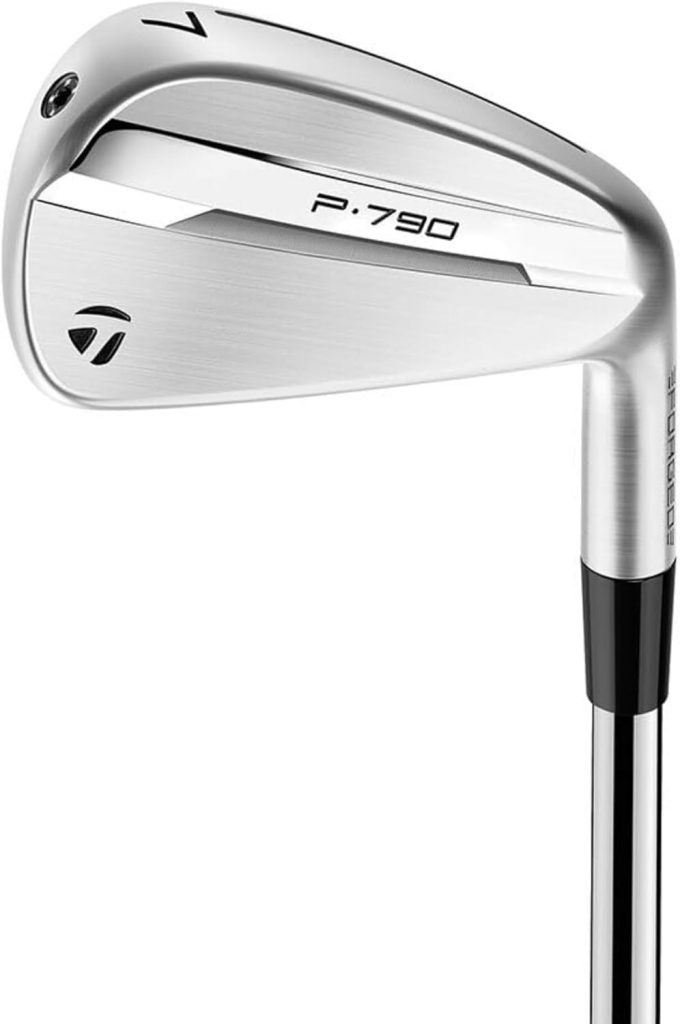
Verified Price: $1,399.99 (steel) / $1,499.99 (graphite) | Best for: 5–14 HCP who want blade aesthetics with GI-level distance | Rating: 9.6/10
In our full testing field, the P790 was the only iron that ranked in the top two in both the players distance category and the game improvement category. No other iron we tested crossed both rankings.
That result is the foundation of the P790’s reputation. That result explains why the P790 is the players’ distance benchmark across five generations.
Furthermore, it is more forgiving than any other PD iron. Notably, the compact profile better players demand at address stays intact.
The 2025 version introduces an ultra-high-strength 4340M forged face. Specifically, it is 20% stronger than the 2023 generation.
That enables a thinner construction and a sweet spot up to 24% larger.
Furthermore, SpeedFoam Air inside the hollow body produces the closest impact feel to a forged iron in any non-forged design.
Our 8-handicap tester described the P790’s feel as indistinguishable from a forged iron on well-struck shots.
The 2025 generation delivers this at the same $1,399.99 steel price as the 2023 version. That makes the upgrade straightforward for existing P790 owners.For golfers who prioritise feel over distance, the Mizuno JPX 925 Hot Metal Pro delivers a genuinely forged impact sensation.
That said, the P790’s hollow body does not fully replicate that sensation despite its quality. For golfers who want the best all-round players distance performance, the P790 sets the benchmark.
Also Read: TaylorMade P790 Review 2026: Tested for Distance, Feel, and Fit
2. Callaway Paradym Ai Smoke, Most Forgiving Players Distance Iron 2026
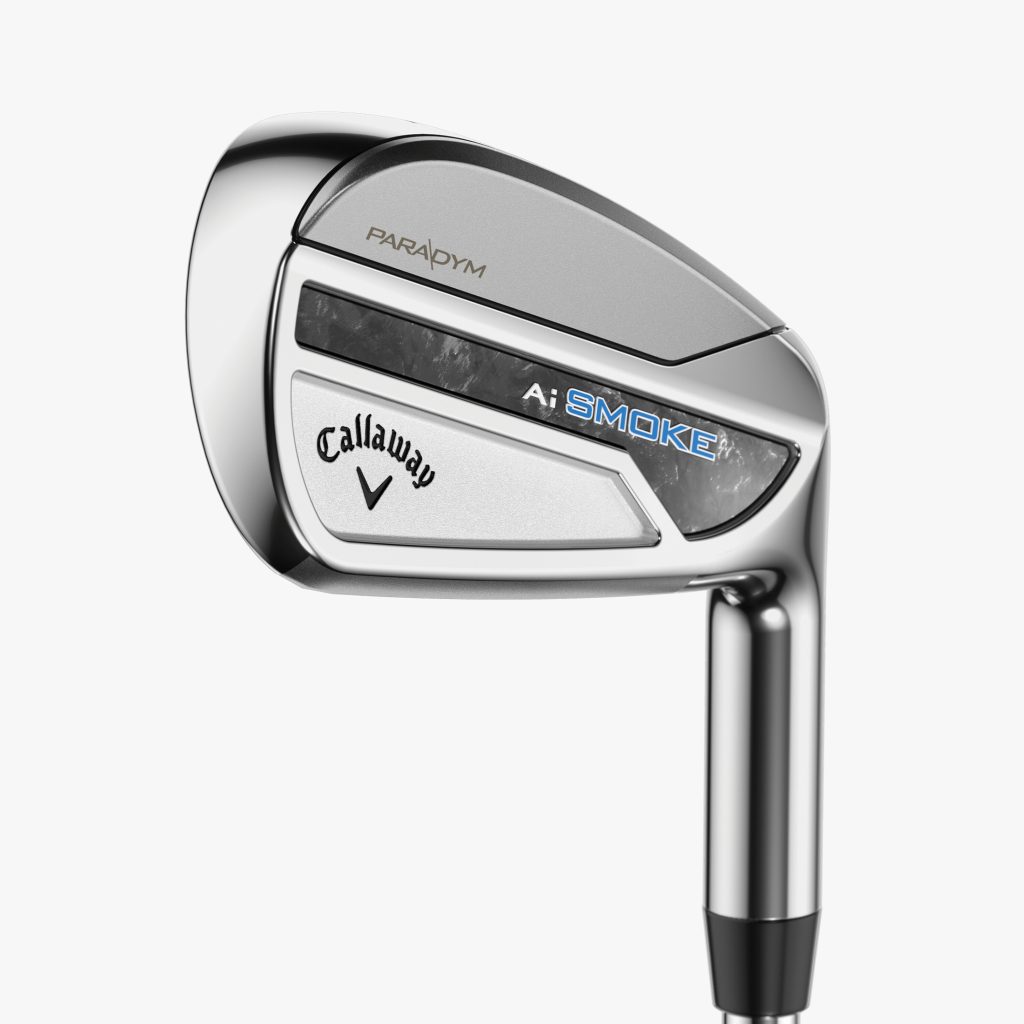
Price: ~$1,099 (check current price) | Best for: 8–14 HCP transitioning from GI irons who want the most forgiving PD option | Rating: 9.2/10
In fact, the Callaway Paradym Ai Smoke bridges game improvement and players distance more effectively than any other 2026 PD iron.
Where the P790 is the purist’s players’ distance iron, the Ai Smoke targets golfers who want a compact profile at address.
Specifically, their contact quality still benefits from wider dispersion tolerance.
The AI-designed urethane microsphere filling produced the smallest gap in distance between a perfect strike and a moderate mishit. That gap was the smallest of any PD iron we tested.
The visual profile at address is more GI-adjacent than the P790 or Mizuno JPX 925.
That is a more familiar experience for golfers moving up from a wide-sole GI iron. As a result, the Ai Smoke is a lower-risk first step into the players’ distance category.
It suits golfers at 10 to 14 handicap who are not yet certain they belong in PD. It does not deliver the same feel reward on well-struck shots as the P790.
Its distances also trail the P790 slightly. For golfers at the boundary between categories, it is the right starting point.
Test it before committing to a full PD iron. For golfers who know they belong in players distance, the P790 is the stronger long-term investment.
The Ai Smoke is the bridge; the P790 is the destination. The feel and workability reward grows with the game.
3. Mizuno JPX 925 Hot Metal Pro, Best Forged Players Distance Iron 2026
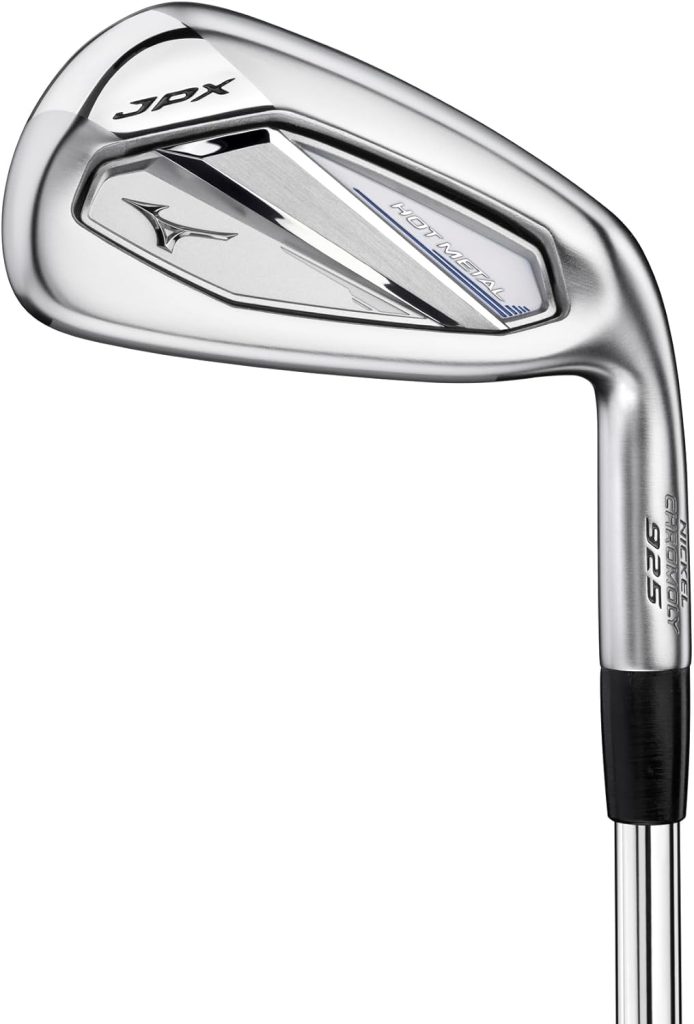
Price: ~$150/club ($900 for 5-PW), check current price | Best for: 5–12 HCP who want a sleeker profile with more workability and genuine forged feel | Rating: 9.3/10
Golfers who play the Mizuno JPX 925 Hot Metal Pro tend to keep it for several seasons.
The Chromoly 4140M construction and CORTECH grooves produce the most consistent approach shot spin of any PD iron we tested.
That is the characteristic that separates balls that hold greens from ones that release through.
In fact, Mizuno engineering built its reputation on exactly that spin consistency. Furthermore, the Hot Metal Pro delivers it at a price point still below the P790.
Notably, the profile is more compact than the standard Hot Metal.
Specifically, a slimmer topline, reduced offset, and shorter blade length give it a player’s iron look at address. That said, it does not match the P790 for raw carry distance.
In our testing, the P790 averaged 5 to 7 yards longer across the set. For golfers who chase carry numbers, choose the P790.
That distance advantage is consistent and measurable across the full set.
For golfers who prioritise feel and spin control on shorter irons, the Hot Metal Pro is the right choice. Furthermore, it comes in at a lower per-club price than the P790.
Best Players and Blade Irons 2026 (0–7 HCP)
Feel is not a marketing word in this category; it is the functional specification.
In short, players and blade irons are the most demanding category to hit consistently. However, they are also the most rewarding when struck correctly.
In fact, the feel difference between a perfectly struck blade and a perfectly struck GI iron is substantial.
Furthermore, the distance penalty from a moderate mishit on a blade is equally substantial.
That trade-off is the defining feature of the category. This category suits only golfers who consistently catch the centre of the face on the majority of shots.
1. Titleist T100 2025, The Benchmark Players’ Iron 2026
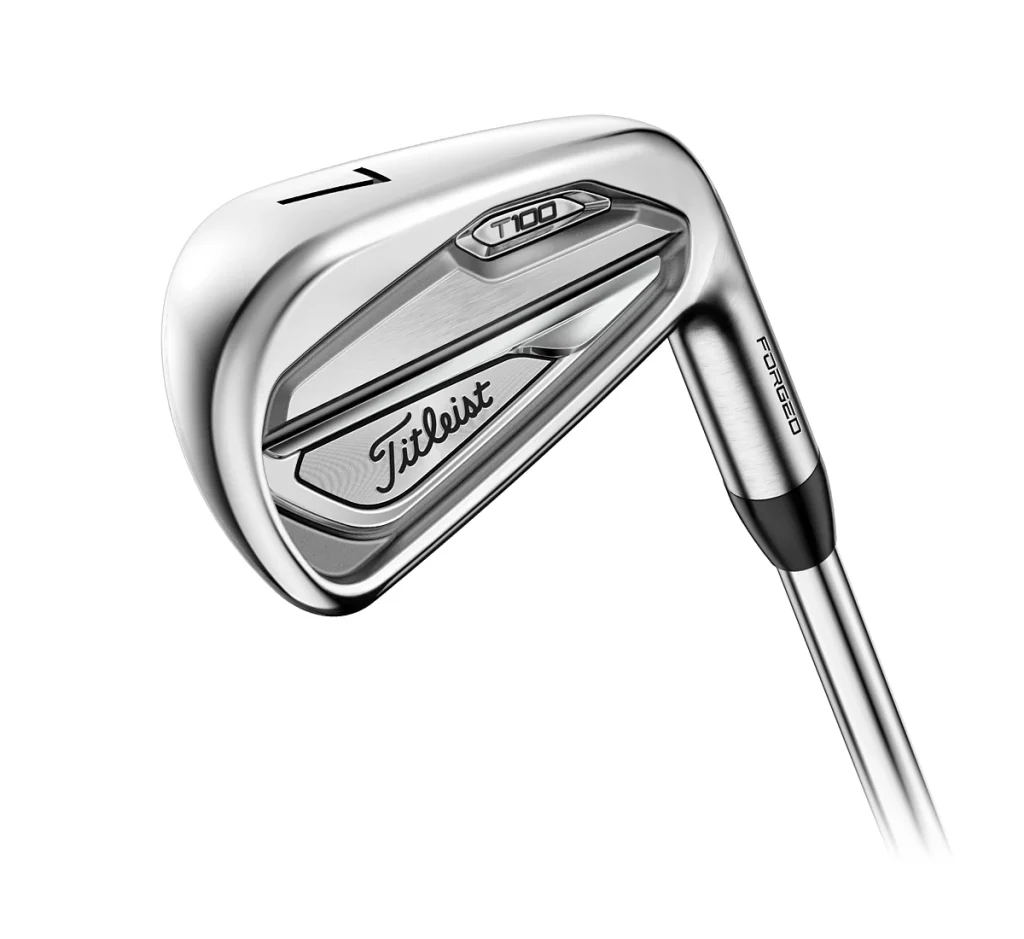
Verified Price: $1,399.99 , pgatoursuperstore.com, taylormadegolf.com | Best for: 0–7 HCP who want maximum feel, workability, and shot feedback | Rating: 9.6/10
Our 3-handicap tester flushed a 7-iron with the T100 from 175 yards. He paused before walking forward.
That pause said everything. That’s different, he said. That moment is what the T100 delivers.
No GI or players’ distance iron replicates the immediate feedback before you watch the ball.
In our full testing field, the T100 produced the best impact feel of any iron at any price point.
The 2025 version introduces Variable Face Thickness technology with more aggressive grooves in the mid and short irons.
As a result, more consistent spin control in variable conditions is the direct benefit.
Furthermore, a new muscle channel in the long irons lowers CG for improved peak height and carry consistency.
Furthermore, split high-density tungsten provides optimal CG placement and stability across the face.
The PGA Tour usage numbers reflect this clearly. Specifically, the T100 is the most played iron on Tour.
That is the most demanding real-world performance test available. That said, the T100 penalises mishits clearly and immediately.
Specifically, reduced ball speed, muted feedback, and a different impact sound all signal every miss.
Golfers at 5 to 9 handicap who find this punishing may find more confidence in the Titleist T150. Specifically, it offers the same profile with marginally more forgiveness.
For golfers who consistently find the sweet spot and want the most feel available in 2026, the T100 sets the standard. In short, there is nothing above it in this category.
Best Senior Golf Irons 2026
A lighter shaft does not make an iron worse; it makes it faster. Specifically, senior irons suit golfers whose swing speed has dropped below 85 mph.
They also suit golfers who experience joint discomfort with heavier steel shafts, or whose ball flight has flattened noticeably over time.
A lighter, higher-launching iron set adds carry distance and height for slower swing speeds through physics.
In short, this is not a reduction in quality. Furthermore, senior golfers who resist graphite shafts on principle leave measurable distance on the table for no scoring benefit.
1. PING G740 , Best Senior Iron 2026
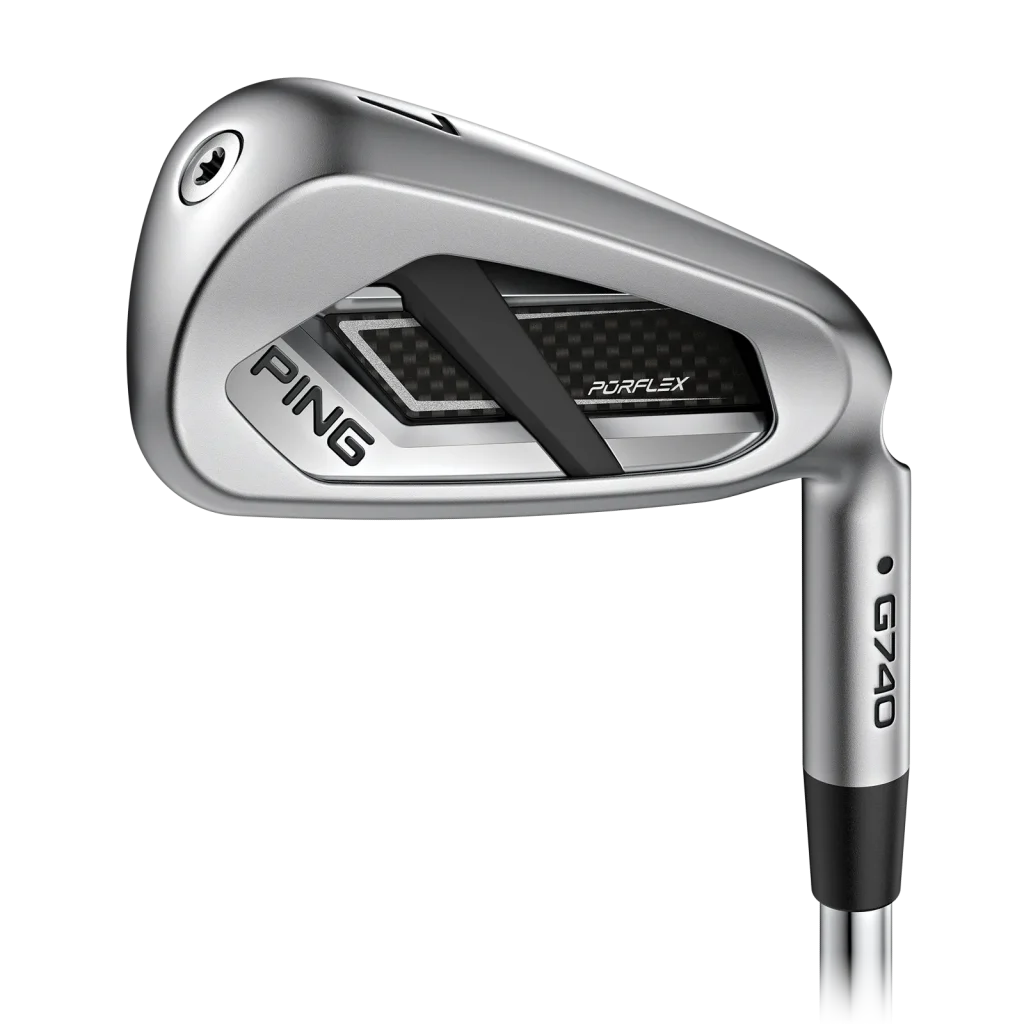
Price: $1,199.99 | Best for: Senior golfers at 70–90 mph swing speed who want premium forgiveness and the widest shaft fitting range | Rating: 9.4/10
The decision criterion that matters most for the G740, it is shaft fitting range. Specifically, PING’s colour-coded fitting system on the G740 covers Regular through Ladies flex in graphite.
Furthermore, it is the only iron in this guide where swing speed matching happens precisely without a custom fitting appointment.
That range matters because swing speed changes often run larger and faster than golfers realise, and a set purchased at 85 mph may need different specifications two seasons later at 77 mph.
Our testers measured the G740’s tungsten weighting and wide sole delivering maximum MOI in the senior category.
The profile looks less chunky at address than previous PING game improvement irons, a legitimate improvement that better players in the senior category noticed immediately.
In our testing, the G740 delivered the most consistent distance results of any senior iron we evaluated.
That consistency is the G740’s defining strength. PING’s custom fitting programme means you can often order the G740 in the correct lie angle from authorised retailers at no additional charge.
Hollow Body vs Forged Irons
| Factor | Hollow Body | Forged |
|---|---|---|
| Construction | Cast body with internal cavity filled with foam or polymer | Single piece of metal compressed under high pressure |
| Distance | Generally longer, face flexes more freely | Shorter on average, denser construction limits face flex |
| Feel at impact | Muted, internal filling dampens vibration | Crisp, tactile, immediate feedback on every strike |
| Forgiveness | Higher, weight repositioned for larger sweet spot | Lower, less ability to reposition weight inside a solid head |
| Best for | GI, SGI, and players distance categories | Players and blade categories, feel-focused mid-handicappers |
Cavity Back vs Blade Irons
| Factor | Cavity Back | Blade (Muscleblade) |
|---|---|---|
| Weight distribution | Perimeter, weight moved to edges for larger sweet spot | Central, weight concentrated behind sweet spot |
| MOI (forgiveness) | Higher, resists twisting on mishits | Lower, off-centre strikes produce significant speed and direction loss |
| Feel on mishits | Muted, mishits feel similar to pure strikes | Punishing, immediately different impact feel on every miss |
| Best for | 10+ HCP, most golfers | 0–7 HCP who consistently find the centre of the face |
In fact, cavity back outperforms blade for any golfer who misses the sweet spot on more than 30% of iron shots.
In fact, that describes most golfers below a 5 handicap. Below that threshold, blade begins to reward.
In fact, it applies to some golfers at 3 or 4 handicap as well. Unless you genuinely and consistently find the centre of the face on most iron shots, cavity back is the right structure.
Steel vs Graphite Iron Shafts
| Factor | Steel Shaft | Graphite Shaft |
|---|---|---|
| Weight | 85–130g | 50–85g |
| Feel feedback | Crisper, more feedback on mishits | Dampened, less vibration |
| Swing speed | Best above 85 mph | Best below 85 mph |
| Joint comfort | More vibration, harder on arthritic hands | Less vibration, better for arthritic hands and wrists |
| Cost | Usually standard, no upcharge | Often $100–$200 upcharge per set |
In fact, the practical rule: iron swing speed above 85 mph with no joint issues means steel is the right default.
Below 85 mph or with joint pain, graphite is the right engineering decision. It is not a beginner option.
It is not a compromise. The weight reduction from graphite produces measurable club speed improvement at slower swing speeds.
That is basic physics, not marketing. The stigma around graphite as a senior shaft persists without reason. In short, it costs golfers measurable distance for nothing.
Best Golf Irons 2026 by Budget
| Budget | Best Pick | Category | Honest Assessment |
|---|---|---|---|
| Under $1,000 | PING G430 ($949.98 on sale) or Mizuno JPX 925 Hot Metal (~$900 for 5-PW) | GI or GI-adjacent | The strongest value bracket in 2026. Premium engineering at accessible prices. PING for forgiveness and fitting system. Mizuno for Japanese craftsmanship and spin consistency. |
| $1,000–$1,200 | TaylorMade Qi Max ($1,099.99) or Callaway Paradym Ai Smoke (~$1,099) | GI or GI/PD bridge | The category leaders for mid-handicap golfers. Qi Max leads on off-centre consistency. Paradym Ai Smoke bridges GI and players distance for golfers transitioning between categories. |
| $1,300–$1,500 | TaylorMade P790 ($1,399.99) or Titleist T100 ($1,399.99) | Players Distance or Players | Justified for golfers who play 20+ rounds annually and have confirmed through testing that they belong in these categories. P790 for players distance. T100 for players and blade. |
Best Golf Irons 2026: Frequently Asked Questions
Category determines the answer. In our 2026 testing, the TaylorMade Qi Max at $1,099.99 delivered the most consistent off-centre performance in the game improvement category.
That is the benchmark for this category. For players distance (5–14 HCP), the TaylorMade P790 2025 at $1,399.99 ranked first overall in our testing.
For players and blades (0–7 HCP), the Titleist T100 2025 at $1,399.99 sets the benchmark. Nothing in 2026 surpasses it for feel.
For seniors, the PING G740 leads the category on forgiveness and shaft fitting range. That fitting range is the specific advantage.
No other senior iron offers the same fitting flexibility. Furthermore, the best value pick across all categories is the PING G430 at $949.98 on sale.
In short, it delivers premium GI performance under $1,000.
Start with your current handicap. Above 20 handicap: super game improvement. 10 to 20 handicap: game improvement. 5 to 14 handicap: players’ distance.
Below 5 handicap: players’ or blade. Contact quality matters more than the handicap number alone; if more than 30% of your iron shots are significantly off-centre, choose the more forgiving category regardless of handicap.
The most reliable test: count iron shots from 150 yards that land within 20 feet of the target. Be honest about that number.
Most golfers overestimate their contact quality. Under 30% means game improvement is the right category for your swing.
Above 50% means players’ distance suits your contact quality and rewards you for it. You get better feel and shot-making without sacrificing the forgiveness you no longer rely on.
In fact, a 15 handicap sits at the boundary between game improvement and players’ distance.
The TaylorMade Qi Max is the safer buy, with premium GI forgiveness that keeps the ball in play even when contact is inconsistent.
The Callaway Paradym Ai Smoke at approximately $1,099 bridges the two categories. It is worth testing before deciding.
For 15-handicap golfers who hit more than half the time solidly, the P790 at $1,399.99 is also worth a launch monitor session.
The feel difference from GI is immediately clear. When in doubt, choose the GI option; the cost of buying too much forgiveness is zero.
The cost of buying too demanding an iron is a full season of score damage. That asymmetry always favours the forgiving option. That asymmetry matters.
In short, the TaylorMade Qi Max HL and the standard Qi Max — both at $1,099.99 — target golfers with an 18 or above handicap.
Specifically, the Qi Max HL prioritises maximum launch and forgiveness for golfers who struggle primarily with ball height.
The standard Qi Max suits golfers who hit occasional solid shots and want GI forgiveness with slightly more feedback at impact.
Furthermore, the Mizuno JPX 925 Hot Metal at $150 per club is worth testing for high-handicap golfers who want Japanese engineering at a below-premium price.
Yes, for golfers at 5 to 14 handicap who have confirmed through testing that they belong in the players’ distance category. That confirmation matters.
The 2025 P790 at $1,399.99 delivers a 24% larger sweet spot than the 2023 version with better feel from the 4340M forged face material.
Our testing placed it first overall in the players’ distance category. Furthermore, it crossed into the top two in our game improvement testing.
No other iron in our full test field achieved both. For golfers below 5 handicap, the Titleist T100 delivers better feel and workability at the same price.
For golfers above 14 handicap, the Qi Max at $300 less delivers better forgiveness for their contact pattern.
Forged irons are not better than cast in absolute terms; they are different. Specifically, forged construction produces a denser grain structure and a softer impact feel.
By contrast, cast construction allows more complex internal shapes and weight repositioning.
That enables the hollow body technology that most GI and players’ distance irons use in 2026.
As a result, most GI and players’ distance irons use cast construction. Hollow body design cannot come from forging.
That is a physical constraint, not a design choice. Cast enables it. Forging does not.
That said, the Mizuno JPX 925 Hot Metal Pro bridges the gap with a forged face in a hollow body. In short, choose forged for feel.
Choose cast hollow body for distance and forgiveness.
In short, the $950 to $1,100 bracket delivers the best performance per dollar in 2026.
The PING G430 at $949.98 on sale, the Mizuno JPX 925 Hot Metal at approximately $900, and the TaylorMade Qi Max at $1,099.99 all deliver current-generation premium technology at mid-range pricing.
That said, spending above $1,400 on irons makes sense only for golfers who play 25 or more rounds annually.
Furthermore, confirm through fitting that you belong in the players or players distance category first.
Before spending $1,400, book a fitting session. In fact, the correct specifications in a mid-range iron outperform incorrect specifications in a premium iron every time.
Yes, for any golfer who plays more than 15 rounds per year, a fitting session pays for itself. A fitting session costs $100 to $250.
Specifically, it resolves shaft flex, shaft weight, lie angle, and grip size simultaneously.
Each variable can cost 5 to 10 yards of distance or 3 to 5 degrees of directional accuracy when wrong. Individually and cumulatively.
Our testing shows the golfer who benefits most from fitting is typically at 10 to 18 handicap.
That is where the performance gap between correctly and incorrectly specified irons is largest.
A 12-handicapper with the wrong lie angle consistently pushes or pulls approach shots. There is no swing-related reason for it.
A fitting removes that penalty permanently. A fitting removes that penalty permanently.
Furthermore, most major retailers credit the fitting fee against a subsequent iron purchase.
Best Golf Irons 2026: Final Verdict
Category first, model second. Every iron decision should start with the handicap table at the top of this guide.
Not with a brand preference. Not with a price point. In fact, the category mismatch error costs more strokes than any individual model choice.
Buying players’ irons at a 15 handicap, or staying in GI irons at a 5 handicap, produces the same result.
For golfers at 10 to 24 handicap, the TaylorMade Qi Max at $1,099.99 is the best available GI iron in 2026.
For golfers at 5 to 14 handicap ready for players’ distance, the P790 2025 at $1,399.99 leads the category.
Furthermore, it is the most consistent performer in the PD field.
For golfers who want premium GI performance under $1,000, the PING G430 at $949.98 on sale is the sharpest value pick in this guide. That is the number that defines the category.
For low-handicap golfers who want feel above all other factors, the Titleist T100 at $1,399.99 sets the standard.
Also Read:
