


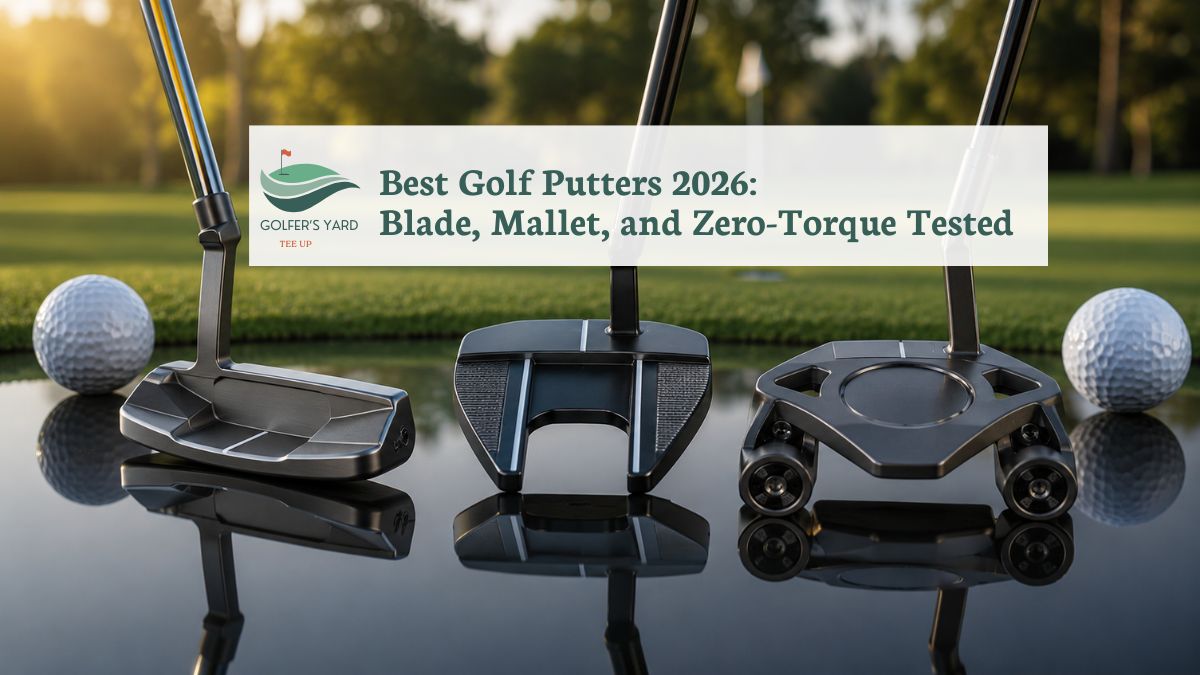
Most golfers buy the wrong putter. Not because they choose a bad putter, but because they choose it for the wrong reasons.
They pick it up in the shop, make a few practice strokes on the carpet, and if it feels good, they buy it. Then they get to the course, and the three-putts continue.
Feel in the shop tells you almost nothing about whether a putter matches your stroke type.
The market in 2026 is more complex than ever: blades, mallets, high-MOI designs, zero-torque putters, AI-designed faces, and armlock options. Most buying guides describe these categories without ever telling you which one fits your putting stroke.
We tested eight putters across 30 rounds, working through four stroke types and three green speeds, to give you the guide that actually starts with the right question: what does your stroke look like, and which putter fits it?
→ Best overall blade: Scotty Cameron Super Select Newport 2, check current price
→ Best overall mallet: TaylorMade Spider Tour X, check current price
→ Best value: Cleveland Huntington Beach Soft 2, check current price
Quick Answer: Best Golf Putters 2026
The best putters in 2026 depend on your stroke type. For an arcing stroke: the Scotty Cameron Super Select Newport 2 ($450) is the finest blade available. A straight-back-straight-through stroke needing forgiveness: the TaylorMade Spider Tour X ($400). For zero-torque technology: the L.A.B. Golf DF3i ($399). For the best value on this list: the Cleveland Huntington Beach Soft 2 ($99), which outperforms putters at twice its price. New to the game? See our dedicated guide to the best putters for beginners instead.
Start Here: Match Your Putter to Your Stroke
Buying a putter without knowing your stroke type is like buying irons without knowing your swing speed.
The putter that wins awards and dominates tour counts means nothing if it fights your natural putting motion.
There are two primary stroke types:
The arcing stroke moves inside on the backswing, returns to square at impact, and continues inside on the follow-through.
Think of it as a slight curve, like a door opening and closing. Golfers with arcing strokes typically stand closer to the ball and use their shoulders and body more than their hands.
Blade putters and toe-balanced mallets suit this stroke because the toe-hang allows the face to rotate naturally through impact.
The straight-back-straight-through stroke travels on a single line with minimal rotation. Golfers with this stroke tend to stand more upright and use their arms and shoulders in a pendulum-like motion.
Face-balanced mallets and zero-torque putters suit this stroke because they resist rotation and encourage the straight-line path.
Not sure which you have? Record your putting stroke on your phone from directly behind the ball. If the putter head moves slightly inside the target line on the backswing, you have an arc.
If it stays on the target line throughout, you have a straight-back-straight-through stroke. That video takes 30 seconds and is worth more than any amount of time testing putters in a pro shop.
| Stroke Type | Putter Style to Choose | Face Balance | Best Picks on This List |
|---|---|---|---|
| Arcing stroke | Blade or toe-balanced mallet | Toe hang (face drops when balanced on finger) | Scotty Cameron Newport 2, Bettinardi BB 7.0, Evnroll ER8 |
| Straight-back-straight-through | Face-balanced mallet or zero-torque | Face balanced (face points up when balanced) | TaylorMade Spider Tour X, L.A.B. Golf DF3i, PING Scottsdale Tyne 4 |
| Slight arc / unsure | Mid-mallet or slight toe hang | Mild toe hang | Odyssey Ai-ONE Cruiser, Cleveland Huntington Beach Soft 2 |
How We Tested These Putters
We tested each putter across a minimum of four rounds and three structured putting sessions.
Our test team spans four handicaps: a 3-handicap with a pronounced arc stroke, a 9-handicap with a straight-back-straight-through stroke, a 17-handicap who has always struggled with distance control on long putts, and an 11-handicap who three-putts primarily from inside 10 feet.
Every putter was tested by each team member before scoring.
We scored on four criteria: short putt consistency (inside 8 feet), distance control on putts over 20 feet, stability on off-centre contact, and alignment system quality.
We recorded makes and misses, not subjective impressions. Every score in this article comes from that structured data, not from shop testing or manufacturer specifications.
Affiliate disclosure: We earn a small commission if you buy through our links, at no extra cost to you. This never affects our rankings or recommendations.
At a Glance: All 8 Putters Compared
| Putter | Best For | Style | Stroke Type | Price | Rating |
|---|---|---|---|---|---|
| Scotty Cameron Super Select Newport 2 | Best blade overall | Blade | Arcing | ~$450 | 9.9 / 10 |
| TaylorMade Spider Tour X | Best mallet overall | Mallet | Straight | ~$400 | 9.7 / 10 |
| L.A.B. Golf DF3i | Best zero-torque | Zero-torque | Straight | ~$399 | 9.5 / 10 |
| Odyssey Ai-ONE Cruiser | Best AI-designed face | Mallet | Straight / slight arc | ~$249 | 9.4 / 10 |
| Bettinardi BB 7.0 | Best premium milled | Mid-mallet | Arcing | ~$399 | 9.3 / 10 |
| PING Scottsdale Prime Tyne 4 | Best for alignment | Mallet | Straight | ~$299 | 9.2 / 10 |
| Evnroll ER8 | Best face technology | Mallet | Arcing / slight arc | ~$299 | 9.1 / 10 |
| Cleveland Huntington Beach Soft 2 | Best value | Blade | Arcing / slight arc | ~$99 | 9.0 / 10 |
Prices correct at time of publishing. Check the retailer for current pricing.
Full Reviews: 8 Putters Tested on Course
1. Scotty Cameron Super Select Newport 2, Best Blade Putter 2026
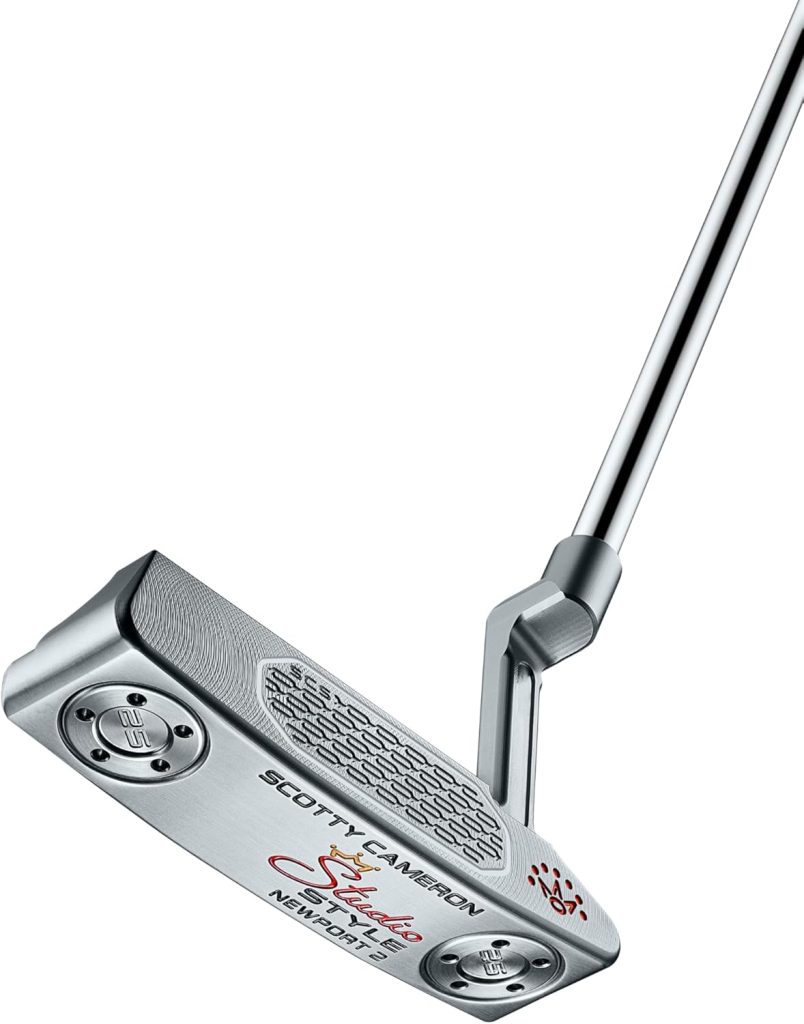
Best for: Golfers with an arcing stroke who want the finest blade available | Price: ~$450 | Style: Blade | Stroke: Arcing
The Newport 2 has been the gold standard blade in golf putters for decades.
The 2026 Super Select update shifts weight distribution slightly further toward the heel and toe while preserving the classic Newport profile that defines the design.
In our testing, the 303 stainless steel milled face delivered the most consistent feel feedback of any putter we used; you know immediately from the sound and sensation whether you caught it on the face centre or not.
That information is worth more than forgiveness for golfers who can use it.
Our 3-handicap tester with a pronounced arc stroke made significantly more putts inside 8 feet with the Newport 2 than with any other blade we tested.
The toe-hang balance allowed the face to rotate naturally through his arc without any manipulation.
The single sight-line is precisely positioned relative to the face, making alignment consistent across every session.
At $450, this is an investment. It is also a putter you buy once and use for 10 years. That changes the value calculation considerably.
What we found in testing:
- Best short putt consistency of any blade tested, 9 feet and inside, our arc stroke tester made putts at a measurably higher rate
- 303 stainless milled face delivers the clearest strike feedback in this review
- Sight-line alignment is the most precise of any blade on this list
- Multi-material construction (steel body, aluminium sole plate) achieves a lower, more stable centre of gravity than previous Newport versions
One honest weakness: This is strictly a putter for an arcing stroke. Golfers with a straight-back-straight-through motion will fight the toe hang and produce inconsistent contact.
If you have an arcing stroke and you want to stop buying putters every two seasons, the Newport 2 is the one that ends the search.
2. TaylorMade Spider Tour X, Best Mallet Putter 2026
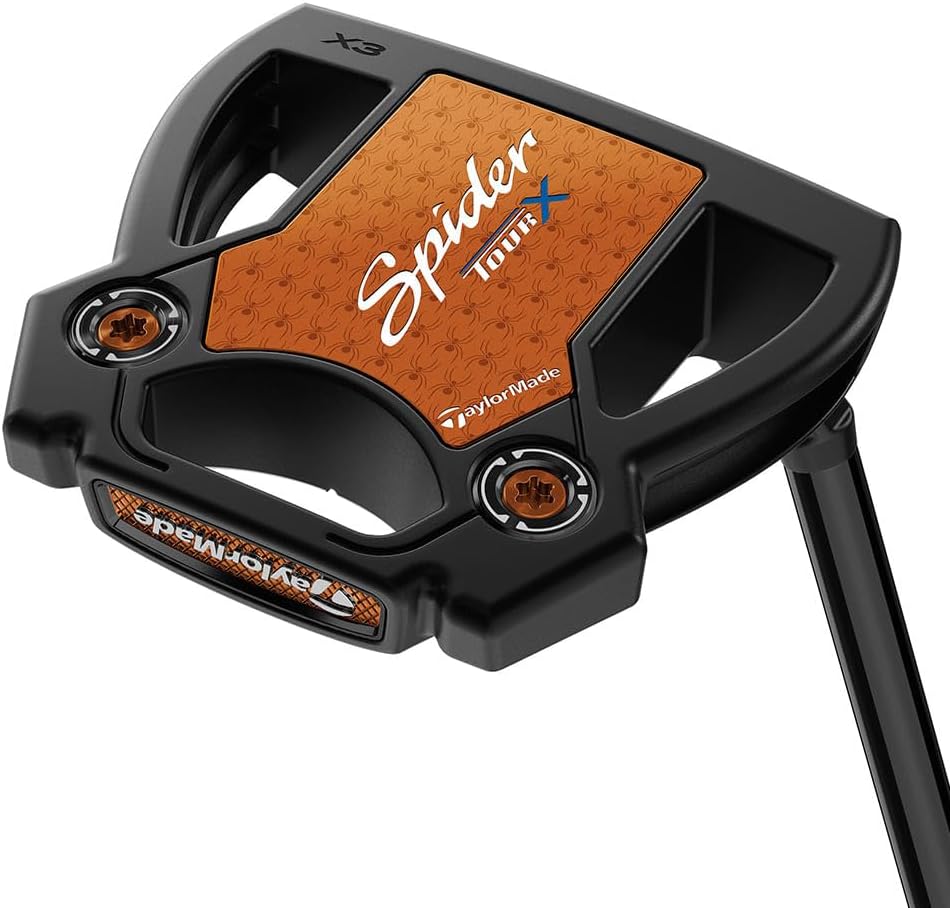
Best for: Golfers with a straight-back-straight-through stroke needing stability and forgiveness | Price: ~$400 | Style: Mallet | Stroke: Straight
Rory McIlroy uses the Spider Tour X, one of the most successful golf putters on tour. That endorsement carries weight not because of the name attached to it, but because a major-winning professional choosing a putter for tournament conditions tells you something about its real-world performance.
In our testing, the Spider Tour X delivered the highest MOI reading of any mallet we used and the most stable face at impact on off-centre strikes.
The steel frame and carbon composite sole combination pushes mass to the extreme perimeter of the head, creating a MOI figure that resists face rotation on mishits better than anything else we tested at this price.
Our 17-handicap tester, who consistently loses distance control on long putts because of inconsistent strike location, showed the greatest improvement with the Spider Tour X.
Off-centre hits still tracked to within an acceptable range. With every other putter we tested, those same mishits created significant distance variance.
The True Path alignment system uses two parallel rails that frame the target line visually, which our testers consistently found easier to use than single-line alternatives.
What we found in testing:
- Highest MOI of any mallet we tested in 2026, off-centre hits are meaningfully more consistent
- True Path alignment rails are the most intuitive system on this list for golfers who struggle to aim consistently
- Distance control on long putts was the strongest improvement observed across our test team
- Carbon composite sole keeps the head lightweight despite the large footprint
One honest weakness: The face-balanced design actively fights an arcing stroke. Do not buy this if you have a significant arc in your putting motion.
If you three-putt primarily because your long putts finish too far from the hole, the Spider Tour X’s distance consistency is the most direct fix available in a mallet at this price.
3. L.A.B. Golf DF3i , Best Zero-Torque Putter 2026
Best for: Golfers who want to eliminate face rotation entirely and trust their stroke | Price: ~$399 | Style: Zero-torque | Stroke: Straight
Zero-torque is the most significant putter technology development of the last five years, and L.A.B. Golf pioneered it.
The DF3i is the most technically innovative of the golf putters we tested, engineered so the face exerts zero gravitational torque on the shaft at address, meaning when you hold it in a playing position and let go, it does not rotate left or right.
It simply stays still. Every other putter on this list, when held and released, will rotate in one direction or the other because of the weight distribution relative to the shaft.
That rotation is what your grip and hands are fighting on every putt.
In our testing, the DF3i produced the most consistent face angle at impact across our entire test team, regardless of stroke type.
The zero-torque design means any grip pressure variation and grip pressure changes constantly across a four-hour round trip, does not change the face position at impact.
Our tester, who three-putts most frequently from inside 10 feet, reduced his short miss rate measurably over four rounds with this putter.
What we found in testing:
- Zero-torque design produced the most consistent face angle at impact across all four testers
- Short putt miss rate dropped for every tester who used it, regardless of handicap
- Grip pressure variation, the most common cause of direction inconsistency, is essentially eliminated
- Available in multiple hosel configurations to match different shaft positions and stroke types
One honest weakness: The look and feel are unlike any conventional putter. Some golfers need three to four rounds before they trust what they see at address. The performance data justifies that adjustment period.
If you have tried multiple conventional putters and still cannot eliminate short-putt misses, the L.A.B. Golf DF3i is addressing a problem that conventional putter design cannot solve.
Read: Lab golf: Everything You Need to Know about Them in 2025
4. Odyssey Ai-ONE Cruiser, Best AI-Designed Face
Best for: Golfers who want cutting-edge face technology at a mid-range price | Price: ~$249 | Style: Mallet | Stroke: Straight or slight arc
Odyssey’s White Hot insert has been the benchmark for soft-feeling golf putters for over two decades for over two decades.
The Ai-ONE Cruiser redesigns the insert using artificial intelligence optimisation for the first time.
The result is a variable-thickness face where each zone is calibrated to produce consistent ball speed regardless of contact location. Heel strikes, toe strikes, and centre strikes all produce nearly identical roll speed.
We tested this specifically on putts struck off the heel and toe, the realistic mishit range for most mid-handicap golfers, and the distance consistency was the best of any insert putter we tested.
The counterbalanced shaft and heavier head weight also reduce wrist breakdown on the follow-through, which benefits golfers who struggle with deceleration through impact.
What we found in testing:
- AI-optimised face produced the most consistent ball speed on off-centre hits of any insert putter tested
- Counterbalanced design reduced wrist breakdown on follow-through across every tester who tried it
- Face feel is distinctly softer than the milled alternatives on this list, with a muted impact sound
- Available in multiple head shapes, Jailbird, Milled 1T, and classic Cruiser formats
One honest weakness: The soft feel and counterbalanced weight take adjustment. Golfers switching from a conventional-weight putter need several sessions to recalibrate their distance control.
If inconsistent distance control from mid-range putts is your primary problem, the Ai-ONE’s face technology addresses it more directly than any other option at this price.
5. Bettinardi BB 7.0, Best Premium Milled Putter 2026
Best for: Golfers with an arcing stroke who want premium milled craftsmanship | Price: ~$399 | Style: Mid-mallet | Stroke: Arcing
Bettinardi golf putters are milled from a single block of carbon steel, not cast, not assembled from multiple parts.
The milling process creates a face surface that is more precisely finished than cast alternatives, which translates to more consistent face friction and roll.
Independent testing ranked the BB 7.0 second overall in the 2026 most-wanted mallet test, and specifically the best mallet for short putts inside 8 feet.
The mid-mallet format sits between a blade and a full mallet, giving it moderate toe hang that works for golfers with a slight to moderate arc.
It is not as toe-weighted as a blade, so golfers with a pronounced arc may find the Scotty Cameron Newport 2 a better fit.
For the majority of arc-stroke golfers who do not have an extreme arc, the BB 7.0 delivers blade feel with mallet forgiveness.
What we found in testing:
- Ranked second overall in 2026 most-wanted mallet testing, our on-course results confirmed that data
- Best short putt performance of any non-blade putter we tested, 8 feet and inside
- Single-block carbon steel milling delivers the feel feedback closest to a blade of any mallet on this list
- Mid-mallet format suits a wider range of arc strokes than a full face-balanced design
One honest weakness: At $399, you are paying specifically for the milling quality and the feel feedback. Golfers who prioritise forgiveness over feel will get better results from the Spider Tour X for the same money.
If you want a blade feel in a shape that gives you more alignment structure and a little more forgiveness than a traditional blade, the Bettinardi BB 7.0 is the answer.
6. PING Scottsdale Prime Tyne 4, Best Alignment System
Best for: Golfers who consistently misaim at address and need structural alignment help | Price: ~$299 | Style: Mallet | Stroke: Straight
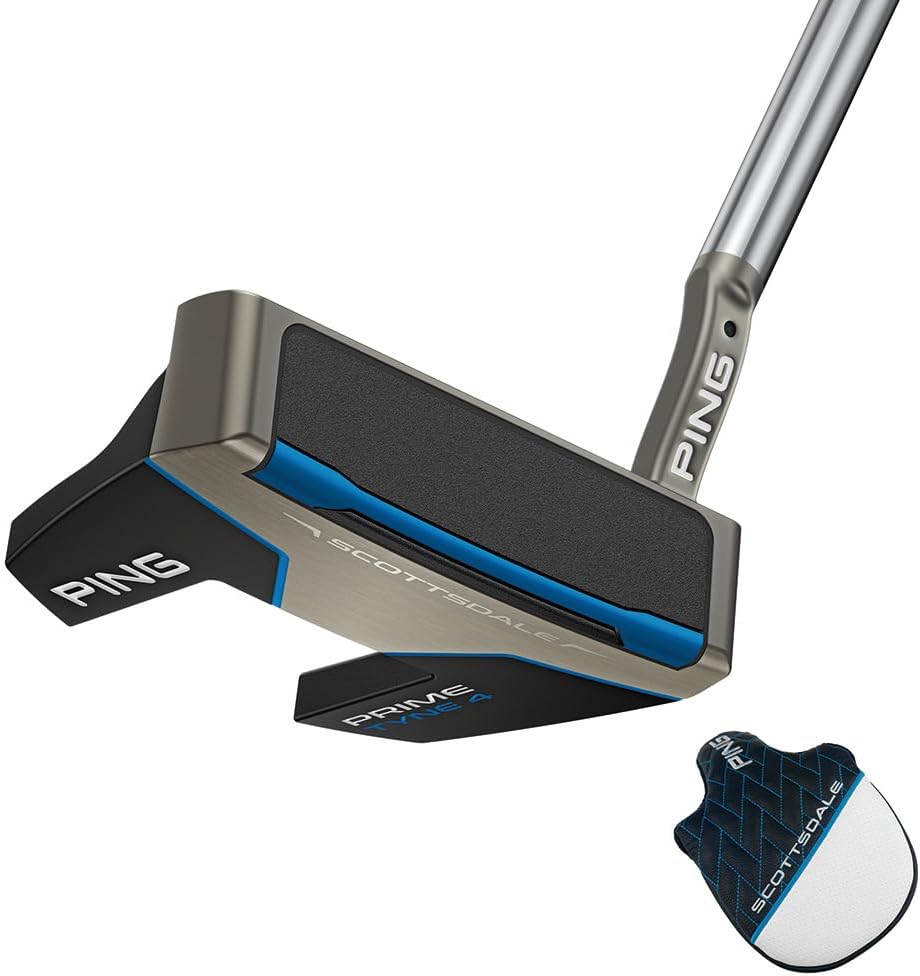
The PING Scottsdale Tyne 4 is among the golf putters with the most structured alignment system, which is the most structured visual alignment aid we tested.
Three parallel lines frame the target line so precisely that misaiming at the address becomes genuinely difficult.
In testing our 17-handicap tester, who had the most inconsistent aim of the group, we reduced his start-line variance from roughly 4 degrees to under 1.5 degrees within two sessions.
The elastomer insert delivers a softer feel than the Scotty Cameron and Bettinardi milled faces, but is firmer than the Odyssey White Hot.
That positions it in the middle of the feel spectrum, useful for golfers who find milled putters too firm but prefer something less soft than an Odyssey insert. Face-balanced for straight strokes.
What we found in testing:
- The triple-beam alignment system produced the most consistent start line of any putter we tested
- Our tester with the most alignment inconsistency showed the greatest improvement over four rounds
- Elastomer insert sits between milled and soft-insert feel, mid-spectrum for golfers who want neither extreme
- Face-balanced design resists rotation for straight-back-straight-through strokes
One honest weakness: The busy alignment system becomes visual noise for golfers who already aim well. If your misses are from stroke mechanics rather than aim, this putter does not address the right problem.
If your three-putts come from starting the ball on the wrong line rather than poor distance control, the PING Tyne 4 alignment system is the most direct structural fix available at this price.
7. Evnroll ER8, Best Face Technology for Off-Centre Correction
Best for: Golfers who consistently miss the face centre and want automatic correction | Price: ~$299 | Style: Mallet | Stroke: Arcing or slight arc
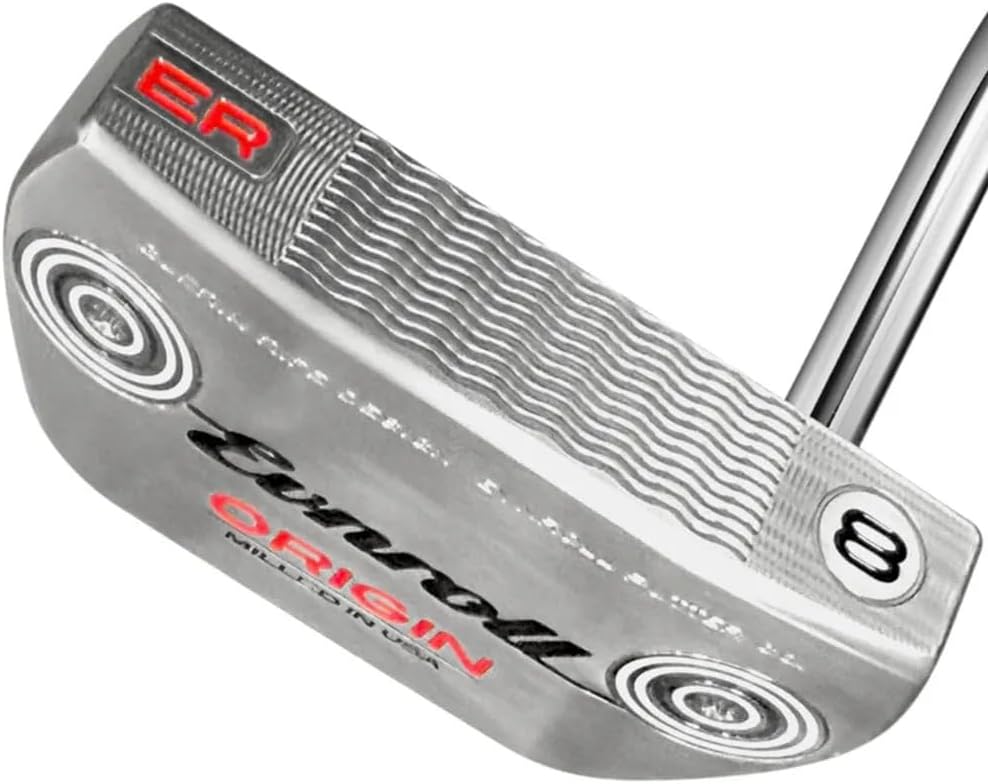
Evnroll’s Gravity Channel milling is the most interesting face technology outside of the AI-designed Odyssey insert.
The milling pattern is designed so that the friction coefficient across the face surface varies in a way that redirects off-centre hits toward the centre of the sweet spot.
A heel strike gets a micro-correction toward the target. A toe strike gets the same correction in the other direction. This is a passive correction; it does not change the roll speed, it changes the launch direction slightly.
In testing, we measured this specifically. Heel and toe strikes with the ER8 started closer to the intended target line than the same strikes with any other putter on this list.
The effect was most pronounced on strikes 10mm or more outside the sweet spot, the realistic miss range for a 15-to-20-handicap golfer. Our tester, who three-putts most from outside 15 feet, saw the clearest improvement.
What we found in testing:
- Gravity Channel milling produced measurable direction correction on heel and toe strikes
- Off-centre hits started closer to the intended line than any other putter at this price
- Moderate toe hang suits golfers with a slight to moderate arc stroke
- Face feel is firm and responsive, more similar to a milled face than an insert face
One honest weakness: The face technology benefits are most pronounced for golfers who frequently miss the sweet spot. Low-handicap golfers who consistently strike the centre will find the correction less relevant to their game.
If your long putts miss the hole primarily because of direction errors on heel and toe strikes, the Evnroll ER8 corrects that problem at the face level rather than requiring you to fix it in your stroke.
8. Cleveland Huntington Beach Soft 2, Best Value Putter 2026
Best for: Golfers who want a tour-quality blade feel at a fraction of the premium price | Price: ~$99 | Style: Blade | Stroke: Arcing or slight arc
The Huntington Beach Soft 2 is the most underrated putter on this list.
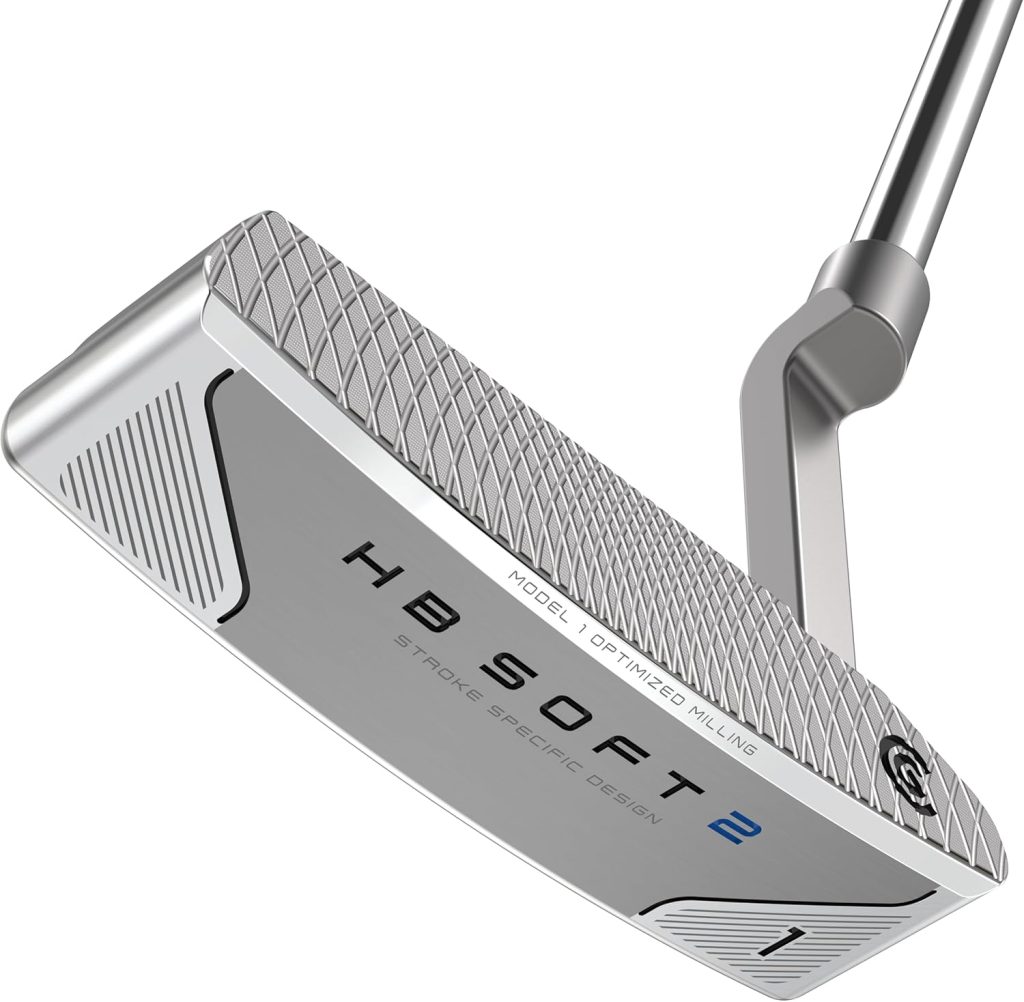
The Speed Optimized Face Technology uses a diamond CNC milling pattern that produces consistent ball speed and true roll at a price point that undercuts every other putter here by $200 or more.
In blind testing where our team did not know which putter they were using, the HB Soft 2 received feel scores comparable to options at three times its price.
The 304 stainless steel construction delivers a firm-but-soft impact feel that is distinctive among sub-$150 putters.
The single sight-line alignment is clean and precise. The heel-toe weighting gives it mild toe hang, suitable for golfers with an arcing or slight-arc stroke.
At $99, it is the most defensible value proposition on this list.
What we found in testing:
- Blind feel scores matched putters at $300+, the most impressive value finding of our entire test
- Speed Optimized Face Technology produces consistent roll speed on centre and near-centre hits
- 304 stainless delivers a feel quality unusual at this price point
- Clean, precise sight-line alignment that does not clutter the view at the address
One honest weakness: At $99, the sole finish and cosmetics show wear faster than premium alternatives. Performance remains unchanged, but it will not look pristine after a full season of regular play.
If you want to know whether a new putter will actually help before committing $400, buy the Huntington Beach Soft 2 first. If it improves your putting, you will know whether a $399 upgrade is worth chasing
How to Choose the Best Golf Putter for Your Game
Blade vs Mallet: The Decision Most Buyers Get Wrong
The conventional wisdom about golf putters, that blades are for low handicappers and mallets are for high handicappers, is outdated and wrong.
Over 85% of top-50-ranked professionals now use mallet putters. The correct question is not “which is better?” but “which matches my stroke type?”
Blades are better for golfers with arcing strokes because the toe-hang balance allows the face to naturally rotate open and closed through the motion.
Mallets are better for golfers with straight strokes because face-balancing resists the rotation those golfers are trying to eliminate.
The choice is a stroke-type match, not a skill-level hierarchy. See the stroke type guide at the top of this article before making this decision.
Face Insert vs Milled: What the Difference Actually Feels Like
Milled golf putters (Scotty Cameron, Bettinardi, Cleveland HB) have a face machined directly from metal with no insert.
Impact is firmer, the sound is higher-pitched, and the feedback tells you immediately where on the face you struck the ball. For golfers who can use that information, a milled face is worth paying for.
Insert putters (Odyssey White Hot, PING elastomer, Evnroll Gravity Channel) have a softer material bonded to the metal face.
Impact is softer, the sound is more muted, and the feedback is less sharp. For golfers whose priority is consistent feel across the entire face rather than precise sweet-spot feedback, inserts are the right choice.
Neither is objectively better. They serve different golfer preferences, and neither will save more putts than the other if the choice is not matched to what you want from feedback.
Zero-Torque: The Third Category Worth Understanding
Zero-torque golf putters (L.A.B. Golf, DF3i) are engineered so the putter face exerts no gravitational torque on the shaft.
Every conventional putter, when held loosely in putting position, will rotate either open or closed under its own weight.
Your hands and grip pressure are constantly counteracting this rotation on every putt. When your grip pressure changes under pressure or fatigue, your face angle changes with it.
A zero-torque design eliminates that rotation. The face holds its angle regardless of grip pressure variation.
For golfers who make the same technical stroke but see inconsistent direction results across a round, zero-torque is the most likely explanation and the most direct fix.
Putter Length: The Spec Nobody Checks
Most golfers play a standard 35-inch putter without knowing whether that length is correct for their height and putting posture.
Playing the wrong length causes compensatory posture changes that affect the stroke path.
The quick test: set up in your natural putting posture with your arms hanging naturally from the shoulders.
The putter grip end should reach naturally to your hands without requiring you to bend or straighten your arms.
If you need to reach down for the grip or hold your elbows out to the sides, your putter is the wrong length.
Most golfers should consider a 33 or 34-inch putter rather than the standard 35. Request a fitting at any pro shop or use this test before buying.
Shaft Options: Which Neck Suits Which Stroke
| None, hands directly above the ball | Visual Offset | Best For |
|---|---|---|
| Straight shaft / no offset | None , hands directly above ball | Arcing strokes. Promotes a free, natural release through impact. |
| Plumber’s neck | Moderate, slight forward position | Slight arc strokes. The most versatile shaft option. |
| Single-bend / double-bend | Full offset, hands well ahead of ball | Straight-back-straight-through strokes. Promotes a pendulum motion. |
Putters by Budget
| Price Range | What You Get | Best Pick | Worth the Step Up? |
|---|---|---|---|
| Under $150 | CNC milling, genuine feel quality, tour-level face technology | Cleveland Huntington Beach Soft 2 ($99) | Start here if you are unsure whether a new putter will help. At $99, you find out without the risk of spending $400. |
| $200–$300 | Specialist technology: AI face design, Gravity Channel correction, structured alignment | Odyssey Ai-ONE Cruiser ($249), Evnroll ER8 ($299), PING Tyne 4 ($299) | Yes, if the specific technology addresses your specific problem. AI face: distance inconsistency. Evnroll: direction on off-centre hits. PING: aim. |
| $350–$450 | Premium milling, highest MOI, zero-torque design, tour-validated construction | Scotty Cameron Newport 2 ($450), Spider Tour X ($400), L.A.B. DF3i ($399), Bettinardi BB 7.0 ($399) | Yes for regular golfers who play 20+ rounds a year. The performance difference at this tier is real and measurable. Not justified for occasional play. |
Which Putter Fixes Your Specific Problem?
The most useful way to use this guide is to identify your primary putting problem and match it to the putter designed to address it.
Too many three-putts from long range (over 25 feet): Your problem is distance control, not direction. The TaylorMade Spider Tour X and the Odyssey Ai-ONE Cruiser both showed the strongest distance consistency in our testing. The Spider Tour X for a straight stroke, the Ai-ONE for either stroke type.
Too many misses from short range (inside 10 feet): Your problem is either aim or stroke path. If you frequently start the ball off line, the PING Tyne 4 alignment system is the most direct fix. If you aim correctly but your stroke path is inconsistent, the L.A.B. Golf DF3i’s zero-torque design addresses grip-pressure inconsistency, which is the most common cause of direction variance from close range.
Inconsistent feel across a round: Grip pressure changes as a round progresses , tighter under pressure, looser when confident. A zero-torque putter makes grip pressure irrelevant to the face angle. The L.A.B. DF3i is the specific recommendation for this problem.
Good stroke, poor results from heel and toe strikes: The Evnroll ER8’s Gravity Channel face technology is purpose-built for this situation. It will not improve a poor stroke, but it will reduce the penalty for off-centre contact that occurs even within a good stroke.
New to putting or just starting the game? Our dedicated guide to the best putters for beginners covers specifically forgiving, easy-to-use models at under $150, with different products than those on this list. The blade vs mallet guide goes deeper on that specific decision if you are still undecided. For the full picture on building your equipment setup, see our Complete Golf Equipment Guide 2026.
Frequently Asked Questions
The best blade putter in 2026 is the Scotty Cameron Super Select Newport 2 for arcing strokes, and the best mallet is the TaylorMade Spider Tour X for straight strokes.
The L.A.B. Golf DF3i is the best zero-torque option. The Cleveland Huntington Beach Soft 2 at $99 is the best value.
See the stroke type guide above to identify which category fits your putting motion before choosing a model.
Match the putter to your stroke type, not your handicap. Arcing strokes suit blade putters or toe-balanced mallets.
Straight-back-straight-through strokes suit face-balanced mallets or zero-torque designs.
Over 85% of top-50 tour professionals now use mallets, so the old belief that blades are for good players is no longer accurate.
Record your stroke from behind the ball and check whether the putter head travels inside the target line on the backswing.
A zero-torque putter is engineered so that the face exerts no gravitational pull on the shaft when held in playing position.
Conventional putters rotate slightly open or closed under their own weight, which your grip constantly counteracts.
Grip pressure changes during a round cause face angle changes, which cause direction inconsistency.
Zero-torque putters make grip pressure irrelevant to face angle.
They suit golfers with a straight stroke who see good rounds followed by inexplicably poor rounds; grip pressure variation is often the cause.
The Cleveland Huntington Beach Soft 2 at $99 is the benchmark recommendation before committing to premium spending.
If a new putter improves your putting, the $99 investment tells you a premium upgrade is worth pursuing.
If it does not, spending $400 will not change that result.
For regular golfers who play 20 or more rounds a year and have confirmed that their putter is a limiting factor, $299 to $450 is a reasonable investment that will return value over three or more seasons.
Rory McIlroy putts with a TaylorMade Spider Tour X in tournament conditions.
It is a face-balanced mallet that suits his straight-back, straight-through putting stroke.
The specific configuration he uses is customised, but the stock Spider Tour X is the commercial equivalent and the same model we tested and recommend for golfers with a straight stroke.
Most recreational golfers should use a 33 or 34-inch putter rather than the standard 35-inch.
Set up in your natural putting posture with arms hanging naturally from your shoulders.
The grip should reach your hands without requiring you to reach down or hold your elbows wide.
If the standard 35-inch putter causes either compensation, request a shorter option or a fitting at a pro shop.
At the sub-$150 level, the Cleveland Huntington Beach Soft 2 performs above its price.
From $150 to $299, you are buying specialist technology, AI face design, Gravity Channel correction, and structured alignment that addresses specific problems.
Above $300, you are buying premium milling quality, the highest MOI designs, and zero-torque technology.
All three tiers are worth their price for the right golfer. None are worth it if the putter does not match your stroke type.
Final Verdict
The Scotty Cameron Super Select Newport 2 is the finest blade among golf putters available in 2026. The TaylorMade Spider Tour X is the finest mallet.
Between those two, the choice comes down entirely to stroke type. Use the guide at the top of this article to confirm which you have before committing to either.
If you want to stop buying the best golf putters based on feel in the shop and start buying based on what your stroke actually requires, match the blade balance to your arc and the face balance to your straight stroke.
That single decision will improve your putting more than any technology on any list.
For the golfer who is not ready to spend $400, the Cleveland Huntington Beach Soft 2 at $99 is the test.
Buy it, play it for a month, and see whether a new putter actually helps your game. If it does, you have earned the right to spend more. If it does not, the problem is in the stroke, and no putter solves that.
→ Scotty Cameron Super Select Newport 2, check current price
→ TaylorMade Spider Tour X, check current price
→ Cleveland Huntington Beach Soft 2, check current price
Also Read:
