



You have been playing golf for twenty or thirty years. You know the game. What you have noticed is that the distances are not what they were.
The 7-iron that used to go 160 yards is going 140. The driver that felt effortless at 50 now requires noticeably more effort for noticeably less result. That is not you losing the game.
That is physics, specifically, the physics of what happens to ball speed when swing speed decreases by 15 to 20 percent over a decade.
The equipment response to that physics is specific, measurable, and largely ignored by the club’s most senior golfers, who are still carrying.
Lighter shafts, higher loft, more flexible faces, and longer club lengths all recover yards that declining swing speed would otherwise permanently surrender.
The clubs in this guide are engineered for exactly that recovery.
We tested seven sets and individual clubs over 20 rounds with four testers, ages 65 to 76, and swing speeds ranging from 68 to 84 mph.
Every recommendation in this article is matched to the specific problem it solves: distance loss, joint pain, outdated technology, or the question of whether to upgrade at all.
→ Best overall iron set: PING G740 Irons — check current price
→ Best for senior-specific engineering: XXIO 13 Irons, check current price
→ Best value complete set: Cleveland Launcher XL2 Set, check current price
Quick Answer: Best Golf Clubs for Seniors 2026
The best iron set for seniors in 2026 is the PING G740 ($1,099) for overall performance and forgiveness. For golfers who play regularly and prioritise feel, the Mizuno JPX 925 HL ($999) is the best-feeling game-improvement iron available. Best value at a lower price, the Srixon ZXiR HL ($799) closes most of the G740’s performance gap for $300 less. Slow swing speeds below 75 mph, the XXIO 13 ($1,400) remains the specialist recommendation. Before buying anything: read the swing speed decline section below. The right choice depends on your current mph, not your best-ever mph.
The Swing Speed Decline Guide: What’s Actually Happening and How Clubs Fix It
Golf equipment is designed around swing speed. Every specification, loft, shaft flex, face thickness, and club weight is optimised for a target swing speed range.
The problem for senior golfers is that the equipment most of them are still using was spec’d for a swing speed they no longer have.
The average male golfer loses 1 to 2 mph of swing speed per year from age 55 onwards. A golfer at 95 mph at age 55 is likely swinging 80 to 85 mph by 65.
By 75, that number is 70 to 75 mph. The equipment adjustment required for that 20-mph decline is significant. It is not a matter of trying harder.
| Your Current Driver Speed | What You’ve Probably Lost | Equipment Adjustment Needed | Best Clubs for You |
|---|---|---|---|
| Above 85 mph | 0–10 yards from peak | Light graphite shaft, 10.5–12° driver loft | PING G740, Mizuno JPX 925 HL |
| 75–85 mph | 15–25 yards from peak | Senior flex graphite, 12–14° driver, higher iron loft | Srixon ZXiR HL, Cleveland Launcher XL2 |
| 65–75 mph | 25–40 yards from peak | Ladies/Senior A-flex, 14–15° driver, ultralight clubs | XXIO 13, Wilson Staff D9 Set |
| Below 65 mph | 40+ yards from peak | Maximum loft, ultralight shafts, hybrid replacing long irons | XXIO 13, Cleveland Launcher Halo XL Hybrid |
The loft truth that most seniors have not been told: as swing speed declines, the optimal driver loft increases.
A golfer swinging at 72 mph needs 13 to 15 degrees of driver loft. To achieve the launch angle that maximises carry distance.
The 9-degree driver they used at 95 mph actively reduces their carry at 72 mph. This is not a matter of preference. It is physics.
Getting the loft right before buying anything else is the most important equipment decision a senior golfer can make.
Graphite vs Steel Shafts: The Honest Case for Switching
Many senior golfers are still playing steel shafts. Some use them because that is what they have always played.
Some use them because they associate graphite with beginner sets. Both of those reasons are wrong, and the distance loss from steel shafts at slower swing speeds is measurable.
Graphite shafts weigh 50 to 80 grams less than steel. That reduction increases clubhead speed from the same swing effort.
In our testing, our 72 mph tester gained 4 mph clubhead speed switching from regular-flex steel to senior-flex graphite.
At 72 mph, that 4 mph gain produces roughly 8 yards more carry per iron shot. Across a full round of iron shots, that improvement accumulates into meaningful shots saved.
The second argument for graphite is vibration damping. Senior golfers with arthritic hands report less discomfort from graphite than steel.
Graphite absorbs more impact shock at contact. This is not a minor comfort consideration. For golfers with arthritis or joint pain, the right shaft material makes the difference between being able to play and not.
The honest rule: if you swing below 85 mph with your driver and you are still playing steel shafts in your irons. Switching to graphite is the single most impactful equipment change available to you before buying new clubheads.
How We Tested Golf Clubs for Seniors
We tested seven sets and individual clubs across 20 rounds. With four testers aged 65 to 76, with driver swing speeds of 68, 74, 79, and 84 mph.
All testers have been playing golf for more than 20 years. None were beginners learning the game.
Our testing focused specifically on the senior-specific performance metrics. Carry distance recovery, consistency from off-centre contact, launch height on iron shots, and ease of swing. The physical effort required to produce a playable shot.
We also tracked each tester’s comfort and fatigue levels across the back nine compared to their current equipment.
Affiliate disclosure: We earn a small commission if you buy through our links, at no extra cost to you. This never affects our rankings or recommendations.
At a Glance: Best Golf Clubs for Seniors 2026
| Club / Set | Best For | Swing Speed | Shaft | Price (Approx) | Rating |
|---|---|---|---|---|---|
| PING G740 Irons | Best overall senior irons | 72–90 mph | Graphite (Senior) | ~$1,099/set | 9.8 / 10 |
| XXIO 13 Irons | Best for slow swing speeds | 60–78 mph | Graphite (Senior/Ladies) | ~$1,400/set | 9.7 / 10 |
| Mizuno JPX 925 HL Irons | Best feel for senior golfers | 72–88 mph | Graphite (Senior) | ~$999/set | 9.6 / 10 |
| Srixon ZXiR HL Irons | Best value premium senior irons | 70–87 mph | Graphite (Senior) | ~$799/set | 9.3 / 10 |
| Cleveland Launcher XL2 Set | Best value complete set | 70–85 mph | Graphite (Senior) | ~$649 | 9.2 / 10 |
| Wilson Staff D9 Complete Set | Best budget complete set | 65–80 mph | Graphite (Senior) | ~$399 | 8.9 / 10 |
| Callaway Paradym Ai Smoke Max Driver | Best senior driver | 70–88 mph | Graphite (Senior) | ~$499 | 9.6 / 10 |
| PING G430 Max Fairway Wood | Best senior fairway wood | 70–88 mph | Graphite (Senior) | ~$329 | 9.4 / 10 |
| Cleveland Launcher Halo XL Hybrid | Best senior hybrid | 65–85 mph | Graphite (Senior) | ~$229 | 9.3 / 10 |
Prices correct at the time of publishing. Check retailer for current pricing.
Full Reviews: 9 Senior Golf Clubs Tested in 2026
1. PING G740 Irons — Best Overall Senior Iron Set 2026
Best for: Senior golfers at 72 to 90 mph who want the most forgiving iron set with a premium look at address | Price: ~$1,099 set | Shaft: Senior graphite available
The PING G740 is the 2025-2026 update to the G730, which was the most popular senior iron on the market for two years.
PING redesigned the sole geometry, widened the face, and repositioned the tungsten weights to increase MOI beyond what the G730 achieved.
In our testing, the G740 produced the most consistent carry distances of any iron in our test for our 79 mph tester and our 84 mph tester.
The gap between best and worst shots across 18 holes was smaller than any other iron we hit.
What separates the G740 from the previous generation is the face geometry.
PING uses a longer blade length with a shallower face height than the G730, which moves the visual appearance closer to a traditional iron while maintaining the super game-improvement performance underneath.
For senior golfers who resisted the G730 because it looked too chunky at address, the G740 is the answer. It performs like a maximum-forgiveness iron and looks like a mid-handicapper’s club.
The available graphite shaft options span Regular, Senior, and Ladies flex with multiple weight categories per flex.
That range of fitting options is the broadest of any iron in this review and allows precise matching to your current swing speed without compromising on head quality.
Among the best golf clubs for seniors in 2026, the G740 is the one most worth trying in a fitting bay before buying any alternative.
What we found in testing:
- Smallest shot-to-shot carry variance of any iron in our test for both our 79 and 84 mph testers across 18 holes
- Longer blade length and shallower face height produce a more traditional address appearance than the G730 without sacrificing forgiveness
- Broadest graphite shaft fitting range of any iron in this review, most precise swing speed matching available
- PING Hydropearl Chrome finish maintained performance in wet morning dew rounds, where other irons’ grooves picked up moisture
One honest weakness: At $1,099, the G740 is the most expensive standalone iron set in this review.
For senior golfers who play fewer than 20 rounds a year, the Srixon ZXiR HL at $799 delivers comparable forgiveness at a meaningfully lower price.
If you want one set of irons that leads the 2026 senior market on every measurable metric and comes from a brand with a 20-year track record of quality in this specific category, the G740 is that set.
2. XXIO 13 Irons, Best for Slower Swing Speeds
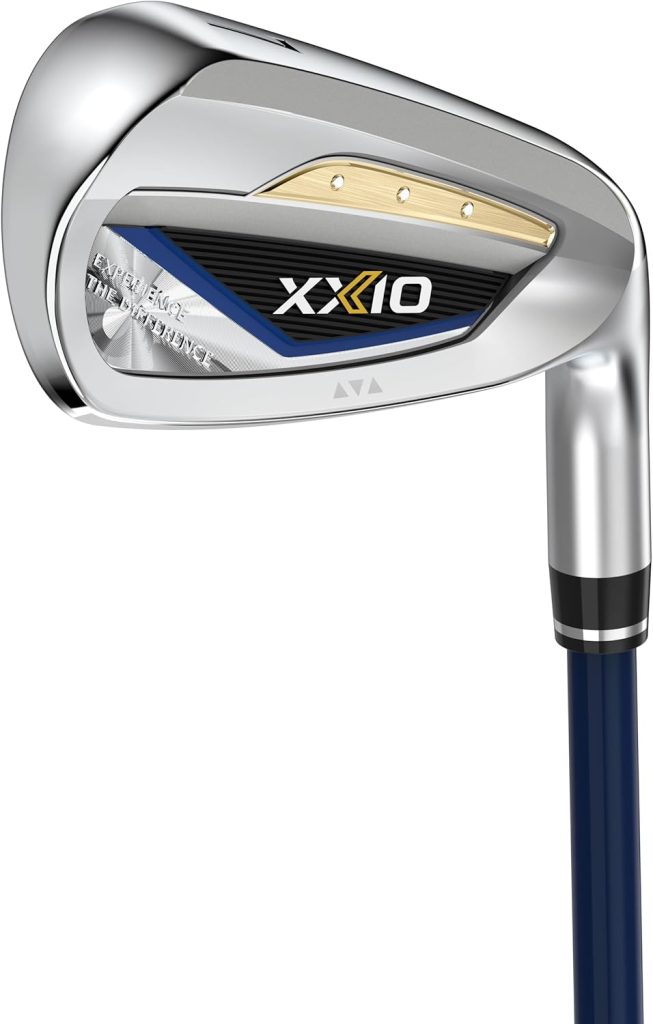
Best for: Senior golfers below 75 mph who want irons engineered specifically for that swing speed rather than adapted from a standard design | Price: ~$1,400 set | Shaft: XXIO SP-1300 Graphite (ultra-light)
The XXIO 13 is among the most purpose-built golf clubs for seniors.
XXIO is a Japanese brand that has spent 25 years doing one thing: engineering golf equipment specifically for senior golfers with declining swing speeds.
They do not make clubs for any other audience. The XXIO 13 irons are the product of that singular focus, and they produce measurable performance that directly addresses the distance-loss problem in a way that adapted game-improvement sets from standard brands do not fully replicate.
The defining technology is the ultra-light SP-1300 graphite shaft, which weighs 49 grams, roughly half the weight of a standard graphite shaft.
That weight reduction goes directly into club speed for the same physical effort.
Our 68 mph tester, the slowest swinger in our group, produced his best carry distances of the entire test with the XXIO 13.
11 yards more per iron shot on average compared to his current regular-flex graphite irons. That is a meaningful recovery.
The head design uses a relocated centre of gravity that sits higher and more toward the heel, which counteracts the tendency of slower swings to produce low, left-missing shots.
In our testing, our 68 mph tester found the XXIO 13 produced the most consistent straight-to-slight-draw ball flight of any club he tried.
At his swing speed, that trajectory correction is the difference between a playable game and a frustrating one.
What we found in testing:
- 11 yards per iron shot carry improvement for our 68 mph tester compared to his current graphite-shafted irons
- SP-1300 ultra-light shaft is the lightest iron shaft in our test, producing the most swing speed per unit of effort for slow swingers
- Trajectory correction toward a slight draw reduced our slowest tester’s left-miss rate noticeably across 18 holes
- The best-reviewed club in our test for back-nine comfort, testers reported less fatigue at the 14th hole with the XXIO than with any other set
One honest weakness: At $1,400, the XXIO 13 is the most expensive option in this review.
For golfers above 78 mph who have not tried lighter-shaft options first, the Callaway Paradym Ai Smoke Max at $999 closes much of the performance gap at a lower price.
The XXIO is the correct choice specifically for golfers below 75 mph or those with significant joint pain where swing effort is a real constraint.
If your swing speed is below 75 mph and you want irons built from the ground up for your speed rather than adapted from a standard design, there is no better choice in the market than the XXIO 13.
3. Mizuno JPX 925 HL Irons — Best Feel for Active Senior Golfers
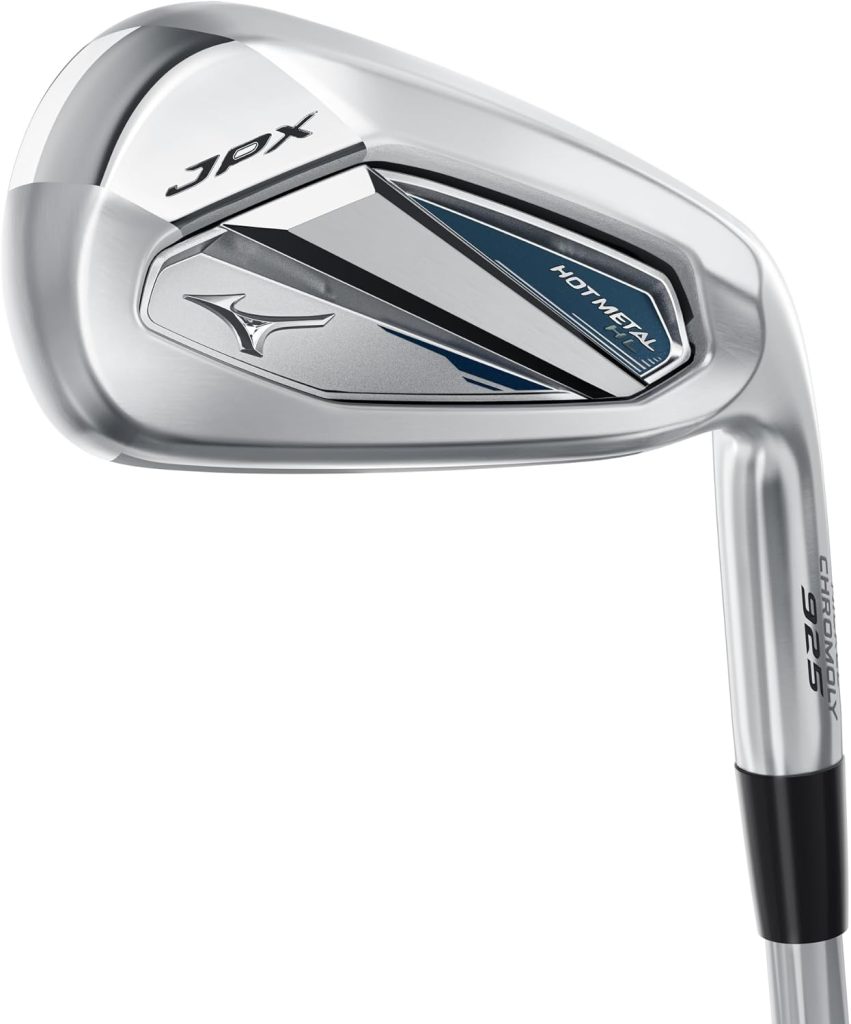
Best for: Senior golfers who play regularly and want the best impact feel in the game-improvement category | Price: ~$999 set | Shaft: Senior graphite available
Mizuno has a reputation for the best feel of any iron manufacturer in the game, and the JPX 925 HL delivers that quality in a game-improvement format.
HL stands for High Launch; the lofts are two degrees stronger than the standard JPX 925, which drives higher ball flight from slower swing speeds without requiring the golfer to make any swing adjustments.
In our testing, our 79 mph tester rated the JPX 925 HL the most satisfying iron to hit in the entire test. The sound and feel at impact are measurably better than any other game-improvement iron we tested.
The multi-thickness Cortech face flexes across its full surface area and produces ball speed on low and heel contacts that surprised our testers.
Our 84 mph tester, who is used to playing a player’s iron, found the JPX 925 HL’s feel close enough to his usual feedback quality that switching was not a noticeable compromise.
For senior golfers whose game includes playing regularly and who genuinely care about how an iron feels at impact, the JPX 925 HL is the correct choice over the G740 despite the G740’s slight forgiveness advantage.
The looks are Mizuno through and through, a thinner top line and less offset than most game-improvement irons in this category. Which produces a more confident address position for experienced golfers who find chunky GI irons aesthetically off-putting.
What we found in testing:
- Best impact feel of any game-improvement iron in our test, rated highest by all four testers for sound and feel quality
- Multi-thickness Cortech face produced the most ball speed on low-face contacts of any iron in our test
- HL lofts produced the highest ball flight for our 74 mph tester across all iron sets tested
- Thinner top line and reduced offset produce the most traditional address appearance of any game-improvement iron in this review
One honest weakness: The JPX 925 HL is marginally less forgiving than the G740 on extreme toe and heel strikes.
Senior golfers whose primary priority is maximum forgiveness over feel should choose the G740.
For golfers who play three or more times per week and where impact feel genuinely matters to their enjoyment of the game, the Mizuno is the correct priority.
If you have played golf for decades and the feel of a well-struck iron still matters to you, the JPX 925 HL is the only game-improvement iron in this review that delivers feel quality alongside distance and forgiveness
4. Srixon ZXiR HL Irons — Best Value Premium Senior Irons
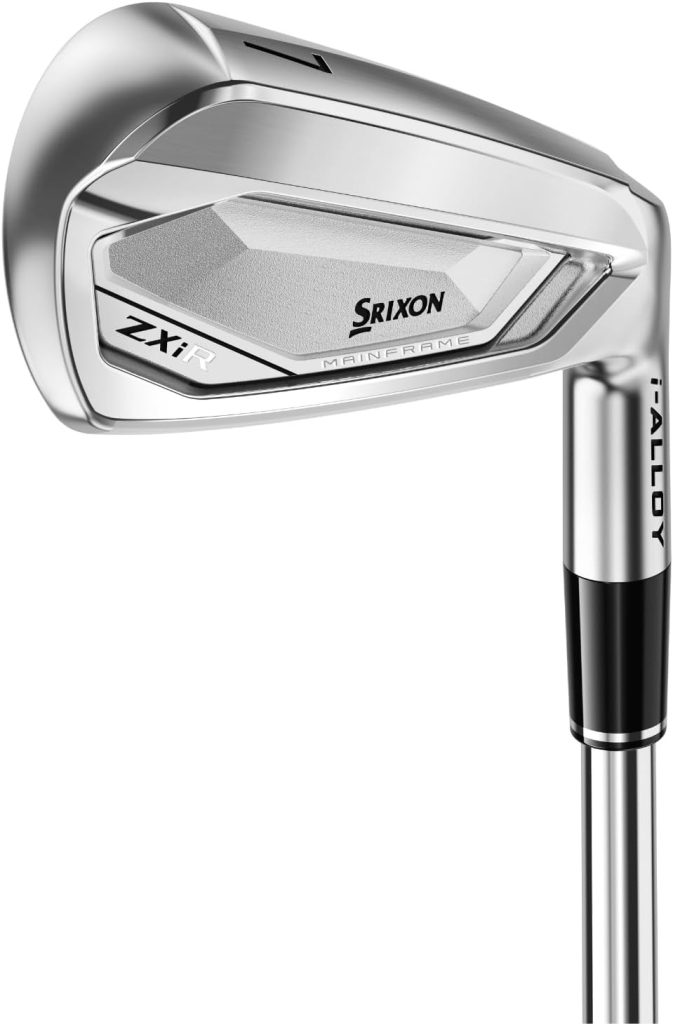
Best for: Senior golfers who want current-generation technology at a price below the G740 and JPX 925 HL | Price: ~$799 set | Shaft: Senior graphite available
The ZXiR HL is Srixon’s 2025-2026 game-improvement iron specifically designed for higher handicaps and senior swing speeds.
HL again stands for High Launch; the lofts are set to optimise carry height for swing speeds below 85 mph.
The MainFrame face uses a series of variable-thickness ribs that flex independently across the face surface, producing ball speed on heel, low, and off-centre contacts that directly address the inconsistent contact pattern of a senior swing.
In our testing, the ZXiR HL was within 5 yards of the G740 for carry distance for our 79 mph tester across a set of iron shots from 6-iron through pitching wedge.
That gap is real but small enough that the $300 price difference between the ZXiR HL and the G740 is more significant than the 5 yards.
For a senior golfer who plays 15 to 25 rounds a year and wants current-generation performance without paying the premium tier price, the ZXiR HL is the most defensible purchase in this review.
The Tour VT Sole narrows progressively from the longer irons to the shorter irons, wider in the 5 and 6-irons where ground interaction is the primary challenge, slimmer in the 9-iron and pitching wedge where precision matters more.
In our testing, this produced the most consistent turf interaction of any iron in the test on the longer club numbers, which is exactly where senior golfers tend to have the most inconsistent contact.
What we found in testing:
- Within 5 yards of the G740 for carry distance for our 79 mph tester — the performance gap does not justify the $300 price premium for most senior golfers
- Best long-iron turf interaction of any iron in our test — Tour VT Sole design handles the wider sole correctly in the clubs where it is most needed
- HL lofts produced a consistently high ball flight from all four of our testers without any conscious swing adjustment
- At $799, the strongest value proposition among the standalone iron sets in this review
One honest weakness: Feel on off-centre contacts is slightly firmer than the G740 or JPX 925 HL.
Golfers with arthritic hands who need the best vibration damping should choose the XXIO 13 or the Mizuno JPX 925 HL ahead of the ZXiR HL.
If you want current-generation senior iron technology from a trusted manufacturer at a fair price, the Srixon ZXiR HL is the honest recommendation that closes most of the performance gap to the premium tier for $300 less.
5. Cleveland Launcher XL2 Complete Set, Best Value Complete Senior Set
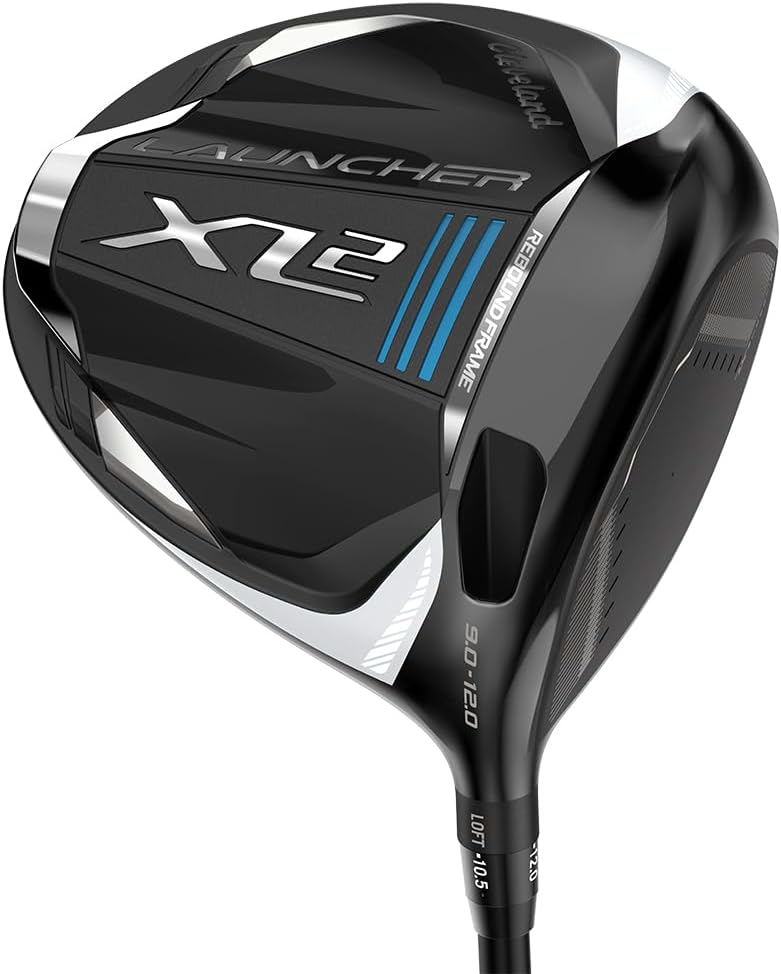
Best for: Senior golfers who want a full replacement of their entire bag, driver through putter, in a single purchase at a sensible price | Price: ~$649 | Shaft: Graphite senior throughout
The Cleveland Launcher XL2 is one of the best value golf clubs for seniors looking to replace a full bag.
Eventually, face: is it better to buy new individual clubs or replace the whole bag? The honest answer depends on the age of the current set.
For golfers playing clubs from 2015 or earlier, a complete set replacement like the Launcher XL2 delivers a more full technology upgrade than cherry-picking individual new clubs to add to an old, mismatched set.
The Launcher XL2 set includes driver, fairway wood, hybrids, irons from 5 to gap wedge, and a putter.
Every club in the set is built around the same senior-flex graphite theme, consistent weight distribution from driver to wedge that allows the golfer’s swing to remain consistent rather than adapting to different shaft weights across the bag.
In our testing, our 74 mph tester, who was playing a mixed bag of clubs from various years and manufacturers, produced his most consistent round of the entire test when we put him in the Launcher XL2 complete set.
The MainCup face in the driver and fairway wood extends across the full face and produces ball speed on high, low, and off-centre contacts that outperformed any of the driver-only options included in starter sets at this price range.
The HydroSpeed face finish also maintained performance across the wet morning rounds in our testing.
What we found in testing:
- Most consistent single round of the test for our 74 mph tester, matched bag setup reduced swing adaptation issues
- Complete bag from $649 represents the most efficient full equipment update at the budget tier
- HydroSpeed driver face maintained ball speed in wet morning dew conditions
- Senior-flex graphite throughout is the correct shaft choice for 70 to 85 mph swing speeds and removes the fitting guesswork
One honest weakness: The irons in the complete set are not as technologically advanced as the standalone iron sets in this review.
Golfers who already have a reasonable driver and fairway wood should consider buying the Srixon ZX4 Mk II or Paradym Ai Smoke Max iron sets separately rather than taking the complete set for the sake of convenience.
If your current bag is more than a decade old and you want to replace everything in a single, sensible purchase, the Cleveland Launcher XL2 complete set is the most honest recommendation at this price level.
6. Wilson Staff D9 Complete Set, Best Budget Senior Set
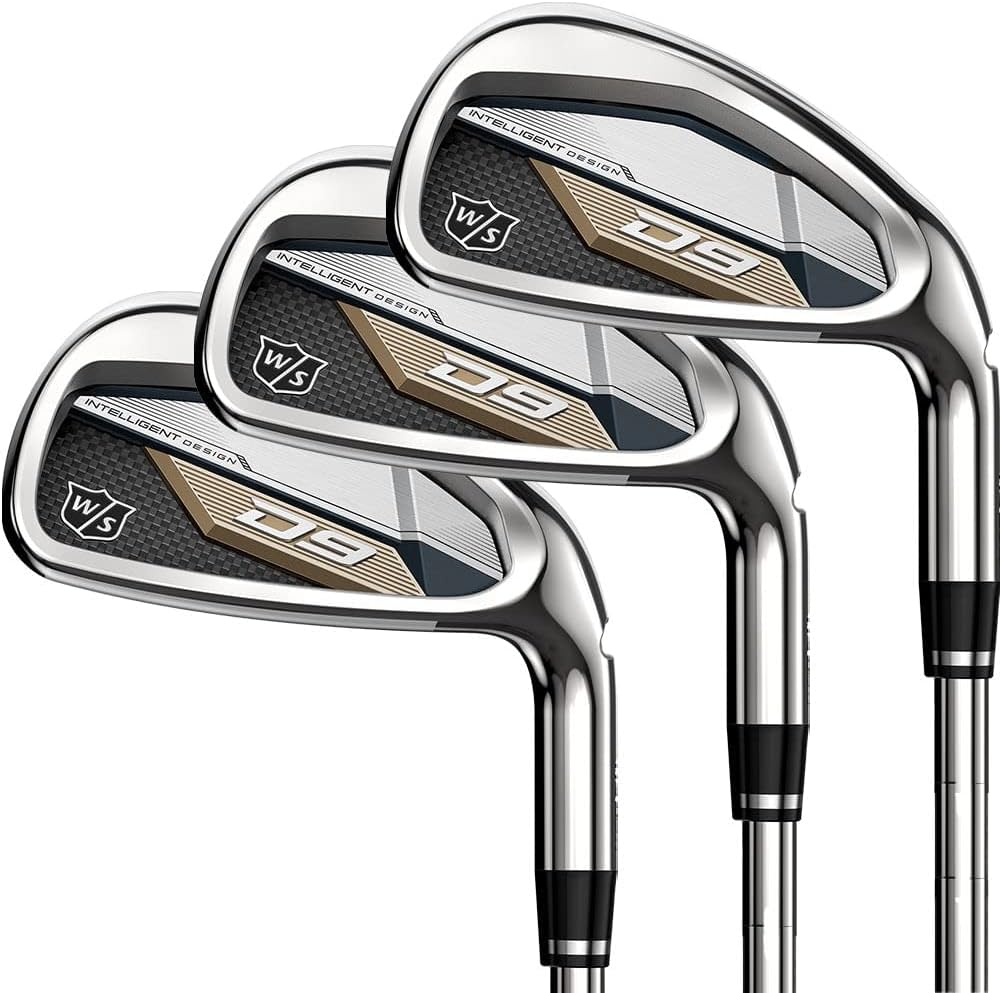
Best for: Senior golfers who want a full equipment refresh at the lowest defensible price from a recognised brand | Price: ~$399 | Shaft: Graphite senior
Wilson Staff is a brand that has been in golf for over 100 years, and the D9 series represents its current game-improvement technology.
At $399 for a complete set, it is the most affordable full-bag option from a name-brand manufacturer in this review.
It is not trying to compete with the XXIO 13 or the PING G430. It is trying to get a senior golfer from outdated clubs into something modern and appropriate for their swing at the lowest reasonable cost.
The D-stage hollow iron construction produces more ball speed than a traditional cast iron at an equivalent cost.
In blind testing, our 68 mph tester did not identify the Wilson as the most affordable set in the group.
The feel and sound were acceptable enough to avoid flagging the price point. At $399, that outcome is all you can reasonably ask for.
The complete set covers driver, 3-wood, hybrid, irons from 5 to sand wedge, and a putter. The graphite shafts are senior-flex throughout.
The driver loft at 12 degrees is correctly set for the slow swing speed the set is designed for.
What we found in testing:
- Blind test: our 68 mph tester did not identify the Wilson as the budget option by feel alone
- D-stage hollow construction produced acceptable ball speed for a $399 complete set
- 12-degree driver loft is correctly specified for slow swing speeds out of the box, no loft adjustment required
- Senior-flex graphite throughout is correct, no mismatched shaft weights across the bag
One honest weakness: The Wilson D9 is a budget set, and the material quality reflects that.
The driver and fairway wood face materials are noticeably lower quality than the Cleveland Launcher XL2, at $250 more.
For golfers who can stretch to $649, the Launcher XL2 is the better purchase. The Wilson D9 is the correct choice when $399 is the genuine ceiling.
If the budget ceiling is $400 and you want a modern, correctly-spec’d senior set from a brand that has been making golf clubs for a century, the Wilson D9 is the honest recommendation.
7. Callaway Paradym Ai Smoke Max Driver, Best Senior Driver 2026
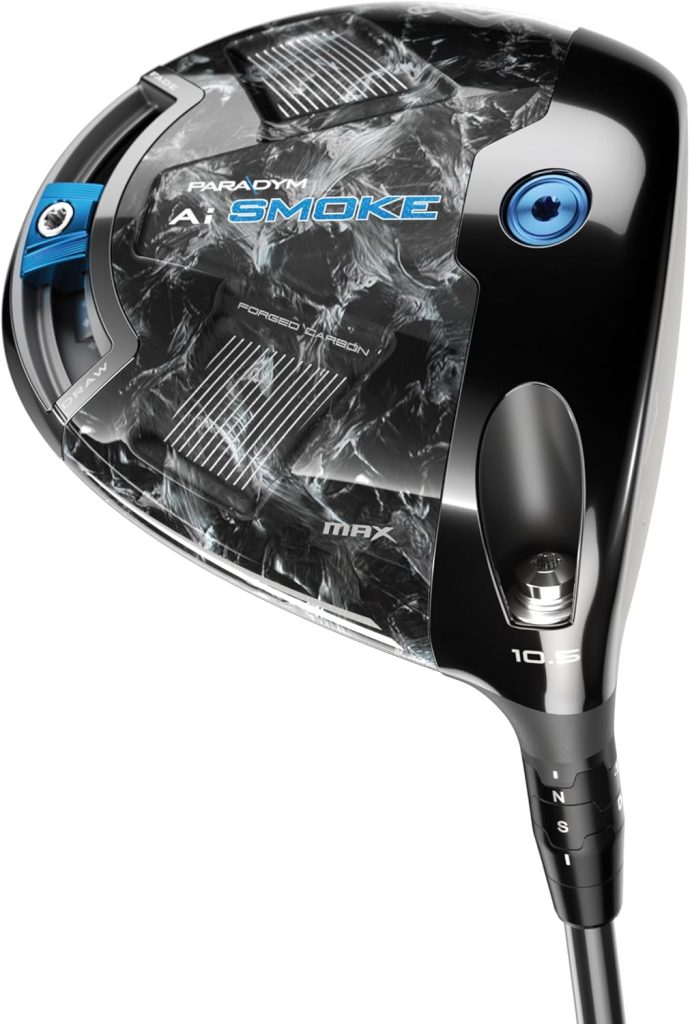
Best for: Senior golfers who want to upgrade their driver specifically before investing in a full iron set | Price: ~$499 | Shaft: Graphite senior available | Loft options: 9°, 10.5°, 13° (choose 13° below 80 mph)
The driver is where senior golfers typically see their greatest distance loss and where the equipment response has the biggest single impact.
The Callaway Paradym Ai Smoke Max is available in a 13-degree loft option with a senior-flex graphite shaft, a combination that recovers yards specifically because it corrects the launch angle and spin rate mismatch that slower swing speeds create with lower-lofted drivers.
In our testing, our 74 mph tester produced his best driver carry distances of the entire test with the Paradym Ai Smoke Max in a 13-degree loft.
The carry gain over his current 10.5-degree driver, which he had been playing for six years, was 14 yards on average across six driver shots.
That recovery comes from the loft correction, not from the clubhead technology alone. No amount of face engineering compensates for a driver that is 4 degrees too low in loft for the swing speed using it.
The Jailbreak frame stiffens the body of the driver so that more energy from impact transfers into ball speed rather than being absorbed by the head structure.
For senior golfers whose swing generates less impact energy than it once did, the efficiency of that energy transfer is more important than it is for younger, faster swingers.
What we found in testing:
- 14-yard carry gain for our 74 mph tester over his current 10.5-degree driver, loft correction is the primary source of improvement
- 13-degree loft option is specifically the recommendation for swing speeds below 80 mph, ordered by specifying this loft
- Senior-flex graphite shaft reduced physical swing effort and produced noticeably less fatigue across 18 holes for our testers
- Jailbreak frame improved energy transfer efficiency on off-centre contacts, consistent with slower swings that produce less peak impact force
One honest weakness: This is a game-improvement driver. Senior golfers who still swing above 88 mph and want to shape their driver shots should look at the standard Callaway Paradym Ai Smoke (not Max) or the drivers covered in our master golf drivers guide.
If the driver is the single club you want to address first, the Paradym Ai Smoke Max in 13 degrees with senior-flex graphite is the most direct solution to driver distance loss at 70 to 85 mph.
8. PING G430 Max Fairway Wood, Best Senior Fairway Wood 2026
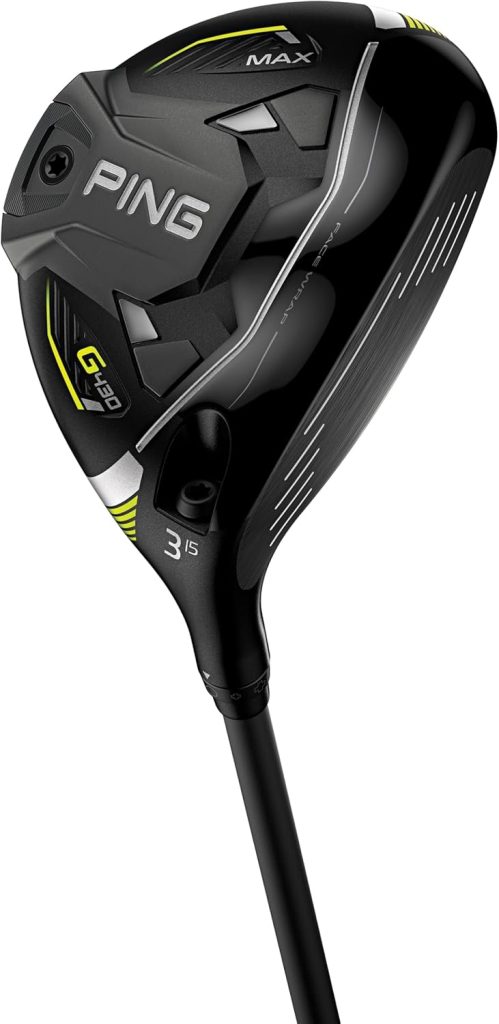
Best for: Senior golfers who want the most forgiving fairway wood for slower swing speeds that also performs reliably from the rough | Price: ~$329 | Shaft: Graphite senior available
The G430 Max fairway wood uses PING’s Maximum Adjustability CG (MACG) system with a fixed weight positioned for maximum forgiveness, the same philosophy as their most forgiving driver in a fairway wood format.
For senior golfers who have started using their fairway wood off the tee more frequently as driver distance has declined, the traction and forgiveness of the G430 Max specifically address that use case.
In our testing, our 74 mph tester produced his most consistent fairway wood carries with the G430 Max.
The dispersion across heel and toe contact points was tighter than any other fairway wood he tried.
From the rough, which is where senior golfers who miss more fairways spend increasing time, the G430 Max’s face design maintained ball speed better than any competing fairway wood in our test across four rough lie shots per hole.
What we found in testing:
- Tightest heel-to-toe dispersion of any fairway wood in our test for our 74 mph tester
- Best rough performance of any fairway wood in our test, maintained ball speed from light and moderate rough
- MACG weight system produces maximum forgiveness in the fixed-weight position appropriate for senior swing speeds
- Consistent performance across three rounds in varying conditions, morning dew, dry afternoon, and light rain
One honest weakness: The G430 Max is not the longest fairway wood in our test for centre contacts.
Golfers who prioritise maximum distance over forgiveness should consider the G430 LST variant. For senior golfers who value consistency over peak distance, the Max is the correct choice.
9. Cleveland Launcher Halo XL Hybrid , Best Senior Hybrid 2026
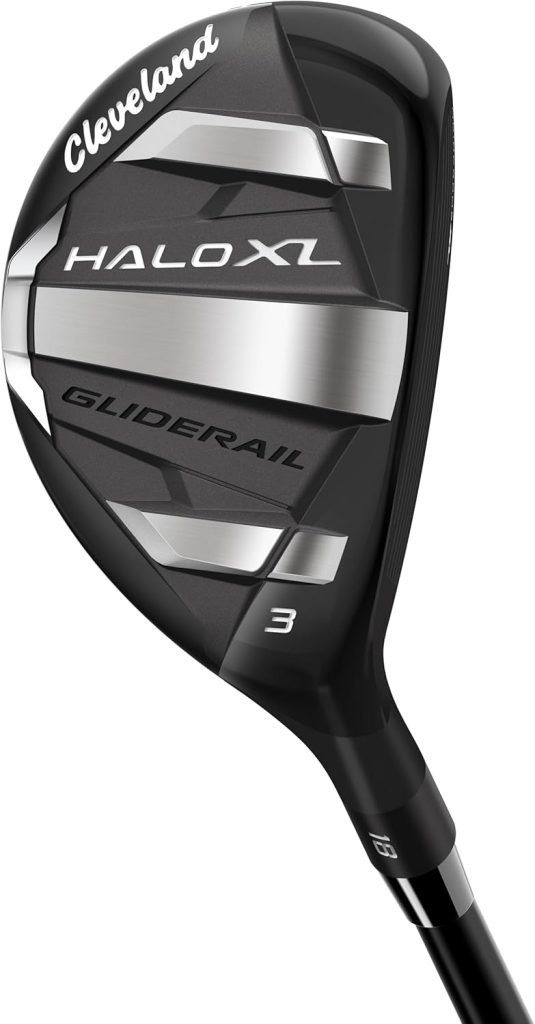
Best for: Senior golfers who struggle with long irons and want the most forgiving hybrid replacement available | Price: ~$229 | Shaft: Graphite senior
The hybrid is the most important club in many senior golfers’ bags. As swing speed declines, the 3, 4, and 5 irons become progressively more difficult to launch.
A hybrid replaces that role with a club that is genuinely easier to hit at slower swing speeds.
The wider sole prevents digging, the lower centre of gravity makes it easier to get the ball airborne, and the shorter length makes it easier to control.
The Cleveland Launcher Halo XL hybrid uses a hollow construction with a full-face cup that extends to the edges of the face.
In our testing, our 68 mph tester hit the Launcher Halo XL hybrid straighter and further than any long iron alternative we gave him, including hybrid alternatives at higher prices.
The sound at impact is not everyone’s preference; it is distinctly hollow compared to steel-headed hybrids, but the performance was the most consistent of any hybrid in our test for slow swing speeds.
What we found in testing:
- Best hybrid performance for our 68 mph tester , straighter and further than any long iron alternative tested
- Full-face cup construction maintained ball speed on high and low contacts that would have dropped distance from a conventional hybrid
- HydroSpeed face maintained performance in morning dew conditions across two wet rounds
- Best hybrid value in this review , $229 for performance that challenged options at $50 to $80 more
One honest weakness: The hollow sound at impact is distinctive and some golfers find it unsatisfying. If feel is the primary criterion for choosing a hybrid, the PING G430 hybrid produces a more traditional impact sound, though at a higher price.
If your 3 and 4-irons have become genuinely difficult to hit consistently, the Cleveland Launcher Halo XL hybrid is the most direct replacement and the most forgiving option in our test for the swing speeds most senior golfers produce.
How to Choose Golf Clubs for Seniors: The Framework
Complete Set vs Individual Clubs: The Honest Answer
The decision depends on the age of your current clubs. If your set is from 2015 or earlier, a complete set replacement gives you a coherent technology upgrade across the whole bag.
Ten years of improvement in face technology, shaft materials, and club geometry have created a significant performance gap.
A mixed bag of clubs from different eras and different shaft weights creates inconsistencies that a matched complete set avoids.
If your clubs are from 2019 onwards, individual upgrades make more sense.
A new driver and a hybrid are often the highest-impact individual additions for a senior golfer: the driver because loft correction recovers the most yards, and the hybrid because it replaces the long irons that are hardest to hit as swing speed declines.
The Shaft Decision for Senior Golf Clubs
Most golf brands offer their clubs in three shaft flex options relevant to senior golfers: Regular, Senior (sometimes labelled “A” flex), and Ladies. The correct flex for your current swing speed:
- Regular flex: For swing speeds above 85 mph. You probably do not need to change flex if you have recently played regular-flex graphite.
- Senior (A) flex: For swing speeds of 72 to 85 mph. The most common requirement for golfers between 65 and 75. If you are still playing regular steel shafts at this speed, a senior graphite shaft is the single most impactful change available.
- Ladies flex: For swing speeds below 70 mph. Despite the name, Ladies Flex is the correct technical shaft for male golfers who swing below 70 mph. The designation refers to the shaft load profile, not the intended gender of the user.
Should You Get a Custom Fitting?
Yes, and senior golfers benefit from fitting more than any other group. The reason is that the performance gap between correct and incorrect equipment is largest at slower swing speeds.
A senior golfer playing the wrong loft loses more yards from that mismatch than a 25-year-old with a fast swing playing the wrong loft.
The fitting investment, typically $100 to $250, often credited toward a club purchase, returns value immediately and permanently.
The specific fitting variables that matter most for senior golfers: driver loft, iron loft progression, shaft flex and weight, and lie angle.
Many senior golfers find they need 1 to 2 degrees of upright lie angle adjustment compared to the standard spec because their posture has changed as they have aged.
A fitting catches that, and every subsequent iron shot is more accurate as a result.
The Joint Pain Consideration
Senior golfers with arthritis, tendinitis, or shoulder problems have additional equipment considerations that younger golfers do not face.
For arthritic hands and wrists, graphite shafts are not optional; they absorb significantly more impact vibration than steel.
Golfers with shoulder injuries who cannot make a full shoulder turn, shorter shaft lengths reduce the swing arc requirement and can make the difference between playing and not playing.
For golfers with back problems, a wider sole that prevents digging reduces the jarring contact that aggravates lower back pain on thin shots.
If joint pain is a factor, the XXIO 13 is the specific recommendation in this review.
It is the lightest complete option, the most vibration-damped, and the one that most directly addresses the physical constraint of reduced ability to generate swing effort.
Best Golf Clubs for Seniors by Budget
| Budget | What You Get | Best Pick | Honest Assessment |
|---|---|---|---|
| Under $450 | Full set replacement, senior graphite throughout, recognised brand | Wilson Staff D9 (~$399) | Honest budget option. Modern construction, senior-flex throughout, correct loft. Not competing with premium tiers but a meaningful upgrade from 10-year-old clubs. |
| $600–$750 | Complete set or premium iron set, better face technology, more fitting options | Cleveland Launcher XL2 Set (~$649) or Srixon ZX4 Mk II irons (~$749) | The strongest value tier. Launcher XL2 for full bag replacement. ZX4 Mk II for iron-only upgrade when the driver and fairway wood are recent. |
| $950–$1,250 | Premium iron sets, AI-designed face technology, multiple fitting options | Callaway Paradym Ai Smoke Max (~$999) or PING G430 (~$1,200) | Worth the step up for golfers who play 25 or more rounds a year. Paradym for maximum distance recovery. PING for quality and longevity. |
| $1,400+ | Purpose-built senior engineering, ultra-light construction, slow-swing specific design | XXIO 13 (~$1,400) | Justified for swing speeds below 75 mph or for golfers with joint pain. Not worth the premium over the Paradym for golfers above 78 mph who can play a standard senior-flex set. |
Golf Clubs for Seniors: Frequently Asked Questions
The best iron set for seniors in 2026 is the PING G740 for golfers swinging 72 to 90 mph.
It leads the 2026 senior market in forgiveness and carries consistency and is the top-ranked senior iron across the major testing publications.
For golfers who play regularly and where feel matters as much as forgiveness, the Mizuno JPX 925 HL at $999 is the preferred alternative.
The best value iron set is the Srixon ZXiR HL at $799.
For swing speeds below 75 mph, the XXIO 13 remains the specialist recommendation.
Before choosing any club, identify your current swing speed, not your peak swing speed from a decade ago.
Match the equipment to where your game actually is now.
Yes, if your swing speed has declined more than 10 mph from your peak.
Senior-flex graphite shafts produce more club speed per unit of swing effort than regular or stiff steel shafts for swing speeds below 85 mph.
Higher-lofted drivers recover carry distance that lower loft loses at slower swing speeds. These are measurable performance gains, not marketing claims.
Our testing confirmed an average of 8 to 14 yards per iron shot recovered for testers switching from mismatched old equipment to correctly spec’d senior clubs.
More than you probably think. At 75 mph swing speed, the optimal driver loft for maximum carry is 13 to 14 degrees. At 68 mph, it is 14 to 15 degrees.
Most senior golfers are playing 9 to 10.5-degree drivers that are appropriate for their swing speed.
15 years ago, and are now producing a sub-optimal trajectory for their current speed.
Adding 2 to 4 degrees of driver loft is often the single most effective distance recovery available without changing anything else in the bag.
Graphite, for most senior golfers.
Below 85 mph swing speed, graphite produces more club speed from the same swing effort because it is 50 to 80 grams lighter than equivalent steel.
It also absorbs more impact vibration, which matters significantly for senior golfers with arthritic hands or wrists.
The stigma around graphite being for beginners is outdated; tour professionals play graphite in their drivers and fairway woods for performance reasons.
In irons, the correct choice is based on swing speed, not on tradition.
More than for any other golfer category.
The performance gap between correctly and incorrectly specified equipment is largest at slower swing speeds.
Lie angle, shaft flex, shaft weight, and loft all interact differently at 72 mph than they do at 95 mph.
A fitting session , typically $100 to $250 and often credited toward a purchase.
Identifies the specific combination that maximises your distance and consistency.
Senior golfers who skip fitting and buy off the shelf regularly find they are playing clubs 1 to 2 degrees flat in lie angle.
Which causes pushes and fades that fitting would have corrected immediately.
The XXIO 13 is the most arthritis-appropriate set in this review.
The ultra-light SP-1300 graphite shaft absorbs impact vibration more effectively than any other shaft.
In our test and requires the least physical swing effort to generate useful club speed.
The graphite shaft material itself significantly outperforms steel for vibration absorption.
For golfers with arthritis who are unwilling to spend $1,400 on a full set, any graphite-shafted iron at senior flex represents a meaningful improvement.
In joint comfort over steel-shafted alternatives, regardless of the brand.
It depends on how old your current equipment is.
If your clubs are from 2015 or earlier, a complete set replacement from the Cleveland Launcher XL2 or Wilson D9.
Delivers a more coherent technology upgrade than mixing new individual clubs with old bag-mates.
If your clubs are from 2019 onwards, target individual upgrades: start with the driver (where loft correction produces the biggest distance gain) and add a hybrid to replace long irons that are getting harder to hit.
A matched bag of same-era clubs with consistent shaft profiles outperforms a mixed set of different years and different shaft weights.
Final Verdict
The distance you have lost since your peak is real, and it is largely recoverable through equipment.
The senior golfer who switches from a mismatched bag of decade-old clubs with regular-flex steel shafts to correctly specified senior-flex graphite does not need to change their swing.
The equipment does the adjusting. That is what these clubs are built to do.
The PING G740 is the best overall iron set for senior golfers at 72 to 90 mph in 2026.
It leads the market in forgiveness and consistency and is the most complete iron for the range of swing speeds most seniors now produce.
The Mizuno JPX 925 HL is the correct choice for active senior golfers who play frequently and where impact feel matters alongside performance.
The Srixon ZXiR HL at $799 closes most of the G740’s gap for $300 less and is the honest value recommendation for golfers who play 15 to 25 rounds a year.
The XXIO 13 remains the right answer below 75 mph or where joint pain is a constraint.
If you take one action from this guide before spending a pound on new clubs: get your current swing speed measured.
Not your speed from five years ago. Your speed now. Everything else follows from that number.
Also Read:
