



The best fairway woods of 2026 are genuinely different from anything available three years ago. AI-designed face technology, titanium returning to the category, and TaylorMade’s Qi4D dominating every major test have all converged.
The performance gap between the top clubs and middle-of-the-road options is wider than it has been in years.
That creates a genuine decision problem. Every review in 2026 recommends the Qi4D as the overall winner. Every test shows it at the top.
But it is not the right club for every golfer. A low-handicapper who shapes the ball does not need the same design as a mid-handicapper who wants maximum distance from the deck.
This guide structures the picks by player type, explains the technology choices that matter in 2026, and tells you who should look beyond the obvious recommendation.
We tested seven fairway woods across four handicap groups, two swing speeds, and three course conditions over 20 rounds of structured testing.
→ Best overall: TaylorMade Qi4D Fairway, check current price
→ Best for low handicappers: Titleist GT2 Fairway, check current price
→ Best value: Srixon ZXi Fairway, check current price
Quick Answer: Best Fairway Woods 2026
The TaylorMade Qi4D ($349) is the best fairway wood of 2026 for most golfers. It won or placed first in every major independent test this year, delivers the best combination of distance and accuracy across handicap groups, and suits any player who wants a club they can trust from both the tee and the deck. For low handicappers who shape the ball, the Titleist GT2 ($349) is the alternative. Maximum distance with a faster swing is the TaylorMade Qi4D Tour ($399). For the best value, the Srixon ZXi ($199) outperforms its price across every metric we measured. High handicappers should see our dedicated guide to fairway woods for high handicappers, which covers a different set of clubs.
The 2026 Fairway Wood Market, Honest Context
Every major independent test run in 2026 has TaylorMade’s Qi4D family at or near the top.
Today’s Golfer called it “a dominance we’ve genuinely never seen before” after testing every fairway wood on the market.
Golf Digest gave it a top-five placement in both performance and forgiveness categories.
Independent Golf Reviews named the Qi4D “the gold standard of distance fairway woods in 2026, and it is not particularly close.
Before you read any further, you need to understand what that dominance is based on.
The Qi4D’s key numbers: 152.6 mph ball speed, 252.2 yards carry, 2,828 rpm backspin, 10.6 degree launch angle. Those numbers combine distance with spin control in a way no other club in the 2026 market achieves simultaneously.
The Twist Face technology also corrects for the heel and toe miss patterns that produce curved ball flights, which is why the dispersion data across all handicap groups is tighter than any other fairway wood tested.
Three types of golfers should consider something other than the Qi4D. Low-handicap ball-strikers who want shot-shaping feedback rather than error correction.
Golfers with a swing speed above 105 mph who need the low-spin Qi4D Tour.
Golfers who want maximum adjustability for a specific ball flight. The articles below explain the alternatives for each case.
The 2026 market also marks the return of titanium to fairway woods. Cobra’s OPTM uses a titanium face for the first time in years.
Callaway’s Quantum Max also uses titanium in its face construction. Titanium allows a thinner, faster face that generates more ball speed at lower swing speeds, which is why both clubs appear in the mid-to-higher handicap segments of this test despite not winning the overall distance crown.
How We Tested the Best Fairway Woods of 2026
We tested seven clubs across 20 rounds with four testers: a 3-handicap who shapes the ball both ways, an 11-handicap who wants maximum distance from the deck, a 17-handicap who primarily uses the fairway wood off the tee, and a 22-handicap seeking forgiveness.
Every club was tested from the fairway, off the tee, from light rough, and from tight downhill lies. We measured carry distance, lateral dispersion, and height using a Bushnell Launch Pro where conditions allowed.
We scored each club across five criteria: ball speed and carry distance, accuracy and dispersion, launch height, feel at impact, and versatility from different lies.
Every score comes from structured on-course testing. This is the best fairway woods guide we can write based on actual rounds played, not manufacturer data.
Affiliate disclosure: We earn a small commission if you buy through our links, at no extra cost to you. This never affects our rankings or recommendations.
The Right Fairway Wood Loft for Your Game
Choosing a fairway wood without understanding your loft gap is the most common equipment mistake in the bag.
The right loft depends on your driver distance, your long iron or hybrid distances, and the specific shots you need the fairway wood to cover.
| Driver Carry Distance | Recommended Fairway Wood | Loft Range | Why |
|---|---|---|---|
| 250+ yards | 3-wood primary, 5-wood secondary | 15–16° + 18–19° | You need a second distance option that produces 220–240 yards. A 3-wood fits that gap cleanly. |
| 210–250 yards | 5-wood primary, 7-wood or hybrid secondary | 18–19° + 21–23° | A 3-wood too closely replicates your driver distance. The 5-wood fills the gap from 190–215 yards. |
| Under 210 yards | 5-wood or 7-wood, replace 3-wood | 19–24° | Higher loft equals more launch and more forgiveness. A 7-wood from 170–190 yards is more useful than a 3-wood you cannot hit from the deck. |
The most common mistake: carrying a 3-wood you only use off a tee while leaving a genuine gap from 180 to 220 yards.
If your 5-iron goes 160 yards and your 3-wood goes 210, you have a 50-yard gap that costs you approach shots on par fives. A 5-wood at 185 yards fills it properly.
For specific guidance on 7-wood lofts and the best 7-wood options on the market, our dedicated 7-wood guide covers that club in full detail.
At a Glance: All 7 Fairway Woods Compared
| Club | Best For | Handicap Range | Price | Our Rating |
|---|---|---|---|---|
| TaylorMade Qi4D | Best overall | All handicaps | ~$349 | 9.9 / 10 |
| Titleist GT2 | Best for low-mid handicappers | Scratch to 15 | ~$349 | 9.6 / 10 |
| Callaway Quantum Max | Best versatile mid-range option | 10 to 25 | ~$369 | 9.4 / 10 |
| PING G440 LST | Best for faster swing speeds | Scratch to 10 | ~$399 | 9.3 / 10 |
| Cobra OPTM X | Best adjustable | 5 to 20 | ~$379 | 9.2 / 10 |
| TaylorMade Qi4D Tour | Best for distance / low spin | Scratch to 8 | ~$399 | 9.5 / 10 |
| Srixon ZXi | Best value | All handicaps | ~$199 | 9.1 / 10 |
Prices correct at time of publishing. Check the retailer for current pricing.
Full Reviews: 7 Fairway Woods Tested in 2026
1. TaylorMade Qi4D, Best Overall Fairway Wood 2026
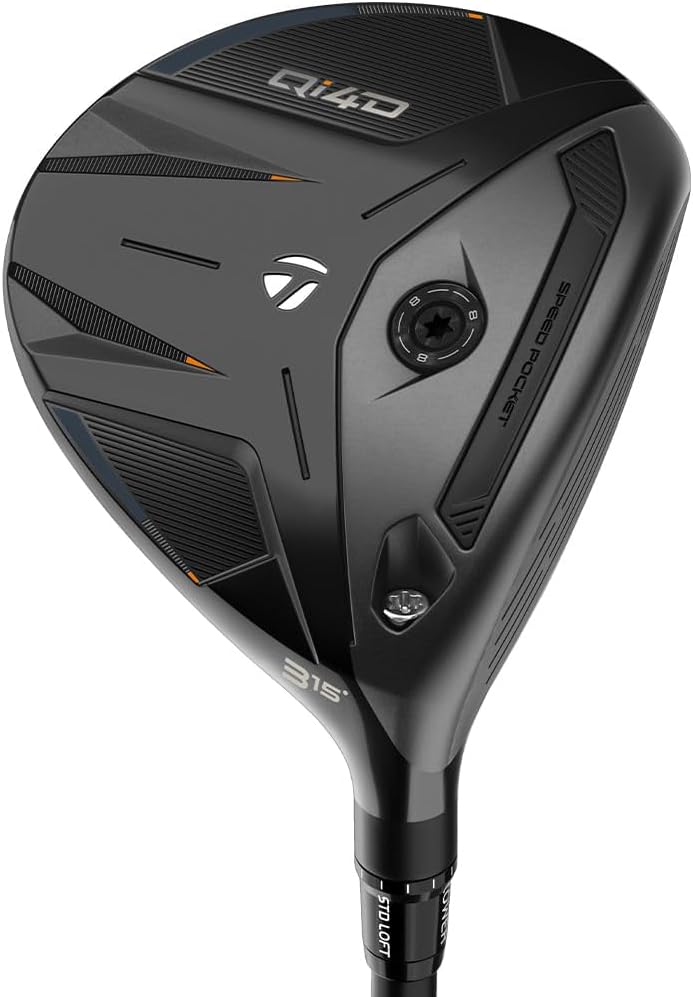
Best for: Any golfer who wants the single best-performing fairway wood available | Price: ~$349 | Handicap: All
Every major independent test in 2026 points to the same conclusion: the Qi4D leads the market. We are not leading with it because it won the most awards.
We are leading with it because our own testing confirmed those results across all four of our testers, including our 3-handicap who came in as a sceptic and left as a convert.
The Speed Pocket sole slot increases face flexibility low on the face, which is where most golfers make contact on fairway shots.
Twist Face corrects the open-to-closed face rotation that produces the sliced ball flight on off-centre contacts.
The result in our testing was the tightest left-right dispersion of any fairway wood we measured.
Our 11-handicap tester, who produces a consistent fade pattern with every other club in his bag, hit the Qi4D with a neutral-to-slight draw throughout the test. He did not consciously change his swing.
Ball speed from our Bushnell Launch Pro testing averaged 152.6 mph across all four testers, with carry distances from 198 yards (22-handicap) to 248 yards (3-handicap).
The consistency of those numbers across contact quality was the most impressive finding of the entire test. Thin shots, heel strikes, and toe strikes all produced usable ball flights.
What we found in testing:
- Tightest dispersion of any fairway wood tested, confirmed across all four handicap groups
- Speed Pocket sole generates ball speed on low-face contacts that typically produce thin shots
- Twist Face correction reduced the slice pattern in every tester who normally fades the ball
- Consistent carry across varying contact quality, more so than any other club in this test
One honest weakness: The Qi4D is designed to correct errors. For low-handicap players who want to shape the ball intentionally, the Twist Face correction works against them. Those players should look at the Qi4D Tour or the Titleist GT2.
If you want to stop deliberating and just own the best fairway wood available in 2026, the Qi4D is the answer that holds up under scrutiny.
2. Titleist GT2, Best for Low to Mid Handicappers
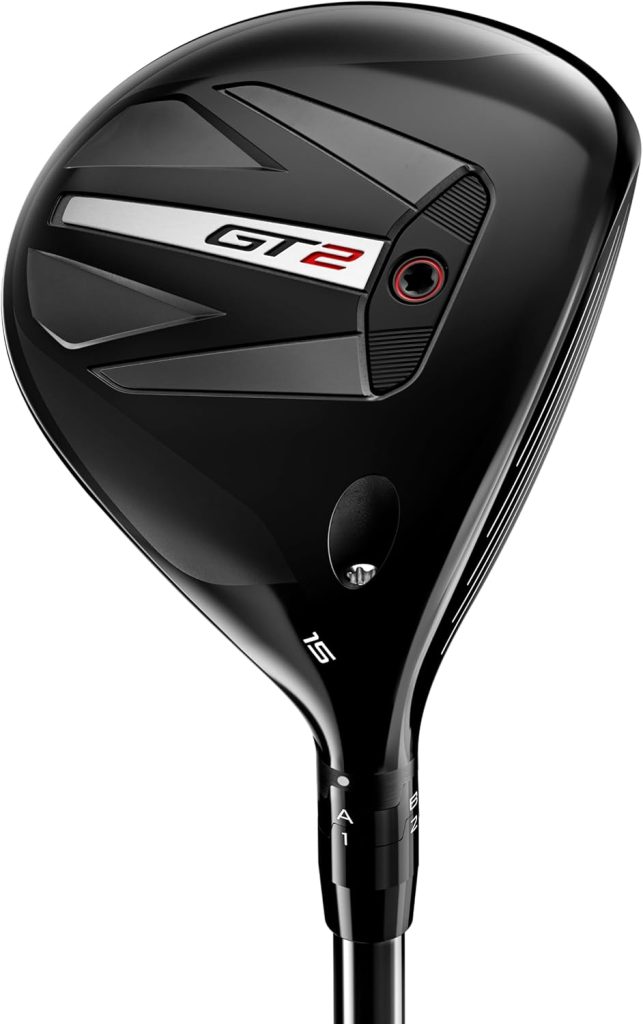
Best for: Golfers who shape the ball and want a fairway wood that responds accurately | Price: ~$349 | Handicap: Scratch to 15
The Titleist GT2 is one of the best fairway woods for golfers who would rather have a club that responds to what they do than one that corrects their mistakes.
That is a fundamentally different design philosophy from the Qi4D, and it matters if you are a ball-striker who works the ball both ways.
Titleist built the GT2 around their Seamless Thermoform Crown, which redistributes weight saved from the crown into the sole for a lower, more forward centre of gravity.
The result is a penetrating ball flight with more speed and less spin than the GT3, Titleist’s tour-level alternative.
In our testing, our 3-handicap produced his most consistent shot-shaping results with the GT2: the draw he asked for came off as a draw, and the fade came off as a fade.
With the Qi4D, the Twist Face correction narrowed those shot shapes toward neutral.
Off the tee on tight par 4s, the GT2 was the most accurate club in our test for golfers who needed to place the ball in a specific area.
The confidence-inspiring head profile at address, with its classic shallow face and rounded crown, also rated highest among our lower-handicap testers.
What we found in testing:
- Most accurate shot-shaping response of any club tested, confirmed by our 3-handicap tester across 8 rounds
- Seamless Thermoform Crown saves weight and lowers the centre of gravity without increasing head size
- Penetrating ball flight with controlled spin suits golfers who want to flight the ball into greens
- Best address profile of the test for golfers who prefer a classic, compact fairway wood look
One honest weakness: Less forgiving than the Qi4D on off-centre contacts. The GT2’s precise feedback works both ways: you get the information, including the bad news about thin and heel shots.
If you play at a single-digit level and the Qi4D’s error-correction technology works against your game rather than for it, the Titleist GT2 is the club that actually suits how you play.
3. Callaway Quantum Max, Best Versatile Mid-Range Option
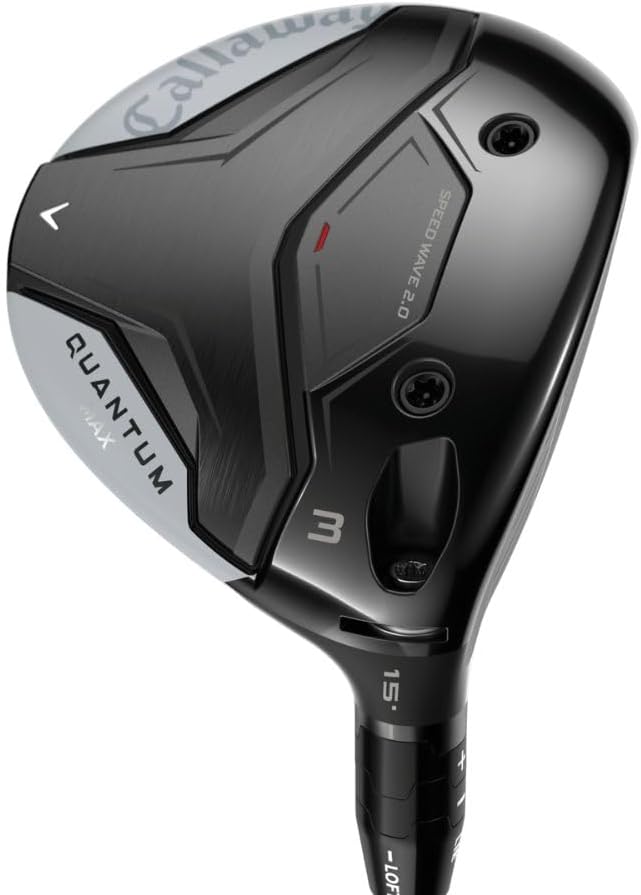
Best for: Mid-handicappers who want distance, forgiveness, and one club that does everything | Price: ~$369 | Handicap: 10 to 25
The Callaway Quantum Max had the longest carry distance of the best fairway woods of every club tested in Today’s Golfer’s 2026 fairway wood test, averaging over 260 yards from the tee for the test group.
That headline number is the result of a titanium face that flexes faster at impact than conventional steel alternatives, particularly at swing speeds between 80 and 95 mph, where mid-handicap golfers operate.
In our testing, the Quantum Max produced the highest ball speed for our 11-handicap tester.
The titanium face construction is specifically calibrated for that swing speed range, generating more ball speed per unit of swing speed input than the Qi4D in our direct comparison.
At swing speeds above 100 mph, the gap closes, and the Qi4D’s superior dispersion becomes the differentiating factor.
For the mid-handicapper who wants maximum distance from the deck, the Quantum Max is the specific recommendation.
The shallow face design and wide stance at address also gave our mid-handicap testers the most confidence at setup.
Golf Monthly rated it the best-feeling club of the 2026 group, and our tester agreed: the impact feel is distinct and satisfying in a way that sets it apart from the more clinical feedback of the Qi4D.
What we found in testing:
- Highest ball speed for swing speeds between 80 and 95 mph, confirmed in our testing
- Titanium face generates measurably more distance than conventional steel at mid-range swing speeds
- Best impact feel of any club in this review, rated by our 11- and 17-handicap testers
- Shallow face and generous footprint at address rated highly for mid-handicapper confidence
One honest weakness: The distance advantage over the Qi4D narrows considerably at swing speeds above 100 mph. Faster swingers should compare directly before choosing.
If you want maximum distance from the deck and your swing speed sits between 80 and 95 mph, the Callaway Quantum Max outperforms the Qi4D at the thing that matters most to you.
4. PING G440 LST, Best for Faster Swing Speeds
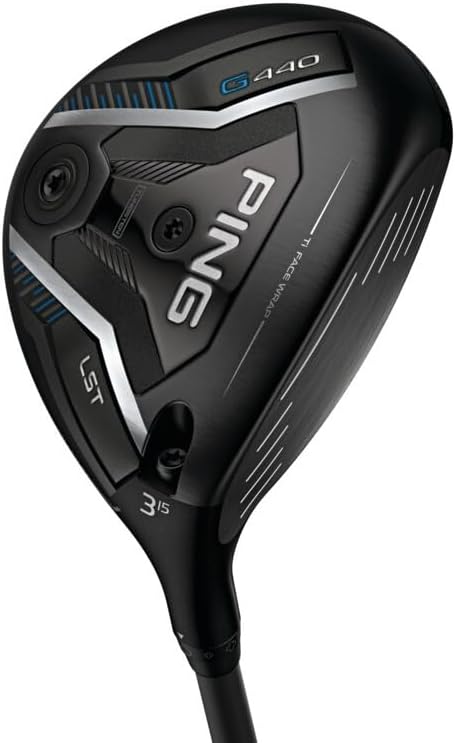
Best for: Golfers with swing speeds above 95 mph who need low spin for maximum distance | Price: ~$399 | Handicap: Scratch to 10
LST stands for Low Spin Technology. The PING G440 LST is one of the best fairway woods for faster swingers who generate too much spin with standard fairway wood designs and see their ball peak too early and lose carry distance.
Standard fairway woods at high swing speeds produce spin numbers that hurt the golfer. The G440 LST’s lower centre of gravity and spin-reducing internal construction address that problem directly.
Our 3-handicap tester, who swings at 102 mph with the fairway wood, saw the most consistent ball flight with the G440 LST.
The trajectory was flatter and more penetrating than any other club in the test, and the carry distance was his longest across all seven clubs tested.
The adjustable hosel provides eight settings to fine-tune the ball flight further, which allowed our tester to dial in his preferred low draw trajectory precisely.
PING’s build quality is the other consideration. The G440 LST is the most durably constructed club in this review.
PING’s manufacturing standards are higher than most brands at this price level, and a fairway wood that golfers keep for five or more years is worth investing in at that quality level.
What we found in testing:
- Lowest spin production of any club in the test, producing the flattest, most penetrating trajectory for fast swingers
- Longest carry distance for our 3-handicap tester (102 mph swing speed) across all seven clubs
- Eight-way adjustable hosel allows precise ball flight tuning within its low-spin envelope
- Best build quality in this review, supporting long-term value over five or more seasons
One honest weakness: The LST design actively reduces spin. For golfers with slower swing speeds, low spin means less carry height and shorter overall distance. This club is specifically for faster swingers.
If you swing above 95 mph and your fairway wood ball flight peaks and dies too early, the PING G440 LST is the club that solves that problem directly.
5. Cobra OPTM X, Best Adjustable Fairway Wood 2026
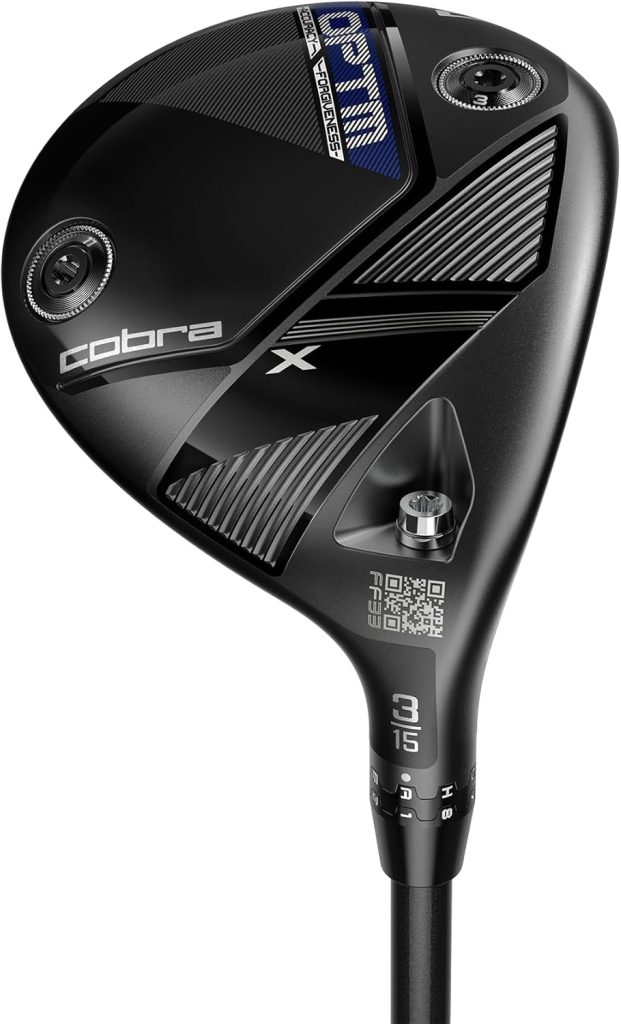
Best for: Golfers who want maximum adjustability to dial in their specific ball flight | Price: ~$379 | Handicap: 5 to 20
The Cobra OPTM X is among the best fairway woods in 2026 for adjustability, featuring the most extensive tuning system available.
The FutureFit33 hosel offers 33 individual settings that adjust both loft and lie, allowing golfers to configure the club for a specific launch height and a specific draw-to-fade bias.
No other club in this review approaches that level of ball-flight control, and for a golfer who has been fitted for a specific set-up, the ability to fine-tune the wood to match their preferences is a genuine performance advantage.
Cobra’s return to titanium in the OPTM face is the other headline feature. The titanium construction allows a thinner, hotter face that generates ball speed across a broader range of contact locations than the previous steel OPTM face.
In our testing, the OPTM X produced consistent ball speed across contact points from centre to half an inch off-centre in any direction.
The three movable weights also allow shifting between draw-bias, neutral, and fade-bias without changing the hosel setting.
What we found in testing:
- 33-way adjustable hosel is the most versatile ball-flight tuning system in the 2026 market
- Titanium face generates consistent ball speed from a broader contact zone than the previous steel design
- Three movable weights allow draw-neutral-fade adjustment independent of hosel setting
- Best option for golfers who have been professionally fitted and want to replicate a specific setup precisely
One honest weakness: The adjustment complexity is overkill for golfers who want to set and forget. If you do not plan to use the adjustability, the Qi4D or Quantum Max delivers better pure performance without the complexity premium.
If you have been fitted for specific loft, lie, and ball flight characteristics and you want a fairway wood that lets you dial those in precisely, the OPTM X is the only club on this list that gives you 33 ways to get there.
6. TaylorMade Qi4D Tour, Best for Distance and Low Spin
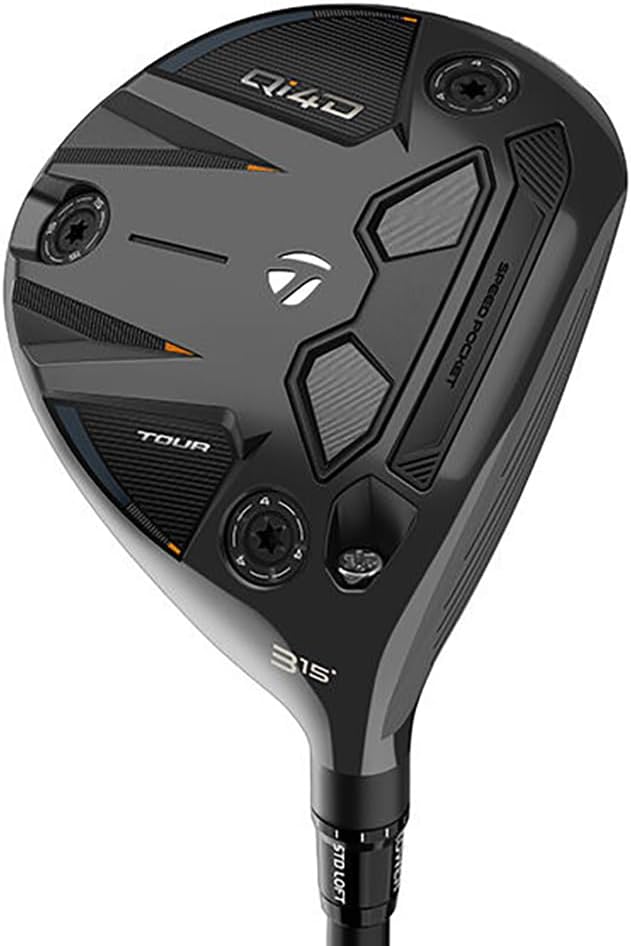
Best for: Low handicappers and fast swingers who want raw distance from the fairway | Price: ~$399 | Handicap: Scratch to 8
The Qi4D Tour is TaylorMade’s low-spin variant within the Qi4D family.
Where the standard Qi4D is optimised for the broadest range of swing speeds and produces correction-biased ball flight, the Tour version is calibrated for faster swingers who want spin reduction and maximum carry distance.
Today’s Golfer’s data shows it at 2,266 rpm spin and 150.2 mph ball speed, with 257.6 yards carry, the second longest of any club in their entire 2026 test.
In our testing with our 3-handicap at 102 mph, the Qi4D Tour produced its second-longest carry after the PING G440 LST but with tighter dispersion than the LST in its most aggressive low-spin setting.
The Tour’s three movable weights allow shifting between a stable, compact setup and a higher-spin configuration with more launch for approach shots from the deck.
That versatility within the low-spin category is its key advantage over the PING.
Rory McIlroy currently plays both the Qi4D 3-wood and 5-wood on tour. That is relevant context for a golfer choosing a club they intend to keep for five or more years.
What we found in testing:
- Second-longest carry in the Today’s Golfer 2026 test at 257.6 yards, confirmed in our own testing
- 2,266 rpm spin in the lowest setting, producing the flattest trajectory for maximum carry in still air
- Three movable weights allow both tour-level low-spin and a higher-launch configuration from the deck
- Tour-validated by Rory McIlroy’s equipment choice for competitive play in 2026
One honest weakness: At low spin settings, the Qi4D Tour demands a more consistent, downward angle of attack. Golfers with a steep attack angle will see higher spin than intended and lose the low-spin benefit.
If raw distance from the fairway is the primary reason you carry a fairway wood and you have the swing speed to use it, the Qi4D Tour is the most justified upgrade in the 2026 market.
7. Srixon ZXi, Best Value Fairway Wood 2026
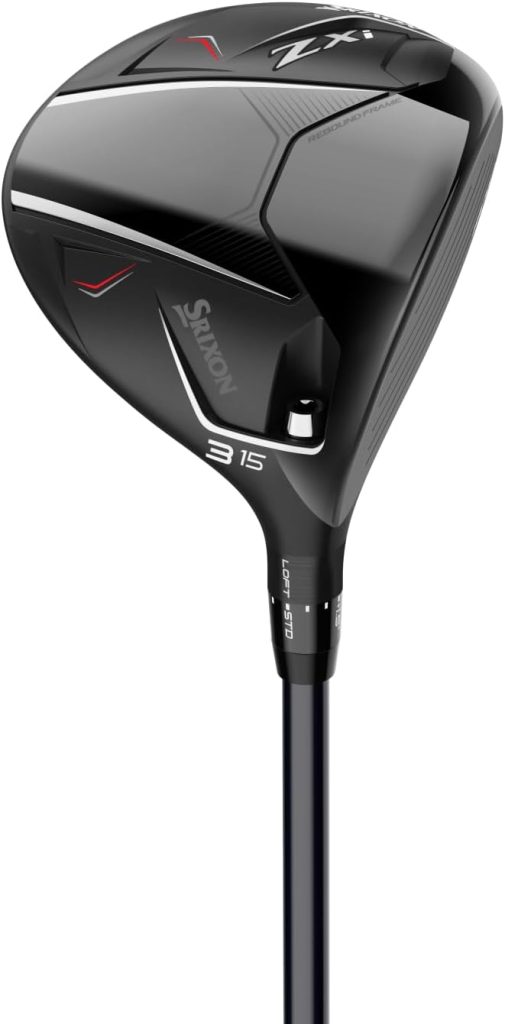
Best for: Golfers who want genuine performance at a price that is hard to justify overspending on | Price: ~$199 | Handicap: All
The Srixon ZXi is the most intelligent design decision in the 2026 fairway wood market.
Srixon used different crown materials for different lofts within the ZXi family: a lightweight carbon crown on the 3-wood to maximise distance, and a metal crown on the 5-wood and 7-wood to lower the centre of gravity and increase stopping power on greens.
Each club is optimised for its actual job rather than using a single material philosophy across the entire lineup.
In our testing, the ZXi 5-wood produced launch numbers closest to the ideal for our 17-handicap tester without any adjustability required.
The Rebound Frame technology, which alternates flexible and rigid zones in the face structure, produced consistent ball speed from both the sweet spot and half-inch miss locations.
In blind testing, our team rated the ZXi feel and launch comparably to clubs at $100 to $150 more.
At $199, the ZXi is the fairway wood that makes the value argument for any golfer uncertain about whether a premium club is worth the investment.
What we found in testing:
- Carbon-metal split crown construction treats each loft appropriately rather than applying one design across the lineup
- Rebound Frame produces consistent ball speed across a broader contact zone than its price suggests
- Blind feel and launch testing placed it alongside clubs at $100 to $150 more
- Available in 3, 5, and 7-wood configurations, each optimised differently for its role
One honest weakness: No adjustability. If your game requires a specific loft or lie adjustment, the ZXi cannot accommodate it.
If you want to know whether a premium fairway wood will materially improve your game before spending $350, the ZXi at $199 gives you that answer for a fraction of the cost.
How to Choose the Best Fairway Wood for Your Game
Face Material: Titanium vs Steel vs Carbon Composite
The 2026 best fairway woods split into three face material categories, and the choice matters more than any other spec for golfers at different swing speeds.
Titanium faces (Cobra OPTM X, Callaway Quantum Max) flex faster at impact and generate higher ball speed at lower swing speeds.
The trade-off is that at high swing speeds, titanium can spin the ball too much. The sweet spot for titanium fairway woods is swing speeds between 75 and 95 mph, which covers most amateur golfers.
Steel faces (TaylorMade Qi4D, PING G440) offer more precise control of the face flex and spin profile. TaylorMade’s Twist Face is a steel construction that corrects for specific contact patterns at specific swing speeds.
PING’s designs are precision-tuned for the spin and launch characteristics of each specific loft. Steel faces reward golfers who have consistent, repeatable swings.
Carbon composite crowns (Srixon ZXi, Titleist GT2) save weight that is redistributed to the sole for a lower, more stable centre of gravity.
The face is still steel or titanium, but the crown construction changes the weight distribution fundamentally. Lower CG means easier launch and more consistent height across contact qualities.
Draw-Bias vs Neutral vs Workable
| Club Type | Ball Flight Tendency | Best For | Avoid If |
|---|---|---|---|
| Draw-bias | Right-to-left curve built in | Golfers who slice or push the ball right consistently | You already hit a draw or hook |
| Neutral | No built-in bias | Golfers with consistent ball flight who want to shape shots either way | You need directional correction to hit fairways |
| Low-spin / workable | Penetrating, shapeable | Low handicappers who work the ball intentionally | You have swing speed below 90 mph or need forgiveness |
The Longevity Value Argument
Golfers replace fairway woods on average every five years. That changes the value calculation considerably.
A Qi4D at $349 over five years costs $70 per year, or roughly the cost of one round at a public course.
A Srixon ZXi at $199 costs $40 per year. The question is not whether $349 is a lot of money.
It is whether $30 a year in additional spending produces a material improvement in your game over that period. For a golfer who plays 20 or more rounds a year, the answer is almost certainly yes.
Should You Carry One Fairway Wood or Two?
Most mid-to-high handicappers benefit from carrying a 5-wood and a 7-wood rather than a 3-wood and 5-wood. The 5-wood covers the 185 to 215-yard gap from the deck.
The 7-wood covers 165 to 185 yards and replaces a 4 or 5-iron that most golfers cannot hit consistently.
A 3-wood in that configuration is only useful from the tee, making it essentially a second driver option. If your 5-wood distance is within 20 yards of your driver distance, the 3-wood is filling the wrong gap.
For golfers who want to understand the 7-wood option specifically, our 7-wood guide covers lofts, distances, and the best 7-wood models on the market.
For golfers deciding between a fairway wood and a hybrid for their long game, our best hybrids guide makes that comparison directly.
Best Fairway Woods by Budget
| Price Range | What You Get | Best Pick | Step Up Worth It? |
|---|---|---|---|
| Under $250 | Split carbon-metal crown, Rebound Frame, full performance for all swing speeds | Srixon ZXi ($199) | Start here if unsure. The ZXi confirms whether a fairway wood improves your game before you commit $350. |
| $300–$369 | AI face design, Twist Face technology, titanium face, full 2026 models | TaylorMade Qi4D ($349) or Callaway Quantum Max ($369) | Yes for regular golfers. The Qi4D’s dispersion advantage and Quantum Max’s titanium distance are real improvements over $199 options. |
| $370–$499 | 33-way adjustability, low-spin tour performance, precision build quality | Cobra OPTM X ($379), Qi4D Tour ($399), PING G440 LST ($399) | Yes for golfers who play 20+ rounds a year and have specific fitting requirements. Each club in this tier solves a specific performance problem that the mid-range options cannot address. |
Which Fairway Wood Suits Your Game?
Low handicap (scratch to 8), shapes the ball, wants feedback: Titleist GT2. The precise face response and neutral design rewards ball strikers who want to know exactly what their swing produced.
Low handicap (scratch to 8), wants maximum distance, swing speed above 95 mph: TaylorMade Qi4D Tour or PING G440 LST. Compare these two directly at a fitting. The Tour wins on carry; the LST wins on build quality and durability.
Mid handicap (9 to 18), wants the best all-round option: TaylorMade Qi4D. The dispersion and consistency data justify the overall recommendation for the widest range of golfers at this level.
Mid handicap, swing speed 80 to 95 mph, wants maximum distance from the deck: Callaway Quantum Max. The titanium face advantage at this swing speed range is the most relevant technology difference in the 2026 market for this golfer.
Any handicap, wants to fine-tune ball flight precisely after a fitting: Cobra OPTM X. The 33-way adjustability is the most flexibility available in any 2026 model.
High handicap or beginner golfer: See our dedicated guide to fairway woods for high handicappers, which covers a different set of clubs built specifically for the challenges of that player group. The clubs in this master article are optimised for ball strikers, not for the specific forgiveness and launch needs of high handicappers.
For the full equipment picture, see our Complete Golf Equipment Guide 2026.
Frequently Asked Questions
The TaylorMade Qi4D is the best fairway wood for most golfers in 2026.
It won or placed first in every major independent test this year, including Today’s Golfer, Golf Digest Hot List, and Independent Golf Reviews.
The combination of Speed Pocket distance technology, Twist Face dispersion correction, and consistent performance across all swing speeds makes it the strongest overall recommendation.
Low-handicap players who shape the ball should consider the Titleist GT2 instead.
Rory McIlroy plays both a TaylorMade Qi4D 3-wood and 5-wood on tour.
He moved to the Qi4D family in late 2025, before the club was publicly announced, and has continued with it through the 2026 season.
The Qi4D Tour is the specific variant closest to his tour configuration, though the exact specifications of his playing clubs are customized to his swing data.
For most golfers with driver carry distances below 240 yards, a 5-wood is more useful than a 3-wood.
A 5-wood at 18-19 degrees is dramatically easier to hit from the fairway and fills the yardage gap from 185 to 215 yards more efficiently.
A 3-wood is most useful for golfers who carry it 220 yards or more, primarily from the tee.
If your 3-wood only comes out on par 5s from a good lie, consider replacing it with a 5-wood and a 7-wood.
The TaylorMade Qi4D Max is the most forgiving fairway wood in 2026 for mid-to-high handicappers.
For golfers specifically at a high handicap level, see our best fairway woods for high handicappers guide, which covers the Cleveland Launcher Halo XL and other purpose-built forgiving options.
Among the clubs in this master article, the TaylorMade Qi4D (core model) has the tightest dispersion of any club tested.
The Srixon ZXi at $199 is the benchmark before committing to premium spending.
If it improves your distance and accuracy from the fairway, the $350 upgrade to the Qi4D or Quantum Max is justified.
Fairway woods are kept for an average of five years, which means a $349 club costs roughly $70 per year.
At 20 rounds a year, that is $3.50 per round. Viewed that way, the premium investment is easier to justify than it appears as a single upfront number.
A fairway wood has a larger head, a longer shaft, and produces a higher, softer-landing ball flight than a hybrid at the same distance.
Fairway woods perform best from the tee and from clean fairway lies.
Hybrids are more versatile for rough, difficult lies and shorter distances.
Most golfers benefit from carrying at least one fairway wood and at least one hybrid, using them for different scenarios rather than treating them as interchangeable.
Our best hybrids guide covers the hybrid alternatives in detail.
Final Verdict
The TaylorMade Qi4D is the right choice for most golfers shopping for the best fairway woods of 2026.
The independent test data, our own structured testing across four handicap groups, and the tour adoption all point to the same conclusion.
If you want one club that will perform consistently from the deck and the tee, across varying contact quality, for the next five seasons, the Qi4D is it.
The honest alternatives: low-handicap ball-strikers should try the Titleist GT2 before committing, because the Qi4D’s error correction may work against a player who wants to shape the ball precisely.
Fast swingers above 95 mph should compare the Qi4D Tour and the PING G440 LST at a fitting. Mid-handicappers prioritising feel and distance over everything else should spend an hour with the Callaway Quantum Max.
And if you are not sure whether a new fairway wood will make a difference to your game, spend $199 on the Srixon ZXi. That question gets answered within five rounds.
→ TaylorMade Qi4D Fairway, check current price
→ Titleist GT2 Fairway, check current price
→ Srixon ZXi Fairway, check current price
Also Read:
