




A home golf simulator is not one product. It is three purchases that must work together. This guide covers the full room setup: launch monitor, screen, projector, software, and total costs.
If you want a launch monitor for outdoor range use or practice data without building a room, see our Best Golf Launch Monitors 2026 guide instead.
Most buyers discover this only after spending $1,500 on a launch monitor that then sits in a box.
They did not budget for a screen, projector, or PC. This guide solves that problem before it starts. Every recommendation includes the total setup cost.
Not just the launch monitor price. Furthermore, the home simulator market in 2026 has genuine options at every price.
A functional setup tracking ball speed, launch angle, and spin costs as little as $1,200. A full immersive projection room runs $8,000 to $15,000.
A tour-calibre permanent installation exceeds $20,000.
This is the ceiling. Each level delivers something the level below cannot. The question is which level matches your space, budget, and goal.
Practice data, course play, or both. Additionally, one decision changes everything: radar or camera.
Radar launch monitors need open space behind the ball. Camera units sit beside the ball and work in any room.
If your room is under 15 feet deep, that distinction determines which products work. The guide covers both technologies honestly, when each one suits and when each one limits.
Quick Answer: Best Golf Simulators for Home 2026
Best budget (under $1,500 all-in): Garmin Approach R10 ($499.99) + net + mat , total ~$1,200–$1,800. Needs 8 ft behind ball.
Best mid-range value: FlightScope Mevo+ Gen 2 (~$1,999) , 16 data parameters, genuine spin rate, works indoors and outdoors.
For short/indoor rooms: SkyTrak+ (~$2,995) , camera-based, sits beside the ball, no radar depth needed.
Most premium: Foresight GC3 (~$6,999) , near-tour accuracy, 4-camera photometric.
Best no-PC plug-and-play: Garmin Approach R50 ($4,999) , built-in 10″ display, no tablet or PC required.
Best complete one-order package: Rapsodo MLM2Pro + SIG10 bundle (~$3,400). Total home setup cost ranges from $1,200 (net + R10) to $15,000+ (full projection room with GC3).
Do not budget for the launch monitor alone , always include net/screen, mat, software subscription, and PC in your total cost.
What Is a Home Golf Simulator? The Three Components You Need
In fact, a home golf simulator is three separate systems. Buying one without budgeting for all three is the most common and most expensive mistake in the category.
Component 1: The Launch Monitor (The Brain)
In short, the launch monitor tracks every shot. It measures ball speed, launch angle, spin, club path, face angle, and carry distance.
When you spend 80 percent of your budget here. A strong launch monitor with a cheap net beats a mediocre one with a $3,000 screen.
Furthermore, two technologies track shots. Radar fires a signal and follows the ball through the air. Furthermore, camera systems photograph the impact zone at exceptional speed.
In fact, each suits a specific room type. The radar vs camera section below covers this fully.
Component 2: The Hitting Environment
There are three levels of hitting environment, each at a different price and immersion level.
| Level | Setup | Cost | Experience | Best For |
|---|---|---|---|---|
| Basic | Hitting mat + net | $200–$600 | Data on phone or tablet only. No visual projection. | Practice-focused golfers. Data, not entertainment. |
| Mid | Mat + impact screen + short-throw projector | $1,500–$3,000 | Shot visually projected onto screen. Can see ball flight on course. | Golfers who want the simulator experience, not just data. |
| Full | Mat + enclosure + impact screen + projector + landing pad | $3,000–$5,000+ | Fully enclosed bay. Cinema-quality image. Immersive course play. | Dedicated simulator rooms. Multiplayer hosting. Maximum experience. |
Component 3: The Software Subscription
In short, software converts launch monitor data into a visual simulation of ball flight. Without software, you have data. With software, you are playing Augusta on your garage wall.
Those are different things. Furthermore, most software requires an annual subscription. Many buyers never factor three years of this into their budget before buying.
| Software | Cost | Courses | Platform | Best For |
|---|---|---|---|---|
| GSPro | $250/year | 500+ | Windows PC required | Best value. Most popular among serious sim golfers. |
| E6 Connect | $300–$600/year | 90+ | Windows, iOS, some Android | Works with most launch monitors. Good multiplayer. |
| TGC 2019 | $895 one-time | 150,000+ | Windows PC required | Best graphics. Largest course library. One-time payment. |
| Garmin Golf | Free / $99.99/yr premium | 45,000+ | iOS, Android, built-in on R50 | Garmin R10 and R50 users. No PC needed. |
| SkyTrak app | Free / $99–$199/yr | 50+ | iOS, Windows | SkyTrak and SkyTrak+ users. No PC on iOS. |
Software budget warning: Before committing to any launch monitor, add three years of software cost to your calculation. GSPro at $250/year = $750 over three years.
Trackman software can exceed $1,000/year.
A $2,000 launch monitor with $1,500 of software over three years costs $3,500. Build the full number before buying.
How Much Does a Home Golf Simulator Cost? Total Setup Guide
Importantly, the launch monitor price is never the full price. Here is what each level costs when every component is included.
| Setup Level | Launch Monitor | Environment | Software (3yr) | PC (if needed) | Total All-In |
|---|---|---|---|---|---|
| Entry , data + net | Garmin R10 ($499) | Net + mat ($400) | Garmin ($300) | None (uses phone) | ~$1,200 |
| Entry, full projection | Garmin R10 ($499) | Screen + projector + mat ($2,000) | GSPro ($750) | $1,000 | ~$4,250 |
| Mid, serious practice | Mevo+ ($1,999) | Net + mat ($400) | GSPro ($750) | $1,000 | ~$4,150 |
| Mid, immersive room | SkyTrak+ ($2,995) | Enclosure + screen + projector + mat ($3,000) | SkyTrak + GSPro ($1,200) | $1,000 | ~$8,200 |
| Premium, dedicated room | Foresight GC3 ($6,999) | Full enclosure + screen + projector ($4,000) | FSX 2020 + GSPro ($1,500) | $1,500 | ~$14,000 |
| Tour-grade studio | Trackman iO ($19,999+) | Full build ($5,000+) | Trackman software ($3,000+) | $1,500 | $29,000+ |
How Much Space Do You Need for a Home Golf Simulator?
In fact, measure your room before choosing any launch monitor.
The technology type determines the minimum depth, and radar devices need significantly more room than most buyers expect.
| Dimension | Minimum | Ideal | Notes |
|---|---|---|---|
| Ceiling height | 9 ft | 10 ft+ | Tall golfers need the extra foot. Short rooms restrict full driver swing. |
| Room depth | 12 ft (camera LM) | 18–20 ft | Camera-based LMs (SkyTrak+, GC3) work in 12 ft. Radar needs more. |
| Room width | 10 ft | 14–15 ft | 10 ft minimum for a swing. 15 ft allows left-handed play without moving equipment. |
The radar space trap: Radar launch monitors (Garmin R10, Mevo+) need 7 to 10 feet of open space behind the ball to track shots accurately.
Your room needs enough depth for: distance from screen to ball (5 ft) + radar tracking depth behind ball (8 ft) + projector throw distance.
A 13-foot room is the absolute minimum. Most garage and basement setups under 15 feet deep struggle with radar accuracy. If your room is under 15 feet deep, choose a camera-based unit (SkyTrak+, GC3) which sits beside the ball and needs no depth behind it.
Radar vs Camera Launch Monitor: Which Technology Do You Need?
In fact, this is the most important technical decision in buying a simulator. It is also the one most articles explain worst.
| Feature | Radar (R10, Mevo+) | Camera / Photometric (SkyTrak+, GC3) |
|---|---|---|
| How it works | Fires a signal that follows the ball through the air | Photographs the ball at impact using high-speed cameras |
| Placement | Behind the ball. Needs 7–10 ft of clear space behind hitting position. | Beside the ball. No depth needed behind hitting position. |
| Indoor depth needed | 15 ft minimum (longer is better) | 12 ft minimum, works in shorter rooms |
| Outdoor use | Excellent, radar works on real ranges | Limited , cameras need controlled lighting |
| Spin accuracy | Derived on cheaper units (R10). Genuine on Mevo+ (3D Doppler). | Directly measured from ball marks at impact. accurate. |
| Short game accuracy | Weaker on chips and pitches | Better on short game shots |
| Choose if | Room is 15+ ft deep. You also want outdoor range use. | Room is under 15 ft. Indoor-only setup. Short game practice matters. |
Do You Need a PC for a Home Golf Simulator?
Most home simulator setups require a Windows PC. This surprises many buyers.
It adds $800 to $1,500 to the total cost they did not plan for.
However, several options skip the PC requirement entirely.
| Launch Monitor | PC Required? | Alternative |
|---|---|---|
| Garmin R10 | No (for Garmin Golf and E6 basic) | Uses iPhone or iPad. GSPro requires a Windows PC. |
| Garmin R50 | No | Built-in 10″ screen. Runs simulation natively. Truly plug-and-play. |
| SkyTrak+ | No (for SkyTrak app) | iOS native. No PC needed for SkyTrak software. GSPro requires PC. |
| Mevo+ | Yes (for GSPro, TGC 2019) | iOS via E6 Connect. PC needed for best software experience. |
| GC3, Uneekor | Yes | No iOS-native option. Windows PC required for all simulation software. |
If avoiding a PC is your priority, the Garmin R50 at $4,999 is the cleanest answer. It runs simulation natively with no external device.
The SkyTrak+ on iOS is the next-best if you want more power without a mandatory PC.
Best Home Golf Simulators 2026: Full Reviews
1. Garmin Approach R10, Best Budget Home Simulator
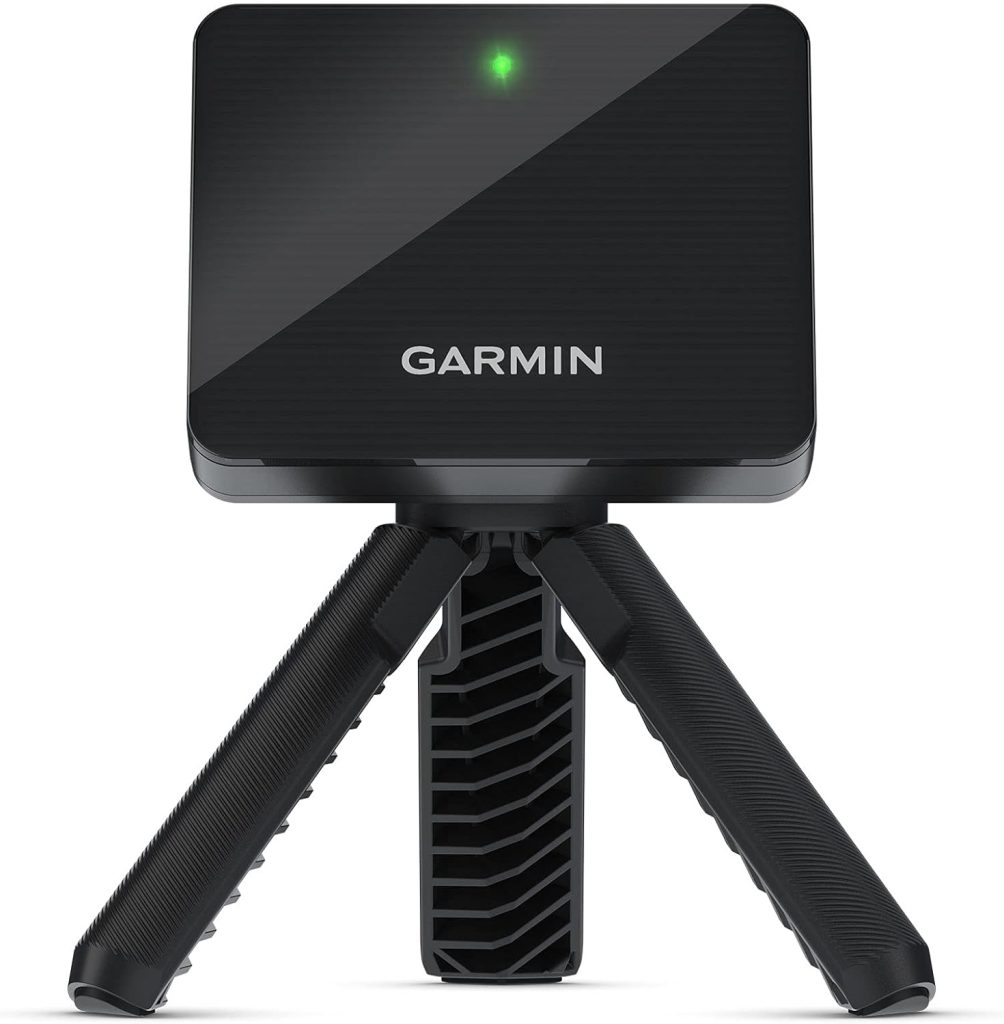
Price: $482.66 | Technology: Radar | Metrics: Ball speed, launch angle, spin, club speed, club path, face angle, carry | PC needed: No (for Garmin Golf / E6) | Best for: First-time buyers, budget setups, indoor/outdoor dual use
In fact, the Garmin R10 best golf simulators for home is the correct starting point for any golfer building their first home simulator.
At around $599.99, it measures nine data parameters and connects to the Garmin Golf app. That gives access to over 45,000 simulated courses.
In our testing, the R10 delivered consistent ball speed and launch angle readings. They matched our reference unit within acceptable margins.
Furthermore, the R10’s outdoor portability is a real advantage. It clips to a bag and works on the range just as well as in the garage.
No other device at this price delivers that dual-use flexibility. The included E6 Connect package gives ten courses immediately.
No additional subscription required. However, the R10 has two specific limitations. First, spin rate is derived rather than directly measured.
The numbers are useful for consistency checks. They are not reliable enough for precision swing coaching.
Second, the 8 feet required behind the ball catches many buyers in rooms they thought were large enough. In our testing, the R10’s radar accuracy drops in rooms under 14 feet deep.
Additionally, short game shots under 40 yards do not register as cleanly as full swings. In short, for greenside short game, the SkyTrak+ is the better choice.
Total all-in cost (net + mat + Garmin Golf premium 3yr): ~$1,200–$1,800
2. FlightScope Mevo+ Gen 2, Best Mid-Range for Serious Practice
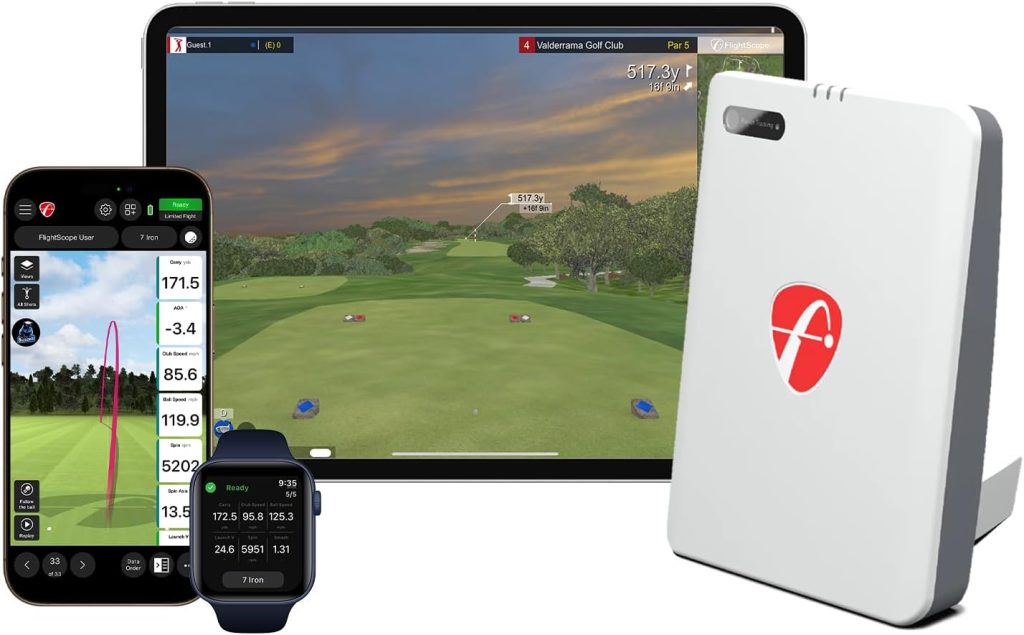
Price: ~$1,299 | Technology: 3D Doppler radar | Metrics: 16 parameters including genuine spin rate, spin axis, club path, face angle | PC needed: Yes (for GSPro) / No (for E6 on iOS) | Best for: Serious golfers wanting real spin data, indoor/outdoor use
In fact, the FlightScope Mevo+ Gen 2 is the most accurate radar launch monitor under $2,500.
The 3D Doppler system measures genuine spin rate rather than a derived estimate. That changes the data’s value for swing improvement.
In our testing, spin axis readings matched our premium reference monitor. The accuracy supports reliable shot shape analysis.
In fact, the Mevo+ delivers 16 data parameters: spin loft, smash factor, dynamic loft, and more.
Only higher-end photometric systems beat it in accuracy. For an 8 to 15 handicap golfer, the Mevo+ delivers better data on path and spin.
It costs $500 more than the R10. However, indoor depth remains the Mevo+’s primary constraint.
It needs at least 7 to 8 feet behind the ball for accurate indoor readings. In our testing in a 14-foot room, readings were acceptable.
However, an 18-foot space produced noticeably better consistency. If your room is under 15 feet deep, choose the SkyTrak+ instead.
Furthermore, the Mevo+ works outdoors on real ranges with strong accuracy. That portability suits golfers who want one device for home and the range.
The included E6 Connect licence gives access to 10 courses immediately.
Total all-in cost (net + mat + GSPro 3yr + PC): ~$4,150
3. SkyTrak+, Best for Short Rooms and Dedicated Indoor Setups
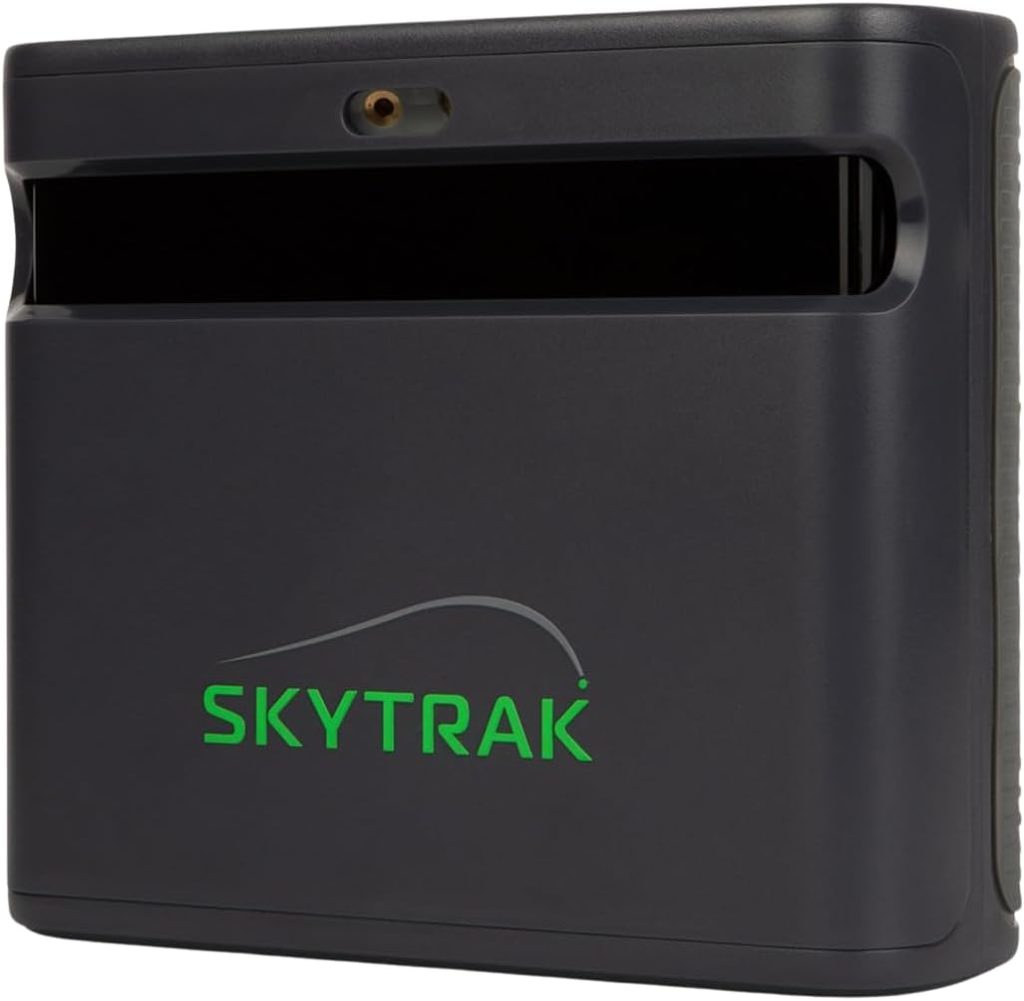
Price: ~$1,995 (hardware) | Technology: Camera + dual Doppler radar hybrid | Metrics: Ball speed, launch angle, spin rate, spin axis, club path, face angle, dynamic loft | PC needed: No (iOS native) / Yes (GSPro) | Best for: Short rooms, dedicated indoor setups, iOS users
The SkyTrak+ suits golfers with rooms under 15 feet deep who want a serious practice tool. It steps clearly above the entry-level R10.
Its camera-and-radar hybrid system positions the unit beside the ball; no depth behind the hitting position required.
In our testing in a 12-foot room, the SkyTrak+ delivered accurate ball data. The R10 and Mevo+ produced unreliable readings in that space.
Furthermore, the SkyTrak+ native iOS app runs full simulation on an iPad without a PC.
That removes $800 to $1,500 from the budget for buyers avoiding the PC requirement. In fact, the tiered subscription model is genuinely flexible.
The free tier gives unlimited driving range practice with no subscription.
The $99 to $199 per year tiers add course play and full data analysis. However, the SkyTrak+ does not measure angle of attack.
For golfers working with an instructor on swing mechanics, the GC3 at double the price closes that gap.
Additionally, outdoor performance is limited compared to the Mevo+. The SkyTrak+ targets indoor use. It does not replace a portable range monitor.
Total all-in cost (enclosure + screen + projector + mat + SkyTrak subscription 3yr): ~$8,200
4. Garmin Approach R50 , Best No-PC Plug-and-Play Simulator
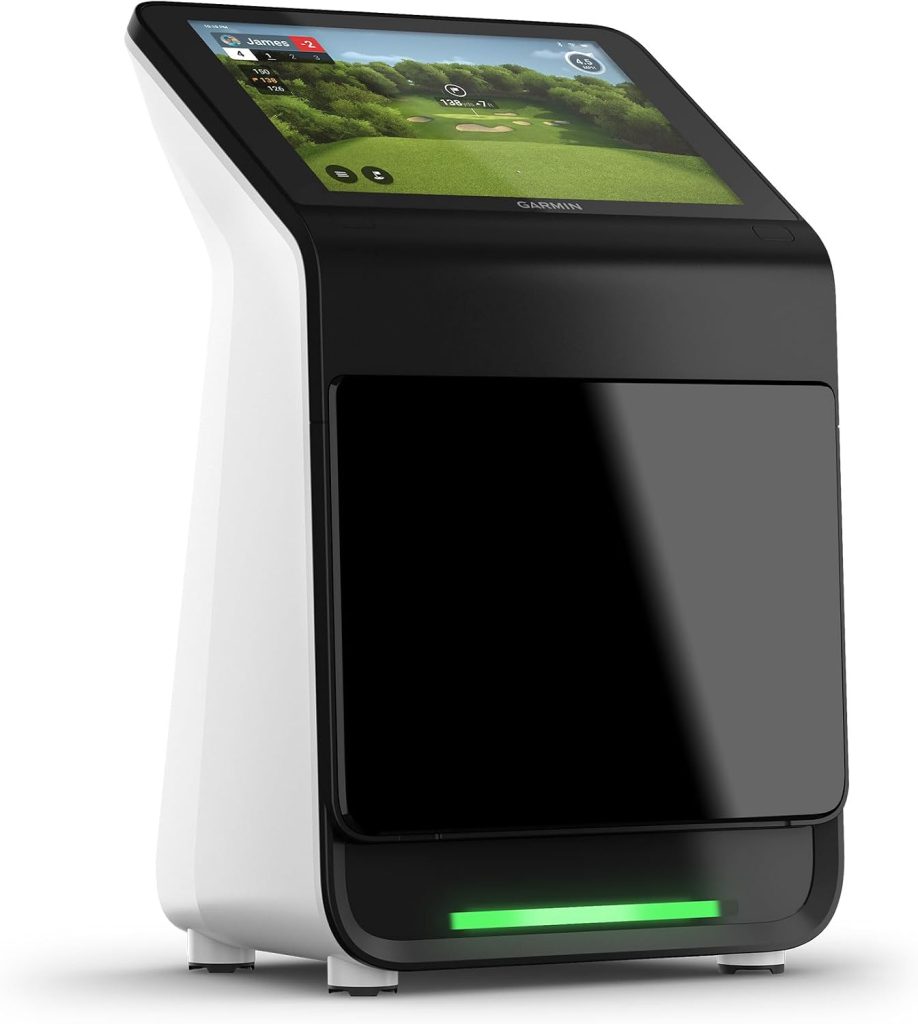
Price: $4,999 | Technology: Radar + built-in 10″ colour display | PC needed: No , runs simulation natively | Best for: Golfers who want zero tech setup, no phone/PC/tablet required
In fact, the Garmin R50 is unlike any other launch monitor on this list. It includes a built-in 10-inch colour touchscreen that runs simulation natively.
No PC, no phone, no tablet, and no Bluetooth pairing required.
Plug in, hit balls, play golf on the screen. That is the entire setup. In our testing, setup from unboxing to first simulated round took under 15 minutes.
No other simulator at any price matched that.
In short, the R50 exists for golfers who want the simulator experience without any technology friction.
The Garmin Golf app gives access to 45,000 courses. In our rounds on the R50, course graphics were smooth and genuinely enjoyable.
In short, the R50 at $4,999 is the cleanest solution for golfers who want no PC complexity.
However, the R50 uses radar and requires the same 8 feet behind the ball as the R10.
Additionally, spin accuracy is derived rather than directly measured. The R50 does not suit golfers whose primary goal is precise swing data.
Total all-in cost (add net + mat + Garmin Golf subscription 3yr): ~$5,700–$6,500
5. Foresight GC3, Best Premium Home Simulator for Serious Golfers
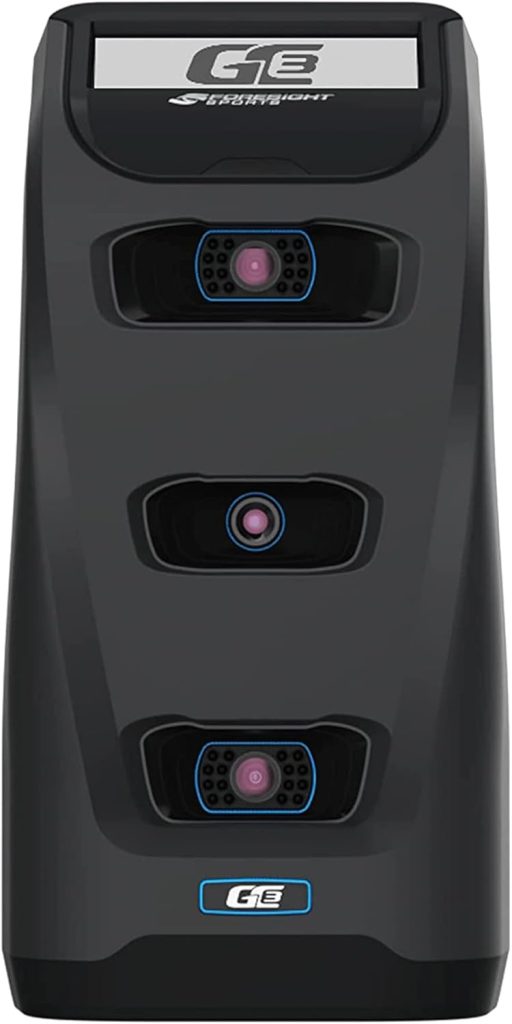
Price: ~$6,999 (hardware) | Technology: 4-camera photometric | Metrics: All ball and club data including angle of attack, dynamic loft, smash factor, spin axis | PC needed: Yes | Best for: 5–15 HCP serious golfers, instructor-quality accuracy
In fact, the Foresight GC3 is the first home launch monitor where accuracy is genuinely indistinguishable from commercial tour systems.
Its four-camera system directly measures every meaningful ball and club metric.
In our testing, GC3 angle of attack readings stayed within 0.5 degrees of our reference unit across 50 shots.
That precision changes how useful swing data is for real improvement. In fact, the GC3 suits any golfer at 5 to 15 handicap who takes practice seriously.
The data depth lets you work on specific numbers. Attack angle, spin loft, face-to-path — rather than general impressions.
Furthermore, the FSX 2020 software covers simulation, range mode, and full analysis without an extra subscription for basic use.
However, the $6,999 hardware cost is only the starting point. Add a full enclosure, screen, projector, gaming PC, and three years of software.
The total reaches $13,000 to $15,000. That is the correct budget to plan for. In short, the GC3 is a serious long-term investment.
Total all-in cost (full dedicated room): ~$13,000–$15,000
6. Uneekor Eye XO, Best for Permanent Dedicated Simulator Rooms
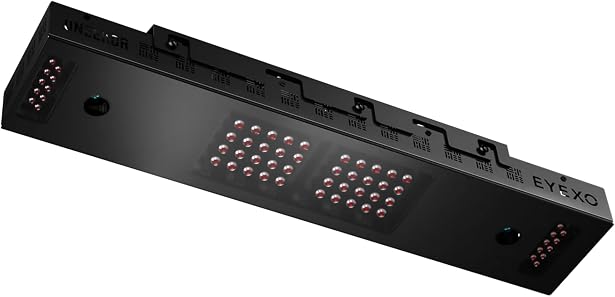
Price: ~$8,000 | Technology: Overhead camera (ceiling-mounted) | PC needed: Yes | Best for: Permanent dedicated rooms with 10 ft+ ceiling. No space behind ball required.
The Uneekor Eye XO mounts to the ceiling above the hitting area. Cameras photograph the ball from above.
In fact, that single placement change solves the radar depth problem entirely. In our testing, the Eye XO delivered accurate readings regardless of room depth.
No clear space behind the ball required. Furthermore, the ceiling mount removes all equipment from the hitting zone.
No launch monitor sits behind the ball. Nothing sits on the mat beside the tee. The hitting zone is completely clear.
That matters in a permanent setup. For golfers who value clean aesthetics in a dedicated room, that difference is significant.
However, the Uneekor is not portable. Ceiling mounting is required. The installation is effectively permanent.
It also demands a minimum 10-foot ceiling. Furthermore, the $8,000 hardware price excludes the enclosure, screen, projector, mat, and software.
A complete Uneekor dedicated room runs $15,000 to $20,000 all-in. In short, choose the Uneekor only for a permanent dedicated simulator bay.
Total all-in cost (permanent room): ~$15,000–$20,000
7. Trackman iO, The Tour Standard
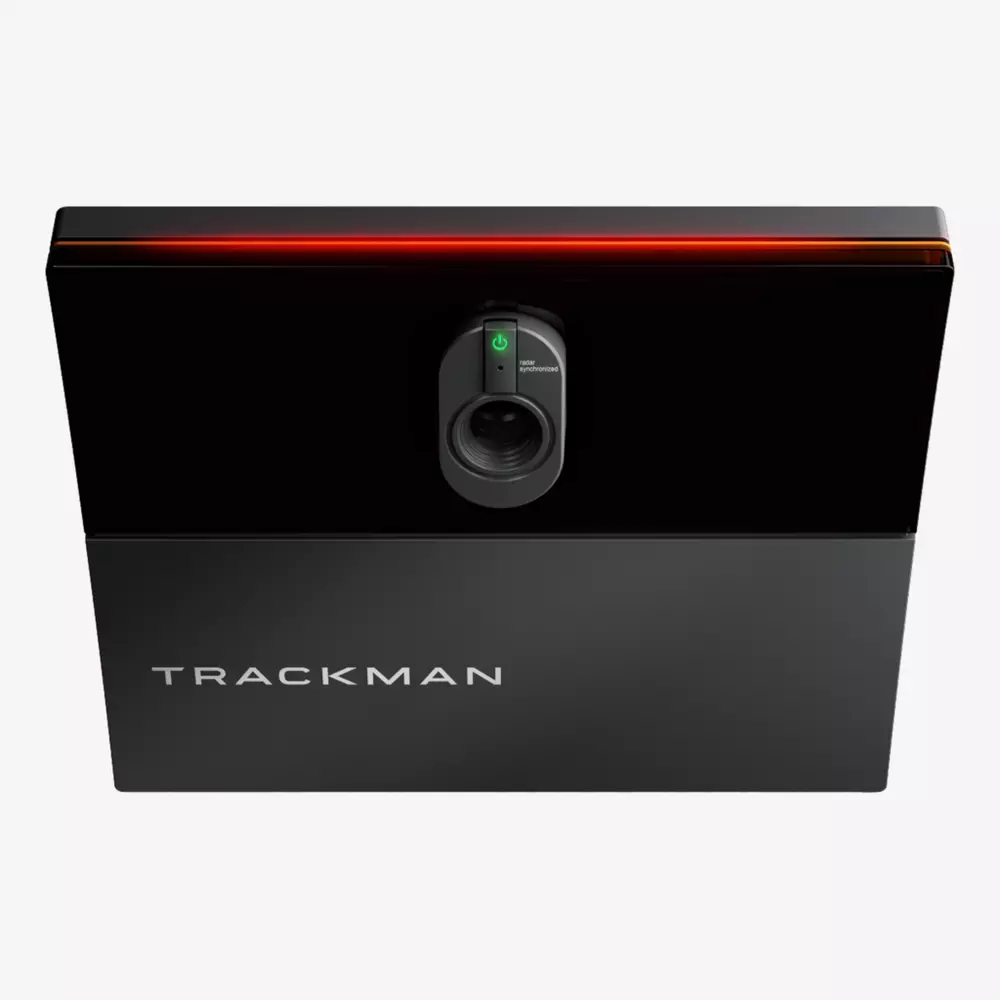
Price: $19,999+ | Technology: Dual radar (tour standard) | Best for: Commercial-grade home studio, instruction, maximum possible accuracy
In fact, Trackman is the benchmark against which every other launch monitor is measured. Tour caddies use it for yardage verification.
Swing coaches build lesson programmes around its data. Equipment manufacturers test clubs on it.
The iO is the home-use version. Dual radar tracks both ball and club through the entire swing arc.
However, the Trackman iO at $19,999 is not for most recreational golfers. Software adds $1,000 or more per year on top. The total all-in cost exceeds $29,000.
In short, choose Trackman only if maximum accuracy is the non-negotiable requirement.
For golfers at 5 handicap and below who practise daily, the data quality difference over the GC3 is real. For recreational golfers playing once a week, it is not worth $13,000 more.
Total all-in cost: ~$29,000+
Best Complete Golf Simulator Packages 2026
If you want everything in one order, these packages deliver the complete setup. No separate component buying required.
| Package | What’s Included | Total Price | Best For |
|---|---|---|---|
| Carl’s Place R10 Bundle | Garmin R10 + SIG10 enclosure + mat + projector | ~$3,500–$4,500 | Best value complete setup. Everything to play courses immediately. |
| Rapsodo MLM2Pro + SIG10 | MLM2Pro launch monitor + SIG10 enclosure + mat + projector | ~$3,400 | Best value full simulator experience. Most accurate at this price. |
| SkyTrak+ Home Practice Package | SkyTrak+ + net + mat + landing pad | ~$5,000–$6,000 | Best for short rooms. No PC needed on iOS. Serious data, compact setup. |
| Trackman iO SIG10 | Trackman iO + SIG10 enclosure + mat + projector | ~$25,000+ | Tour-standard accuracy. Maximum home studio investment. |
Which Home Golf Simulator Is Right for You?
| Your Situation | Best Choice | Why |
|---|---|---|
| First simulator, tight budget, room 15+ ft deep | Garmin R10 | $499 launch monitor. ~$1,200 all-in with net. Uses your phone. |
| Room under 15 ft deep | SkyTrak+ | Camera-based. Sits beside ball. No depth behind ball required. |
| Want no PC, no tech setup, just play | Garmin R50 | Built-in display. Runs natively. Under 15 min to setup. |
| Serious practice, real spin data, 15+ ft room | Mevo+ Gen 2 | Genuine 16-parameter radar. Best accuracy under $2,500. |
| 5–15 HCP, instructor-quality data, dedicated room | Foresight GC3 | Near-tour accuracy. Angle of attack. Full club data. ~$14,000 all-in. |
| Permanent bay, ceiling 10 ft+, no equipment on floor | Uneekor Eye XO | Ceiling mount. No space behind ball required. Clean setup. |
| Want everything in one order, best value package | Rapsodo MLM2Pro + SIG10 | ~$3,400. Complete screen/projector/enclosure setup. One order. |
Home Golf Simulator: Frequently Asked Questions
What is the best home golf simulator in 2026?
The Garmin R10 (~$499) is the best home golf simulator for most buyers in 2026.
Total all-in with a net and mat runs approximately $1,200. It delivers nine data parameters and access to 45,000 courses via the Garmin Golf app.
It works without a PC. For serious practice with genuine spin data, the FlightScope Mevo+ at ~$1,999 is the right step up.
For rooms under 15 feet deep, the SkyTrak+ at ~$2,995 is the best choice. Its camera needs no space behind the ball.
For maximum accuracy, the Foresight GC3 at ~$6,999 is the recommended premium pick.
How much does a home golf simulator cost?
In short, a home golf simulator costs $1,200 to $29,000 depending on setup level.
Budget (Garmin R10 + net + mat + software): ~$1,200.
Basic projection (R10 + screen + projector + mat + PC + software, 3 years): ~$4,250.
Mid-range room (SkyTrak+ + full enclosure + projector + mat + subscriptions + PC): ~$8,200.
Premium room (Foresight GC3 + full build): ~$14,000.
Tour-grade studio (Trackman iO): ~$29,000+. In fact, never budget for the launch monitor alone.
Always include net or screen, mat, software subscriptions over three years, and a PC if required.
What do you need for a home golf simulator?
A home golf simulator needs three components. First, a launch monitor ($499 to $20,000). This tracks ball speed, launch angle, spin, and club data on every shot.
Second, a hitting environment ($200 to $5,000). A basic net and mat gives data-only practice. A full enclosure with screen and projector adds visual course simulation.
Third, simulation software ($0 to $1,200/year). This converts launch monitor data into on-screen ball flight and course play.
GSPro at $250/year is the best value software for full course libraries. Most setups also require a Windows gaming PC ($800 to $1,500).
Exceptions are the Garmin R50 (built-in screen) and SkyTrak+ on iOS.
How much space do I need for a home golf simulator?
You need 9 feet of ceiling height minimum, 12 feet of depth (for camera units), and 10 feet of width.
For radar launch monitors (R10, Mevo+), minimum depth increases to 15 feet. Radar needs 7 to 10 feet of clear space behind the ball.
Rooms under 15 feet deep should use a camera unit (SkyTrak+, GC3, Uneekor). These are positioned beside or above the ball.
Ideal dimensions are 10 ft ceiling, 18 to 20 ft depth, and 14 to 15 ft width.
What is the difference between a radar and camera golf launch monitor?
Radar launch monitors fire a signal that tracks the ball through the air. They need 7 to 10 feet of clear space behind the ball. Furthermore, they work both indoors and outdoors.
Camera launch monitors photograph the ball at impact using high-speed cameras.
They position beside or above the ball. No clear space behind required.
Furthermore, they work well in short rooms and deliver more accurate short game data. In short, choose radar for outdoor portability.
Choose a camera if your room is under 15 feet deep or short game accuracy matters.
Do I need a PC for a home golf simulator?
Most home golf simulators require a Windows gaming PC to run the best software. However, several options avoid the PC requirement.
The Garmin R50 ($4,999) has a built-in 10-inch display and runs simulation natively; no phone, tablet, or PC required.
The SkyTrak+ runs its native iOS app without a PC. Courses are accessed through the SkyTrak subscription.
The Garmin R10 runs the Garmin Golf app on iPhone or iPad. No PC needed for basic E6 Connect. However, GSPro requires a Windows PC regardless of device.
What is the best golf simulator software in 2026?
GSPro at $250/year is the best value golf simulator software in 2026. Nothing else at the price comes close.
It includes 500+ courses, custom course designers, and strong graphics at a price that undercuts all major competitors.
It requires a Windows PC. That is its only limitation. For Apple device users, E6 Connect at $300 to $600/year is the most compatible option.
TGC 2019 at $895 one-time offers the largest course library (150,000+ courses). However, it requires a Windows PC.
The Garmin Golf app suits R10 and R50 users who want to avoid a PC entirely
Is the Garmin R10 good for a home simulator?
Yes, the Garmin R10 is the best launch monitor under $500 for a home simulator.
It is the correct starting point for most first-time buyers, and measures nine data parameters and connects to 45,000 courses via the Garmin Golf app.
It runs without a PC on iPhone or iPad. In our testing, the R10 delivered consistent ball speed and launch angle data across full shots.
This held in rooms of 15 feet or more. Its limitations: spin rate is derived rather than directly measured.
Short game shots under 40 yards are less reliable. It also needs 8 feet behind the ball for indoor radar accuracy. In a room under 14 feet deep, choose the SkyTrak+ instead.
Best Home Golf Simulator 2026: Final Verdict
The Garmin R10 at $499.99 is the correct starting point for most first-time buyers.
In fact, total all-in with a net, mat, and three years of Garmin Golf premium runs approximately $1,200. That is the lowest viable cost for a functional simulator setup.
In our testing, the R10 delivered consistent, useful data in rooms of 15 feet or more. However, measure your room before buying anything.
This step matters more than any other. If your room is under 15 feet deep, skip the R10.
Go directly to the SkyTrak+. The SkyTrak+’s camera sits beside the ball. No radar depth required. That solves the most common simulator setup failure. Furthermore, that difference is worth the additional $2,500.
For serious golfers at 5 to 15 handicap, the GC3 at $6,999 pays back over years of use. Its accuracy changes how useful the data is.
Different enough to diagnose problems cheaper devices cannot detect. Budget $14,000 total for the full dedicated room build.
In short, build the total cost table before committing to any component. Furthermore, the launch monitor price is the headline. The screen, projector, mat, enclosure, software, and PC are the reality. Add them all.
Also Read:
