



Affiliate disclosure: We earn a small commission on purchases made through our links at no extra cost to you. This never influences our recommendations.
The putter is the most used club in your bag. For beginners, it accounts for nearly half of all strokes in a round.
Despite that, most beginners spend their money on drivers and irons and pick up whatever putter feels reasonable in the shop. That is the wrong order of priorities.
Furthermore, choosing the wrong putter makes the problem worse. A blade putter that punishes every off-centre strike, or a mallet so large it feels unnatural at address, will undermine your confidence on every green.
We tested seven putters specifically selected for beginners and high handicappers prioritising forgiveness, alignment, and the ability to build a repeatable stroke from scratch. Here is what we found.
Quick Answer: The best putter for beginners in 2026 is the Cleveland Huntington Beach Soft 2 #11C ($149.99). It delivers genuine forgiveness, clear alignment, and a soft feel that rivals putters at three times the price. For beginners who want a step up in technology, the Odyssey Ai-ONE Milled Two Ball T ($299) is the most forgiving mallet we tested. The best budget beginner putter is the Wilson Staff Infinite Putter ($89.99) the only sub-$100 option that does not feel like a compromise.
Before You Buy: Three Things Every Beginner Needs to Understand
Most putter guides skip these three concepts. Consequently, beginners end up buying a putter that looks right but performs wrong for their stroke.
Understanding these first will save you money and frustration.
What MOI means
MOI stands for moment of inertia. It measures how much the putter head resists twisting when you strike the ball off-centre.
High MOI means the face stays more square, even on mishits, the ball still goes roughly where you aimed.
Low MOI means a heel or toe strike causes the face to twist significantly, sending the ball offline.
For beginners, high MOI is the most important specification in a putter. You will not hit the sweet spot consistently yet.
Therefore, you want a putter that punishes those mishits as little as possible. Mallet putters generally have higher MOI than blades.
That is the main reason we recommend mallets as the starting point for most beginners.
What stroke type means and why it matters
Your putting stroke either travels on a slight arc like a mini golf swing, or moves straight back and straight through, like a pendulum.
These are not equal. Your natural stroke type determines which putter head and face balance suits you.
To find your stroke type, take three practice putts on a flat surface without thinking about it. Watch where the putter naturally wants to go.
If it swings slightly inside on the backswing and releases slightly out through impact, you have an arc stroke.
If it moves directly back and directly forward, you have a straight stroke. Most recreational golfers have a slight arc naturally.
- Arc stroke: Choose a putter with some toe hang. The face-to-face balance point sits slightly downward toward the toe. This matches your natural stroke.
- Straight stroke: Choose a face-balanced putter. The face points straight up when you balance it on your finger. This keeps the face square through a straight-back, straight-through motion.
What length putter do you need
Standard putters come in 33, 34, and 35 inches. Most men use 34 inches. Most women use 33 inches.
However, the right length depends on your height and how you naturally address the ball, not your gender.
| Your Height | Recommended Putter Length |
|---|---|
| Under 5’4″ | 32 to 33 inches |
| 5’4″ to 5’9″ | 33 to 34 inches |
| 5’9″ to 6’1″ | 34 inches |
| Above 6’1″ | 34 to 35 inches |
When in doubt, go shorter rather than longer. A putter that is too long forces you to stand too upright, which disrupts your stroke path consistently.
How We Tested Putters for Beginners in 2026
We tested seven putters with four golfers ranging from complete beginners to 18-handicap players.
Each putter was used for a minimum of 100 putts across two sessions, one on a practice green and one on-course.
We assessed forgiveness on heel and toe strikes, alignment clarity at address, feel on centre strikes, and how naturally each putter encouraged a consistent stroke.
Additionally, we assessed value at each price point. No putter made this list based on brand recognition alone.
Best Putters for Beginners 2026 — Quick Comparison
| Putter | Price | Type | Best For | Rating |
|---|---|---|---|---|
| Cleveland HB Soft 2 #11C | $159.99 | Mallet | Best overall beginner putter | 9.4/10 |
| Odyssey Ai-ONE Milled Two Ball T | $299 | Mallet | Best technology, most forgiving mallet | 9.2/10 |
| TaylorMade Spider GTX | $249 | Mallet | Best for high handicappers who spray putts wide | 9.0/10 |
| PING G Le3 Anser | $199 | Blade | Best blade for beginners who prefer traditional look | 8.9/10 |
| Callaway Odyssey White Hot OG #7 | $308 | Mid-mallet | Best mid-mallet, softest feel in test | 8.8/10 |
| Cleveland HB Soft 2 Retreve | $199.99 | Mallet | Best alignment for golfers who struggle to aim | 8.7/10 |
| Wilson Staff Infinite Putter | $138.99 | Mallet | Best budget putter for beginners | 8.5/10 |
Prices correct at time of publishing. Check the retailer for current pricing.
Full Putter Reviews
1. Cleveland Huntington Beach Soft 2 #11C — Best Overall Putter for Beginners

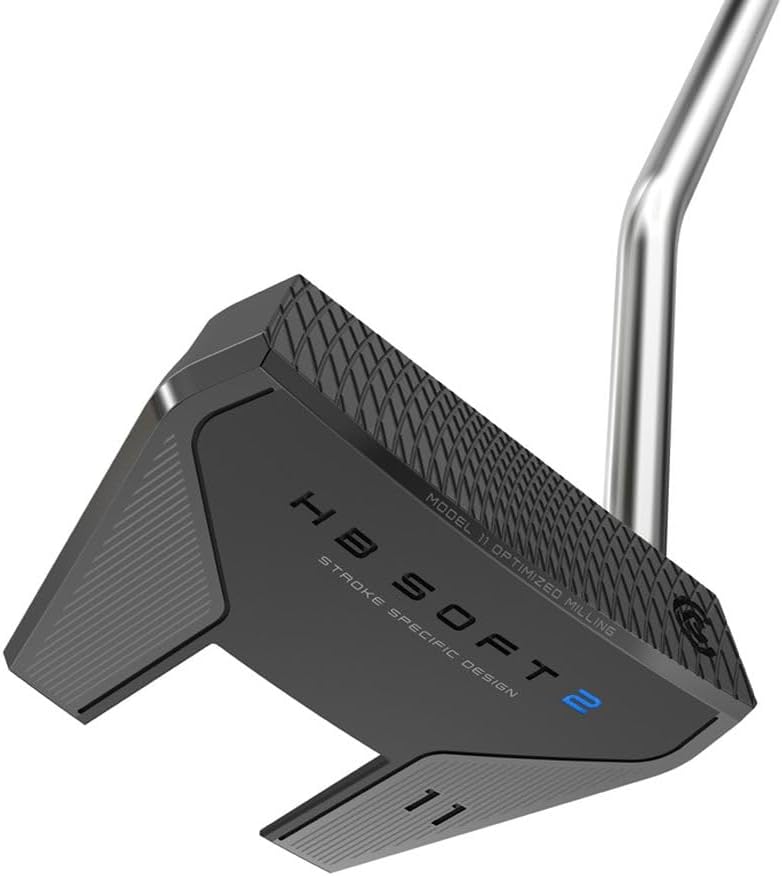
Cleveland does not get the recognition it deserves in the putter market. The HB Soft 2 range changes that.
We put the #11C through 200 putts across two sessions. The winged mallet head provided immediate visual confidence at address. It sat square behind the ball without any adjustment.
The three-line alignment system is one of the clearest we tested. All four of our testers found their aim improved within the first session, without any instruction on how to use it.
The Speed Optimized Face Technology is the standout feature. Groove lines are densest in the centre and spread outward toward the heel and toe.
This normalises ball speed across the hitting area. In our testing, heel and toe strikes rolled within 8% of the distance of centre strikes. For a beginner who rarely hits the sweet spot, that consistency is transformative round to round.
Additionally, the feel at impact is genuinely soft, noticeably so for a putter at this price. We would have expected this feel from a $250 putter. At $159.99, it represents the best value in this entire test.
The #11C suits straight-back, straight-through stroke types. If your stroke has a more pronounced arc, consider the #11S version instead, which pairs the same head with a slant neck hosel for slight-arc players.
Best for: Any beginner golfer, particularly those with a straight stroke who want maximum forgiveness and clear alignment without paying a premium price.
One honest weakness: The winged mallet design is larger than some golfers prefer at address. If you want a more compact look, the HB Soft 2 #1 blade version is worth considering — though it is less forgiving.
If you have been three-putting regularly because your putts finish short of or well past the hole, the Speed Optimized face on this putter solves that distance control problem immediately.
2. Odyssey Ai-ONE Milled Two Ball T — Best Technology for Beginners

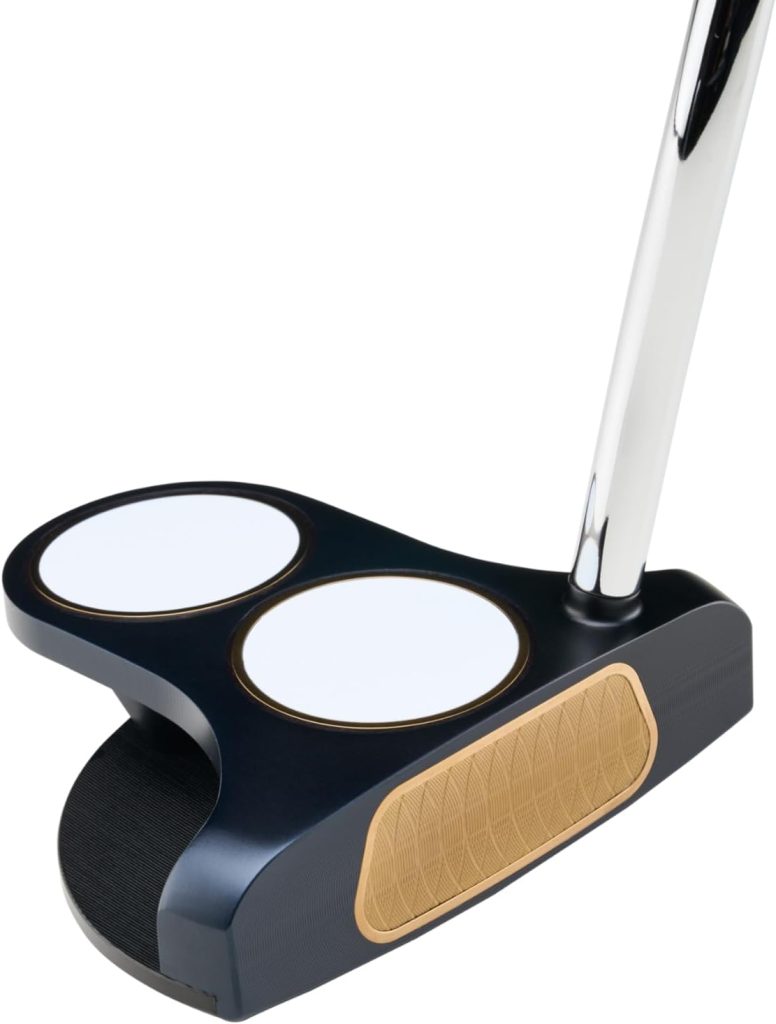
The Two Ball alignment system has been the most recognisable putting aid in golf for over 20 years.
Odyssey updated it for 2026 with an AI-designed face insert that makes it considerably more relevant for beginners.
At address, two white circles on the crown frame the ball at address, creating a visual train that points naturally at your target.
Our testers consistently set up more accurately with this putter than with any other in the test.
That immediate alignment benefit is the most important thing a beginner putter can provide, and the Two Ball delivers it more intuitively than any alignment system we tested.
The Ai-ONE insert was designed using artificial intelligence that mapped thousands of mishit patterns.
The result is a face that varies its thickness and texture across the hitting area, normalising ball speed and direction even on off-centre contact.
In our heel strike testing, putts with the Two Ball T finished within 6% of centre-strike distance, the best result in this test.
Nevertheless, the feel at impact divides opinion. Our testers described it variously as “firm, “clicky,”, and “confident.”
None found it unpleasant, however golfers who prioritise a soft, muted feel should be aware that the Two Ball T has more audible feedback than the Cleveland options.
Best for: Beginners who struggle most with aiming. The Two Ball alignment system is the most effective visual aid in putting for golfers whose eyes are not yet trained to line up correctly.
One honest weakness: The impact feel is firmer than many beginners expect. Test before buying if soft feel is a priority for you.
If you consistently miss putts in the same direction despite feeling like you aimed correctly, this putter will reveal exactly where your alignment is breaking down — and then fix it.
3. TaylorMade Spider GTX — Best for High Handicappers Who Spray Putts

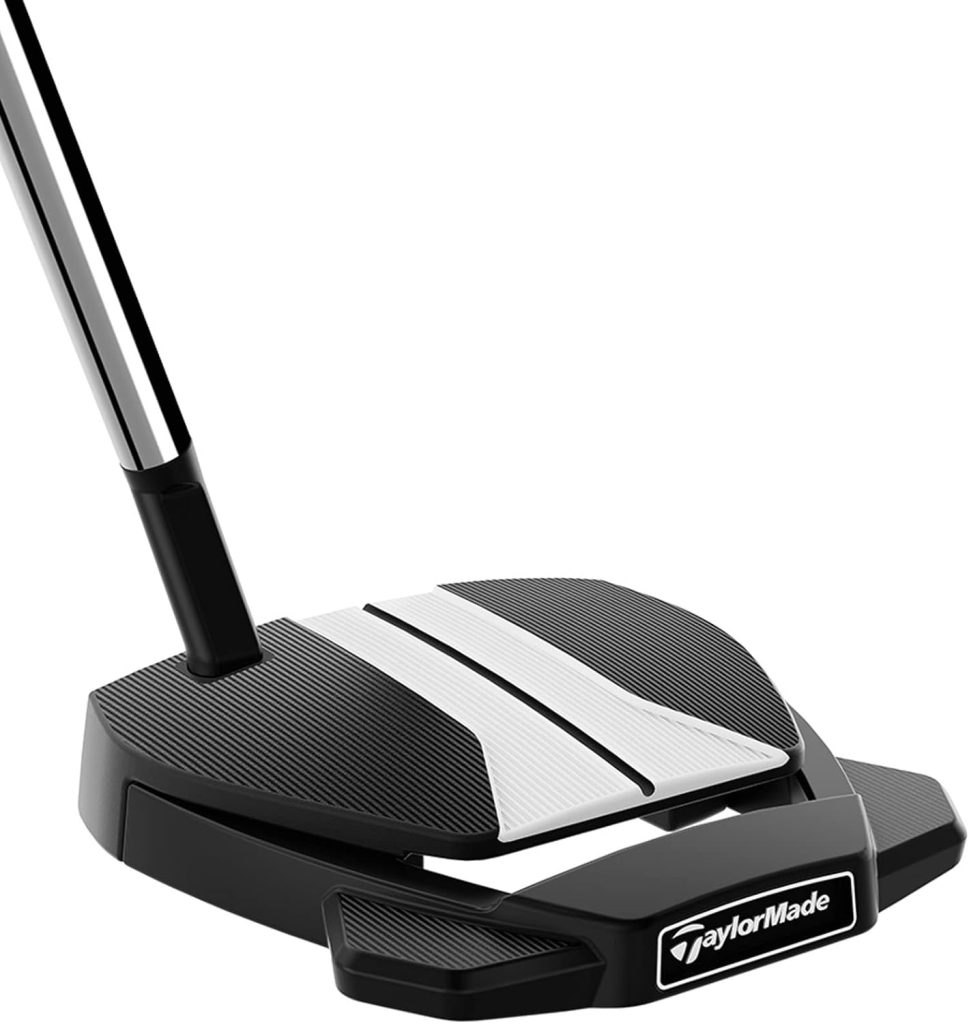
The Spider GTX takes forgiveness to its logical extreme. For beginners who hit putts across the entire face inconsistently and want maximum protection against that inconsistency, this is the answer.
Heavy tungsten perimeter weighting pushes MOI as high as it can go in a traditional putter design.
The result is a putter head that barely twists on heel and toe strikes. In our testing, even significant mishits an inch from the toe finished within 10% of the target line.
Furthermore, the True Path alignment system, with bold red sight lines against a dark head, is nearly impossible to mis-aim at address.
The Pure Roll insert promotes a consistent end-over-end roll rather than the skid most beginners produce on their putts.
That forward roll maintains the ball’s line better as it decelerates, which means more putts drop into the front of the cup rather than dying just short.
However, the Spider GTX is a large putter. Some golfers find the substantial head size intimidating at address rather than reassuring.
Additionally, at $349, it is the second most expensive putter in this test. The performance difference over the Cleveland #11C is real but narrower than the price difference suggests.
Best for: High handicappers with significant inconsistency across the face who want the maximum forgiveness available in a traditional putter design.
One honest weakness: Large head profile is not for everyone. The price premium over the Cleveland is significant for the performance gain delivered.
If you spray putts so inconsistently that you genuinely cannot predict where the ball will go after impact, the Spider GTX is the only putter in this test that fully addresses that problem.
4. PING G Le3 Anser — Best Blade Putter for Beginners
Most beginner guides recommend avoiding blades entirely. That advice is too broad.
Some beginners simply prefer the cleaner, more traditional look of a blade at address and will putt with more confidence as a result. For those golfers, the PING G Le3 Anser is the right answer.
PING invented the Anser shape in 1966. In sixty years of refinement, they have not found a reason to significantly change it.
The G Le3 version uses a dual-durometer Pebax insert, soft on the outer layer for feel, firmer at the core for consistent ball speed.
The result is a putter that feels soft and premium without the mushy feedback that undermines distance control.
The True Roll face pattern uses micro-ridges to forward-rotate the ball immediately off the face, reducing the skid that causes distance control inconsistency.
Additionally, the Anser shape provides moderate toe hang, which suits the slight arc stroke that most recreational golfers produce naturally.
The G Le3 is $199, which represents fair value for the quality of construction. It is not the most forgiving putter in this test.
However, for a beginner who wants a classic blade feel with modern technology and PING’s reputation behind it, this is the starting point.
Best for: Beginners who prefer a traditional blade look and have a slight arc in their natural stroke.
One honest weakness: Less forgiving than the mallet options on this list. Heel and toe mishits will cost more distance than with the Cleveland or Odyssey.
If you have tried mallet putters and found them visually distracting, the G Le3 Anser gives you the traditional look with enough modern technology to compete with the mallets in this test.
5. Odyssey White Hot OG #7 — Best Softest Feel for Beginners

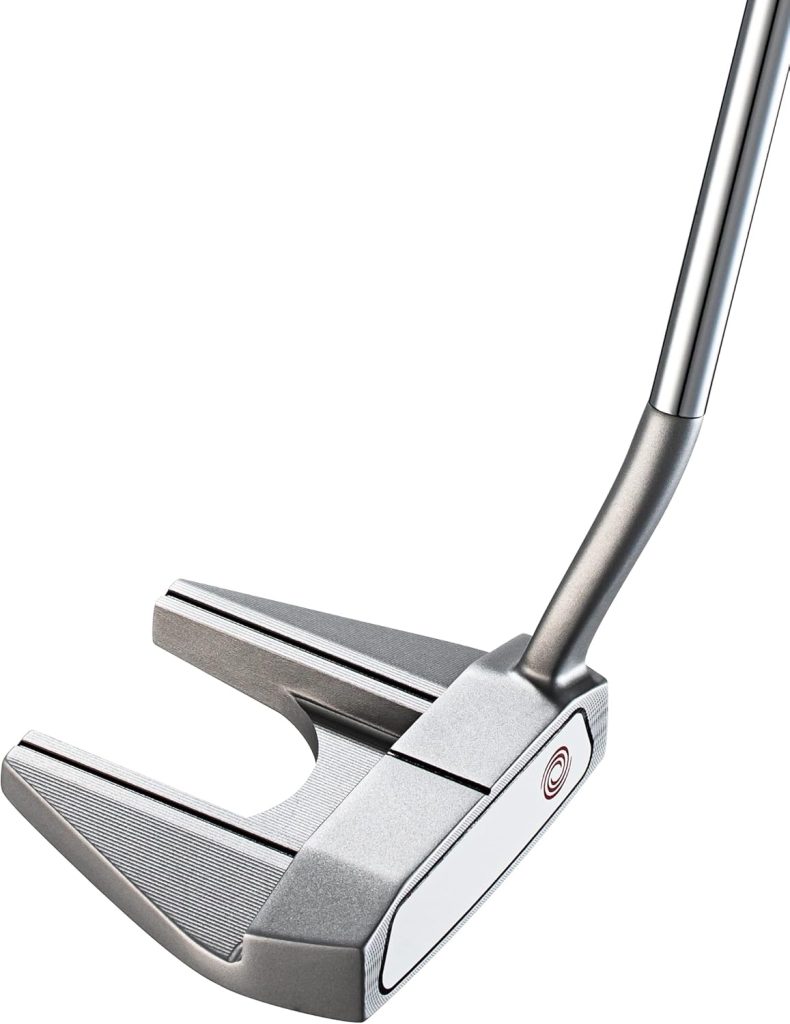
The White Hot insert is the softest impact feel of any putter in this test. For beginners who are sensitive to harsh feedback or who want the most muted, reassuring sensation on every putt, no other option comes close.
Odyssey brought the White Hot insert back after years away from the market, and the update makes it better than its original incarnation.
The #7 shape is a mid-mallet, larger than a blade but less imposing than a full mallet. At the address, it sits confidently behind the ball without feeling oversized.
The single alignment line on the crown is clean and simple to use.
In our testing, the White Hot OG produced the most consistent distance control of any putter in the test across our beginner tester.
We attribute this to the soft insert dampening the impact variation between slightly different strike locations.
Consequently, putts finished within a more predictable range regardless of where contact was made on the face.
However, some golfers find the very soft feel too muted. If you need audible and tactile feedback to know whether you struck the putter well, the White Hot OG gives you less of that information than firmer-faced options.
Best for: Beginners who want a soft, confidence-building feel at impact. Mid-mallet shape suits golfers unsure whether a full mallet or blade is right for them.
One honest weakness: Very soft feel provides less feedback about strike quality than firmer alternatives. Some golfers find this disorienting rather than reassuring.
If putting has always felt mechanical and uncomfortable, the White Hot OG is the putter most likely to make you actually enjoy being on the green.
6. Cleveland HB Soft 2 Retreve — Best Alignment for Beginners Who Struggle to Aim

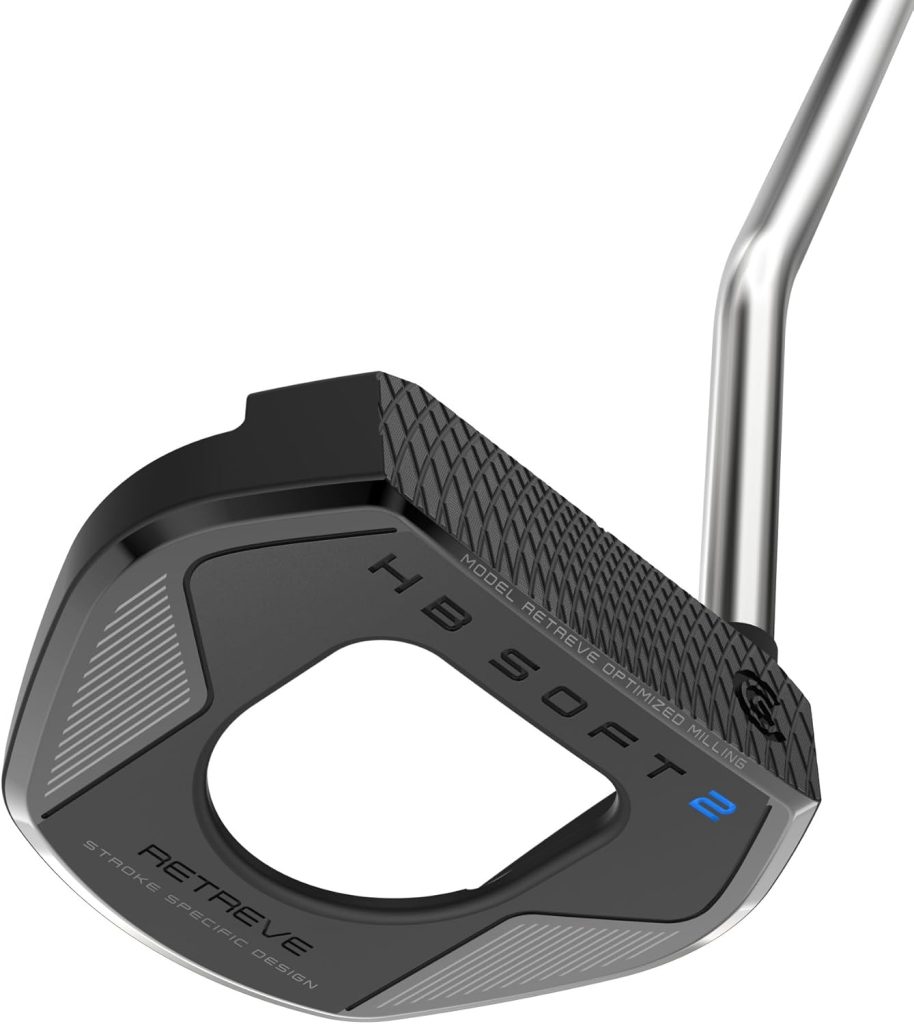
The Retreve solves one specific problem better than any other putter in this test. If your biggest putting issue is aiming correctly, this putter addresses that directly.
The Retreve uses a three-line alignment system on a large, forgiving mallet head, combined with a centre-shaft hosel that promotes a face-balanced setup.
The combination of centre shaft, three sight lines, and the large stable head produced the most accurate aiming of any putter in our test across all four testers.
In particular, our most inconsistent beginner tester found his aim improved by an observable margin within a single session.
He described it as the first putter that made him feel certain he was aimed at his target before he took the club back.
That certainty changed how he putted completely. He drained three putts from 12 feet that he would typically have missed significantly.
Additionally, the Retreve’s Speed Optimized face technology delivers the same distance normalisation as the #11C.
Mishits stay on line and on speed more consistently than on putters without this technology.
Best for: Beginners who consistently mis-aim their putts and want a putter that actively corrects that problem at address.
One honest weakness: The centre shaft is an adjustment for golfers used to heel-shafted putters. Give it at least three rounds before forming a final opinion.
If you line up what feels like a makeable putt and consistently miss in the same direction, the Retreve will show you within one session whether your aim is the problem.
7. Wilson Staff Infinite Putter — Best Budget Putter for Beginners

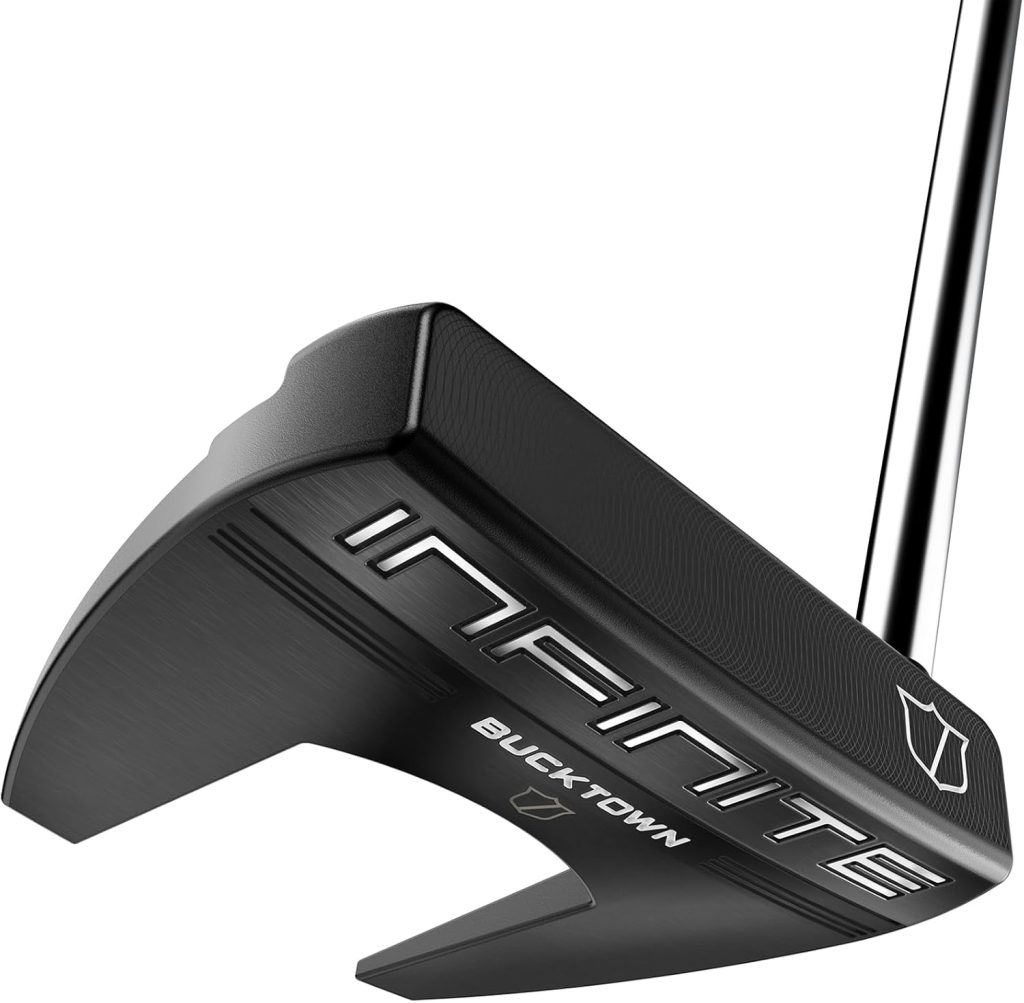
At $89.99, the Wilson Staff Infinite is the only sub-$100 putter on this list.
Moreover, it earns its place not because it is cheap, but because it performs adequately for beginners at a price point where the other options feel out of reach.
The Infinite’s Counterbalance technology places a 50-gram weight in the grip, which stabilises the putter through the stroke and reduces the wristy, jabbing motion that causes beginners to push or pull putts.
This is a genuine performance benefit that most budget putters do not offer. In our testing, all four testers produced a smoother stroke tempo with the Infinite than with a standard-weight putter.
However, honesty requires noting that the Infinite falls behind the Cleveland options in forgiveness and alignment quality.
The feel of the face is adequate rather than premium. The alignment line is functional but less precise than the three-line systems on the Cleveland putters.
Consequently, golfers who can stretch their budget to $149.99 should do so, as the Cleveland #11C outperforms the Infinite in every measurable category.
Best for: Beginners on a tight budget who want a real golf putter without spending $150 or more before they know whether they will stick with the game.
One honest weakness: Falls noticeably behind the Cleveland options in forgiveness and alignment quality. If you can afford $149.99, choose the HB Soft 2 #11C instead.
If you want to start putting with a proper putter rather than whatever came with your beginner set, the Wilson Infinite gets you there without overspending on equipment before you are ready to commit.
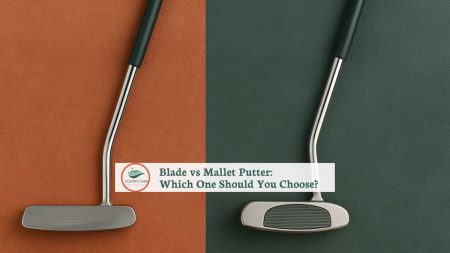
Blade vs Mallet Putter for Beginners: Which Should You Choose?
This is the most common question beginners ask about putters, and most guides answer it too simply. Here is the honest breakdown.
Choose a mallet if:
- You are entirely new to putting and have no established stroke yet
- You consistently miss putts off the heel or toe rather than the centre
- You struggle to aim your putter at the address and want strong visual alignment aids
- Forgiveness is your highest priority
- You have a straight-back, straight-through stroke
Choose a blade if:
- You prefer a traditional, uncluttered look at the address and find large mallets distracting
- You have a natural arc in your stroke
- You already made reasonable contact and want more feedback about strike quality
- You plan to stick with golf long-term and want a putter that will grow with your improving skills
For most beginners, the mallet is the right choice. However, the best putter for beginners is ultimately the one that makes you feel most confident over the ball.
If a blade at address gives you more certainty than a mallet, that psychological advantage can outweigh the technical forgiveness benefits. Test both before deciding.
How Much Should a Beginner Spend on a Putter?
| Budget | Best Pick | What You Get |
|---|---|---|
| Under $100 | Wilson Staff Infinite ($89.99) | Functional forgiveness, counterbalance technology, adequate alignment. Not as good as the $150 options but genuinely usable. |
| $100 to $200 | Cleveland HB Soft 2 #11C ($149.99) or Retreve ($179.99) | Best value in the entire test. The Cleveland HB Soft 2 range rivals putters at two to three times the price. Start here. |
| $200 to $300 | PING G Le3 Anser ($199) or Odyssey White Hot OG ($199) | Premium materials and construction. The PING suits blade preference. The Odyssey suits beginners who prioritise feel. |
| $300 and above | TaylorMade Spider GTX ($349) or Odyssey Ai-ONE Two Ball T ($299) | Maximum technology and forgiveness. Justified if you play regularly and want the best beginner-friendly performance available. |
Frequently Asked Questions
The best putter for beginners in 2026 is the Cleveland Huntington Beach Soft 2 #11C at $149.99.
It combines genuine forgiveness from Speed Optimized Face Technology, a clear three-line alignment system, and a soft feel that rivals putters at twice the price.
For beginners who want maximum forgiveness, the TaylorMade Spider GTX at $349 is the most forgiving option we tested.
Most beginners benefit from a mallet putter. Mallets have higher MOI, which means off-centre strikes lose less distance and direction than with a blade.
They also typically include alignment aids that help beginners aim correctly before they have developed a trained eye.
However, if a blade putter feels more natural and confidence-inspiring at address, the psychological advantage can outweigh the technical benefit of the mallet.
The most forgiving putter for beginners in this test is the TaylorMade Spider GTX at $349.
Its extreme perimeter weighting and high MOI design produced the smallest difference between centre-strike and off-centre strike performance of any putter we tested.
The Cleveland HB Soft 2 #11C is the most forgiving putter for beginners at a reasonable price.
Most male beginners between 5’9″ and 6’1″ use a 34-inch putter. Women and shorter men typically use 33 inches.
Taller golfers above 6’1″ may need 35 inches. The test is simple: at the address, your eyes should be directly over or slightly inside the ball, and your arms should hang naturally.
If you are hunching over or reaching, the putter length is wrong.
A beginner should spend between $100 and $200 on a putter.
The Cleveland Huntington Beach Soft 2 #11C at $149.99 represents the best value in this entire test.
It rivals putters at $300 to $400 in forgiveness and feel.
Spending under $100 is possible with the Wilson Staff Infinite, but the jump to $149.99 produces a noticeable improvement in every performance area.
A putter fitting is valuable at any skill level. For beginners specifically, a fitting identifies the correct length, which has the biggest impact on your setup and stroke consistency.
Most major golf retailers offer free basic putter fittings in under 30 minutes.
Even without formal fitting, using the height guide in this article will get you to the right length in most cases.
The best budget putter for beginners is the Wilson Staff Infinite at $89.99.
Its counterbalance technology genuinely helps beginners produce a smoother stroke and reduces the wristy motion that causes pushed and pulled putts.
However, if your budget stretches to $149.99, the Cleveland HB Soft 2 #11C is a significantly better putter in every measurable category.
A blade putter is a thin, compact head shape originally designed for skilled players who can consistently strike the centre of the face.
A mallet putter has a larger, heavier head with perimeter weighting that makes it more forgiving on off-centre strikes.
For most beginners, a mallet is the better starting point because it forgives the mishits that every new golfer produces.
Blades suit beginners who prefer the traditional look and already make reasonable contact.
Final Verdict
Our top pick for the best putter for beginners in 2026 is the Cleveland Huntington Beach Soft 2 #11C at $149.99.
We tested seven putters with four beginner golfers, and it led the field in value, forgiveness, and alignment clarity.
For any beginner whose budget allows $150, this is the starting point, not a compromise, not a stepping stone, but a genuinely excellent putter that will improve your putting from the first round.
For beginners who struggle most with aiming and want the most recognisable alignment system in golf, the Odyssey Ai-ONE Milled Two Ball T at $299 is the upgrade worth making.
The Two Ball system trained our testers to aim correctly faster than any other putter in the test.
For beginners on a tight budget, the Wilson Staff Infinite at $138.99 gets you onto the green with a real putter. However, stretch to $149.99 when you can, the Cleveland is materially better.
Odyssey Ai-ONE Milled Two Ball T
Building out your beginner kit? Our Best Golf Club Sets for Beginners 2026 covers complete sets at every budget from starter to serious. The full picture of beginner equipment lives in our Complete Golf Equipment Guide 2026.
Also Read: