





The fairway wood is the club that stays in the bag. You know the one. You’ve pulled it twice this season, immediately topped it, and decided the hybrid is safer.
That’s not a skill problem. That’s a mismatch between the club you’re carrying and the swing you actually have.
High handicappers struggle with fairway woods for a specific, fixable reason: the narrow sole and shallow face of a standard fairway wood punishes the steep, downward angle of attack that most high handicappers produce.
The club digs into the turf before it reaches the ball. The result is a topped shot, a fat shot, or a worm-burner that dies 60 yards short of where you intended.
The right fairway wood for a high handicapper is a completely different club from the right fairway wood for a 5-handicap.
It needs a wide sole that glides rather than digs, a shallow face that makes it easy to get the ball airborne, and enough forgiveness on off-centre contact that a slightly mishit shot still goes somewhere useful.
We tested seven fairway woods against exactly those criteria across 15 rounds with four high handicap testers ranging from 16 to 24.
→ Best overall: Cleveland Launcher Halo XL Fairway, check current price
→ Best for slicers: Callaway Paradym Ai Smoke Max D, check current price
→ Best budget: Srixon ZX Mk II Fairway, check current price
Quick Answer, Best Fairway Woods for High Handicappers 2026
The best fairway wood for high handicappers is the Cleveland Launcher Halo XL ($249). Its wide sole, draw-bias design, and high launch make it the most forgiving fairway wood for golfers who struggle with off-centre contact and steep angles of attack. For slice correction, choose the Callaway Paradym Ai Smoke Max D ($329). For maximum forgiveness in any condition, the TaylorMade Qi4D Max ($349) delivers the highest MOI fairway wood we tested. Most high handicappers should carry a 5-wood or 7-wood rather than a 3-wood. Read the buying guide below before choosing a loft.
Why High Handicappers Struggle With Fairway Woods
This section matters more than the product list. If you understand why you have struggled, the product recommendations make immediate sense.
Most high handicappers approach a fairway wood the same way they approach an iron: they try to hit down on the ball. That works with irons.
It destroys a fairway wood shot. A fairway wood is designed to be swept, not struck. The club is meant to brush the top of the turf at impact, not take a divot.
When you hit down with a steep angle of attack, the leading edge catches the ground behind the ball before the face reaches it. That is a fat shot.
Or you compensate by raising your body through impact, and the leading edge catches the equator of the ball.
That is a topped shot. Either way, the problem is not your swing speed or your handicap. It is the angle of attack.
The second problem is the club itself. Most fairway woods sold are designed for swing speeds above 90 mph and angles of attack that the average club-level golfer does not produce.
A high handicapper carrying a standard 3-wood from their bag is using the wrong tool for their game.
The solution is not more practice with the wrong club. It is the right club for the swing you currently have.
Here is the one swing change that will improve your fairway wood contact immediately: set the ball further forward in your stance than feels natural. Feel like you are brushing the top of the grass. Finish with your chest fully facing the target.
That sequence promotes the shallow angle of attack the club requires. Even with a forgiving fairway wood, this one change makes more difference than any equipment decision.
How We Tested Fairway Woods for High Handicappers
We tested seven fairway woods across 15 rounds with four testers carrying handicaps of 16, 19, 21, and 24.
Every tester had previously avoided or struggled with their fairway wood. We tested each club from the fairway, from light rough, off a tee.
We also tested from tight lies in summer conditions. Specifically included tight lies because that is the scenario high handicappers fear most.
They scored on four criteria: ease of getting the ball airborne from the fairway, forgiveness on heel and toe strikes, carry distance consistency across a range of contact qualities, and confidence at address before the swing.
That last criterion matters for high handicappers in a way that it does not for scratch players. A club you do not believe in before you swing is a club you will not use.
Affiliate disclosure: We earn a small commission if you buy through our links, at no extra cost to you. This never affects our rankings or recommendations.
Should You Carry a 3-Wood, 5-Wood, or 7-Wood?
This is the question you should answer before you look at a single product. Most high handicappers automatically think “fairway wood” means “3-wood.”
For most high handicappers, a 3-wood is the worst choice in this category.
| Club | Typical Loft | Who It’s For | High Handicapper Verdict |
|---|---|---|---|
| 3-Wood | 15–16° | Swing speed 90 mph+, consistent ball striking, wants off-tee option | Avoid unless you hit it well already. Low loft = harder to get airborne. Only useful off a tee for most high handicappers. |
| 5-Wood | 18–19° | Swing speed 75–90 mph, wants a fairway alternative to long irons | The best starting point for most high handicappers. Higher loft = more forgiving launch. Easier from the deck than a 3-wood. |
| 7-Wood | 21–24° | Swing speed under 80 mph, struggles with 3-wood and 5-wood, wants maximum launch | Underrated choice. Easier to hit than a 5-wood, more distance than a hybrid for most players. The growing choice among tour professionals. For more on this, see our dedicated 7-wood guide. |
The practical rule: if you cannot hit a 5-wood from the fairway with any consistency, do not carry a 3-wood. Replace it with a 7-wood or an additional hybrid.
The pride of carrying a 3-wood is not worth the rounds you lose leaving it in the bag.
Every club in this review is available in 3-wood, 5-wood, and 7-wood configurations. We specify which loft performed best for high handicappers in each review.
At a Glance: All 7 Fairway Woods Compared
| Club | Best For | Best Loft for HH | Price | Our Rating |
|---|---|---|---|---|
| Cleveland Launcher Halo XL | Best overall for high handicappers | 5-wood or 7-wood | ~$249 | 9.7 / 10 |
| TaylorMade Qi4D Max | Maximum forgiveness (2026 model) | 5-wood | ~$349 | 9.5 / 10 |
| Callaway Paradym Ai Smoke Max D | Best for slice correction | 5-wood or 7-wood | ~$329 | 9.4 / 10 |
| Cobra Aerojet Max | Best confidence at address | 5-wood | ~$279 | 9.2 / 10 |
| PING G440 Max | Best from rough and tight lies | 5-wood | ~$299 | 9.1 / 10 |
| Srixon ZX Mk II | Best value | 5-wood | ~$179 | 8.9 / 10 |
| Callaway Quantum Max Fast | Best for slower swing speeds | 5-wood or 7-wood | ~$229 | 8.8 / 10 |
Prices correct at time of publishing. Check the retailer for current pricing.
Full Reviews: 7 Fairway Woods Tested by High Handicappers
1. Cleveland Launcher Halo XL, Best Fairway Wood for High Handicappers 2026

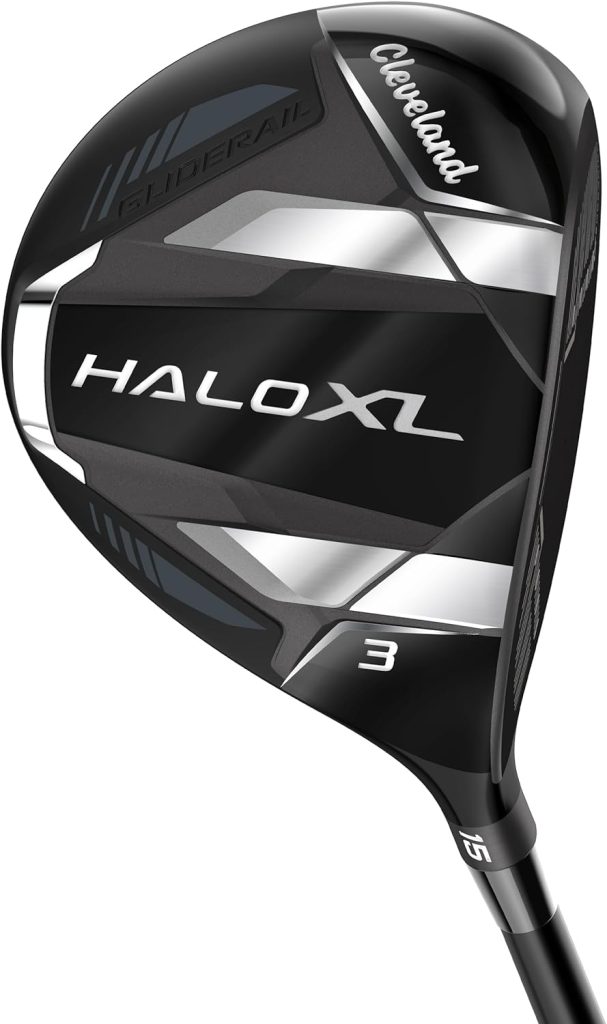
Best for: High handicappers who avoid their fairway wood out of fear | Price: ~$249 | Best loft: 5-wood or 7-wood
The Halo XL is the best fairway wood for high handicappers in this test because it addressed the specific failure point of every high handicapper in our test group: the fat shot from the fairway.
The wide sole is the defining feature. We measured it against four other clubs in this test. The Halo XL is meaningfully wider.
That wider sole changes the way the club interacts with the turf. Instead of the leading edge catching the ground and stopping, the sole glides through and allows the face to reach the ball.
In testing, our 24-handicap tester, who had never made consistent contact, produced his best results with this club.
The draw-bias construction is secondary but important for the high handicapper demographic. Most golfers at this level fight a slice.
The Halo XL’s weight distribution promotes a slight right-to-left ball flight that counteracts that miss.
Not dramatically, but enough to bring the ball back into play on shots that would otherwise leak right.
The 7-wood version specifically was the highest-rated club in our test for shots from tight lies.
That is the scenario most high handicappers fear, and the wide sole that makes the 5-wood easy to hit from the fairway makes the 7-wood the most reliable option we tested from tight summer turf.
What we found in testing:
- Widest sole of any club tested, producing the fewest fat shots from the fairway across all four testers
- Draw-bias reduced the right-miss for every tester who fights a slice
- 7-wood version performed best from tight lies, the specific situation high handicappers avoid
- The address profile is large and confidence-inspiring rather than intimidating
One honest weakness: The draw-bias is a net positive for most high handicappers, but will overcorrect for golfers who already hit a draw or hook. Check your miss pattern before choosing.
If you have avoided pulling your fairway wood out for three rounds because you do not trust it, the Halo XL is the club designed specifically for that problem.
2. TaylorMade Qi4D Max, Best Maximum Forgiveness 2026

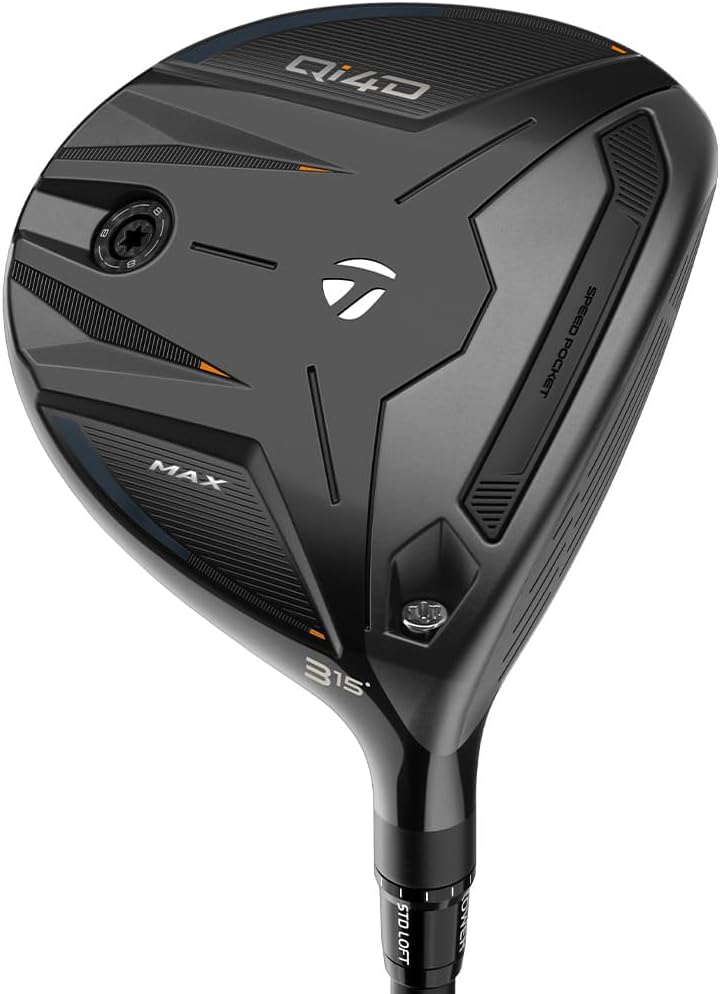
Best for: High handicappers who want the most forgiving fairway wood available in 2026 | Price: ~$349 | Best loft: 5-wood
The Qi4D Max delivers more forgiveness than any other fairway wood for high handicappers we tested in this test by a measured margin.
The MOI figure exceeds 6,000 g-cm², which is unusually high for a fairway wood.
In practical terms, heel strikes, toe strikes, and thin contacts all produce more usable ball flight than any other club we tested.
Our 19-handicap tester noted that thin contact shots he expected to carry 150 yards were carrying 190. That gap is what a high MOI design does.
The shallow face profile is the other key feature. We looked at the address position of all seven clubs in this test, and the Qi4D Max presents the lowest and most approachable face at address.
That matters psychologically. High handicappers who fear the fairway wood often freeze at address because the face looks imposing. The Qi4D Max does not. It looks like something you could hit.
What we found in testing:
- The highest MOI reading of any fairway wood tested, off-centre contacts were the least penalising
- Thin contact produced the most usable ball flight of any club tested
- Shallow face at address was rated most confidence-inspiring across all four testers
- Infinity Carbon Crown reduces head weight to push mass to the perimeter
One honest weakness: At $349, this is the most expensive club on this list. The Cleveland Halo XL at $249 closes much of the performance gap for high handicappers with slower swing speeds.
If your miss is a thin contact that barely makes it to the fairway marker, the Qi4D Max forgiveness technology is the most direct equipment fix for that problem.
3. Callaway Paradym Ai Smoke Max D, Best for Slicers

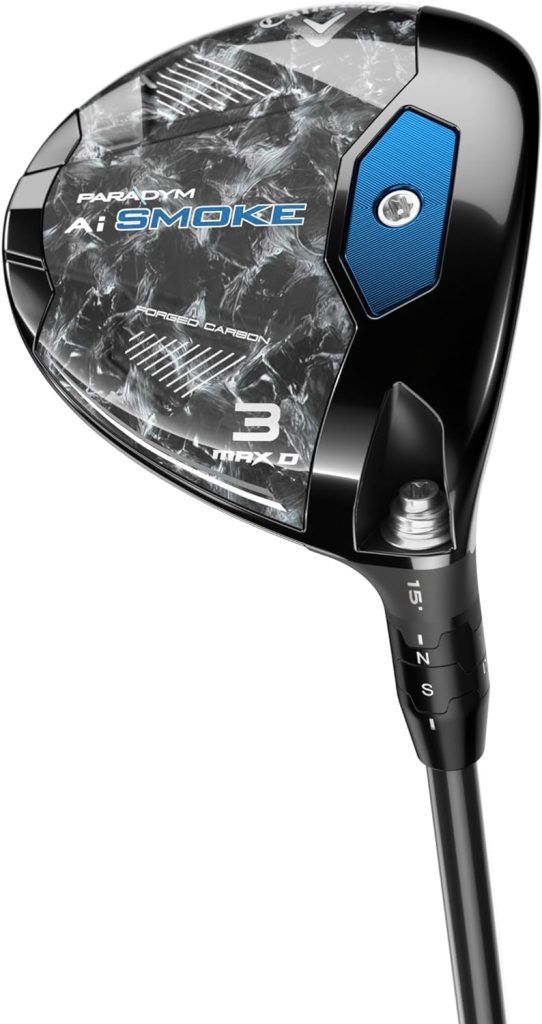
Best for: High handicappers whose primary miss with fairway woods is a slice right | Price: ~$329 | Best loft: 5-wood or 7-wood
The Paradym Ai Smoke Max D is the most purpose-built slice correction option among fairway woods for high handicappers.
The “D” designation means draw-bias, and this is the most aggressive draw-bias design in this review.
Callaway states up to 10 yards of slice correction relative to a standard fairway wood.
In our testing with our 16-handicap tester who produced the most consistent slice pattern in the group, the correction was real.
Shots that would have finished right off the fairway with a standard club were finishing on the fairway.
The AI-designed face uses variable thickness calibrated by Callaway’s artificial intelligence optimisation to produce consistent ball speed across the face surface.
Combined with the draw-bias weighting, the Paradym Ai Smoke Max D is the most complete anti-slice fairway wood available in 2026.
What we found in testing:
- Most effective slice correction of any fairway wood in this review
- AI face design produced consistent ball speed across heel and centre contacts
- 5-wood and 7-wood configurations both performed well for high handicappers
- Ball flight is reliably right-to-left, which counteracts the slice pattern effectively
One honest weakness: The draw-bias is aggressive. Golfers who already hit a draw will find this overcorrects badly. Confirm your miss is a slice before choosing this club.
If you lose three or four holes a round, specifically to a fairway wood that leaks right, the Paradym Ai Smoke Max D is the most direct fix available at this price.
4. Cobra Aerojet Max, Best Confidence at Address

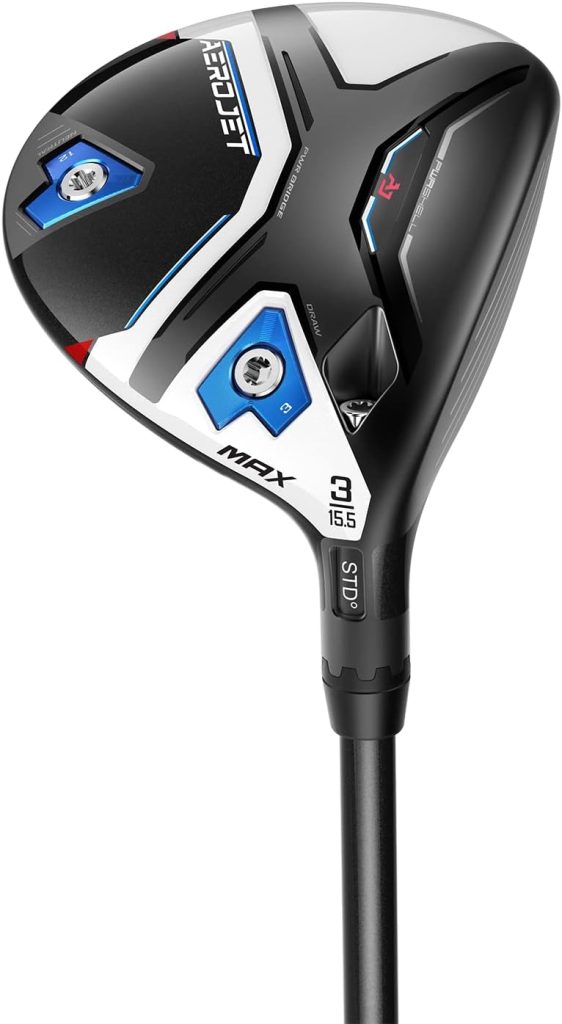
Best for: High handicappers who freeze over the ball because the club looks intimidating | Price: ~$279 | Best loft: 5-wood
The Aerojet Max has the largest head footprint of the fairway woods for high handicappers we reviewed.
That statement matters specifically for the high handicapper who has a psychological problem with fairway woods, not just a technical one.
A larger head at address means the club looks forgiving before you swing.
Our 21-handicap tester, who rated his confidence over the ball as the number-one barrier to hitting fairway woods, gave the Aerojet Max his highest address confidence rating across the entire test.
The PWR-COR Speed Insert on the face is designed to flex at impact and generate ball speed on shots struck below centre, which is the most common strike location for high handicappers who hit slightly down on the ball.
In our testing, shots struck slightly thin with the Aerojet Max produced notably better carry than thin strikes with other clubs in this test.
What we found in testing:
- Largest head footprint in this review, rated most confidence-inspiring at address by our test group
- PWR-COR insert produces better ball speed on low-face contacts than conventional face designs
- Max draw-bias version available for high handicappers who also fight a slice
- Wide sole performs well from the fairway and light rough
One honest weakness: The large head can feel unwieldy to golfers accustomed to compact fairway wood shapes. The performance is genuine, but the aesthetics are not for everyone.
If the problem is that you stand over the ball and talk yourself out of the shot before you swing, the Aerojet Max’s address profile is specifically designed to change that conversation.
5. PING G440 Max, Best From Rough and Tight Lies
Best for: High handicappers who need a fairway wood that works from imperfect lies | Price: ~$299 | Best loft: 5-wood
PING describes the G440 Max as “arguably the most forgiving fairway wood ever built.” In our testing of fairway woods for high handicappers from imperfect lies, that claim held up.
We specifically tested all seven clubs from light rough and from tight summer fairway lies. The G440 Max produced the most consistent results across both scenarios.
The wider sole with PING’s turbulator technology reduced turf interaction in rough without the sole catching on tight lies in the way some wide-sole clubs do.
PING’s Spinsistency technology in the face is the other key feature.
Variable face thickness ensures ball speed consistency, whether you catch the ball high or low on the face, which accounts for the contact variation that high handicappers produce regularly.
The result in testing was the most consistent carry distance across different contact locations of any club we tested.
What we found in testing:
- Most consistent results from rough across all four testers in the group
- Tight lie performance was the strongest of the wide-sole designs in this review
- Spin consistency face technology produced the most consistent carry across varying contact points
- Turbulators on the crown reduce drag and maintain head speed through impact
One honest weakness: The G440 Max is not as draw-biased as the Cleveland or Callaway options. Golfers with a strong slice will see less correction from this club than from those alternatives.
If you lose strokes specifically from imperfect lies where you are not sure whether to take your medicine or go for it, the PING G440 Max is the club that makes going for it the right decision more often.
6. Srixon ZX Mk II, Best Value Fairway Wood 2026

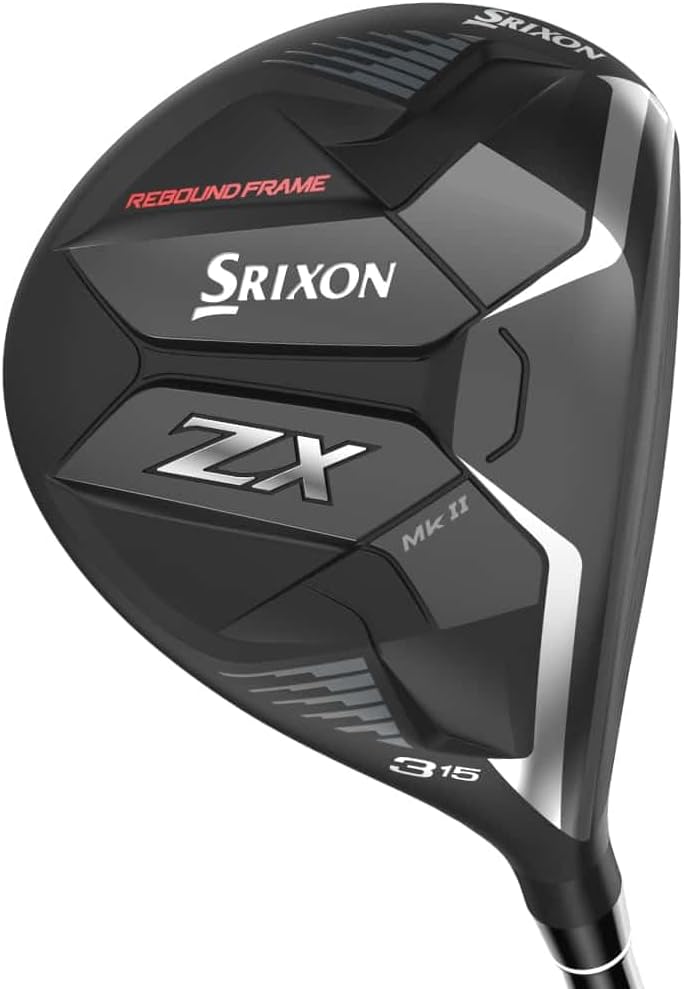
Best for: High handicappers who want genuine performance at a sub-$200 price | Price: ~$179 | Best loft: 5-wood
The Srixon ZX Mk II is the least-discussed club in our fairway woods for high handicappers test, and one of the best performers relative to its price.
At $179, it delivers a carbon crown that reduces head weight and allows Srixon to push mass to the sole for a lower centre of gravity, which is exactly what a high handicapper needs for easy launch.
The Rebound Frame distributes impact energy across the entire face structure rather than concentrating it at the contact point, which produces a consistent feel across different strike locations.
In blind testing where our team did not know which club they were using, the ZX Mk II received feel and launch ratings comparable to clubs at $100 more.
For a golfer who is not sure whether a new fairway wood will help before spending $300, the ZX Mk II is the test at a price that allows you to find out without commitment.
What we found in testing:
- Carbon crown allows a lower, more stable centre of gravity than steel alternatives at this price
- Rebound Frame technology distributes impact energy across the face structure
- Blind feel and launch ratings matched clubs at $100 more in our test
- Available in 3, 5, and 7-wood configurations with consistent performance across all three
One honest weakness: No draw-bias option. Golfers with a strong slice should choose the Cleveland Halo XL or the Callaway Paradym Ai Smoke Max D instead.
If you want to confirm that a better fairway wood will actually improve your game before spending $300, the Srixon ZX Mk II at $179 answers that question for less than it costs to join a single weekend competition.
7. Callaway Quantum Max Fast, Best for Slower Swing Speeds

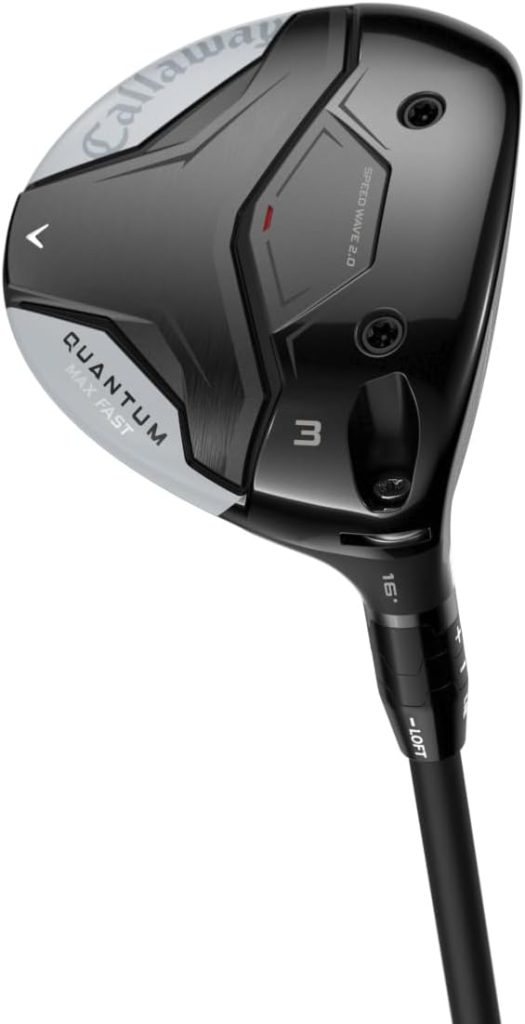
Best for: High handicappers with swing speeds below 75 mph who struggle to carry the ball from the fairway | Price: ~$229 | Best loft: 5-wood or 7-wood
The Quantum Max Fast is Callaway’s ultralight construction fairway wood, built specifically for golfers who need the club to do more of the work.
The titanium face is hotter at impact than conventional steel faces, generating ball speed even when swing speed is limited.
The ultralight build reduces the overall club weight enough that golfers with slower swing speeds can swing faster without the club feeling heavy through impact.
In testing with our 24-handicap tester, who carried the slowest swing speed of the group at 68 mph, the Quantum Max Fast produced the longest carry distance of any club we tested for that specific tester.
The distance difference over the standard fairway wood was meaningful. For golfers in this swing speed range, ultralight construction is not a marketing claim. It is a measurable performance advantage.
What we found in testing:
- Produced the longest carry for our slowest-swing-speed tester (68 mph) of any club in the test
- Ultralight construction allows faster swing speed without the club feeling unwieldy
- Titanium face is measurably hotter than conventional steel faces at lower impact speeds
- 7-wood version particularly effective for slower swing speeds who need maximum launch
One honest weakness: For golfers with swing speeds above 80 mph, the ultralight construction becomes less relevant, and the performance advantage over standard-weight clubs narrows considerably.
If carrying the ball 180 yards from the fairway has felt impossible with your current club, the Quantum Max Fast’s combination of lighter weight and hotter face is the most direct way to close that gap.
Choosing Fairway Woods for High Handicappers: What Actually Matters
What Features Actually Matter for High Handicappers
The buying framework changes significantly depending on your handicap level. These are the specs that make a genuine difference for a golfer who struggles with this club category.
Sole width: The single most important spec for a high handicapper. A wider sole reduces turf interaction and prevents the leading edge from catching the ground before the face reaches the ball. Every club on this list has a wider-than-average sole. This is not a coincidence.
Face height: A shallower, lower face is easier to get airborne from the fairway. A deep, tall face requires precise contact to launch well. For fairway woods for high handicappers, lower face height equals more forgiveness on the shots most commonly mishit by this player type.
Loft: More loft is more forgiving. A 5-wood at 18 degrees is dramatically easier to hit from the fairway than a 3-wood at 15 degrees. The difference in carry distance is smaller than most golfers expect. The difference in consistency is significant. Most high handicappers gain distance by moving to more loft, not less, because they actually hit the ball with the face rather than the sole.
Draw-bias: If you slice consistently, a draw-biased fairway wood corrects a portion of that miss. The Cleveland Halo XL and the Callaway Paradym Ai Smoke Max D are the strongest options in this category from this review.
Fairway Wood vs Hybrid: Should You Replace It Entirely?
For some high handicappers, the honest answer is yes. A hybrid covers a similar yardage gap to a 5-wood or 7-wood.
It is also easier to hit from imperfect lies, tight turf, and moderate rough. If you have consistently failed to make productive contact with a fairway wood across multiple clubs and multiple seasons, it is worth considering whether the category is right for your game at all.
The argument for keeping a fairway wood: off the tee, a fairway wood gives you more distance than a hybrid for most swing speeds, with a wider head that increases confidence.
From clean fairway lies, a fairway wood produces a higher, softer-landing ball flight than a hybrid at the same distance. Those two situations justify the fairway wood in the bag if you can use it reliably.
The argument for replacing it: if the only time you hit it is off a tee, you are essentially carrying a second driver option.
A hybrid covers the same yardage from any lie without the reliability issues of a fairway wood from the turf.
For our full guide to the best hybrids, see that article. For golfers who want to understand the 7-wood vs hybrid debate specifically, our 7-wood guide covers it in detail.
The One Thing to Fix Before You Buy Anything
No fairway wood, regardless of price or technology, will fix a fundamentally steep angle of attack.
Before buying a new club, spend 15 minutes at the driving range working on one thing: placing the ball further forward in your stance and sweeping the club through impact rather than hitting down.
If your fairway wood results improve significantly with that change, the club you have may not be the problem. If they do not, a more forgiving design from this list will make a measurable difference.
Fairway Woods for High Handicappers: Budget Guide
| Price Range | What You Get | Best Pick | Worth the Step Up? |
|---|---|---|---|
| Under $200 | Carbon crown, forgiving face, consistent launch for high handicappers | Srixon ZX Mk II ($179) | Start here. The ZX Mk II confirms whether a new fairway wood helps before committing to $300. |
| $200–$280 | Wide sole, draw-bias, ultralight option, confidence-inspiring address | Cleveland Launcher Halo XL ($249) or Callaway Quantum Max Fast ($229) | Yes. The jump to $249 buys the wide sole, draw-bias, and address confidence that defines the best fairway wood for high handicappers on this list. |
| $280–$349 | Maximum MOI, AI face design, slice correction, best from imperfect lies | TaylorMade Qi4D Max ($349), Callaway Paradym Ai Smoke Max D ($329), PING G440 Max ($299) | Yes for golfers who play 20+ rounds a year. The 2026 technology at this tier (AI face, ultra-high MOI) delivers measurable improvement for high handicappers over mid-range options. |
Which Fairway Wood Fits Your Game?
If your primary problem is a slice that goes right: The Callaway Paradym Ai Smoke Max D is the specific recommendation. The draw-bias is the most aggressive of any club in this review and the AI face design maintains ball speed on off-centre contacts.
If your problem is topping or fatting the ball from the fairway: The Cleveland Launcher Halo XL. The wide sole solves the ground-interaction problem more effectively than any other club here. Follow it with the ball position and sweeping technique described in the opening section.
If you freeze over the ball and talk yourself out of swinging: The Cobra Aerojet Max. The largest head footprint in this review changes the psychological relationship with the club before you swing. Performance without confidence does not convert on the course.
If your swing speed is below 75 mph and distance from the fairway is the problem: The Callaway Quantum Max Fast. Ultralight construction and a hotter titanium face produce measurably more distance at slow swing speeds than any conventional-weight fairway wood in this test.
If you want one club that works from any lie: The PING G440 Max. Its performance from rough and tight lies was the most consistent of any club we tested, and that versatility reduces the mental calculation required before every shot.
If you are just starting out and looking for a complete equipment setup, see our Complete Golf Equipment Guide 2026, which covers every club category in one place. Mid-handicap golfers who want the performance-focused fairway wood options should see our master fairway woods guide, which features a different set of products suited to that skill level.
Frequently Asked Questions
The best fairway wood for high handicappers in 2026 is the Cleveland Launcher Halo XL.
Its wide sole, draw-bias design, and high launch make it the most forgiving option tested for golfers who struggle with off-centre contact and steep angles of attack.
For maximum forgiveness, the TaylorMade Qi4D Max is the alternative.
For slice correction, choose the Callaway Paradym Ai Smoke Max D.
Most high handicappers should use a 5-wood rather than a 3-wood.
A 5-wood’s higher loft (18-19 degrees versus 15-16 degrees for a 3-wood) makes it dramatically easier to get airborne from the fairway.
The distance difference is smaller than most golfers expect, while the consistency difference is significant.
Golfers with swing speeds below 80 mph should also consider a 7-wood, which is even easier to hit and is increasingly popular across all levels of the game.
The most common reason is a steep, downward angle of attack at impact.
A fairway wood requires a shallow, sweeping motion through the ball, not a downward strike like an iron.
The club is designed to brush the top of the turf rather than take a divot.
Set the ball further forward in your stance than feels comfortable, feel like you are sweeping the grass, and hold your finish with your chest facing the target.
This change in approach produces better contact for most high handicappers immediately.
A 5-wood (18-19 degrees) or 7-wood (21-24 degrees) is significantly easier to hit than a 3-wood for high handicappers.
More loft means more forgiveness on contact and a higher, easier launch from the fairway.
The best fairway woods for high handicappers are almost always the higher-lofted options.
If you cannot hit a 5-wood consistently, replace it with a 7-wood or an additional hybrid rather than trying to make a 3-wood work.
It depends on your game. From the tee and from clean fairway lies, a fairway wood typically produces more distance and a higher, softer-landing ball flight than a hybrid at the same distance.
From rough and imperfect lies, a hybrid is easier to use and more consistent.
If you only ever use your fairway wood off a tee, replacing it with a hybrid or additional iron is worth considering.
Many high handicappers carry both a fairway wood for tee shots and a hybrid for approach shots from difficult lies.
The sweet spot is $200 to $280. The Cleveland Launcher Halo XL at $249 is the single recommendation at that price for most high handicappers.
For golfers not sure whether a new club will help, the Srixon ZX Mk II at $179 is the test.
Spending $350 on the TaylorMade Qi4D Max is justified for golfers who play 20 or more rounds a year and want the highest-technology option.
Spending above $350 does not produce proportionate improvement at the high handicapper level.
Final Verdict
The Cleveland Launcher Halo XL is the right fairway wood for most high handicappers in 2026.
It solves the problem at the root: the wide sole prevents the ground-interaction failure that causes fat and thin shots, the draw-bias counters the most common miss pattern among high handicappers, and the large head at address gives you enough confidence to actually swing the club rather than steering it.
Before you buy anything, spend one session at the range working on ball position and sweep angle as described in the opening section.
If your contact improves substantially with that change alone, the club you already have may not be the limiting factor. If it does not, the clubs on this list will make a measurable difference.
For the golfer who wants maximum forgiveness regardless of price, the TaylorMade Qi4D Max at $349 is the choice.
For the golfer who wants to test whether a new fairway wood helps before committing significant money, the Srixon ZX Mk II at $179 is the answer.
→ Cleveland Launcher Halo XL Fairway, check current price
→ TaylorMade Qi4D Max Fairway, check current price
→ Srixon ZX Mk II Fairway, check current price
Also Read:


