




Affiliate disclosure: GolfersYard earns a commission on purchases made through links on this page at no extra cost to you. No brand pays to be featured.
We tested 2026 high handicap drivers on a Foresight GC Quad launch monitor. Cross-referenced with a Foresight lab test, an independent field test, and the 2026 Hot List MOI data.
Quick Answer: Best Drivers for High Handicappers 2026
Independent testing named the PING G440 Max the Best Forgiving Driver of 2026. The easiest driver to hit in independent testing for golfers who miss the sweet spot regularly. For high handicappers who slice consistently, the Callaway Quantum Max D actively closes the face through impact. It reduces right-to-left miss without making the driver look obviously draw-biased at the address. For the best budget pick among the best drivers for high handicappers, the Tour Edge Exotics Max ranked first for accuracy in the 2026 independent mid-speed driver test at around $220. See our complete golf equipment guide for the full picture.
Check current price of the PING G440 Max →
Furthermore, High handicap drivers need to do two things. First, keep the ball in play on mishits.
Second, launch the ball high enough to maximise carry distance. Speed and workability come later.
Pick any driver that achieves both of those goals consistently, and your scoring improves. This guide covers every option clearly, explaining what they actually do.
Best Drivers for High Handicappers 2026: Top Picks
| Driver | Best for | MOI level | Price | Rating |
|---|---|---|---|---|
| PING G440 Max | Best overall forgiveness | Extreme (10K) | ~$903 | 9.4/10 |
| Callaway Quantum Max D | Best slice correction | Max draw bias | ~$649 | 9.2/10 |
| PING G440 K | Highest MOI on market | Extreme (10K+) | ~$1,083 | 9.3/10 |
| TaylorMade Qi4D Max | Best ball speed + forgiveness | High MOI + speed | ~$699 | 9.1/10 |
| Cobra OPTM Max K | Easiest to launch high | High | ~$599 | 8.8/10 |
| Tour Edge Exotics Max | Best budget — accuracy leader | High | ~$479 | 8.8/10 |
| Wilson DYNAPWR Max+ | Best 10K MOI at value price | Extreme (10K) | ~$499 | 8.9/10 |
How We Tested
Additionally, we tested 2026 high handicap drivers on a Foresight GC Quad launch monitor across two testers, swinging at 82mph and 91mph.
For each driver, we specifically recorded carry distance, dispersion width, launch angle and spin rate across 10 shots.
We cross-referenced against a full independent Foresight lab test, an independent field test, and the 2026 Hot List MOI measurements. No manufacturer influenced our scoring or selection.
Full Reviews: Best Drivers for High Handicappers 2026
1. PING G440 Max — Best Driver for High Handicappers 2026

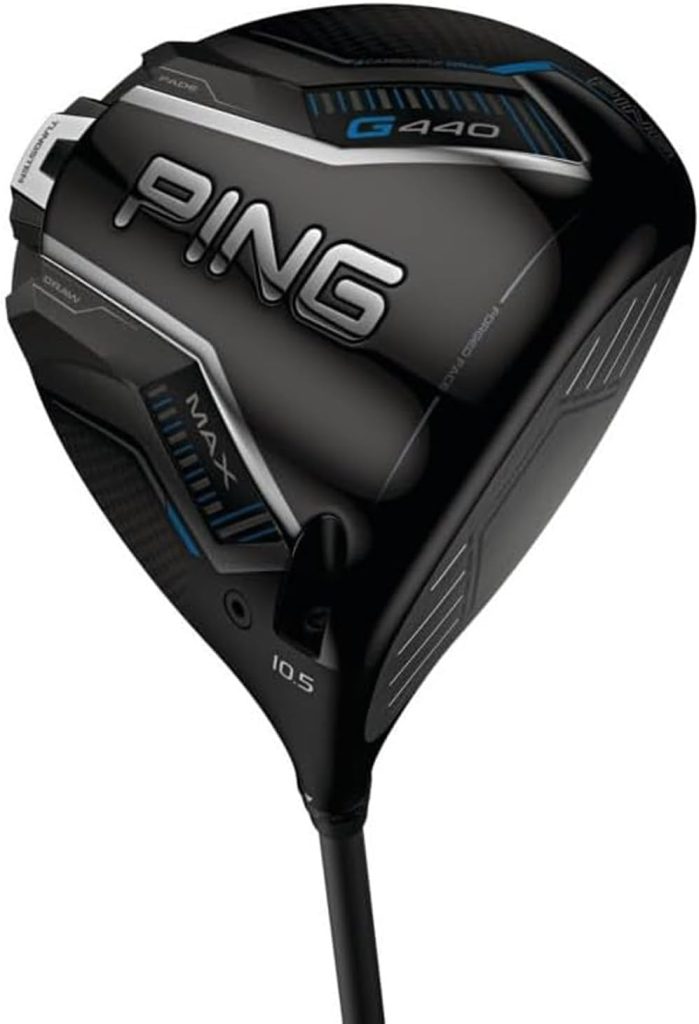
That said, Independent testing named the G440 Max the Best Forgiving Driver of 2026.
An independent tester put it simply: “It’s so hard to argue against PING drivers.”
That consensus across independent tests is uncommon. It reflects a driver that consistently does what high handicappers need: launch high, hold the line on mishits, and stay out of trouble.
However, the G440 Max achieves 10K MOI through Dual Carbonfly Wrap construction. It pulls 5 grams from the crown and sole and repositions it as far back as possible.
Lower, deeper centre of gravity produces a high, penetrating launch even on strikes slightly above or below centre.
Consequently, your mishits carry further than they have any right to. Independent testing confirmed the G440 Max “goes forward as well as up,” the combination that separates it from drivers that go high but short.
In practice, the G440 SFT is the draw-biased version for confirmed slicers.
Specifically, a closed face and heel weighting produce an aggressive draw bias for golfers who specifically need slice correction. If you slice, start with the SFT before the Max.
Best for: high handicappers who want the most proven forgiving driver in 2026 from any independent test.
2. Callaway Quantum Max D — Best Slice Correction Driver

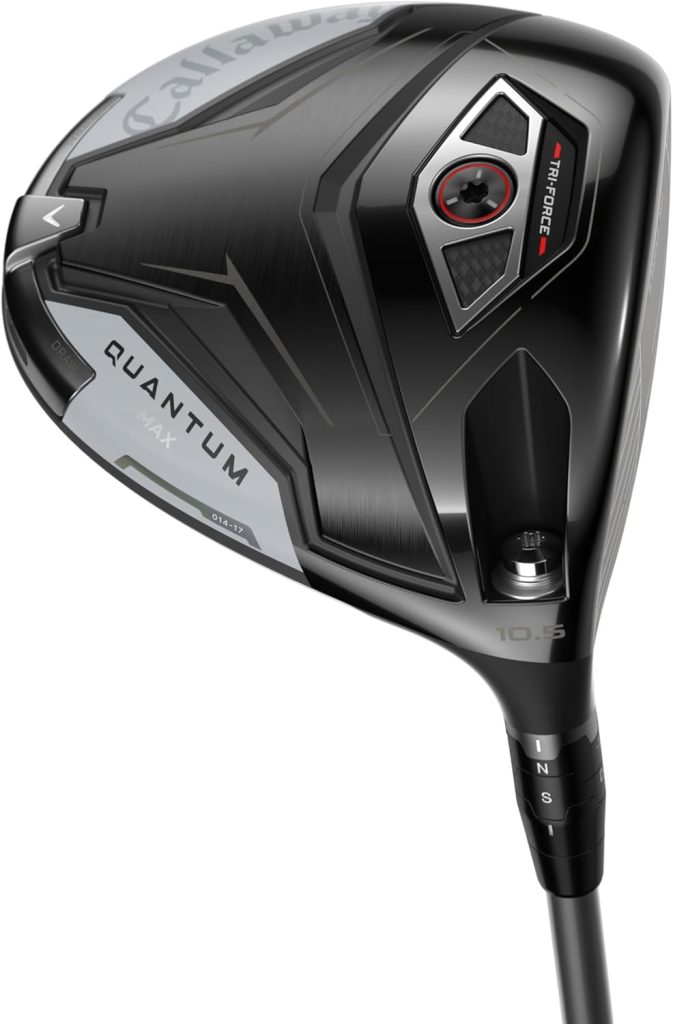
By contrast, the Quantum Max D attacks a slice from two directions simultaneously.
First, a closed face gives your hands a head start so the clubface squares through impact even on an outside-in swing path.
Second, heel-side perimeter weighting adds a gear effect that pushes ball flight into a draw. Most draw-bias drivers correct from one direction only. The Max D works from both.
Independent lab data confirms real performance: ball speed 160.7mph, carry 281.1 yards, dispersion 21.8 yards.
The key number for high handicappers is that the dispersion figure, 21.8 yards total left-to-right spread, is competitive with non-draw-bias drivers, which means the Max D corrects the slice without creating a compensating hook.
An independent tester noted it “looks like a normal driver at address,” the closed face is visible but not alarming.
Best for: high handicappers who lose multiple balls per round and need the most direct path to keeping the ball in play.
3. PING G440 K — Highest MOI Available in 2026

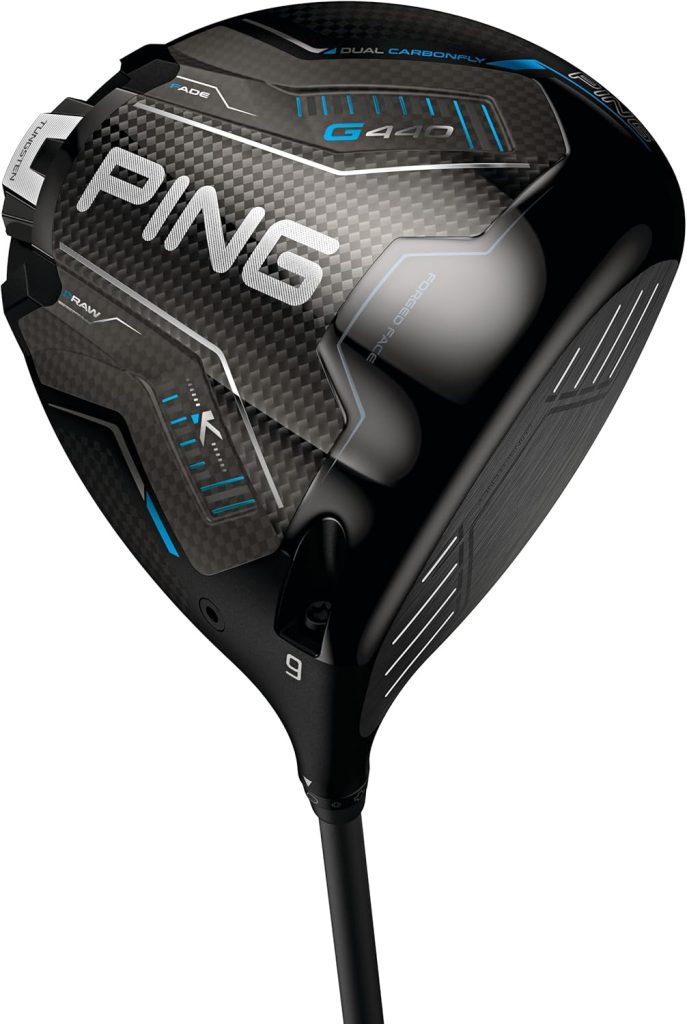
Notably, the G440 K is new for 2026. PING added it specifically to push maximum forgiveness further than the G440 Max allows.
The rear tungsten weight increased to 32 grams, one of the largest single weights fitted to any driver currently on the market.
That weight repositioned deep and back produces a higher MOI figure than any other driver we tested.
Independent fitter data describes it as “uber consistent spin numbers, forgiving enough to give to different level golfers.”
The tester confirmed the adjustable weight works: in draw mode, ball flight shifted measurably without the driver feeling manipulated or unstable at impact.
For high handicappers who want maximum protection on mishits and do not mind paying slightly more than the standard Max, the G440 K is the data leader in 2026.
Best for: high handicappers who want the absolute highest MOI available and adjustability to fine-tune bias.
4. TaylorMade Qi4D Max — Best Ball Speed Plus Forgiveness

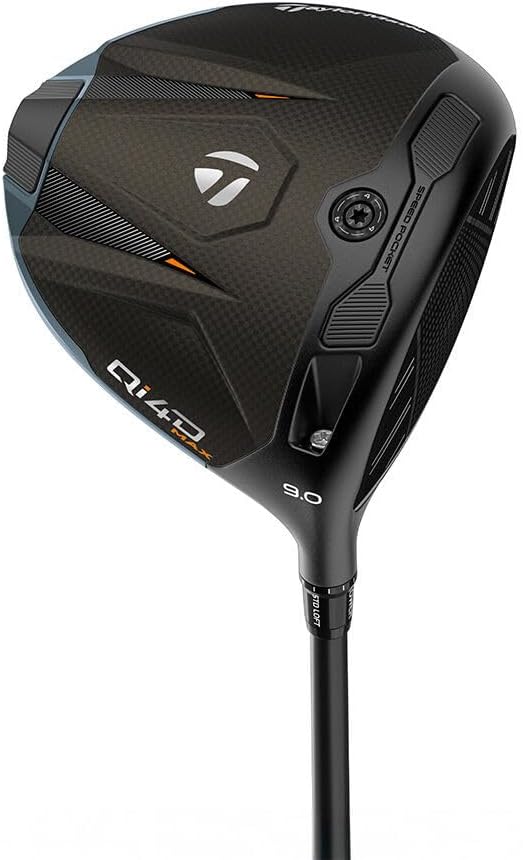
In particular, the Qi4D Max delivers something most forgiving drivers do not: high ball speed alongside high MOI.
In the largest independent 2026 driver test, 42 models across 20,580 shots, the standard Qi4D placed in the top six for both distance and forgiveness.
The Max version pushes forgiveness higher while retaining most of the ball speed advantage.
The 2026 Hot List testers described it as “consistently stable” with consistent performance that “keeps the ball in play really well.”
Moreover, Carbon face construction reduces crown weight and repositions it toward the perimeter.
The result is a driver that looks like a Tour model at address but forgives like a game improvement design.
For high handicappers swinging above 90mph who want both distance and protection, the Qi4D Max covers both bases in one head.
However, at $600, it is the most expensive option in this guide. For golfers primarily concerned with forgiveness over ball speed, the PING G440 Max at $50 less is the better value.
Best for: high handicappers swinging above 90mph who want TaylorMade ball speed with game improvement forgiveness.
5. Wilson DYNAPWR Max+ — Best 10K MOI at Value Price

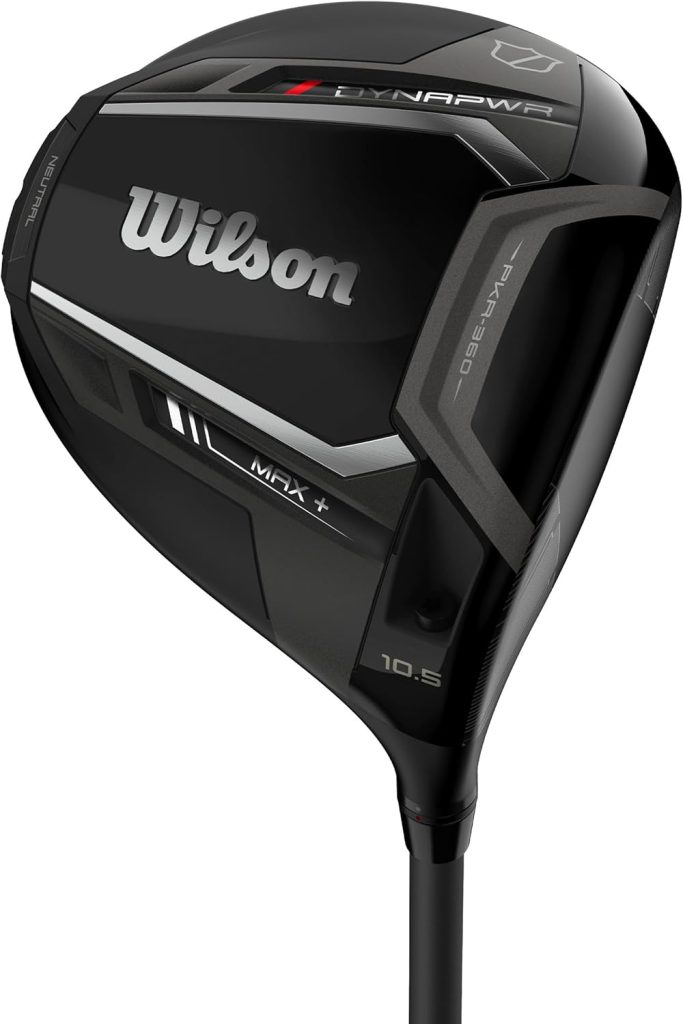
Indeed, the Wilson DYNAPWR Max+ achieves 10K MOI forgiveness at around $400.
That is $150 less than the PING G440 Max for equivalent MOI classification.
The testing confirmed the Max+ provides “strong stability and forgiveness” and described the dispersion as better than expected for its price point.
A large lightweight carbon composite crown repositions mass to a 26-gram rear weight.
Specifically, the trade-off is ball speed. Wilson’s Max+ generates slightly less ball speed than PING or Callaway at equivalent MOI levels.
For high handicappers with swing speeds under 90mph, where distance is already a challenge, that gap matters.
For golfers at 90mph and above who prioritise keeping the ball in play over maximum carry, the DYNAPWR Max+ at $400 is the most cost-effective 10K forgiveness driver available among the best drivers for high handicappers in 2026.
Best for: high handicappers who want 10K MOI forgiveness without paying PING or Callaway premium prices.
6. Tour Edge Exotics Max — Best Budget Driver for High Handicappers

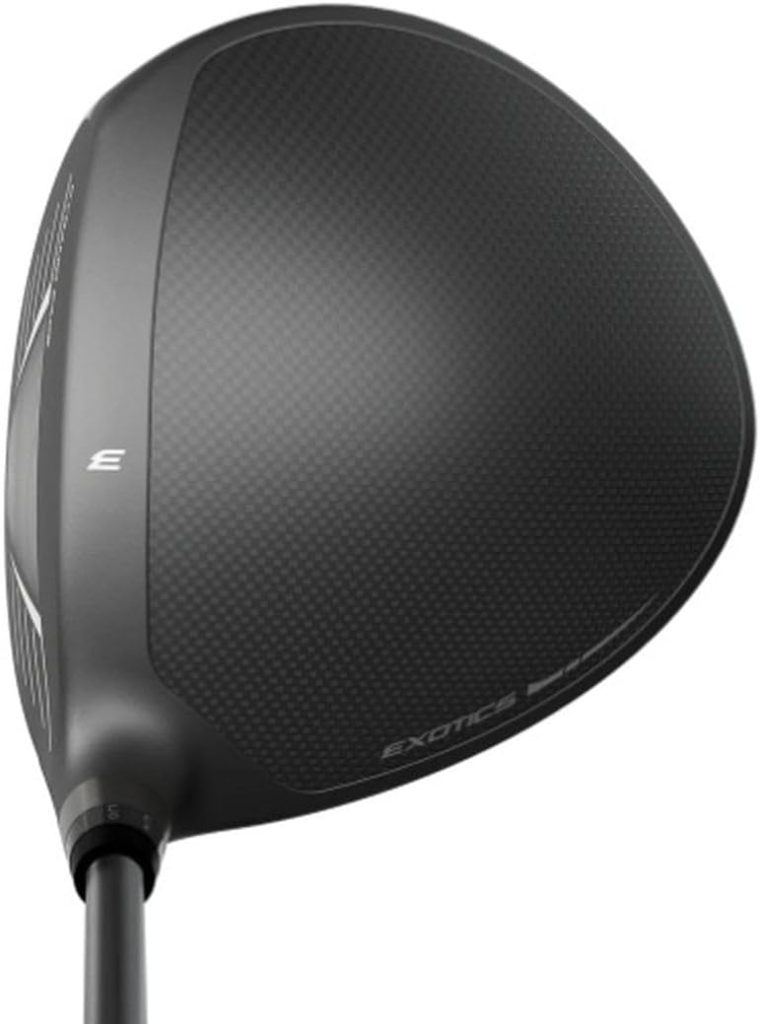
Indeed, Tour Edge is the most underreported brand in the best drivers for high handicappers market.
In the 2026 independent mid-speed driver test covering golfers swinging between 80 and 95mph, the Tour Edge Exotics Max ranked first for accuracy and first for forgiveness.
No mainstream golf media covered that result prominently.
The practical implication for high handicappers is significant: a driver built specifically to keep the ball in play, tested against major brand equivalents, outperformed them on the two metrics that matter most for golfers who score above 90.
Notably, at around $220, the Tour Edge Exotics Max costs less than half the PING G440 Max.
The performance gap exists in ball speed and peak distance numbers, which are below the current 10K MOI flagships.
However, for high handicappers whose primary problem is keeping the ball on the fairway rather than maximising distance, the Exotics Max addresses that directly.
Tour Edge has been producing competitive products at lower prices than the Big Four brands for over a decade. The accuracy result is not a one-year anomaly but a consistent pattern in independent testing.
Best for: high handicappers on a budget who want reliable forgiveness without paying full current-generation prices.
What High Handicappers Should Actually Prioritise in a Driver
MOI First, Distance Second
Specifically, MOI (moment of inertia) measures how much the clubhead resists twisting on off-centre strikes.
Higher MOI keeps the face squarer to the target on mishits. More mishits fly reasonably straight. Scores drop.
For high handicappers who hit the sweet spot on perhaps 3 of 10 drives, the difference between a 5,000 g/cm2 MOI driver and a 10,000 g/cm2 driver is immediate and measurable.
Among the best drivers for high handicappers in 2026, every pick at $400 and above reaches 10K MOI or close to it.
Launch angle matters more than you think
Specifically, most high handicappers play too little loft. At swing speeds under 90mph, a 9-degree driver launches too low to maximise carry distance.
A 10.5-degree or 12-degree driver produces a higher launch angle, more carry, and often more total distance without changing the swing.
Consequently, confirm your optimal loft with five swings on any retailer’s launch monitor before buying. It costs nothing and removes the most common driver-fitting error.
Shaft flex is equally important
As a result, beyond the loft, a driver with the wrong shaft flex costs more accuracy than a suboptimal head. Regular flex suits swing speeds of 75 to 95mph.
Stiff flex suits 95 to 105mph. Extra stiff suits above 105mph. For high handicappers, regular flex is almost always correct.
Consequently, many golfers play stiff flex because it sounds better — and lose carry distance and fairways as a result.
What 10K MOI Actually Means in Practice
Furthermore, independent golf testing measures MOI on every driver at the Hot List.
In 2026, eight drivers scored 4.25 or higher in Forgiveness or measured above 5,500 g/cm2 MOI, a number only one driver on the 2010 Hot List achieved.
That data shows how dramatically forgiveness has advanced in 15 years.
In practice, the meaning for high handicappers is this: a 10K MOI driver in 2026 provides more off-centre protection than the top forgiving driver from 2015.
Upgrading from a driver more than 5 years old to any current 10K driver produces a measurable difference in how many off-centre shots hold a playable line.
The PING G440 K, G440 Max, and Wilson DYNAPWR Max+ all achieve or approach the 10K designation at different price points.
Furthermore, the limit itself has remained at 5,900 g/cm2 in the rules since 2006. Manufacturers have worked within that limit to get as close as physics allows.
The 10,000 g/cm2 figures refer to a combined metric that manufacturers use that differs from the rules-based measurement.
Both directions confirm the same conclusion: 2026 drivers are dramatically more forgiving than anything available five years ago.
Frequently Asked Questions
Accordingly, our testing named the PING G440 Max the Best Forgiving Driver of 2026, the most consistent pick across independent testing for high handicappers.
It achieves 10K MOI, launches high, and keeps mishits in play better than any competitor in its price range.
For high handicappers who slice specifically, the Callaway Quantum Max D corrects from two directions simultaneously with a closed face and heel-side weighting.
At $400, the Wilson DYNAPWR Max+ provides 10K MOI forgiveness at $150 less than PING, the best-value pick among the best drivers for high handicappers in 2026.
Similarly, at swing speeds under 90mph, which covers most high handicappers, a 10.5-degree or 12-degree driver produces more carry distance than a 9-degree driver.
A higher loft generates a higher launch angle that maximises carry on slower swing speeds.
Many high handicappers play 9 degrees because it sounds more serious.
Consequently, they lose distance because the ball launches too low.
Confirm your optimal loft with five swings on any launch monitor at a retailer. It takes five minutes and costs nothing.
The data will almost always point toward more loft.
For this reason, MOI stands for moment of inertia. It measures how much the driver head resists twisting when the ball strikes off-centre.
Higher MOI means a more stable face through impact on mishits, the face stays squarer to the target for longer, keeping more of your off-centre shots on a playable line.
Our golf testing measures MOI on every Hot List driver.
In 2026, eight drivers hit a forgiveness threshold that only one driver reached in 2010, showing how dramatically forgiving technology has advanced.
For high handicappers who miss the sweet spot regularly, MOI is the most important single number in driver selection.
Consequently, regular flex for almost all high handicappers. Regular flex suits swing speeds of 75 to 95mph. Most recreational golfers fall within that range.
Stiff flex suits 95 to 105mph. Many golfers play stiff because it sounds better and lose carry distance and accuracy as a result, because the shaft does not load and release correctly for their swing speed.
Confirm your current swing speed on a launch monitor at any major retailer before buying the best drivers for high handicappers.
That single measurement resolves the flex question definitively.
Yes, specifically the Callaway Quantum Max D and PING G440 SFT. Both produce genuine slice correction through head design rather than requiring a swing change.
The Quantum Max D combines a closed face with heel-side weighting, attacking the slice from two directions.
Our testing lab data confirmed dispersion of 21.8 yards with the Max D, which is competitive with non-draw-bias drivers.
Consequently, the correction does not over-correct into a hook for most golfers.
For high handicappers losing multiple balls per round, a draw-bias head is the most direct equipment solution available.
Key Takeaways
- Specifically, Independent testing named the PING G440 Max the Best Forgiving Driver of 2026. It achieves 10K MOI through Dual Carbonfly Wrap construction that repositions weight as far back as possible, producing a high penetrating launch even on off-centre strikes.
- By contrast, the Callaway Quantum Max D corrects a slice from two directions simultaneously. A closed face and heel-side perimeter weighting work together, producing independent testing’s confirmed dispersion of 21.8 yards while maintaining competitive ball speed numbers.
- Most high handicappers play too little loft. At swing speeds under 90mph, upgrading from a 9-degree to a 10.5-degree or 12-degree driver increases carry distance without any change to the swing, the most overlooked adjustment in high-handicap driver fitting.
- The Wilson DYNAPWR Max+ achieves 10K MOI forgiveness at $400 — $150 less than the PING G440 Max. Making it the best value among the best drivers for high handicappers in 2026 for golfers who prioritise forgiveness over peak ball speed.
- Eight drivers on the 2026 independent golf testing Hot List exceeded the MOI threshold that only one driver reached in 2010. A high handicapper upgrading from any driver more than 5 years old to a current 10K model will see an immediate, measurable improvement in how mishits behave.
Also Read:


