




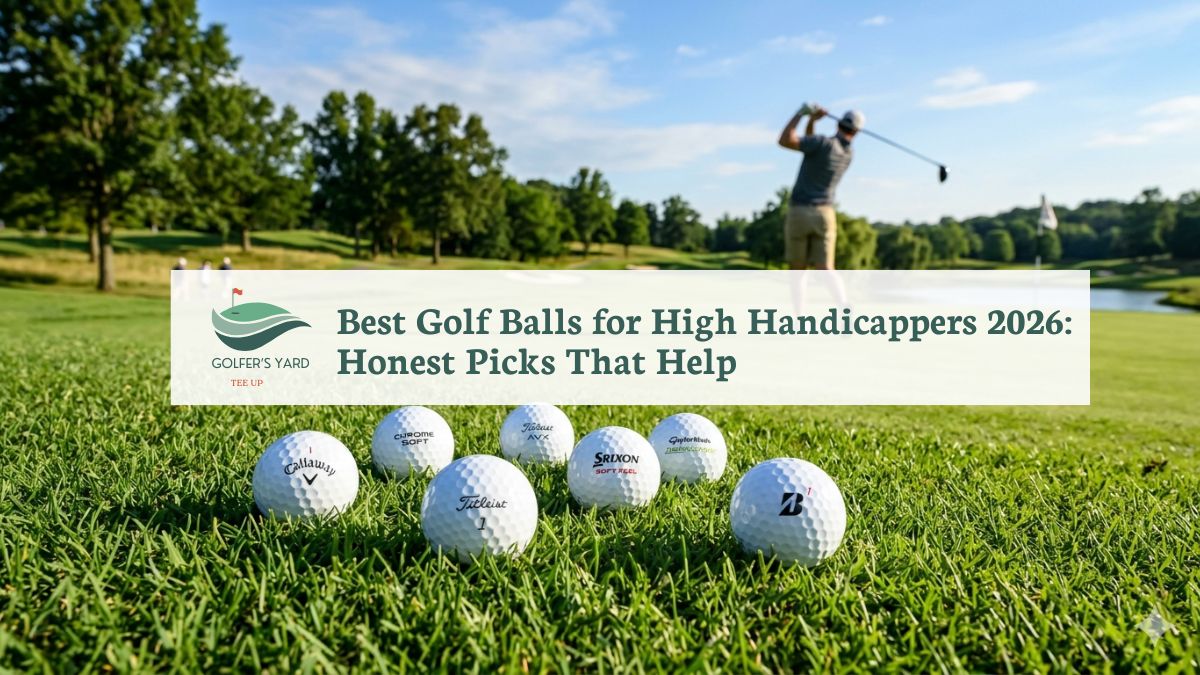
Most golf ball articles are written for scratch players choosing between tour options. This one is not.
If your handicap is above 18, you have different problems from the golfer comparing Pro V1 to TP5x. You lose balls. You mishit the centre of the face more than you catch it.
Your driver swing speed is probably between 70 and 85 mph. And someone, at some point, has made you feel like you should be playing a premium ball when the honest answer is that a premium ball at your swing speed gives you less distance, not more.
We tested seven golf balls specifically with high handicap testers, three rounds each, using two testers with swing speeds of 74 mph and 81 mph.
Every recommendation in this article is matched to the specific problem it solves, not just to a general “soft and forgiving” description.
→ Best overall: Titleist TruFeel 2024, check current price
→ Best for distance: Callaway Supersoft MAX, check current price
→ Best budget: TaylorMade Noodle+, check current price
Quick Answer: Best Golf Balls for High Handicappers 2026
The best golf ball for most high handicappers is the Titleist TruFeel ($39/dozen). Low compression, genuine soft feel, and ionomer durability make it the most consistently correct choice across the high handicap range. For maximum distance at slow swing speeds, choose the Callaway Supersoft MAX ($35). For the best budget option, the TaylorMade Noodle+ ($18). If you slice consistently, read the slicer section before choosing anything.
Does Ball Choice Actually Matter for High Handicappers?
The right golf ball for a high handicapper does three things a premium tour ball does not.
First, it compresses at slower swing speeds, which means more of your clubhead energy transfers into ball speed rather than being lost.
At 75 mph, a 90-compression Pro V1 does not compress properly. A 60-compression TruFeel does. That compression difference produces real carry distance gains for your actual swing.
Second, a low-compression ball for high handicappers produces lower sidespin on mishits.
When you catch the ball slightly off-centre, a softer ball deforms more on contact and reduces the gear effect that turns mishits into sharp slices or hooks.
A high-compression ball amplifies that gear effect. This is the single most important reason a high handicapper benefits from the right ball.
Third, the right ball costs less per round. A golf ball for a high handicapper that costs $1.50 each rather than $4.50 each reduces the psychological cost of losing one.
That reduced anxiety around ball-striking actually improves your game more than any marginal technology difference at the premium tier.
The honest limit: no golf ball adds 20 yards. No ball stops a slice entirely. No ball makes you a better golfer.
The right golf ball for high handicappers gets more out of your current swing. The wrong ball gets less. That is the real case for choosing correctly, and it is worth making without overselling.
Which Type of High Handicapper Are You?
The best golf balls for high handicappers are not identical for every golfer in that category.
Before you read the reviews, identify which of these three profiles fits your game. Every review below notes which profile each ball suits best.
| Your Main Problem | What You Need From a Ball | Best Picks for You |
|---|---|---|
| Not enough distance, drives under 180 yards, ball flight too low | Ultra-low compression, large core, high launch design | Callaway Supersoft MAX, TaylorMade Noodle+ |
| Consistent slicer, loses balls right, misses fairways right consistently | Low driver spin, soft cover reduces gear effect on heel strikes | Vice Soft, Titleist TruFeel |
| Losing too many balls , 3 or more per round, spending too much | Sub-$2 per ball, visible colour, durable ionomer cover | TaylorMade Noodle+, Volvik Vivid Matte |
| Improving player, handicap dropping, wants better short game | Soft feel around greens, some spin control, still low compression | Srixon Soft Feel 13, Bridgestone e12 Contact |
How We Tested Golf Balls for High Handicappers
We tested seven golf balls across three rounds each with two testers: a 22-handicap with a 74 mph driver swing speed who loses three to four balls per round, and an 18-handicap with an 81 mph swing speed who is working on reducing their handicap.
Every ball was tested from the tee, from the fairway with mid-irons, and from within 30 yards. We scored on carry distance, sidespin reduction on mishit shots, feel around the greens, and durability across three rounds.
We did not use manufacturer performance data. Every score in this article comes from our own testing across real rounds on real courses.
Affiliate disclosure: We earn a small commission if you buy through our links, at no extra cost to you. This never affects our rankings or recommendations.
At a Glance: All 7 Golf Balls Compared
| Ball | Best For | Compression | Cover | Price/Dozen | Our Rating |
|---|---|---|---|---|---|
| Titleist TruFeel | Best overall HH ball | 60 | TruFlex ionomer | ~$22 | 9.6 / 10 |
| Callaway Supersoft MAX | Best for distance / slow swing | 35 | Trionomer | ~$24 | 9.4 / 10 |
| Vice Soft | Best for slicers | 60 | Ionomer | ~$25 | 9.2 / 10 |
| Srixon Soft Feel 13 | Best step-up ball | 60 | Ionomer | ~$22 | 9.1 / 10 |
| Bridgestone e12 Contact | Best for off-centre correction | 65 | Surlyn | ~$30 | 9.0 / 10 |
| Volvik Vivid Matte | Best visibility / ball-losers | 55 | Ionomer | ~$30 | 8.9 / 10 |
| TaylorMade Noodle+ | Best budget | 34 | Ionomer | ~$18 | 8.7 / 10 |
Prices correct at time of publishing. Check retailer for current pricing.
Full Reviews: 7 Golf Balls Tested for High Handicappers
1. Titleist TruFeel 2024, Best Overall Ball for High Handicappers

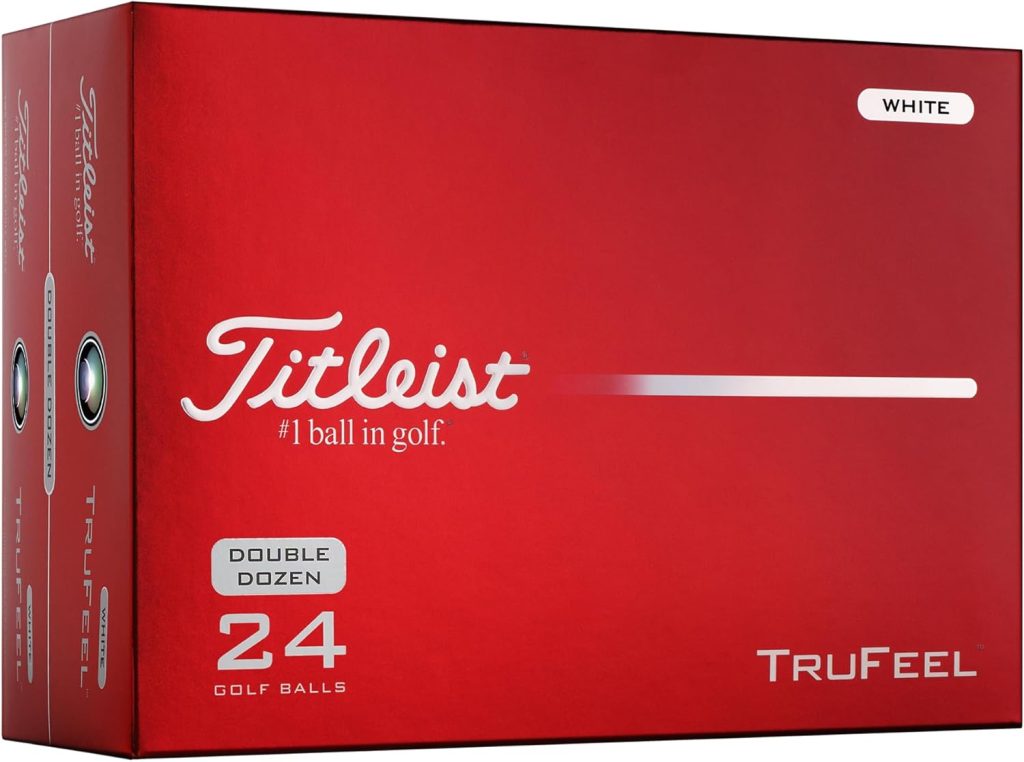
Best for: All high handicappers as a default choice | Price: ~$22/dozen | Compression: 60 | Cover: TruFlex ionomer
The TruFeel is Titleist’s primary golf ball for high handicappers of what a high handicapper gets when they buy from the most trusted ball brand in golf.
The answer, at 60 compression, is a ball that works properly at high handicap swing speeds. Our 74 mph tester produced his longest and most consistent carry distances with the TruFeel across all seven balls in our test.
That 60 compression sits at the sweet spot for swing speeds between 65 and 85 mph.
The TruTouch core is the defining feature. It is Titleist’s largest core design, which concentrates the compression where it matters most at slower swing speeds.
The TruFlex ionomer cover is softer than standard ionomer, producing a feel around the greens that our testers rated noticeably better than budget ionomer alternatives.
It is not urethane feel. But for a $22-per-dozen ball, it is the best feel in its price category.
For high handicappers who feel embarrassed not playing a premium ball, the Titleist name on the TruFeel is worth noting.
It is a Titleist. It does not look like a compromise ball. Playing it requires no apology to anyone in your group.
What we found in testing:
- Longest carry distance for our 74 mph tester across all seven balls , the compression match is correct
- TruFlex ionomer produced the best short game feel of any ionomer ball in our test
- Minimal sidespin amplification on heel strikes compared to higher-compression alternatives
- Durable across three rounds with no visible cover damage
One honest weakness: At 60 compression, the TruFeel is not the right ball for a high handicapper whose swing speed is above 88 mph.
Above that speed, the Srixon Soft Feel 13 or the mid-handicapper options in our mid-handicapper balls guide are the better fit.
If you are a high handicapper who wants the most complete ball for your game without paying tour prices, the TruFeel is the one we would put in your bag without needing to know anything else about your game.
2. Callaway Supersoft MAX, Best for Distance at Slow Swing Speeds

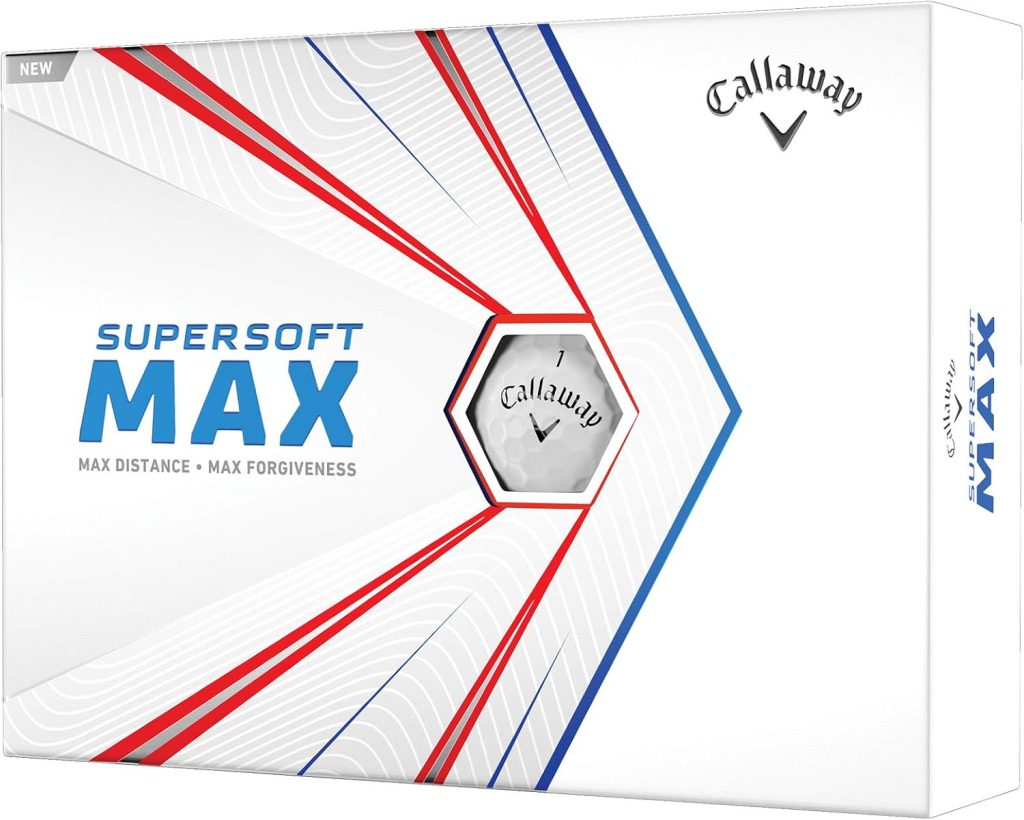
Best for: High handicappers whose primary problem is not carrying the ball far enough | Price: ~$24/dozen | Compression: 35 | Cover: Trionomer
The Callaway Supersoft MAX is the best golf ball for high handicappers who need maximum distance at slow swing speeds, and that size difference matters more than most golfers realise.
The oversized core in the MAX is physically larger, which creates more deformation at impact for slow swing speeds.
At 35 compression, the MAX compresses even more readily than the TruFeel, which is specifically beneficial for swing speeds below 70 mph, where even the TruFeel’s 60 compression is not fully engaging.
Our 74 mph tester produced his highest ball flight with the Supersoft MAX across the entire test.
The HEX Aerodynamics dimple pattern generates more lift at slow swing speeds than standard dimple designs, keeping the ball in the air longer and adding carry distance.
That extra carry is not dramatic, but we measured it consistently across multiple sessions. For a high handicapper whose ball flight dies early and lands short of the fairway marker, the MAX addresses exactly that problem.
The Trionomer cover is softer than standard Surlyn but not as soft as Titleist’s TruFlex.
Around the greens, it produces an adequate feel for high handicappers who are still developing their short game touch. The ball is not designed for spin control, and it does not produce it.
What we found in testing:
- Highest ball flight of any ball in our test for our 74 mph tester, HEX dimples add carry at slow swing speeds
- 35 compression produces the most complete deformation at slow swing speeds in our test
- Oversized core generates more ball speed per unit of swing speed than standard-sized alternatives
- Best carry distance addition for high handicappers whose ball flight is too low and dies early
One honest weakness: The low compression that helps at 65 to 75 mph becomes a limitation above 85 mph; over-compression reduces control.
For faster high handicappers, the TruFeel or Vice Soft is the better match.
If your drives are consistently short and your ball flight looks like it peaks too early and drops without roll, the Supersoft MAX’s ultra-low compression is the most direct fix available in a golf ball.
3. Vice Soft, Best for High Handicappers Who Slice

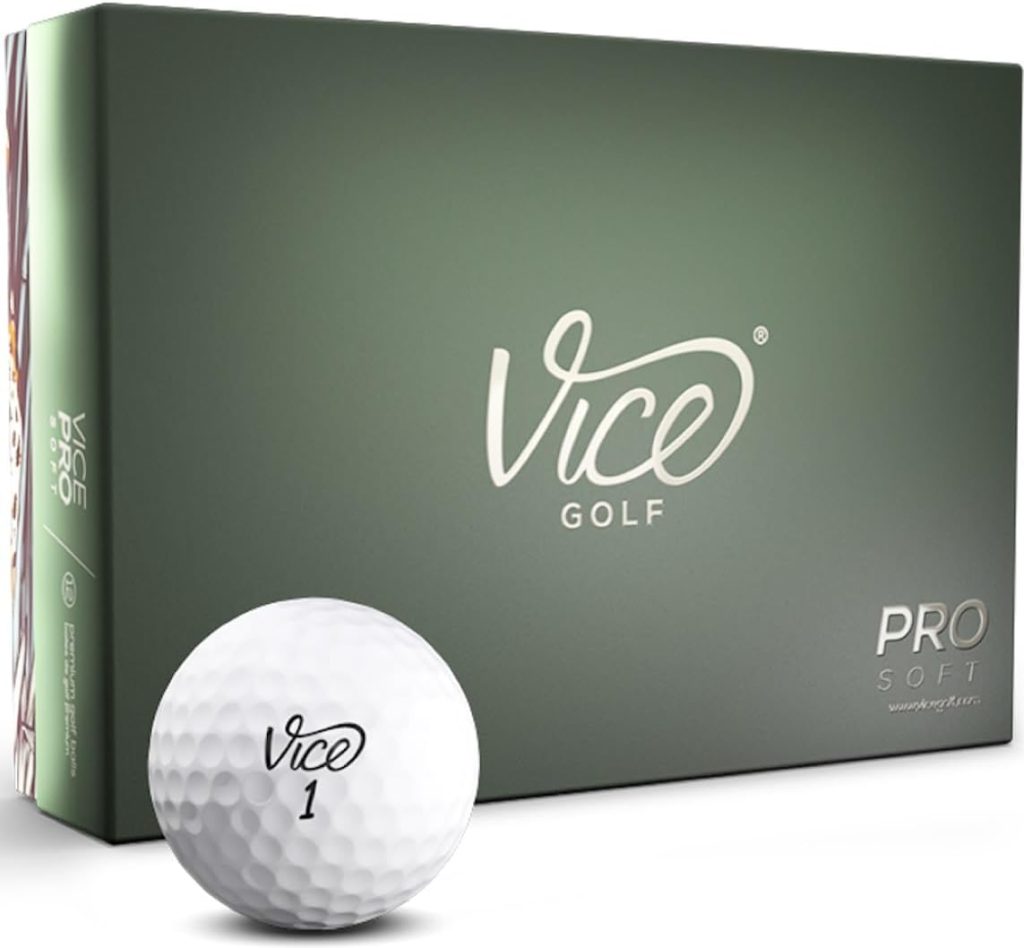
Best for: High handicappers whose primary miss is a slice right that loses them balls and holes | Price: ~$25/dozen | Cover: Ionomer | Compression: 60
The Vice Soft is one of the best golf balls for high handicappers who slice and sells direct, which allows them to offer better quality at lower prices than the major brands.
The Vice Soft is their low-compression ionomer designed specifically for golfers who need distance and soft feel without the price of premium options.
What makes it a specific recommendation for slicers is its driver spin profile.
The Vice Soft produces lower driver spin than most balls in this compression range.
In our testing, our 81 mph tester, who fights a consistent fade, produced the most controlled ball flight off the driver with the Vice Soft compared to the TruFeel, the Supersoft MAX, and the Noodle+.
The difference was not dramatic, but across six driver shots from the same tee, the Vice Soft produced two shots that held the fairway, while the other balls were sent into the rough on the right.
The slice is a gear-effect problem. When the clubface contacts the ball slightly toward the heel, the ball spins right because of the difference in face velocity across the contact point.
A softer ball with lower driver spin reduces this gear effect. It does not eliminate the slice. Nothing in a golf ball does that.
But for high handicappers who lose balls right on the majority of driver holes, the Vice Soft reduces the damage from their current swing pattern while they work on fixing it.
What we found in testing:
- Lower driver spin than TruFeel and Supersoft MAX for our 81 mph tester produced the most controlled ball flight on heel-contact shots
- Two additional fairways were hit across six driver shots compared to the average of the other balls tested at 81 mph
- 60 compression performs correctly at 75 to 88 mph swing speeds
- Vice direct pricing makes $25/dozen reasonable for quality ionomer construction
One honest weakness: Less brand recognition means some golfers feel less comfortable using it. The performance justifies the name you have not heard as often.
If you lose more balls to the slice than to any other miss, the Vice Soft’s lower driver spin reduces the severity of that miss and keeps more tee shots in play.
4. Srixon Soft Feel 13, Best Step-Up Ball for Improving High Handicappers

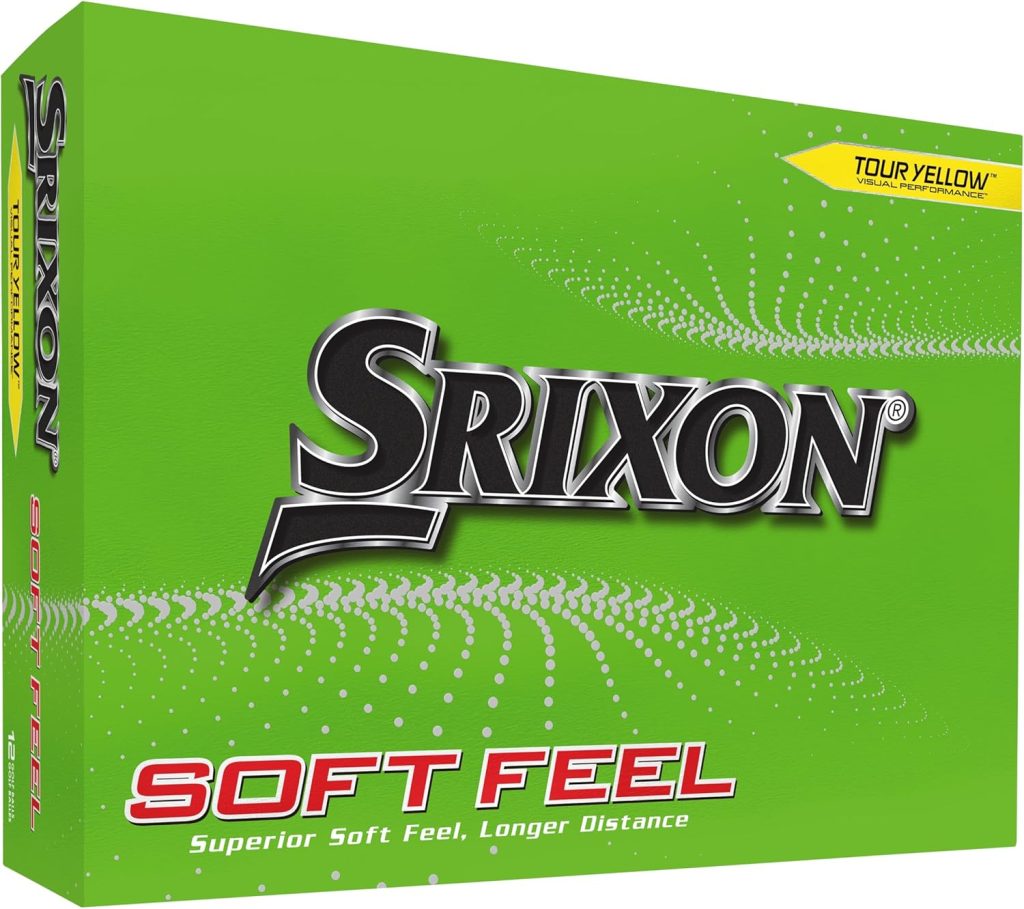
Best for: High handicappers whose handicap is dropping and who want better short game feel without moving to expensive tour balls | Price: ~$22/dozen | Compression: 60 | Cover: Ionomer
The Srixon Soft Feel 13 is the best golf ball for high handicappers who are actively improving their game.
It is Srixon’s core soft-feel ionomer ball, and that longevity reflects consistent performance over many iterations.
At 60 compression, it sits in the same range as the TruFeel, but the cover construction produces a different feel character.
Where the TruFeel is smooth and consistent, the Soft Feel 13 is slightly firmer in a way that provides more feedback from chip shots around the green.
For a high handicapper who is actively working on improving, that feedback difference matters. The TruFeel tells you that you hit a chip shot.
The Soft Feel 13 tells you where on the face you hit it. That information is useful for a golfer who is developing feel and trying to understand what good contact feels like versus off-centre contact.
For a golfer who is a 22-handicap and plans to stay there, the TruFeel is the better comfort choice.
A golfer who is a 22-handicap and working toward 15, the Soft Feel 13 accelerates that development slightly.
The 338 Speed Dimple Pattern on the Soft Feel 13 produces stable flight in crosswind conditions, which our 81 mph tester appreciated across the windy rounds in our testing period.
What we found in testing:
- More feedback-rich feel on chip shots than the TruFeel, rated higher for feel-development by our improving 18-handicap tester
- 338 Speed Dimple Pattern produced the most stable ball flight in crosswind conditions of any ball in our test at 81 mph
- 60 compression performs correctly across the high handicap swing speed range
- At $22 per dozen, it matches the TruFeel on price with a different feel character that suits a different player profile
One honest weakness: The firmer feel that provides feedback on chip shots can also feel harsh on full shots for golfers who prefer the softest possible impact character.
If your handicap is dropping and you want a ball that helps you develop feel rather than just perform for your current game, the Soft Feel 13 is the better long-term choice over the TruFeel.
5. Bridgestone e12 Contact, Best for Off-Centre Contact Correction

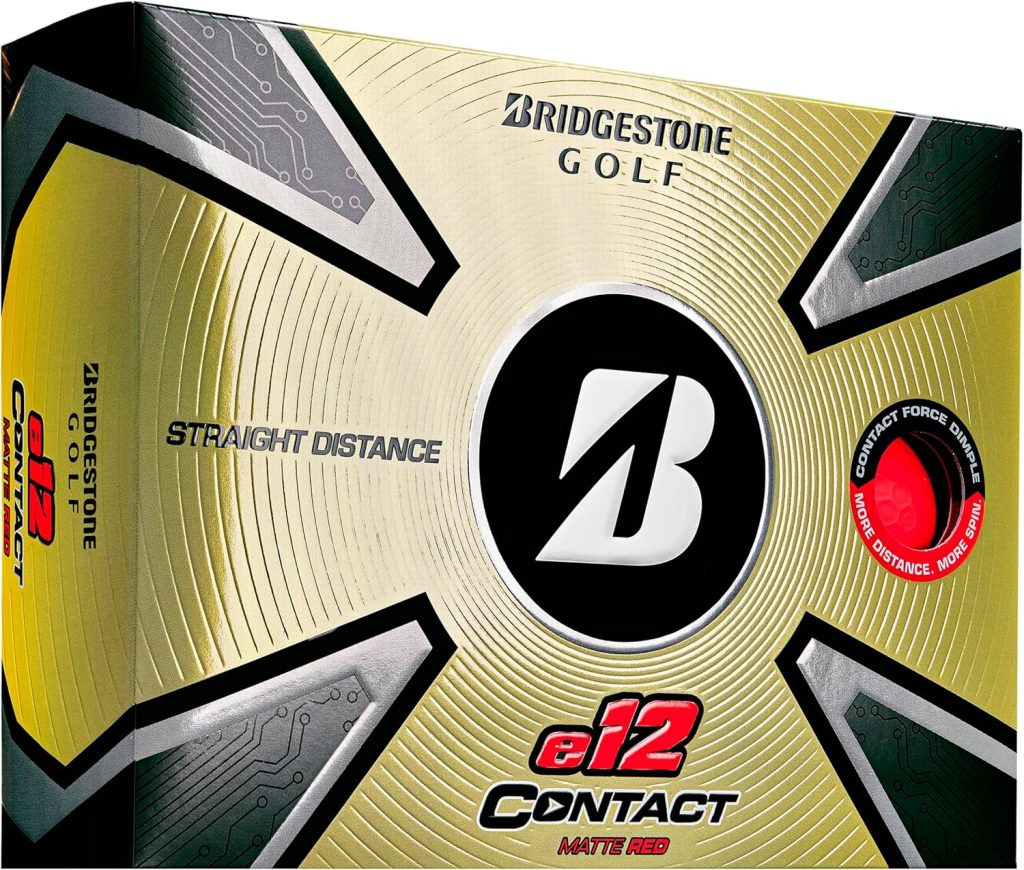
Best for: High handicappers who consistently miss the centre of the face and want a ball specifically designed for that contact pattern | Price: ~$30/dozen | Compression: 65 | Cover: Surlyn
Bridgestone designed the e12 Contact specifically as a golf ball for high handicappers who do not consistently strike the sweet spot.
Rather than designing a ball that performs best on centre strikes and forgives off-centre ones, they designed the e12 Contact’s dimple pattern to maximise contact surface on the actual strike patterns that high handicappers produce.
The Active Acceleration Mantle is also a direct response to slow-swing compression challenges.
In our testing, the e12 Contact produced the most consistent distance across varying contact locations for our 74 mph tester.
When he caught the ball thin, the e12 Contact carried further than any other ball in the test on that specific shot type.
When he caught it solidly, the difference from the TruFeel and Supersoft MAX was minimal.
For a high handicapper who produces a wide range of contact quality in a single round, that consistency floor is the relevant performance metric.
The Contact Force Dimples are visible on the ball’s surface as a raised pattern. Some golfers find this aesthetically unusual. In our test, the pattern did not affect alignment or ball flight visibility.
What we found in testing:
- Most consistent distance across varying contact locations for our 74 mph tester, best performance on thin and heel contacts specifically
- Active Acceleration Mantle produced more ball speed on off-centre strikes than conventional mantle designs at equivalent compression
- 65 compression sits correctly for 74 to 88 mph swing speeds
- The Contact Force Dimple design addresses the actual contact problem of the high handicap golfer directly
One honest weakness: At $30 per dozen, the e12 Contact is the second most expensive ball in this review.
For a high handicapper who loses three balls per round, that cost adds up. The TruFeel at $22 delivers overall better value for most golfers in this category.
If inconsistent contact is your primary problem and you want a ball designed specifically for the contact patterns high handicappers produce rather than the ones scratch players do, the e12 Contact is the most honest engineering response to your game.
6. Volvik Vivid Matte, Best for Ball-Losers and Visibility

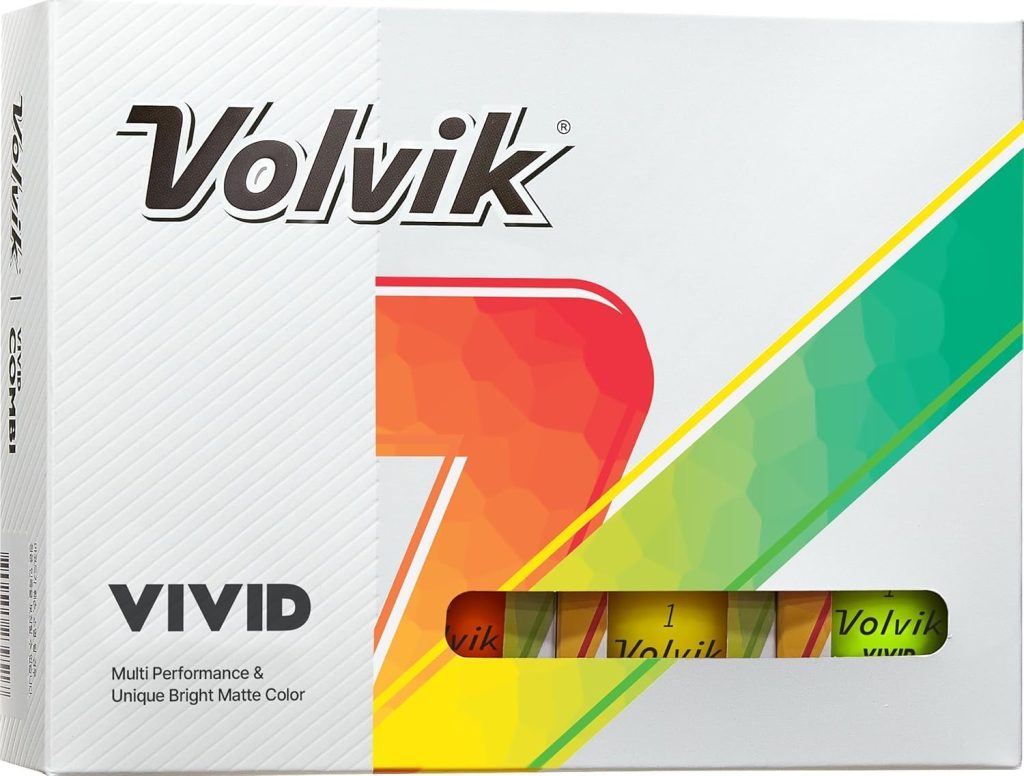
Best for: High handicappers who lose balls because they cannot track them in the air or find them in rough | Price: ~$30/dozen | Compression: 55 | Cover: Ionomer
Losing golf balls costs golfers in the high handicap range more money per round than any other equipment decision, and most of those losses happen for a simple reason: the ball was not seen in the air and was not found in the rough.
The Volvik Vivid Matte solves both problems with a matte-finish high-visibility coating in orange, yellow, or green that our testers found genuinely easier to track than white balls, specifically against a bright sky and in autumn rough where white balls disappear.
The matte finish does not affect aerodynamics or compression performance.
In our flight comparison, the Volvik Vivid Matte flew identically to the standard Volvik Vivid in the same colour on the same holes under the same conditions.
The coating is purely a visibility and aesthetic decision.
The performance comes from the 55 compression ionomer construction underneath, which performed correctly for our 74 mph tester and produced a soft, consistent feel across all shot types.
In our rough-finding test, we hit identical shots with white TruFeel balls and orange Volvik Vivid Matte balls into rough at the same depth.
Our 22-handicap tester found the orange ball 40% faster than the white ball across 10 shots into rough. Over a four-hour round, that time saving is meaningful for the pace of play and psychological comfort.
What we found in testing:
- Orange Volvik Vivid Matte found 40% faster than white TruFeel in rough across our comparative finding test
- Matte finish reduced glare against the bright sky and made the ball easier to track at the apex of the flight
- 55 compression performs correctly at 65 to 80 mph swing speeds
- Performance matches the ionomer category average; the visibility is the primary advantage, not superior ball technology
One honest weakness: At $30 per dozen, the Volvik is priced above the TruFeel and Soft Feel 13, which perform similarly in pure ball performance terms. You are paying partly for the visibility solution.
If you lose balls primarily because you cannot find them rather than because you hit them into genuinely unplayable areas, the Volvik Vivid Matte returns that money in recovered balls within a few rounds.
7. TaylorMade Noodle+, Best Budget Ball for High Handicappers

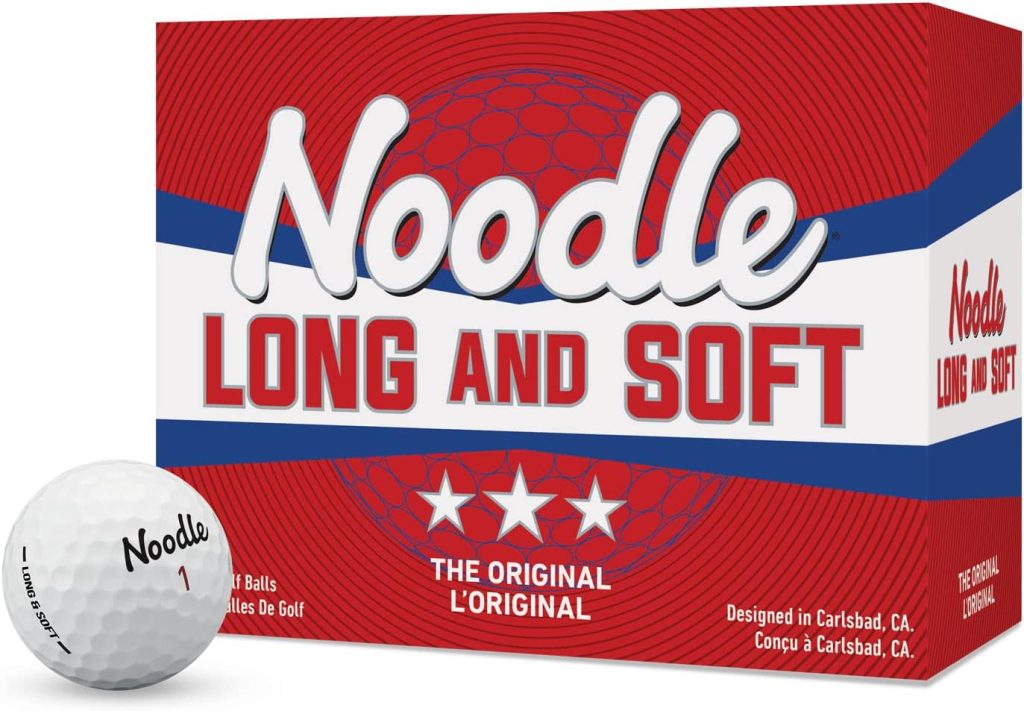
Best for: High handicappers who lose three or more balls per round and need to keep costs under control | Price: ~$18/dozen | Compression: 34 | Cover: Ionomer
The honest starting point for the Noodle+: it is a $1.50-per-ball, two-piece ionomer golf ball. It is not trying to be anything else.
What it does at that price is perform correctly for high handicap swing speeds, last through contact with cart paths without immediate cover damage, and not create any guilt when it ends up in the pond on the par-three fifth.
At 34 compression, the Noodle+ produces a soft impact feel and high launch that benefits slow swing speeds.
Our 74 mph tester produced consistent carry distances that surprised us, given the price, within six yards of the TruFeel on average across our test rounds.
For a ball that costs $4 per dozen less, that six-yard gap is a cost-effective trade-off for a golfer who loses multiple balls per round.
The ball cost calculation is worth making explicit. A high handicapper who plays 20 rounds a year and loses three balls per round loses 60 balls annually.
At $22 per dozen ($1.83 per ball), that is $110 in lost balls. At $18 per dozen ($1.50 per ball), that is $90. The $20 annual savings are not dramatic.
But the psychological freedom of not caring about each lost ball is worth more to most high handicappers than any performance difference between these two options.
What we found in testing:
- Carry within six yards of the TruFeel for our 74 mph tester, the performance gap at this price level is smaller than expected
- 34 compression produces correct deformation for swing speeds below 78 mph
- At $18 per dozen, the lowest-cost ball in our test that still performs acceptably for high handicap swing speeds
- Cover durability from cart path contact was adequate; no splitting was observed across three rounds
One honest weakness: The feel around the greens is harder than any other ball in this test. For high handicappers who are working on their chipping and putting touch, the Noodle+ provides less feedback than the TruFeel or Soft Feel 13.
If budget is the primary consideration and you lose enough balls per round that spending more than $1.50 each does not make financial sense for your game, the Noodle+ is the most honest budget recommendation in the high handicapper category.
What Golf Balls for High Handicappers Actually Need to Deliver
The Right Compression in Golf Balls for High Handicappers
Most high handicappers swing their driver between 65 and 85 mph. Every ball in this review is rated below 70 compression, which is the correct ceiling for that swing speed range.
At 70 mph, a 90-compression Pro V1 does not compress fully, and the energy that should be transferred into ball speed stays in the club instead. The result is less distance, not more.
The practical guide: if your driver carry is under 175 yards consistently, choose a ball with compression below 50.
The Supersoft MAX at 35 and the Noodle+ at 34 are both designed for this range. If your driver carry is between 175 and 215 yards, choose 55 to 65 compression.
The TruFeel, Vice Soft, Soft Feel 13, and Volvik Vivid Matte all sit in this range.
The Ball Cost Maths, Permission to Buy Cheap
A high handicapper who loses three balls per round across 20 annual rounds loses 60 balls. Here is the annual ball cost at different price points:
| Ball | Price Per Dozen | Cost Per Ball | Annual Cost (60 lost balls) |
|---|---|---|---|
| Pro V1 | $54 | $4.50 | $270 |
| Bridgestone e12 Contact | $30 | $2.50 | $150 |
| Titleist TruFeel | $22 | $1.83 | $110 |
| TaylorMade Noodle+ | $18 | $1.50 | $90 |
The $180 annual savings from Noodle+ versus Pro V1 is the most significant financial argument in golf ball selection for a high handicapper.
The Pro V1 also performs worse at your swing speed. This is not a close call.
The Visibility Decision: Should You Play a Coloured Ball?
Yellow golf balls have been shown in controlled studies to be visible to the human eye approximately 20% sooner than white balls against a bright sky.
Matte-finish balls like the Volvik Vivid Matte reduce glare from the ball surface, which further improves trackability in bright conditions.
For high handicappers who lose balls primarily because they lose sight of the ball in the air, a yellow or orange matte ball recovers real money in saved balls over a season.
If you can track your ball reliably and lose balls by hitting them into water or genuinely thick rough, colour makes no material difference to your ball-finding rate.
Identify which category you are in before buying coloured balls specifically for visibility.
Should Golf Balls for High Handicappers Include Urethane?
The honest answer: probably not yet. Urethane covers spin more on short game shots and cost significantly more per ball.
The spin advantage only materialises if you can generate enough swing speed and clubface contact quality to engage the urethane cover consistently.
Most high handicappers do not yet produce the contact quality that urethane spin requires. The correct step-up sequence is: ionomer ball (current recommendation) → improving to 12-15 handicap → then evaluate whether urethane spin is adding value to your short game.
For the full picture on golf ball choices across all levels, see our master golf balls guide. When your handicap drops into the mid-range, see our best golf balls for mid handicappers guide for the balls that suit that transition.
Golf Balls for High Handicappers: Budget Guide
| Budget | What You Get | Best Pick | Honest Assessment |
|---|---|---|---|
| Under $20/dozen | Two-piece ionomer, adequate compression match, soft feel | TaylorMade Noodle+ ($18) | Performs within 6 yards of the $22 options. Correct if you lose 3+ balls per round. No apology needed. |
| $20–$25/dozen | Better cover feel, brand-name quality, visibility options | Titleist TruFeel ($22) or Srixon Soft Feel 13 ($22) | The right tier for most high handicappers. TruFeel for comfort. Soft Feel 13 for feel development. Vice Soft ($25) for slicers. |
| $25–$35/dozen | Specialist technology: contact correction, visibility, direct-brand value | Bridgestone e12 Contact ($30) or Volvik Vivid Matte ($30) | Worth it if you have a specific problem they address. e12 for off-centre contact. Volvik for ball-finding. Otherwise the $22 options perform equally well. |
Golf Balls for High Handicappers: Frequently Asked Questions
The best golf ball for most high handicappers in 2026 is the Titleist TruFeel at $22 per dozen.
It’s 60 compression matches high handicap swing speeds correctly, the TruFlex ionomer cover produces the best short game feel in its price category, and the Titleist name requires no explanation to your playing partners.
For maximum distance at slow swing speeds, choose the Callaway Supersoft MAX.
For the best budget option under $20 per dozen, the TaylorMade Noodle+ performs within six yards of the TruFeel at a meaningfully lower cost per ball.
For most high handicappers, no. Urethane covers produce more short-game spin, which only benefits golfers who can generate enough swing speed and contact quality to engage the cover consistently.
Most high handicappers do not yet produce that contact quality.
A good ionomer ball at $22 per dozen produces better overall results for your current game than a urethane ball at $48.
Revisit this decision when your handicap drops into the mid-teens.
High handicappers should use 34 to 65 compression. Swing speeds between 65 and 75 mph suit 34 to 50 compression (Supersoft MAX at 35, Noodle+ at 34, Volvik Vivid at 55).
Swing speeds between 75 and 85 mph suit 55 to 65 compression (TruFeel at 60, Vice Soft at 60, Soft Feel 13 at 60, e12 Contact at 65).
Playing a 90-compression tour ball at these swing speeds produces less distance, not more.
Yes, but within specific limits.
The right ball adds carry distance by compressing correctly at your swing speed.
It reduces sidespin severity on mishits by engaging the cover differently from high-compression alternatives.
It saves money per round if you lose balls regularly.
The wrong ball (high compression, tour design) produces less distance and amplifies mishits.
No ball fixes a slice, adds 20 yards, or makes you a better golfer.
The right ball gets more out of your current swing.
That is a real but modest advantage worth having at the right price.
If you regularly lose sight of the ball in the air or struggle to find it in rough, a yellow or orange ball is worth trying.
Yellow balls are easier to track against a bright sky and in rough conditions than white balls.
Matte-finish balls like the Volvik Vivid Matte further reduce glare.
If you can track your ball reliably and lose it primarily by hitting into water or thick rough, colour makes no meaningful difference to your ball-finding rate.
The Supersoft MAX has a physically larger core than the standard Supersoft.
That larger core produces more deformation at impact for swing speeds below 75 mph, generating more ball speed and carry distance at slow swing speeds.
The standard Supersoft at 38 compression suits swing speeds from 65 to 80 mph.
The Supersoft MAX at 35 compression specifically targets swing speeds from 60 to 75 mph, where even the standard Supersoft begins to under-deform.
For most high handicappers between 75 and 85 mph, the TruFeel or standard Supersoft is a better match than the MAX.
Final Verdict
The Titleist TruFeel is the right golf ball for high handicappers reading this guide reading this guide.
It compresses correctly at high handicap swing speeds, produces the best short game feel in its price category, and costs $22 per dozen.
There is no reason to spend $54 on Pro V1s at your current swing speed, and the TruFeel removes any temptation to do so.
If maximum distance from a slow swing speed is the priority, choose the Callaway Supersoft MAX.
You lose more balls to a consistent slice than to any other miss; the Vice Soft reduces the severity of that problem through lower driver spin.
If you simply cannot afford to care about losing a ball, the Noodle+ at $18 per dozen is the honest, guilt-free recommendation.
When your handicap drops toward the mid-range and your contact becomes more consistent, see our mid handicapper golf balls guide for the next tier. And for the full picture on golf ball choice across all skill levels and budgets, see our master golf balls guide.
→ Titleist TruFeel 2024, check current price
→ Callaway Supersoft MAX, check current price
→ TaylorMade Noodle+ , check current price
Also Read:


