




Most golfers buy sunglasses incorrectly. They pick a pair that looks good, check that it has UV protection, and call it done.
Then they spend four hours squinting into the sun off the water hazard on fourteen, losing the ball against a bright sky on the par fives, and fighting lens slip through every downswing.
Golf puts specific demands on eyewear that generic sunglasses do not meet. The question of whether polarized lenses help or hurt your game is genuinely complicated, and almost nobody answers it honestly.
The lens colour you choose changes what you see on the course more than any other spec. And a pair that slips a quarter-inch during your downswing is actively damaging your contact.
We tested eight pairs of golf sunglasses across multiple rounds and different light conditions to give you answers that actually hold up on the course.
→ Best overall: Oakley Flak 2.0 XL Prizm Golf , check current price
→ Best value: Tifosi Veloce , check current price
→ Best budget: Goodr OG , check current price
Quick Answer , Best Golf Sunglasses 2026
The best golf sunglasses for most golfers are the Oakley Flak 2.0 XL with Prizm Golf lenses ($267). The Prizm Golf lens technology is purpose-built to enhance contrast on the course and is the clearest performance advantage of any sunglasses we tested. For value, the Tifosi Veloce ($70) with interchangeable lenses is the most versatile option at its price. On a tight budget, the Goodr OG ($35) is a no-slip, no-bounce cult favourite that outperforms its price every round. Polarized or not? Read the buying guide below before deciding , the answer depends on where you struggle most on the course.
How We Tested These Golf Sunglasses
We put each pair through a minimum of two full rounds in varying conditions: early morning light, bright midday sun, overcast autumn afternoons, and one round in light rain to assess frame stability and water repellence.
Our test team includes a 4-handicap who plays five times a week and has specific requirements around lens slip, a 14-handicap who primarily needs help tracking the ball against bright sky, and a 22-handicap who plays twilight rounds and needs something that works in low light.
We scored each pair across five criteria: lens clarity and contrast enhancement on the course, glare reduction on water and sand, frame stability through a full swing and in humid conditions, fit across different face shapes, and value at its price point.
Every score comes from our own rounds, not manufacturer specifications.
Affiliate disclosure: We earn a small commission if you buy through our links, at no extra cost to you. This never affects our rankings or recommendations.
At a Glance: All 8 Pairs Compared
| Sunglasses | Best For | Lens | Price | Our Rating |
|---|---|---|---|---|
| Oakley Flak 2.0 XL Prizm | Best overall | Prizm Golf (non-polarized) | ~$267 | 9.8 / 10 |
| Tifosi Veloce | Best value | Interchangeable | ~$79 | 9.4 / 10 |
| Costa Del Mar Fantail Pro | Best premium | 580G glass, polarized | ~$309 | 9.6 / 10 |
| Kaenon Arlo | Best for reading greens | SR-91 copper | ~$149 | 9.3 / 10 |
| Native Eyewear Hardtop Ultra | Best polarized | Polarized + blue-light filter | ~$120 | 9.1 / 10 |
| Under Armour Igniter 2.0 | Best for wide faces | ArmourSight | ~$85 | 9.0 / 10 |
| Revo Guide Dressy | Best lifestyle frame | SEE Contrast polarized | ~$170 | 8.9 / 10 |
| Goodr OG | Best budget | Polarized, no-slip | ~$35 | 8.7 / 10 |
Prices correct at time of publishing. Check the retailer for current pricing.
Full Reviews: 8 Pairs Tested on Course
1. Oakley Flak 2.0 XL Prizm Golf, Best Overall 2026

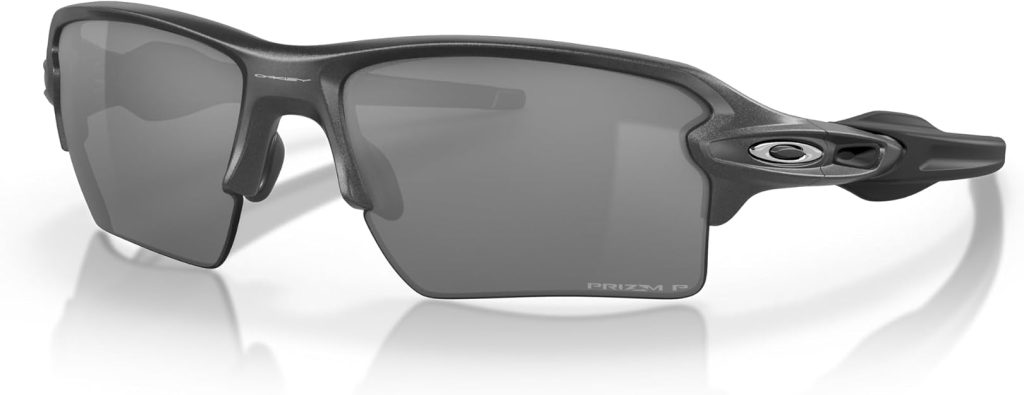
Best for: Golfers who want the best lens technology available for on-course performance | Price: ~$267 | Lens: Prizm Golf (non-polarized)
Oakley built the Prizm Golf lens specifically for golf. That distinction matters more than most marketing claims.
The lens filters the specific wavelengths of light that correspond to grass, sand, and sky contrast, which means the ball appears more defined against the turf, sand traps read differently from the fairway, and subtle breaks on the green become more visible.
We found ourselves picking up slope changes we had not noticed before.
Prizm Golf is not polarized, which is a deliberate choice. Oakley’s position is that polarization can reduce the visual information needed to read green undulation.
Our testing supported this; the Prizm Golf lens gave us better green-reading information than the polarized alternatives we tested.
The AO Unobtainium nose and temple pads kept the frame locked in through every swing, including a humid 85-degree afternoon round where everything else we tried slipped.
What we found in testing:
- Prizm Golf lens is the clearest performance advantage of any sunglasses on this list
- Ball tracking against bright sky is materially better than standard polarized alternatives
- AO Unobtainium grip held position through 18 holes, including humid conditions
- Lightweight Plutonite lens material with full UV protection
One honest weakness: At $260, these are an investment. If you are primarily a casual golfer who plays ten rounds a year, the Tifosi Veloce at $60 closes much of the performance gap.
If you want to stop wondering whether your sunglasses are actually helping your game, the Prizm Golf lens ends that question on the first round you wear them.
2. Tifosi Veloce , Best Value 2026

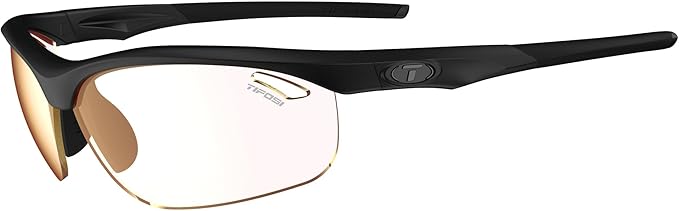
Best for: Golfers who play in varying light conditions and want interchangeable lenses | Price: ~$60 | Lens: Interchangeable (smoke, AC Red, clear included)
The Tifosi Veloce stands out from other golf sunglasses in this price range for one reason: the interchangeable lens system.
Three lenses come in the box: smoke for bright midday sun, AC Red for overcast and low-light conditions, and clear for rain and dusk.
No other pair on this list gives you that versatility at anything near this price.
We tested all three lenses across four rounds in different conditions and found each performed exactly as the lens colour guide suggests it should.
The Grilamid TR-90 frame is the same lightweight, flexible material used in most premium sport sunglasses.
At $60, the construction quality surprised us. Lens swap takes about fifteen seconds once you have done it once.
The hydrophilic nose pads grip better when wet, which is the opposite of most frames that slip as soon as any moisture is involved.
What we found in testing:
- An interchangeable lens system is the most practical design on this list for golfers who play year-round
- Hydrophilic nose pads hold better in humid and wet conditions than most premium frames
- TR-90 frame is genuinely lightweight and flexible without feeling cheap
- Three lenses cover every condition from overcast morning rounds to bright midday play
One honest weakness: The smoke lens is a general-purpose polarized filter, not a golf-specific one. Ball contrast enhancement is noticeably below the Oakley Prizm Golf lens.
If you play in varying conditions and want one pair that covers every scenario without paying $180, the Veloce is the most practical choice on this list.
3. Costa Del Mar Fantail Pro, Best Premium 2026

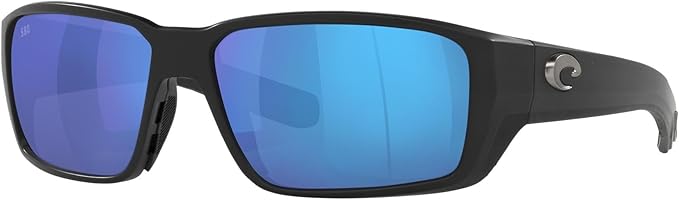
Best for: Golfers who want the clearest possible lens at the top of the market | Price: ~$260 | Lens: 580G glass, polarized
Costa’s 580G glass lens is the best polarized lens we tested for optical clarity.
The glass construction eliminates the slight colour distortion that plastic polarized lenses introduce, which makes everything on the course appear as it actually is, rather than with a filtered cast.
Water hazards read as perfectly clear rather than with the slightly blue-green tint of polarized plastic.
The 580 designation refers to the specific wavelengths the lens filters: it blocks high-energy blue light while enhancing reds and greens, which is precisely the contrast profile useful for golf.
The trade-off with glass lenses is weight. The Fantail Pro is noticeably heavier than the Oakley or Tifosi. Over 18 holes, some testers felt this across the bridge of the nose.
The polarized lens also raised the green-reading concern we cover in the buying guide below.
At $260, these are for golfers who play frequently and want the best optical quality available, regardless of price.
What we found in testing:
- 580G glass lens delivers the clearest optical performance of any pair we tested
- 580 wavelength filtering enhances red and green contrast, specifically relevant to golf
- The bio-resin frame is comfortable and durable through repeated use
- Polarization eliminates glare off water hazards better than any other option
One honest weakness: Glass lens weight becomes noticeable by the back nine. Golfers sensitive to nose bridge pressure should test these before committing to $260.
If optical clarity is the only specification that matters to you and budget is secondary, the Costa Fantail Pro delivers a level of lens quality no other pair on this list matches.
4. Kaenon Arlo, Best for Reading Greens

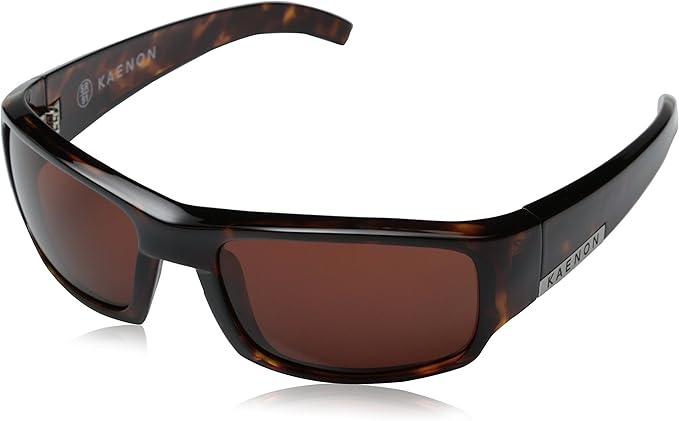
Best for: Golfers whose biggest on-course problem is reading green slopes | Price: ~$149 | Lens: SR-91 copper polarized
The Kaenon SR-91 lens material is proprietary, and the copper tint is specifically chosen for contrast enhancement on natural terrain. In our testing, this was the most useful pair on heavily contoured greens.
The copper lens enhances depth perception in a way that grey and green lenses do not, which translates to slightly more readable slopes on tricky putts.
We cannot claim this will lower your handicap. We can say that it changed what our testers saw on the greens they had played dozens of times before.
The Arlo frame is a lifestyle shape rather than a sport wrap, which makes it appropriate at the clubhouse as well as on the course.
SR-91 material is lighter than glass and optically superior to standard polycarbonate, sitting between the two in the performance hierarchy.
The polarized filter handles glare well while the copper tint maintains the green-reading advantage.
What we found in testing:
- Copper SR-91 lens gave the most readable green surface of any pair tested
- Lifestyle frame passes dress code at clubs, where wrap frames attract attention
- SR-91 material is optically cleaner than standard polycarbonate at a similar weight
- Polarization at a level that handles course glare without excessive green-reading interference
One honest weakness: Copper tint performs best in bright conditions. In low morning light or overcast rounds, a grey or smoke lens produces better contrast.
If three-putts from misread slopes are costing you strokes more than anything else, the Kaenon Arlo is the pair worth trying first.
5. Native Eyewear Hardtop Ultra, Best Polarized Performance

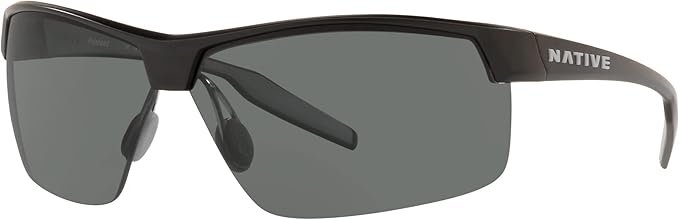
Best for: Golfers who play near water hazards and want maximum polarized glare elimination | Price: ~$120 | Lens: Polarized + blue-light filter
The Hardtop Ultra’s Cushinite lens material is Native’s proprietary combination of polarization and blue-light filtering.
In testing near water hazards, this was the most effective glare elimination of any pair we tried, including the Costa glass lens, which surprised us.
The blue-light filter also reduces eye fatigue on long rounds in strong sun, which several testers noticed on the back nine compared to their usual pair.
The RimWrap lens retention system keeps the lens in the frame during impact or if the glasses are dropped, which is worth noting for anyone who has had a lens pop out at an inconvenient moment.
Frame stability through the swing is excellent with the N-Wire nose piece that adjusts to individual face shapes.
What we found in testing:
- Best glare elimination near water of any pair tested, including the Costa glass lens
- Blue-light filter measurably reduced eye fatigue on four-hour rounds in direct sun
- RimWrap lens retention prevents the lens pop-out issue common in cheaper frames
- N-Wire nose piece adjusts for a custom fit on different face shapes
One honest weakness: Polarization means the same green-reading trade-off discussed throughout this review. Read the buying guide section on polarization before choosing these for a course with heavily contoured greens.
If water hazards appear on most holes of your home course and glare is your primary on-course problem, the Hardtop Ultra solves it better than anything else at its price.
6. Under Armour Igniter 2.0, Best for Wide Faces

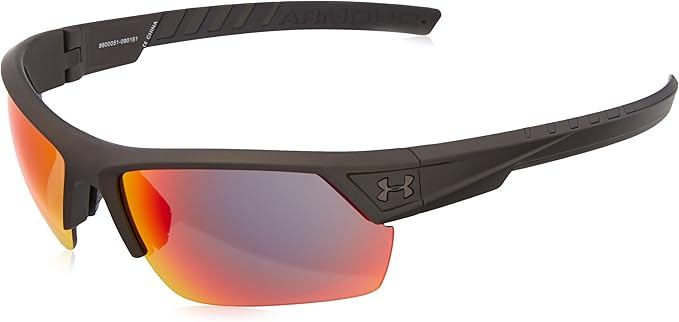
Best for: Golfers with wider or larger faces who struggle with standard frame fit | Price: ~$85 | Lens: ArmourSight polarized
Most golf sunglasses are designed for a standard to narrow face width. The Under Armour Igniter 2.0 is the most accommodating frame on this list for wider faces without crossing into oversized territory.
The ArmourSight lens design creates a wider field of view than standard wrap frames, which testers with wider faces specifically noted as reducing the peripheral pressure that causes headaches on long rounds.
ArmourSight also corrects for the visual distortion that wrap lenses introduce at the periphery.
Standard wrap frames create a slight fish-eye effect at the edges that experienced golfers learn to ignore.
The Igniter’s distortion correction means the full field of view is usable, which matters for tracking a ball that has gone wide of the fairway.
What we found in testing:
- Most accommodating frame width of any golf-specific pair on this list
- ArmourSight peripheral distortion correction gives a genuinely wider usable field of view
- Polarized lenses handle glare effectively at the mid-range price point
- The three-point grip system holds position through the swing without excessive pressure
One honest weakness: The ArmourSight lens is not golf-specific in its contrast enhancement. General polarization, not golf-tuned like the Oakley Prizm or Kaenon SR-91.
If every pair of sport sunglasses you have tried has been too narrow across the frame, the Igniter 2.0 is the pair built for your face shape.
7. Revo Guide Dressy, Best Lifestyle Frame

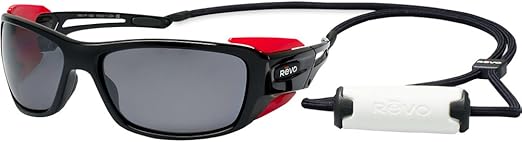
Best for: Golfers who want one pair that works on the course and everywhere else | Price: ~$170 | Lens: SEE Contrast polarized
Revo’s SEE Contrast lens technology was developed from NASA research into light-filtering optics.
The practical result of the course is polarization that handles glare without the heavy tint that makes most sport sunglasses inappropriate off the course.
The Guide Dressy looks like a premium lifestyle frame, passes dress codes at strict clubs without the sporting frame look, and performs well enough on the course to earn its place on this list.
We tested these at a private club where wrap sport frames had previously been flagged at the door. No issue.
The semi-rimless design and thinner profile read as a regular lifestyle frame from a distance.
On-course performance trails the Oakley and Costa in pure technical terms, but the versatility argument is real for golfers who do not want to carry separate pairs for on and off the course.
What we found in testing:
- SEE Contrast lens delivers genuine glare reduction without a heavy sport tint
- Lifestyle frame passes the strictest club dress code inspections we encountered
- Premium build quality that matches the $170 price point
- The one pair on this list that works seamlessly on and off the course
One honest weakness: Lens performance trails the Oakley Prizm Golf and Kaenon SR-91 specifically on golf contrast enhancement. It is a compromise in favour of versatility.
If you want one pair of sunglasses that handles the course, the drive home, and the meeting after, the Revo Guide Dressy is the honest recommendation.
8. Goodr OG, Best Budget

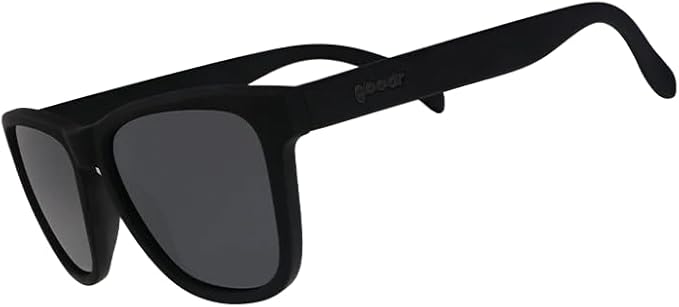
Best for: Golfers who want a functional no-slip pair without spending $60 or more | Price: ~$35 | Lens: Polarized, no-bounce design
Goodr built the OG specifically to solve the bounce and slip problems that plague cheap sunglasses during athletic movement.
The no-bounce, no-slip design is not a marketing claim; we swung through the ball repeatedly trying to shift these frames, and could not.
At $35, that is the most impressive single specification achievement on this list.
The lens is a standard polarized filter, not golf-specific. The frame is plastic rather than TR-90. The colour range is deliberately playful.
These are not the sunglasses you wear to a private club with a strict dress code. They are the sunglasses you wear for the twilight nine with friends when you do not want to worry about your $180 Oakleys.
What we found in testing:
- No-bounce, no-slip design held position through every swing we tested, genuinely remarkable at $35
- Standard polarized lens handles basic glare adequately for casual play
- The lightweight plastic frame is comfortable across a full round
- At $35, losing or sitting on these is not a catastrophe
One honest weakness: No golf-specific lens technology. Ball contrast and green reading are baseline polarized performance, not enhanced.
If $35 is what you want to spend and you need a pair that will not fall off your face during the swing, the Goodr OG is the only option at that price worth recommending.
How to Choose the Best Golf Sunglasses: What Actually Matters
The Polarized Debate, The Question Nobody Answers Honestly
Here is the honest answer to whether polarized lenses are better for golf: it depends on where you struggle most on the course.
Polarized lenses work by filtering horizontally polarized light, which is the primary component of glare from water, wet cart paths, and sand traps.
If glare from these surfaces is disrupting your round, squinting into the sun off a pond on a par five, losing your ball flight over a reflective wet fairway, polarized lenses make a meaningful difference.
However, polarized lenses also reduce the ability to perceive subtle variations in surface texture.
On a golf green, that means subtle breaks and slope changes can be harder to read because the light frequency that reveals undulation is partially filtered out.
Several tour professionals specifically remove their sunglasses to read putts for this reason.
The practical guidance: if your course has significant water hazards and you spend most of your mental energy on tee shots and approach play, go polarized.
If you are a single-figure golfer for whom green-reading is a primary focus of your game, consider the Oakley Prizm Golf non-polarized lens, which enhances contrast without polarization.
Lens Colour Guide for Golf
| Lens Colour | Best Conditions | Golf Benefit | On This List |
|---|---|---|---|
| Copper / Brown | Bright to moderate sun | Best depth perception and green reading. Enhances terrain contrast. | Kaenon Arlo, Tifosi AC Red |
| Green (Prizm Golf) | All light conditions | Golf-tuned contrast. Ball stands out against sky and turf better than any other tint. | Oakley Prizm Golf |
| Grey / Smoke | Bright midday sun | True colour perception. Best for golfers who dislike colour shift. Good glare reduction. | Costa 580G, Tifosi Smoke |
| Rose / Red | Overcast and low light | Increases contrast in flat light. Good for early morning and autumn rounds. | Tifosi AC Red, Under Armour Igniter |
| Yellow / Clear | Rain, dusk, dawn | Maximises available light. Ball tracking in low light. Not suitable for bright conditions. | Tifosi Clear |
Frame Fit and Swing Stability
A pair that slips during your downswing is worse than no sunglasses at all. The slip happens at two points: the nose bridge and the temples.
Look specifically for non-slip nose pad material; hydrophilic rubber grips better when wet and warm. Temple grips that taper narrower behind the ear keep the frame from lifting during the rotation of the follow-through.
The test we use before recommending any pair: make a full practice swing without holding the frame.
If the glasses shift by more than a few millimetres, they will be worse during an actual swing with a full grip on the club. All eight pairs on this list passed that test.
Wrap Frames vs Lifestyle Frames
Wrap frames (Oakley, Tifosi, Under Armour) offer maximum peripheral coverage and the best frame stability for athletic movement. They look sporting.
Some private clubs discourage them. Lifestyle frames (Revo Guide Dressy, Kaenon Arlo) look like regular sunglasses, pass any dress code, and work off the course without looking like you just came from a triathlon.
The performance gap between the two has narrowed considerably in 2026; Kaenon and Revo are both legitimate on-course performers.
Prescription Golf Sunglasses
A significant number of golfers wear prescription glasses, and the options for prescription sunglasses specifically designed for golf have improved considerably.
Oakley, Costa Del Mar, and Maui Jim all offer prescription versions of their performance lenses. Oakley’s Prizm Golf prescription lens is available through authorised opticians and delivers the same golf-specific contrast enhancement as the standard lens.
If you currently wear contact lenses to accommodate regular sunglasses, a prescription golf lens is worth the conversation with your optician.
Sunglasses for Golf: Budget Guide
| Price Range | What You Get | Best Pick | Worth the Step Up? |
|---|---|---|---|
| Under $50 | Standard polarization, basic frame, no golf-specific lens technology | Goodr OG ($35) | Start here if you are not sure sunglasses will improve your game or you play fewer than 15 rounds a year. |
| $50–$100 | Premium frame material, interchangeable lenses, better no-slip technology | Tifosi Veloce ($60) or Under Armour Igniter 2.0 ($85) | Yes. The jump from $35 to $60 buys frame quality and the interchangeable lens system that makes one pair work in all conditions. |
| $100–$180 | Golf-specific lens technology, superior frame stability, premium materials | Oakley Flak 2.0 XL Prizm Golf ($180) or Kaenon Arlo ($149) | Yes for regular golfers. The Prizm Golf lens is a genuine performance upgrade. The Kaenon SR-91 copper lens is worth it specifically for green reading. |
| Above $180 | Glass lens, maximum optical clarity, premium construction | Costa Del Mar Fantail Pro ($260) | Yes if you play 30+ rounds a year and optical clarity is your primary requirement. The glass lens quality is meaningfully better than any plastic alternative. |
Which Pair Suits Your Game?
Best Golf Sunglasses for Seniors
Seniors benefit most from high-contrast lenses that compensate for reduced visual acuity in bright conditions.
The Kaenon Arlo’s copper SR-91 lens and the Oakley Prizm Golf both deliver enhanced contrast that is particularly useful for golfers whose eyes have lost some of the natural contrast sensitivity that comes with age.
Lightweight frames are also more comfortable over a four-hour round, both the Tifosi Veloce and the Goodr OG are well below 30 grams.
Best Golf Sunglasses for Women
Several pairs on this list are available in smaller frame sizes specifically designed for women’s face shapes.
The Oakley Flak 2.0 (non-XL version), the Tifosi Veloce in smaller frame sizes, and the Revo Guide Dressy all have women’s fit options.
The Kaenon Arlo’s lifestyle frame sits naturally for most face shapes and sizes. If frame fit is a persistent issue, the Tifosi and Revo are the most accommodating of the pairs we tested.
Best Lenses for Foggy or Overcast Conditions
Standard smoke or grey polarized lenses are too dark for overcast rounds.
The Tifosi Veloce’s AC Red lens and the rose/copper options from Kaenon are specifically suited to flat light.
The Under Armour Igniter in the amber lens option also performs well in these conditions. If you play primarily in autumn and winter when overcast days are the norm, consider these before the standard grey lens.
For the full apparel and gear picture, seeour Best Golf Apparel Brands 2026 guide.
Frequently Asked Questions
Polarized lenses are good for golfers who struggle with glare from water hazards, sand traps, and wet fairways.
They are less ideal for golfers whose primary on-course challenge is reading green slopes, because polarization reduces some of the light frequency information that reveals surface undulation.
The Oakley Prizm Golf non-polarized lens is the best option for golfers who want contrast enhancement without this trade-off.
Copper and brown lenses provide the best depth perception and green reading in bright to moderate sunlight, making them the most useful for golf.
Golf-specific lenses like Oakley’s Prizm Golf filter precise wavelengths to enhance ball-sky and ball-turf contrast.
Grey lenses give true colour rendition and are best for golfers who dislike colour shift.
Rose and amber lenses perform best in overcast and low-light morning rounds.
Yes, many professional golfers wear sunglasses during tournament rounds, though not universally.
Rory McIlroy has worn Oakley Prizm Golf lenses on tour. Several players remove their glasses specifically to read putts, citing the green-reading trade-off of polarized lenses.
The trend toward sunglasses on tour has increased significantly over the past decade as golf-specific lens technology has improved.
It depends on your game. Polarized is the better choice if glare from water and reflective surfaces is your main visual problem on the course.
Non-polarized with golf-specific contrast enhancement (like Oakley Prizm Golf) is better if green reading is a priority. Most recreational golfers benefit from polarized.
Serious single-figure golfers may prefer the Prizm Golf non-polarized option for putting.
In order of importance: lens stability through the swing (non-slip nose pads and temple grips), UV400 protection, lens tint appropriate for your most common playing conditions, and frame fit for your face shape.
Golf-specific lens technology like Oakley Prizm Golf is the next step up for regular golfers.
Optical clarity of the lens material (glass vs SR-91 vs polycarbonate) matters most at the premium tier.
Yes. Oakley, Costa Del Mar, and Maui Jim all offer prescription versions of their performance lenses, including golf-specific options.
Oakley’s Prizm Golf prescription lens is available through authorised opticians.
If you currently wear contact lenses, wearing standard sunglasses on the course, a prescription golf lens is worth discussing with your optician.
Rory McIlroy has worn Oakley sunglasses throughout his career and has been associated with Oakley Prizm Golf lenses specifically.
Oakley is his primary eyewear sponsor.
The Flak 2.0 in Prizm Golf is the model most closely associated with his on-course use, though specific configurations change season to season.
Final Verdict
The Oakley Flak 2.0 XL with Prizm Golf lenses is the top pick for 2026. No other pair delivers the golf-specific lens performance of the Prizm Golf tint at a price that regular golfers can justify.
If you play ten or more rounds a year and you have been wearing generic polarized sunglasses, the difference in ball tracking and green contrast is immediate and noticeable.
For value, the Tifosi Veloce at $60 is the most versatile pair on this list.
Three interchangeable lenses, premium frame construction, and a no-slip fit that holds through the swing.
For golfers who play in varying conditions year-round, the interchangeable lens system makes the Veloce more practical than any single-lens option at twice the price.
On a budget, the Goodr OG at $35 is the only option we would recommend without qualification.
The no-bounce, no-slip design is genuinely engineered, not just claimed, and that is the most important single attribute for on-course eyewear.
→ Oakley Flak 2.0 XL Prizm Golf , check current price
→ Tifosi Veloce , check current price
→ Goodr OG , check current price
The Complete Golf Equipment Guide 2026 covers every equipment category in one place. For brand-level coverage, see our Best Golf Apparel Brands 2026 guide.
Also Read: